Newsletter Pre header
ESA/Hubble/Webb weic2601: Intricacies of the Helix Nebula revealed. First spotted in the early 1800s, the Helix Nebula has become one of the most iconic planetary nebulas in the sky as it’s recognised for its striking, ring-like shape. One of the closest planetary nebulas to Earth, it has become …

Newsletter header
Newsletter header
ESA/Hubble logo ESA/Webb logo
ESA LOGO
ESA/Webb News
15 January 2026

First spotted in the early 1800s, the Helix Nebula has become one of the most iconic planetary nebulas in the sky as it’s recognised for its striking, ring-like shape. One of the closest planetary nebulas to Earth, it has become a favorite among astronomers using ground- and space-based telescopes to study the final moments of a dying star in the greatest detail. The NASA/ESA/CSA James Webb Space Telescope has now leveled those studies up, offering the clearest infrared look at this familiar object.

The release, images and videos are available on:
https://esawebb.org/news/weic2601/

Kind regards,
ESA/Hubble/Webb Information Centre
15 January 2026

Newsletter Footer
Newsletter Footer
 
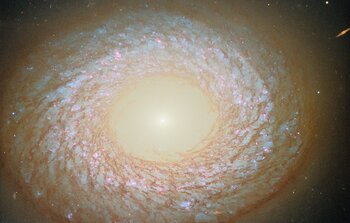
potw2538a   potw2537a   potw2536a   potw2535a   potw2532a  
Dwarf stars in a glittering sky   A dance of dwarf galaxies   The Red Spider Nebula, caught by Webb   Webb brings cosmic lenses into focus   Dusty wisps round a dusty disc  

Follow us on:

ESA/Hubble/Webb, ESA Office, Space Telescope Science Institute, 3700 San Martin Dr, D-21218 Baltimore, United States