Newsletter Pre header
ESA/Hubble/Webb weic2608: Webb looks into the cradles of star clusters, finds massive clusters emerge faster. Astronomers using the NASA/ESA/CSA James Webb Space Telescope together with the NASA/ESA Hubble Space Telescope have looked deeply at thousands of young star clusters in four nearby galaxies, studying clusters at different stages of evolution. Their findings show that more …

Newsletter header
Newsletter header
ESA/Hubble logo ESA/Webb logo
ESA LOGO
ESA/Webb News
6 May 2026

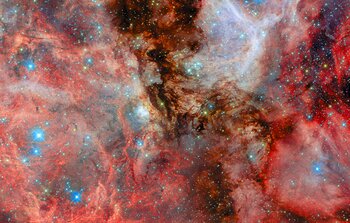
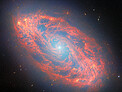
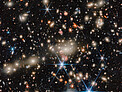
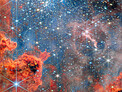
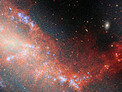
Astronomers using the NASA/ESA/CSA James Webb Space Telescope together with the NASA/ESA Hubble Space Telescope have looked deeply at thousands of young star clusters in four nearby galaxies, studying clusters at different stages of evolution. Their findings show that more massive star clusters emerge more quickly from the clouds they are born in, clearing away gas and filling the galaxy with ultraviolet light. The result gives us a more detailed understanding of star formation in galaxies, as well as how and where planets can form.

The release, images and videos are available on:
https://esawebb.org/news/weic2608/

Kind regards,
ESA/Hubble/Webb Information Centre
6 May 2026

Newsletter Footer
Newsletter Footer
 
potm2603a   potm2602a   potm2601a   potw2552a   potw2551a  
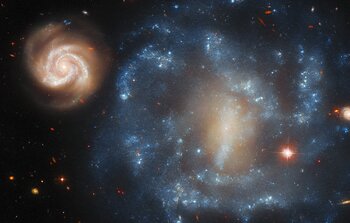
A pair of planet-forming discs   The stellar lifecycle in a nearby spiral   A celebrity cluster in the spotlight   Dwarf stars in a glittering sky   A dance of dwarf galaxies  

Follow us on:

ESA/Hubble/Webb, ESA Office, Space Telescope Science Institute, 3700 San Martin Dr, D-21218 Baltimore, United States