Newsletter Pre header
ESA/Hubble/Webb weic2621: Webb measures distance to farthest fast radio burst, suggesting origin — Record breaker dates back to just 3 billion years after the Big Bang. First discovered in 2007, fast radio bursts are enigmatic, millisecond-long flashes of radio emission from the distant Universe. Their origin remains uncertain, particularly since most are seen once and never again. Astronomers using the NASA/ESA/CSA James Webb Space Telescope have …

Newsletter header
Newsletter header
ESA/Hubble logo ESA/Webb logo
ESA LOGO
ESA/Webb News
8 October 2026

First discovered in 2007, fast radio bursts are enigmatic, millisecond-long flashes of radio emission from the distant Universe. Their origin remains uncertain, particularly since most are seen once and never again. Astronomers using the NASA/ESA/CSA James Webb Space Telescope have pinpointed the host galaxy of the most distant fast radio burst (FRB) seen to date. Their finding has implications for what kind of energetic event creates these bursts.

The release, images and videos are available on:
https://esawebb.org/news/weic2621/

Kind regards,
ESA/Hubble/Webb Information Centre
8 October 2026

Newsletter Footer
Newsletter Footer
 
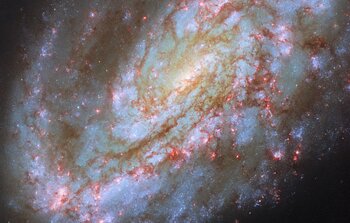
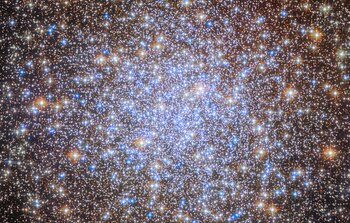
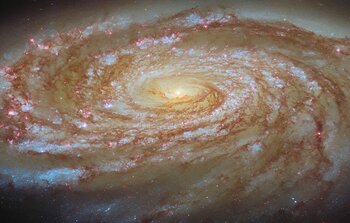
potm2609a   potm2608a   potm2607a   potm2606a   potm2605a  
Galaxies in a cosmic house of mirrors   Striking star clusters and irregular clumps   Webb opens a Treasure Chest filled with stars   A cosmic construction project   Webb unveils young stars across every stage of formation  

Follow us on:

ESA/Hubble/Webb, ESA Office, Space Telescope Science Institute, 3700 San Martin Dr, D-21218 Baltimore, United States