
About the Object
| Name: | MACS J0553.4-3342 | |
|---|---|---|
| Distance: |
4 billion light years z=0.412 (redshift) | |
| Constellation: | Columba | |
| Category: | Galaxies NIRCam Picture of the Month | |
Coordinates
| Position (RA): | 5 53 23.01 |
|---|---|
| Position (Dec): | -33° 42' 27.40" |
| Field of view: | 4.50 x 2.22 arcminutes |
| Orientation: | North is 10.6° right of vertical |

Interactive Sky View
Background Survey Options
Colours & filters
| Band | Wavelength | Telescope |
|---|---|---|
| Optical (Blue) | 900 nm | James Webb Space Telescope NIRCam |
| Infrared (Blue) | 1.15 μm | James Webb Space Telescope NIRCam |
| Infrared (Blue) | 1.5 μm | James Webb Space Telescope NIRCam |
| Infrared (Cyan) | 2.0 μm | James Webb Space Telescope NIRCam |
|
Infrared
(Cyan) methane | 2.1 μm | James Webb Space Telescope NIRCam |
| Infrared (Green) | 2.77 μm | James Webb Space Telescope NIRCam |
|
Infrared
(Green) water ice | 3.0 μm | James Webb Space Telescope NIRCam |
| Infrared (Yellow) | 3.56 μm | James Webb Space Telescope NIRCam |
| Infrared (Red) | 4.1 μm | James Webb Space Telescope NIRCam |
| Infrared (Red) | 4.44 μm | James Webb Space Telescope NIRCam |
A cosmic construction project
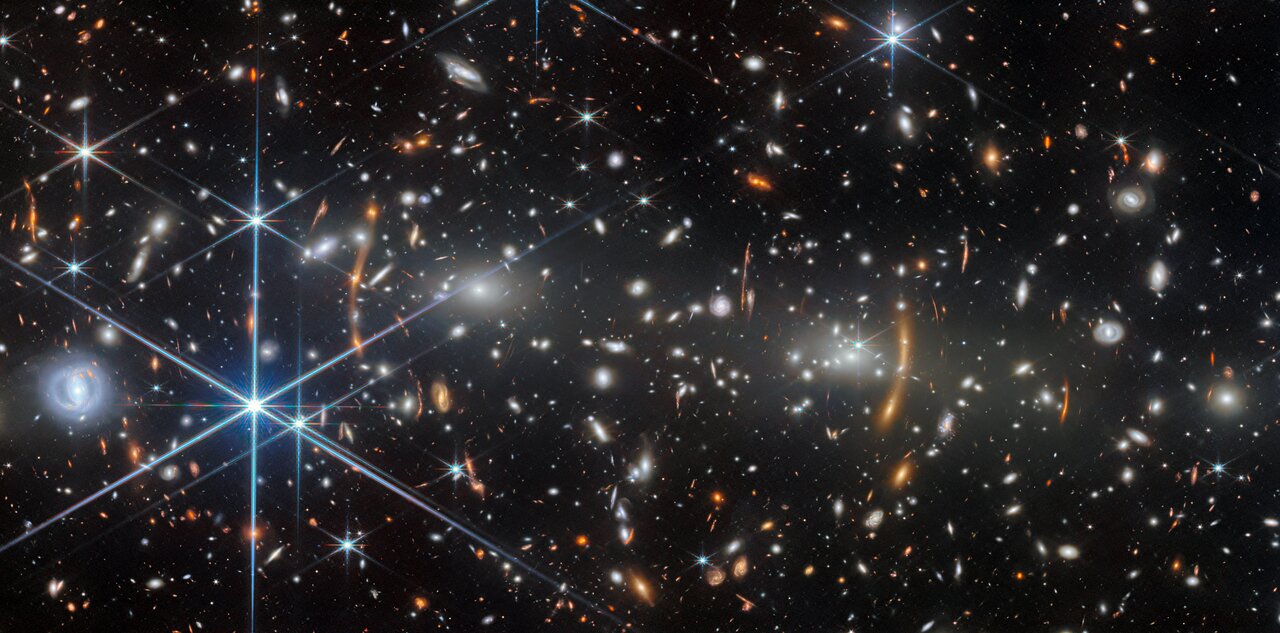
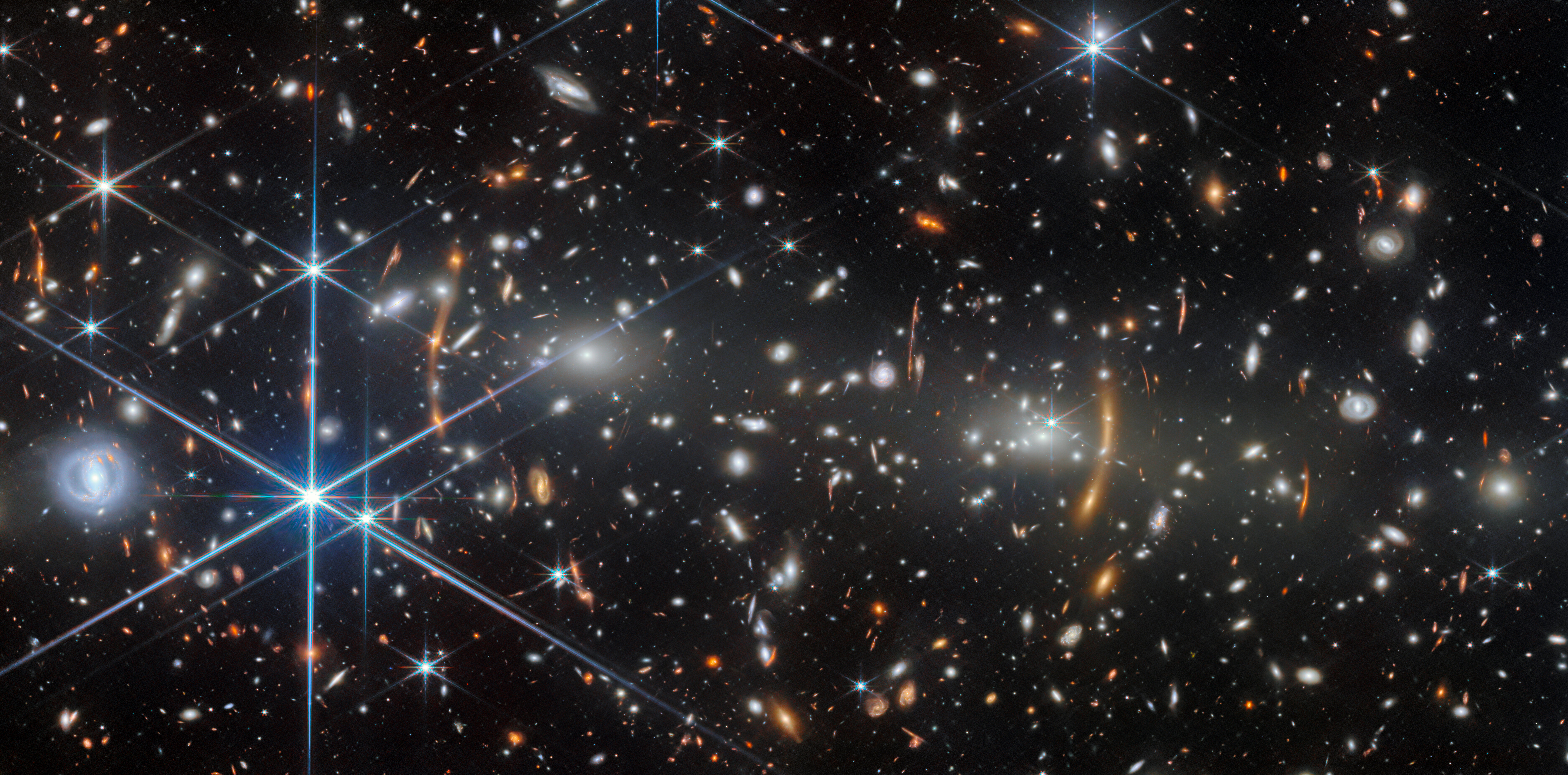
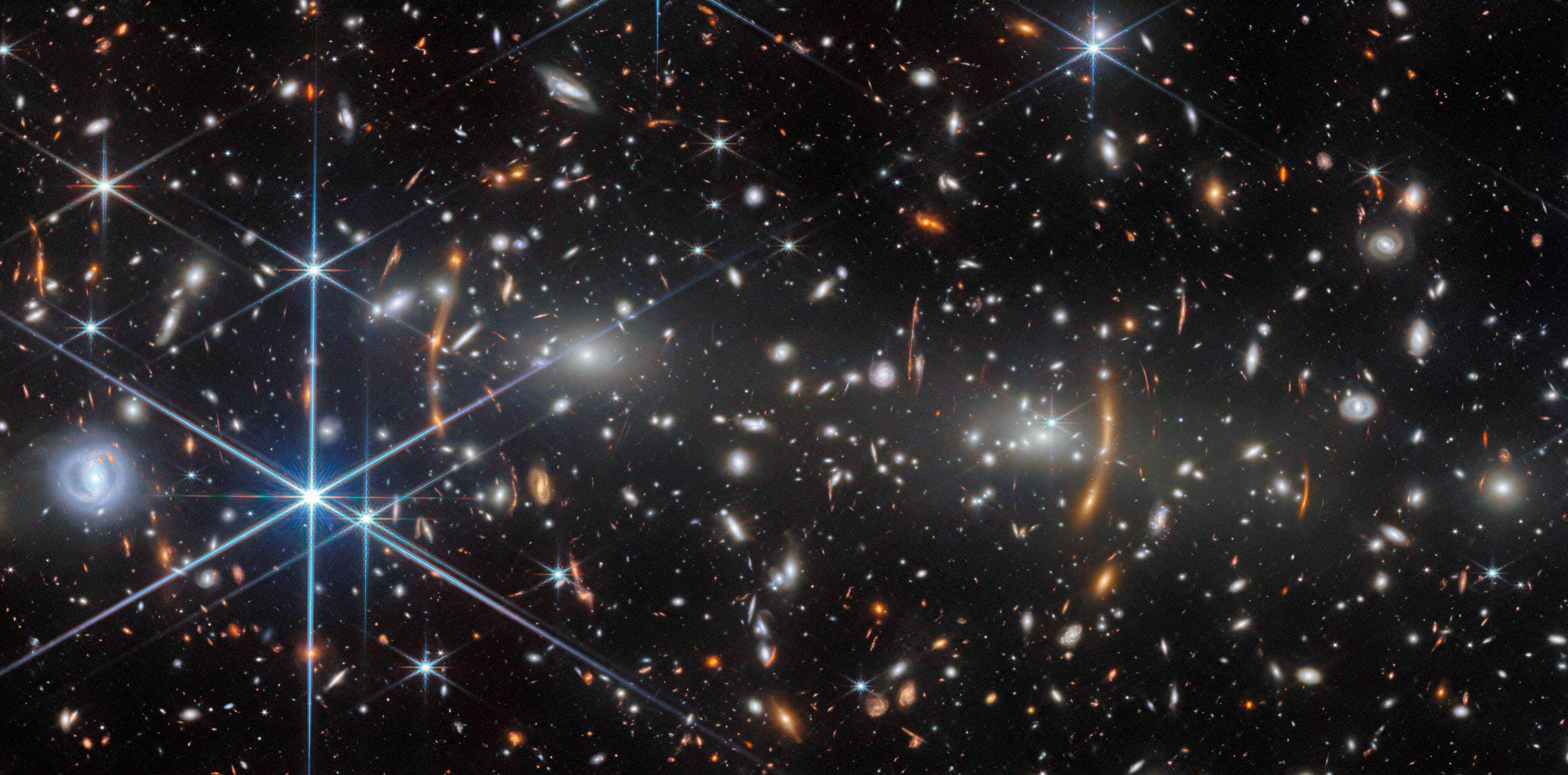
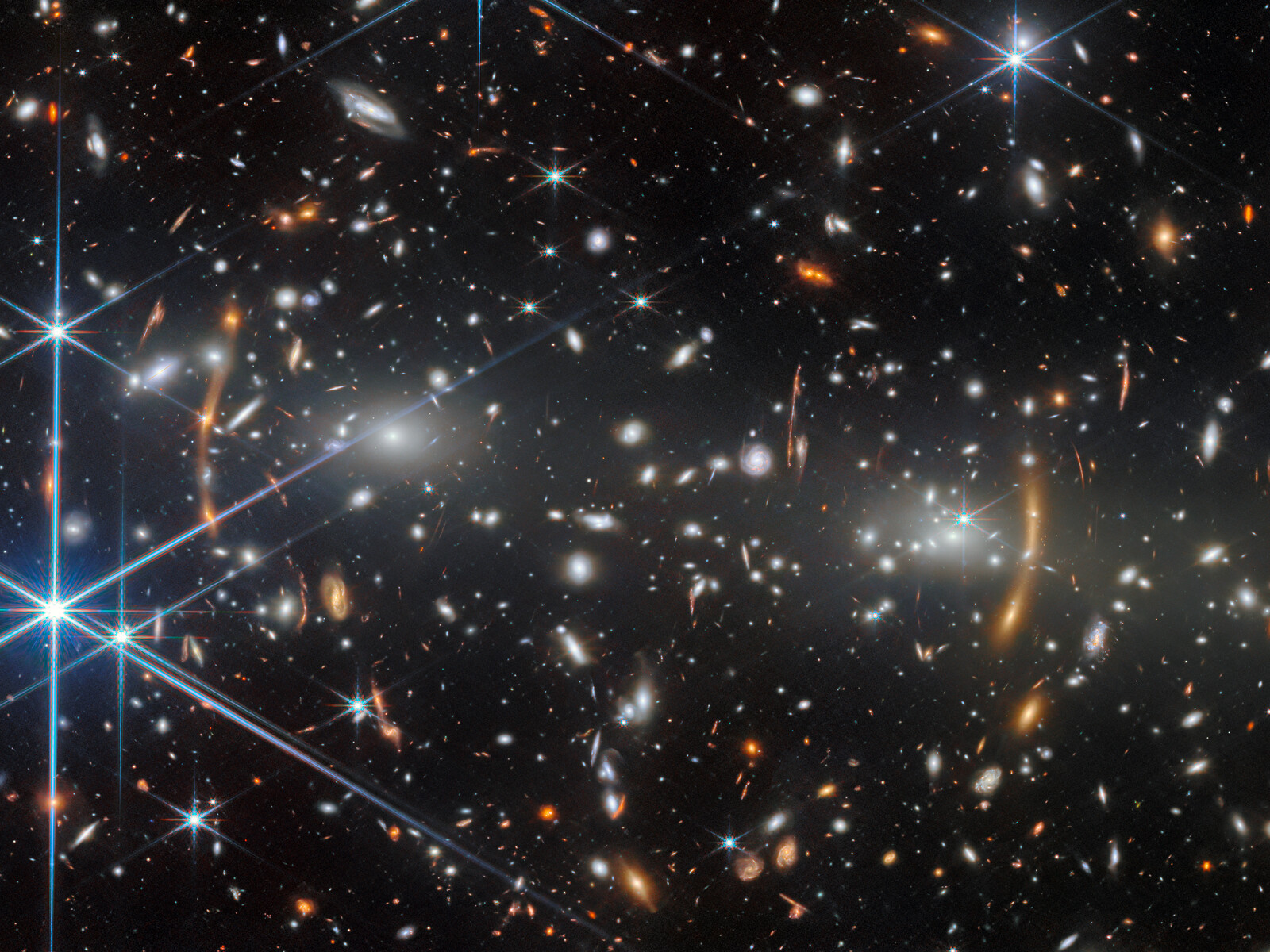
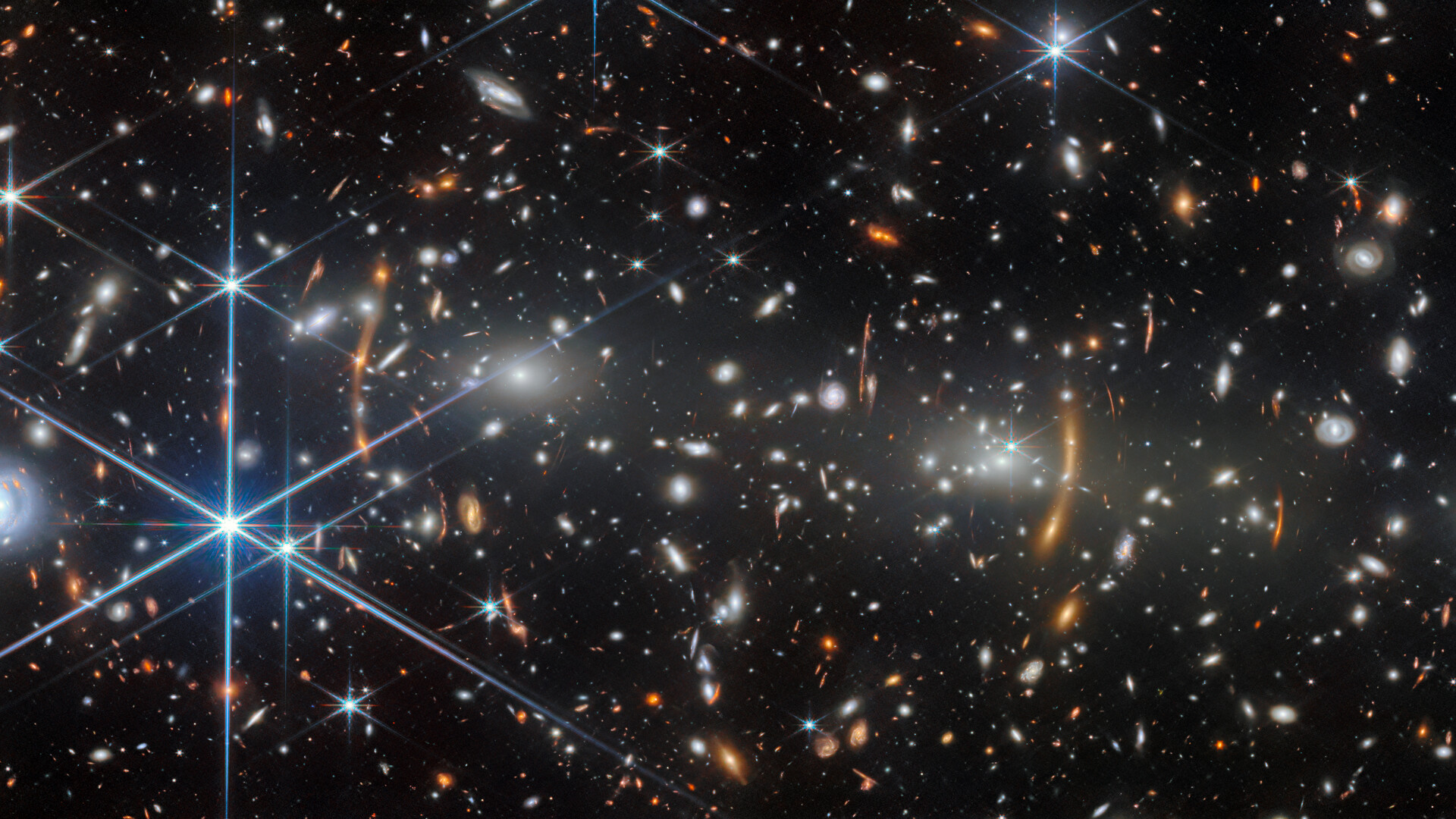
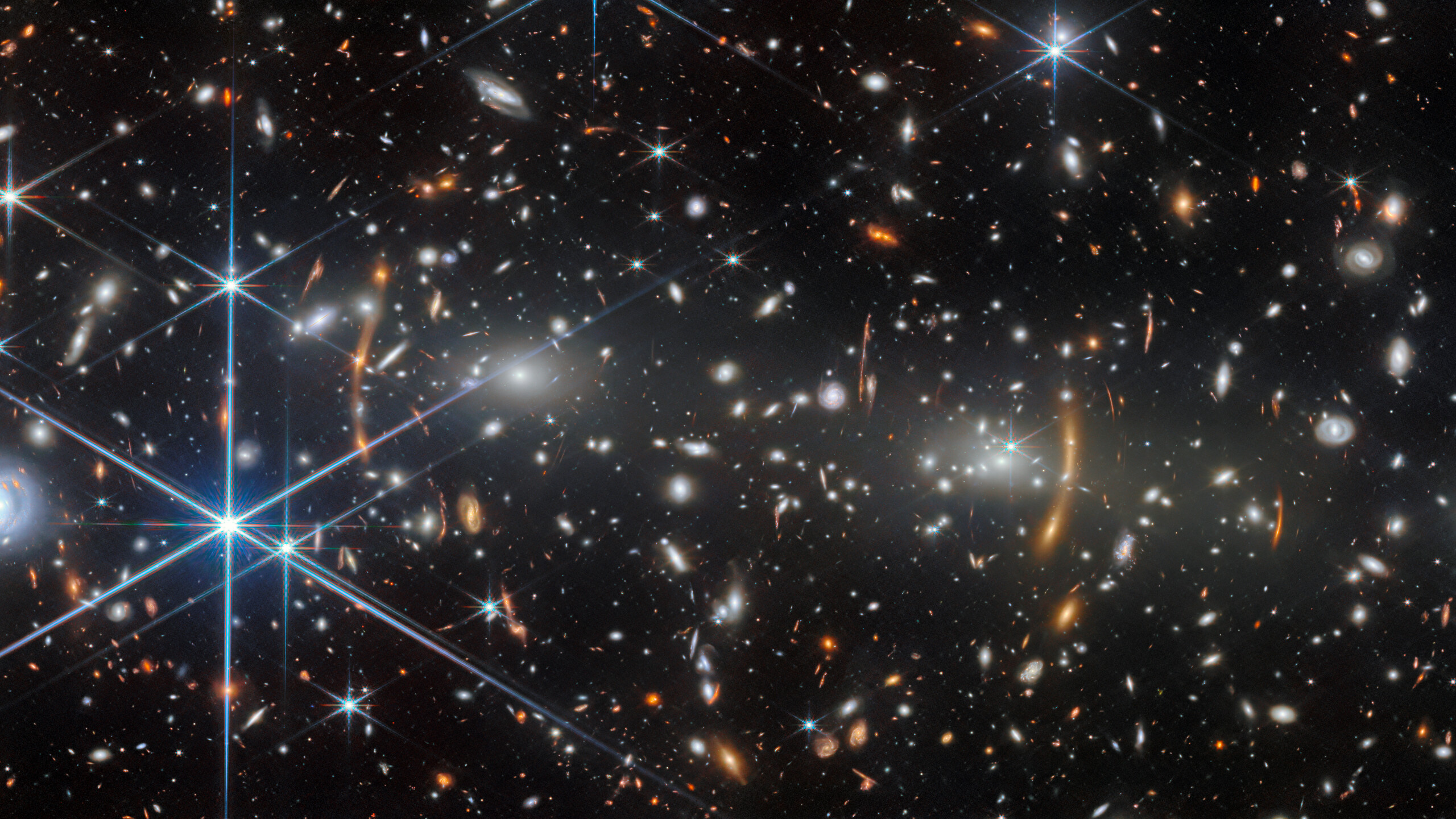
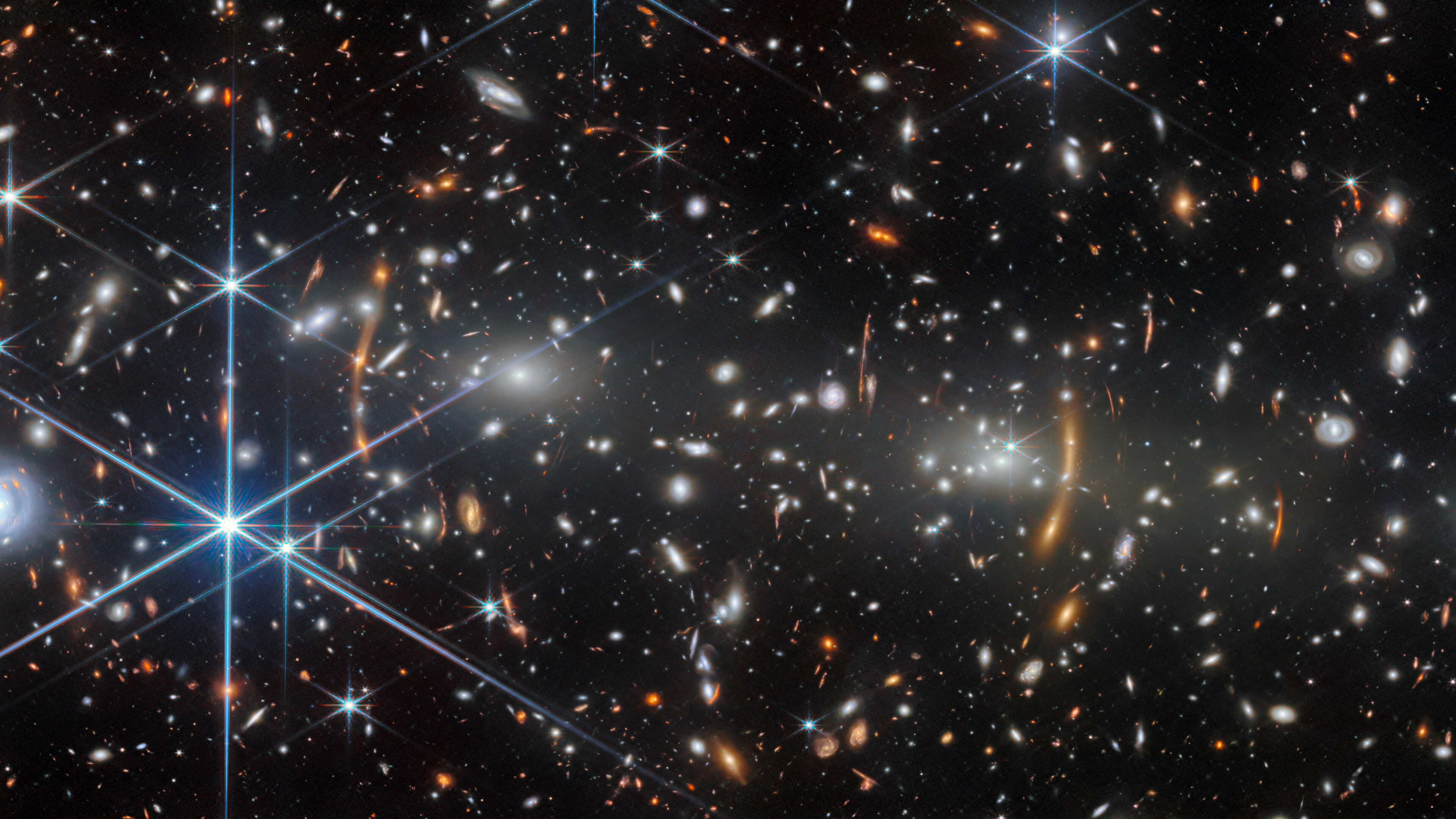
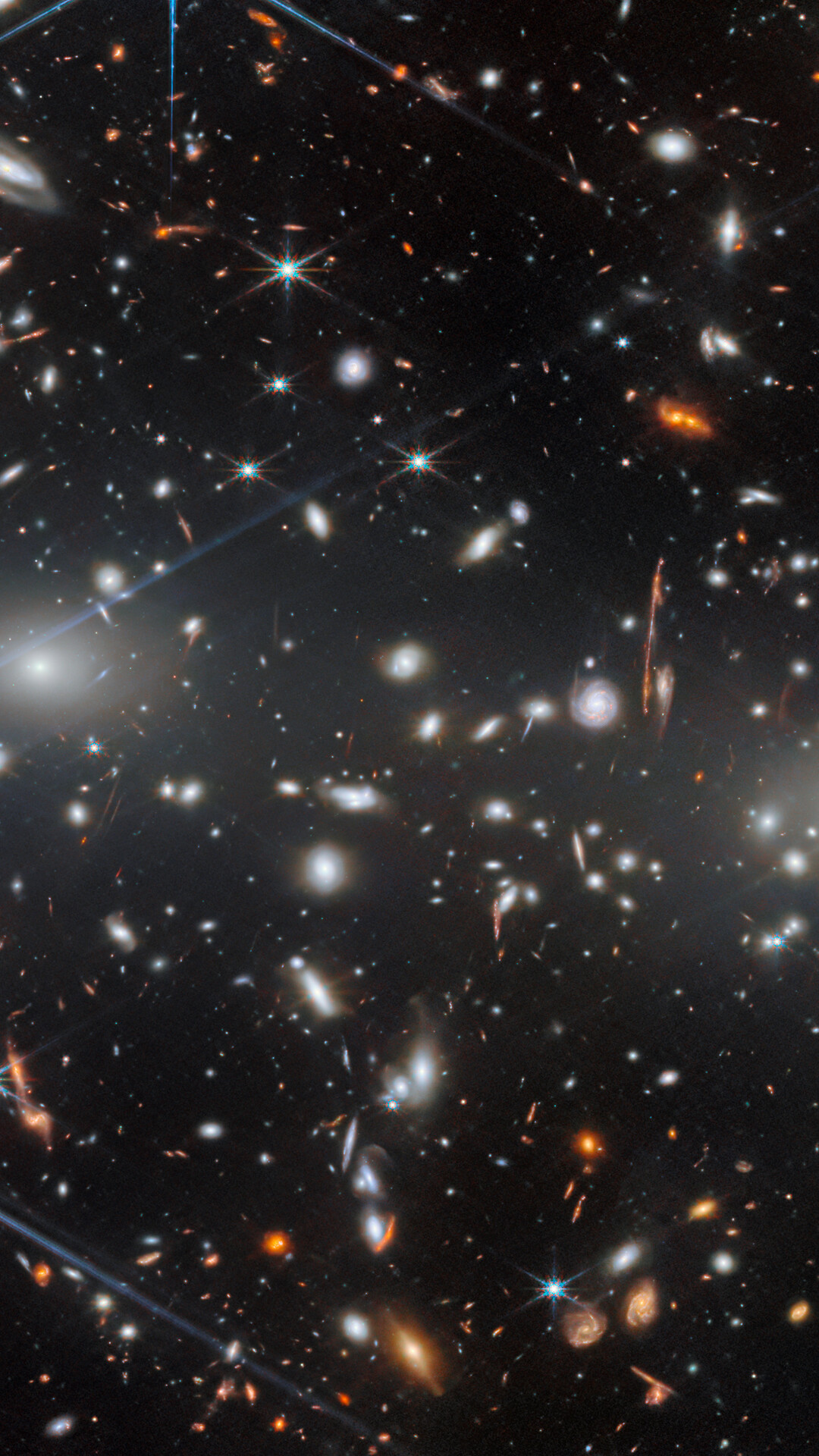
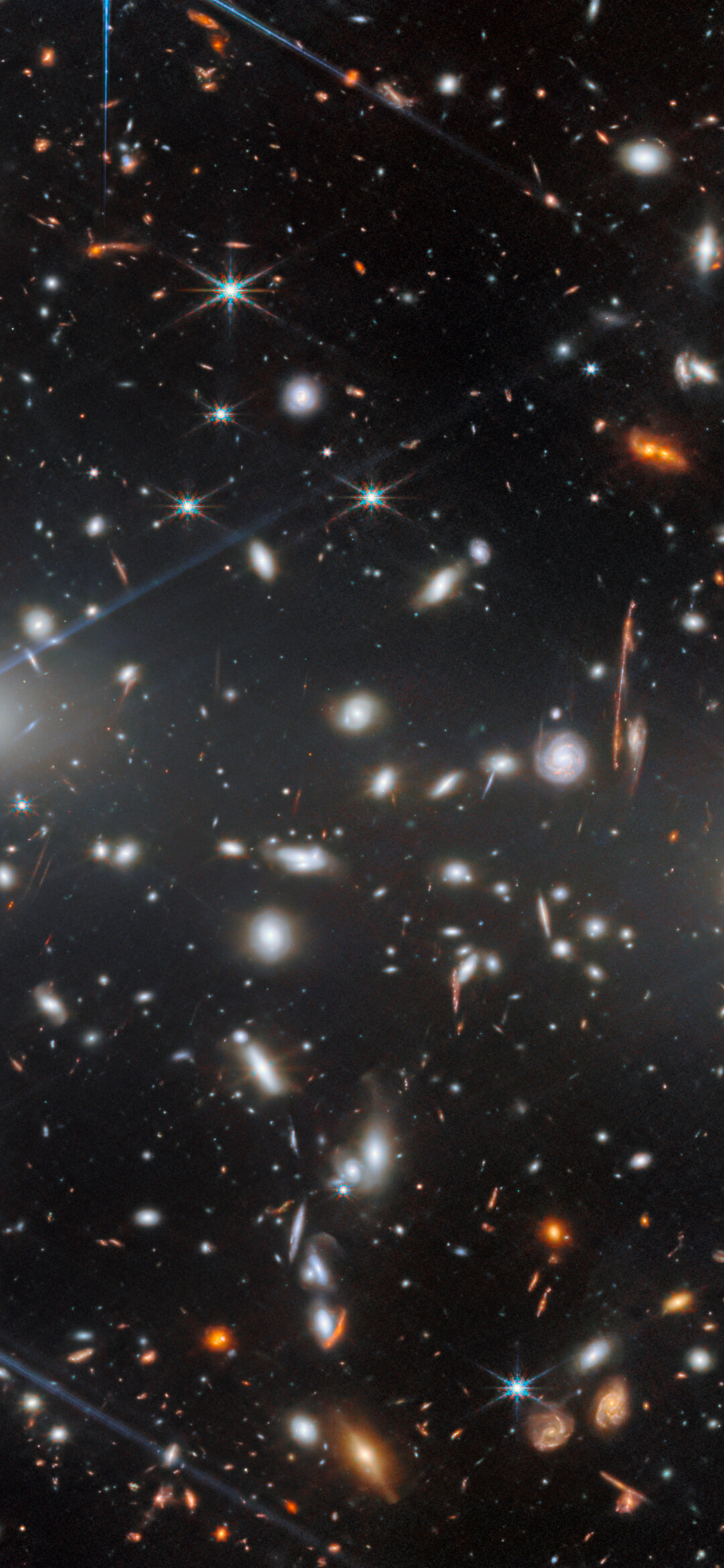
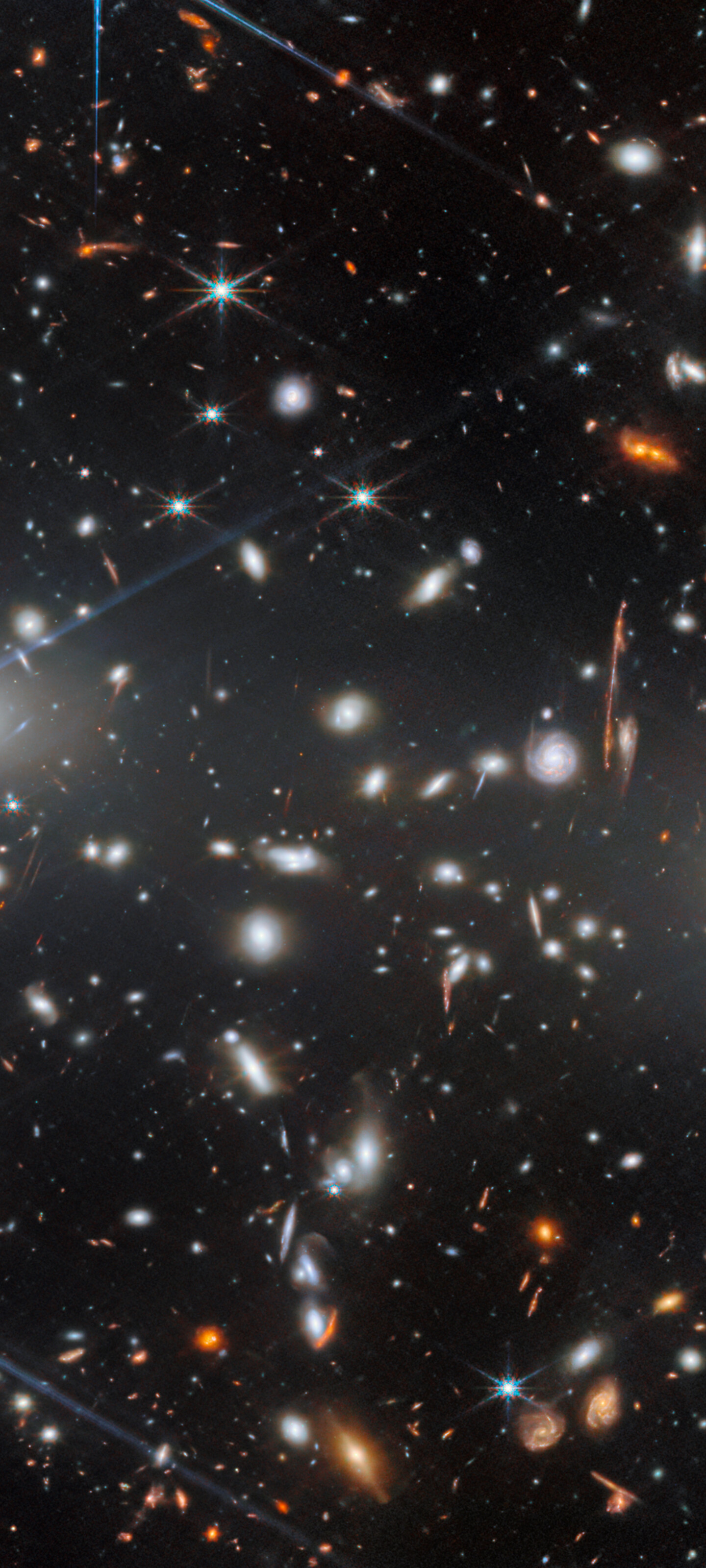
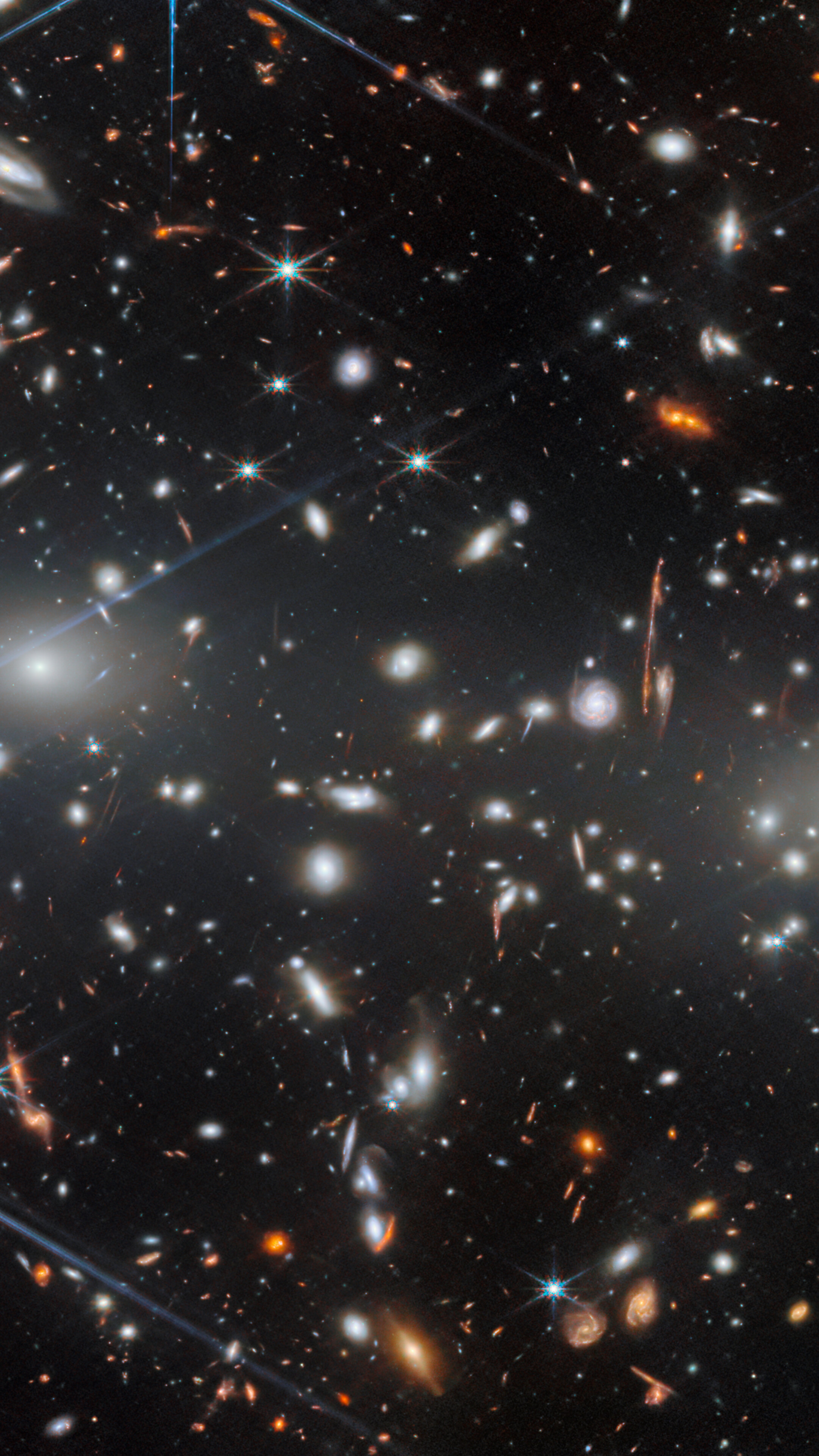
In today’s Picture of the Month from the NASA/ESA/CSA James Webb Space Telescope we are taken on a visit to a building site of significant scale. The project is a galaxy cluster named MACS J0553.4-3342, located in the constellation Columba (the Dove).
MACS J0553.4-3342 is situated at a redshift of 0.412. Redshift is a measure of how much the cluster’s light has been stretched by the expansion of the Universe over the course of its long journey to Webb’s mirrors; this unassuming number tells us that we are seeing MACS J0553.4-3342 as it was 4.4 billion years in the past. But for a galaxy cluster, this is relatively young. In fact, observations with the NASA/ESA Hubble Space Telescope and other telescopes show a cluster still in the process of being built.
MACS J0553.4-3342 is composed of two sub-clusters — roughly equal in mass — that are actively merging. The two subclusters have already slammed through each other and travelled over one million light-years apart, but they will eventually come back together again and again until they finally merge. The construction process is messy, and MACS J0553.4-3342 is filled with extremely hot gas that radiates powerful X-rays. Each subcluster is anchored on an immensely bright and massive elliptical galaxy, which are easily identifiable as the two brightest points in the centre of this scene with the largest glowing halos around them. The many smaller white elliptical galaxies are bound to one of the two subclusters by gravity, and will be incorporated into the final galaxy cluster. This image also features many foreground galaxies — spirals and dusty discs that are unrelated to MACS J0553.4-3342 — and prominent bright stars in our own Milky Way galaxy.
Even mid-way through its construction, the titanic clumps of matter swirling around in this galaxy cluster have built a device that is already very useful for us here on Earth: a gravitational lens. The extreme and concentrated mass in MACS J0553.4-3342 curves light with its gravity, similar to how a glass lens bends and focuses light. In this image you can see prominent orange, stretched-out arcs alongside each of the subclusters. These arcs are images of distant background galaxies, whose light has been warped by the galaxy cluster’s gravitational pull. The arc on the left side, three bright spots joined together, is actually three images of a single background galaxy! A forest of smaller arcs and lines are scattered across the image too; such a fantastic view appears in few other places in the Universe.
Look in the right spot, however, and this galaxy cluster turns from a distorting funhouse mirror into a precision scientific device. The gravitational lensing focuses light, magnifying objects and enhancing their brightness so if they lie in exactly the right place, background galaxies and even individual stars that would have been far too faint and distant to spot will be made visible. By carefully mapping out the mass of the cluster, researchers can reconstruct where and how strongly it distorts light from our point of view, then search for serendipitously-magnified distant objects to study. The arcs we can see in MACS J0553.4-3342 already show a few galaxies from less than a billion years after the Big Bang.
This image, taken with Webb’s Near-Infrared Camera (NIRCam), stems from a survey programme named VENUS (#6882). Astronomers aimed to create a collection of deep, high-quality images of massive galaxy clusters like MACS J0553.4-3342 across a wide range of infrared wavelengths, greatly expanding the area covered by Webb’s sensitive instruments. Researchers can then scour the clusters for distant and faint objects that have been brightened through gravitational lensing, from young galaxies and low-mass black holes to supernova explosions and individual stars. Gravitational lensing has been key to many of Webb’s most dramatic discoveries in recent years, and having many more examples of it allows us to systematically study the distant past and the evolutionary stages of the galaxies, stars and black holes we see today.
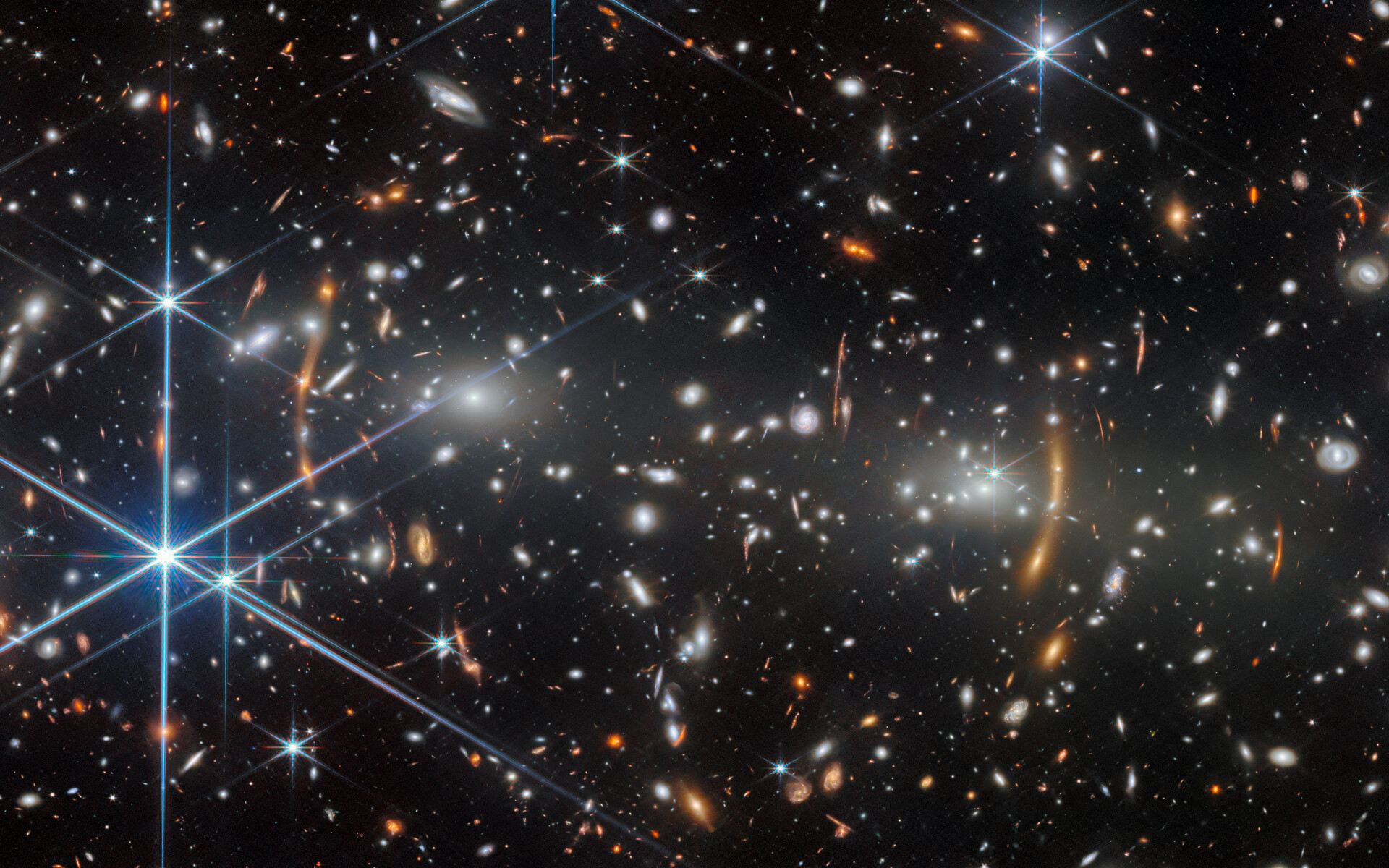
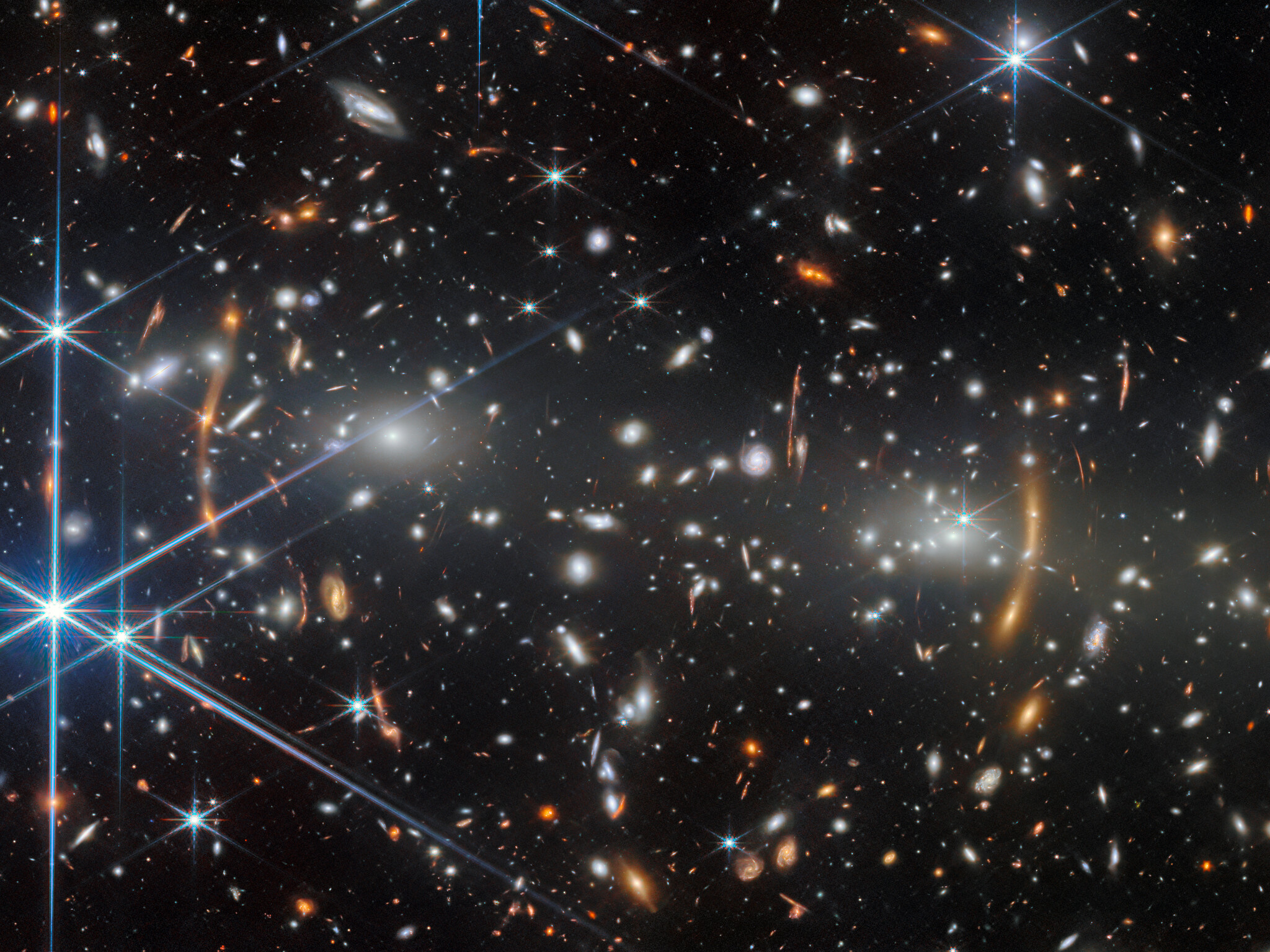
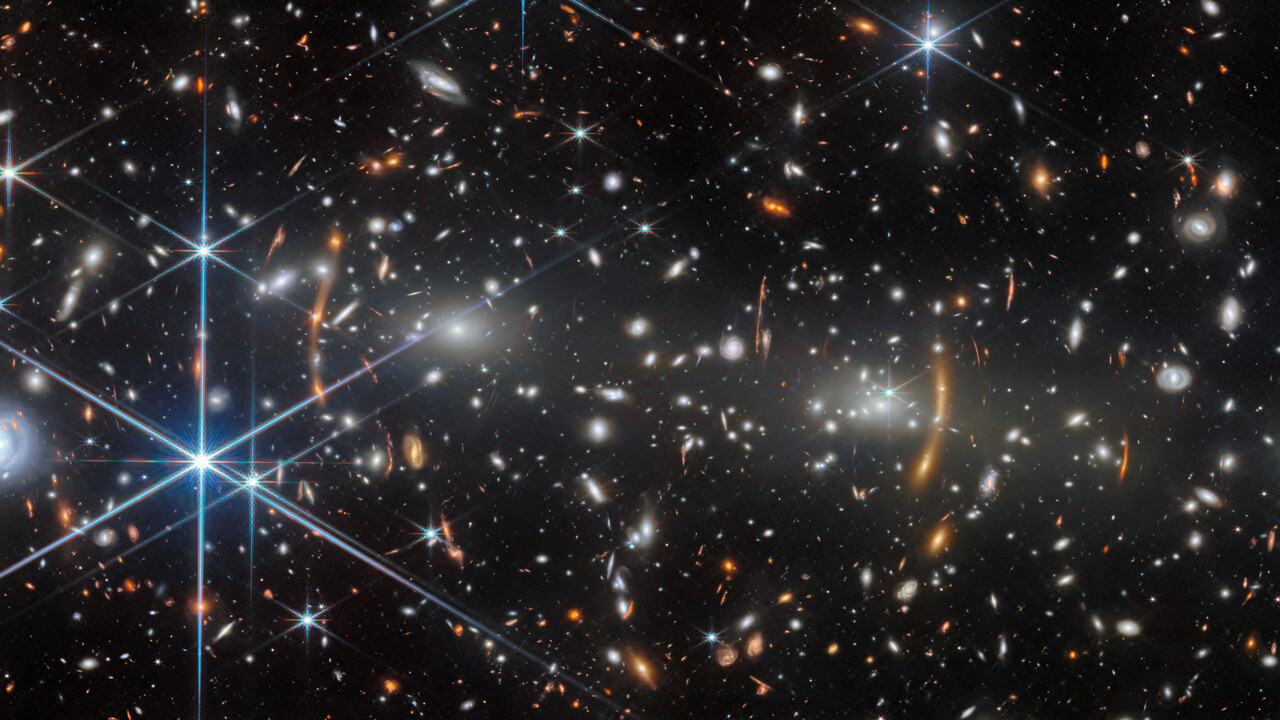
[Image Description: A galaxy cluster in deep space. It is filled with elliptical galaxies: small, bright white glowing ovals. The two largest elliptical galaxies, left and right of center, are bright cores that radiate light. Unrelated, distant galaxies are scattered around as red smudges and dots.Many of these are stretched out into red arcs and lines by the galaxy cluster’s strong gravity, creating multiple images in places. Numerous spiral galaxies and bright stars appear in the foreground.]
Links
Credit:ESA/Webb, NASA & CSA, S. Fujimoto
About the Image
| Id: | potm2606a | |
|---|---|---|
| Type: | Observation | |
| Release date: | 3 July 2026, 10:00 | |
| Size: | 8792 x 4346 px | |