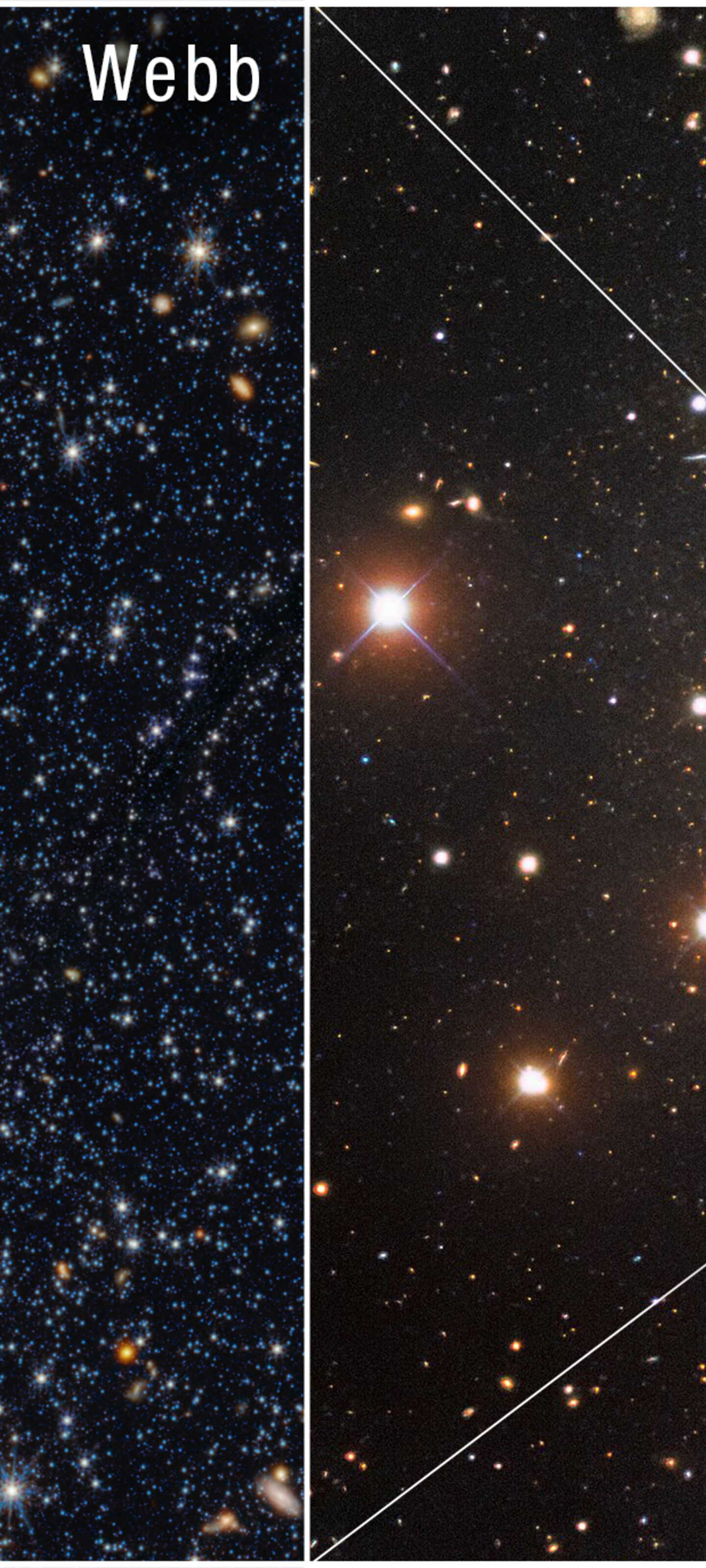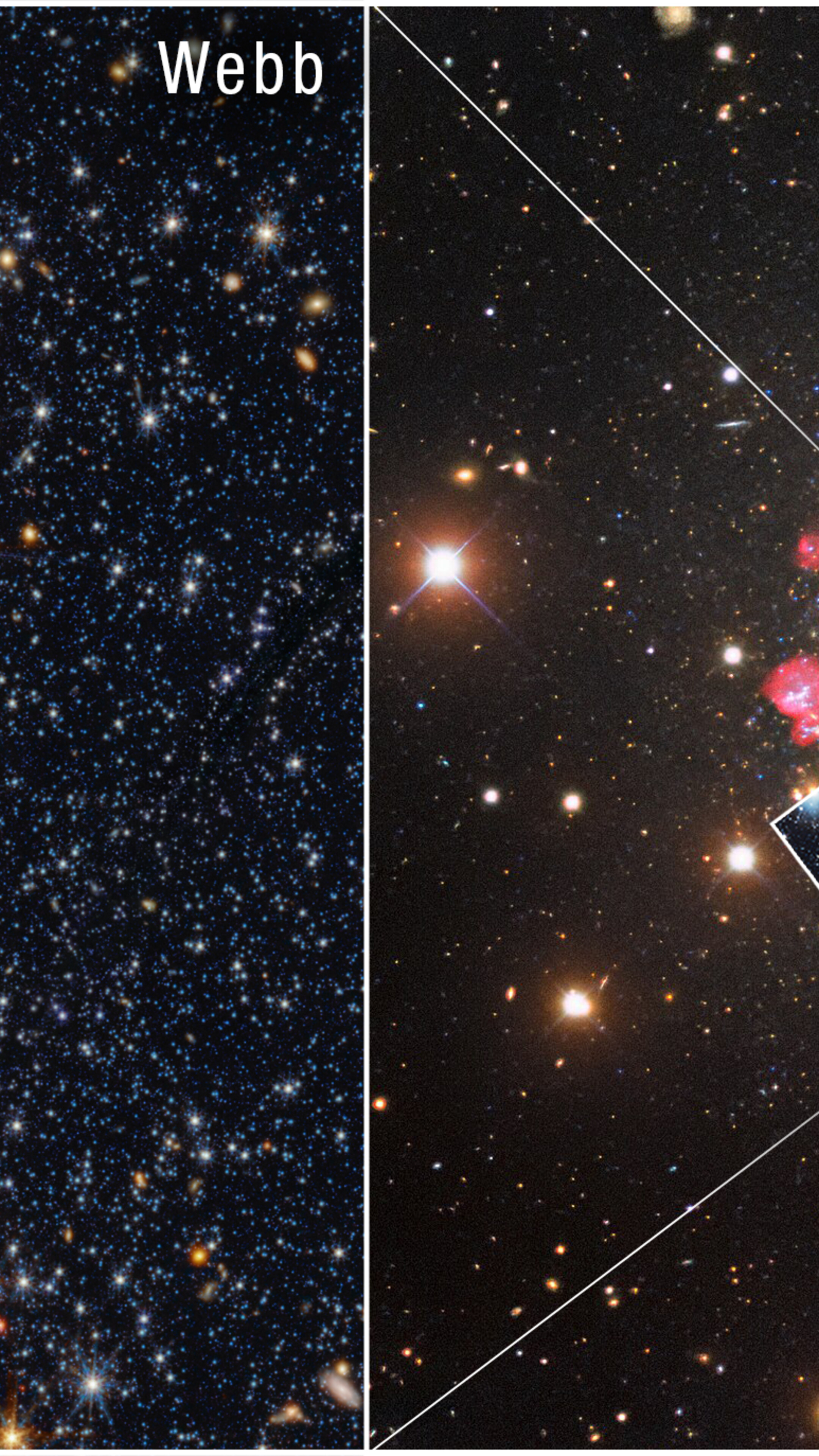

Sextans A PAHs pull-out (NIRCam and MIRI image)
Using the NASA/ESA/CSA James Webb Space Telescope, astronomers have spotted two rare kinds of dust in the dwarf galaxy Sextans A, one of the most chemically primitive galaxies near the Milky Way. The finding of metallic iron dust and silicon carbide (SiC) produced by aging stars, along with tiny clumps of carbon-based molecules, shows that even when the Universe had only a fraction of today’s heavy elements, stars and the interstellar medium could still forge solid dust grains. This research with Webb is reshaping ideas about how early galaxies evolved and developed the building blocks for planets.
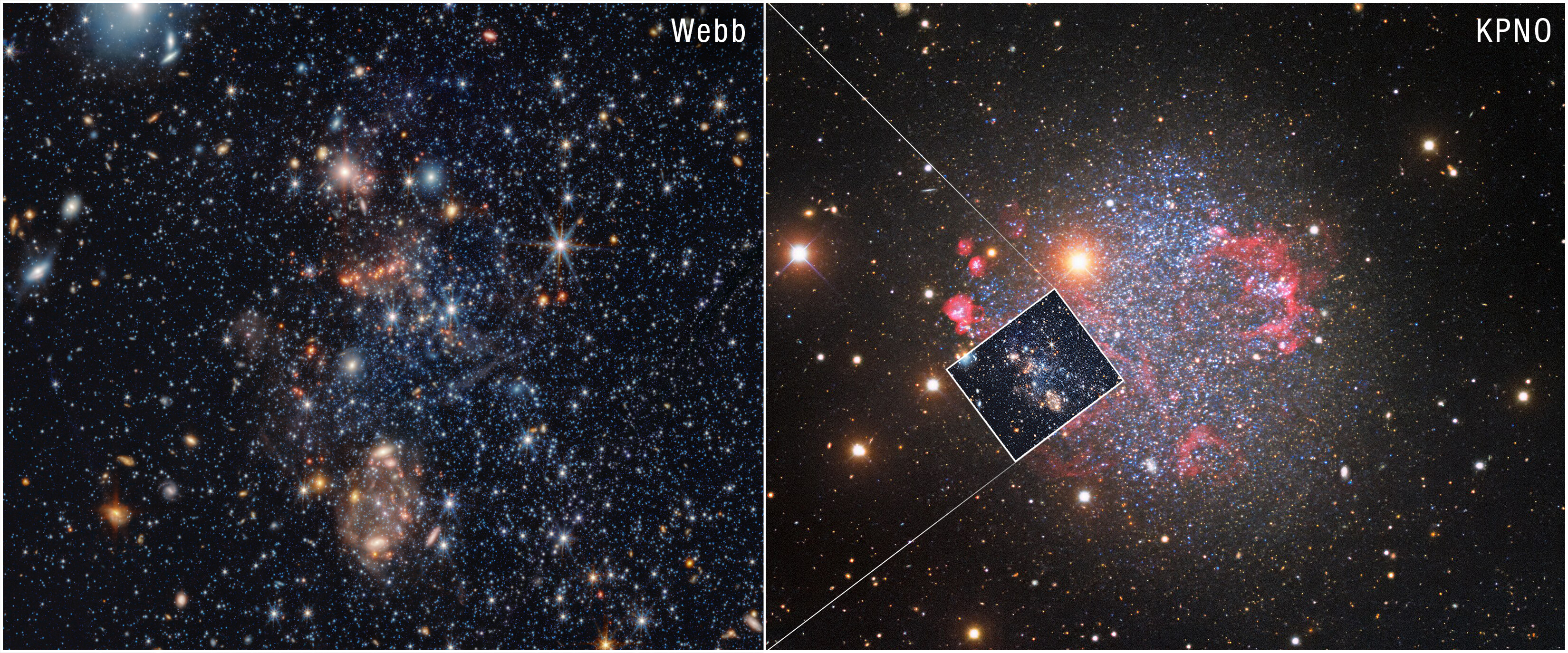
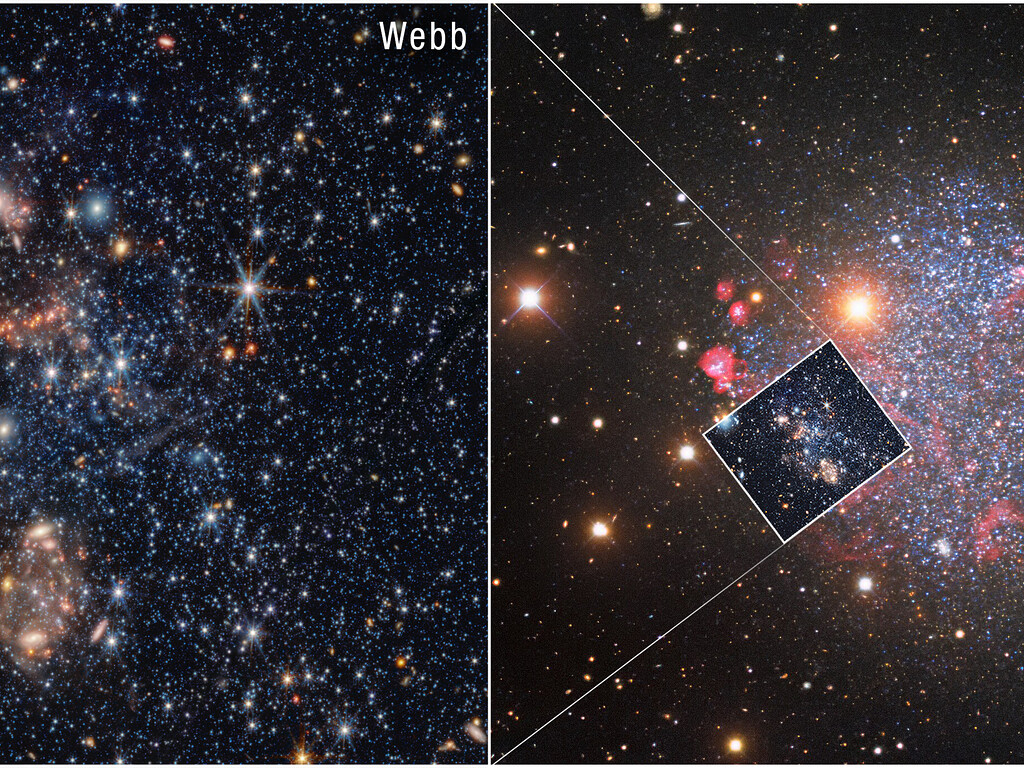
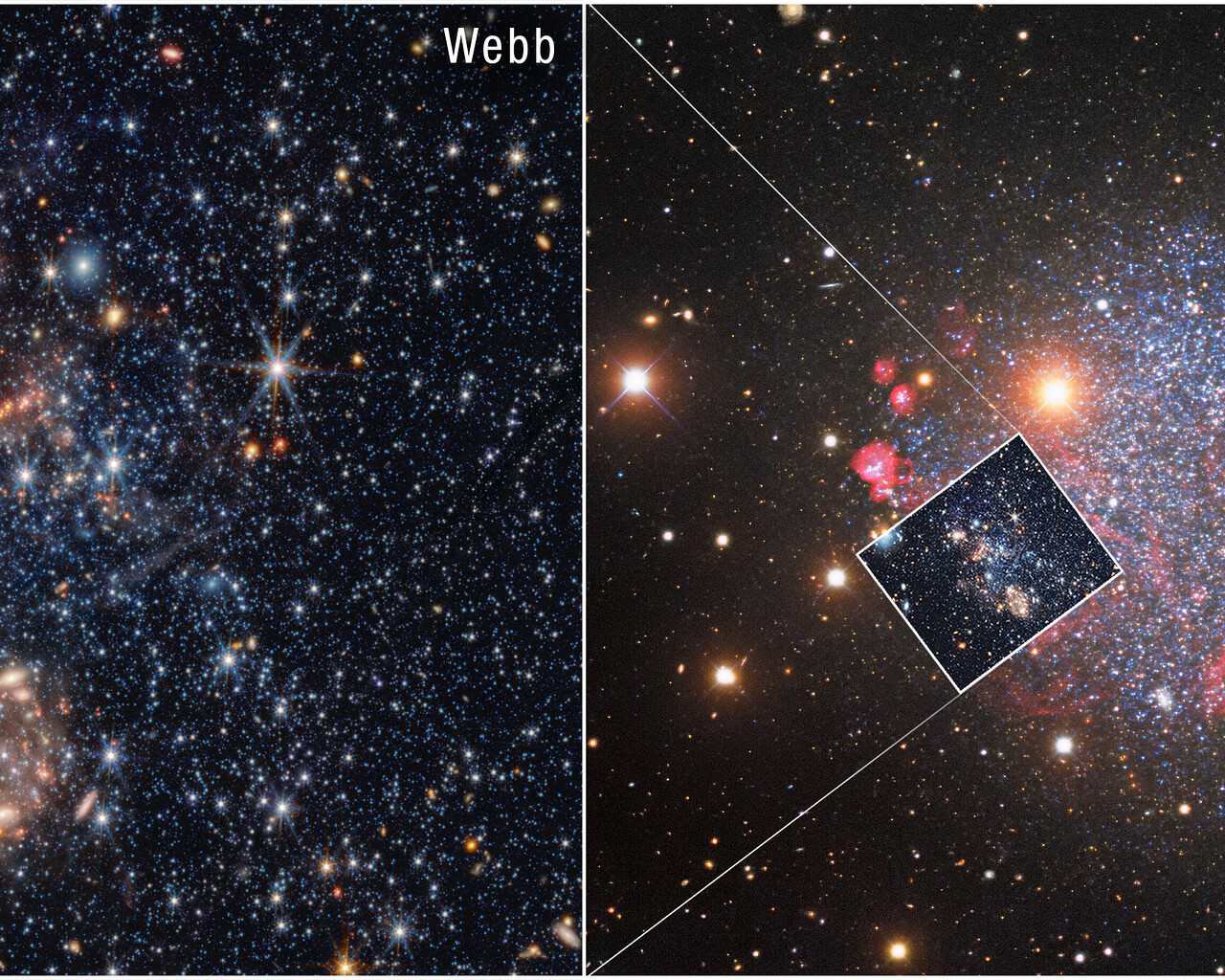
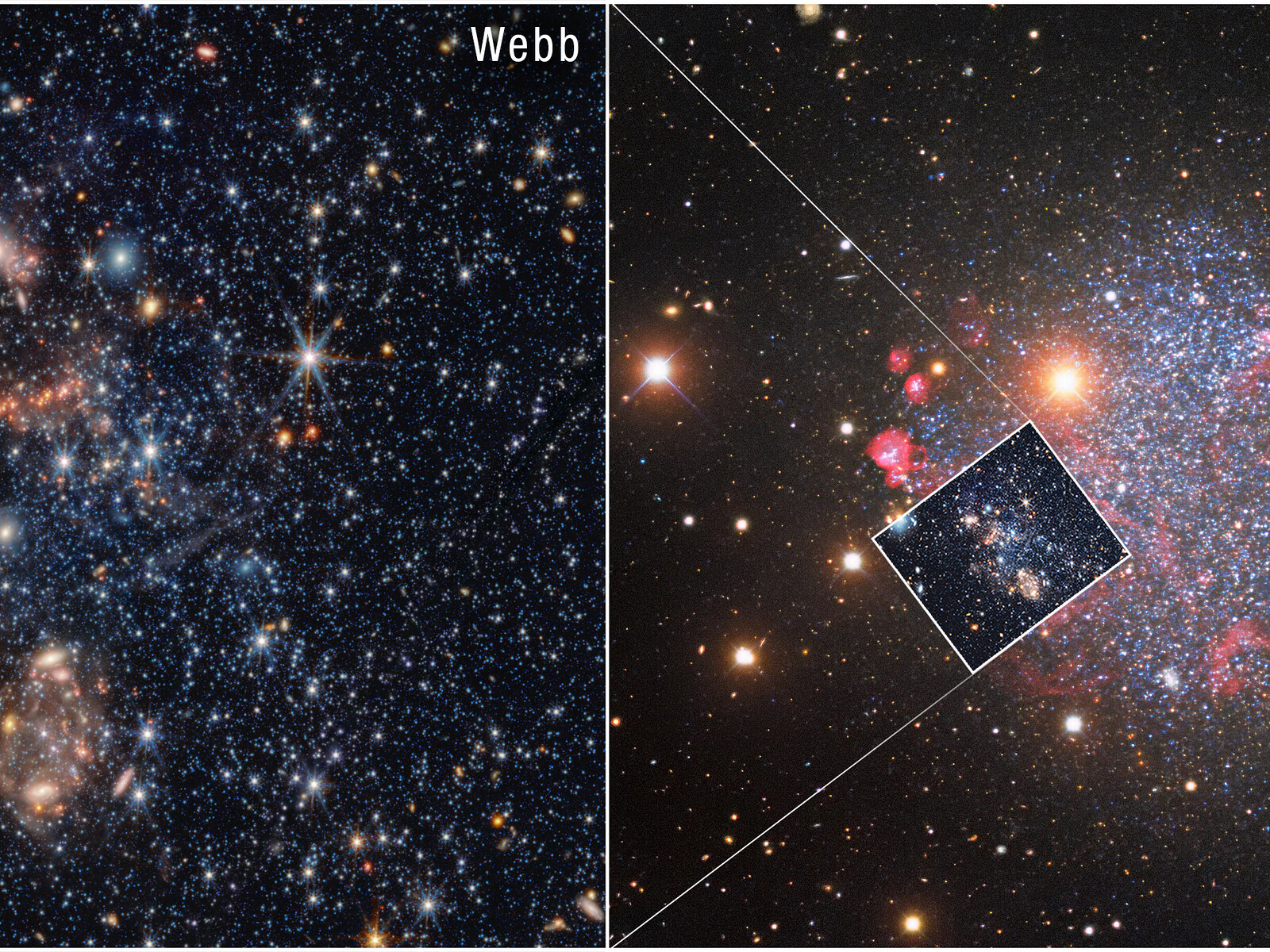
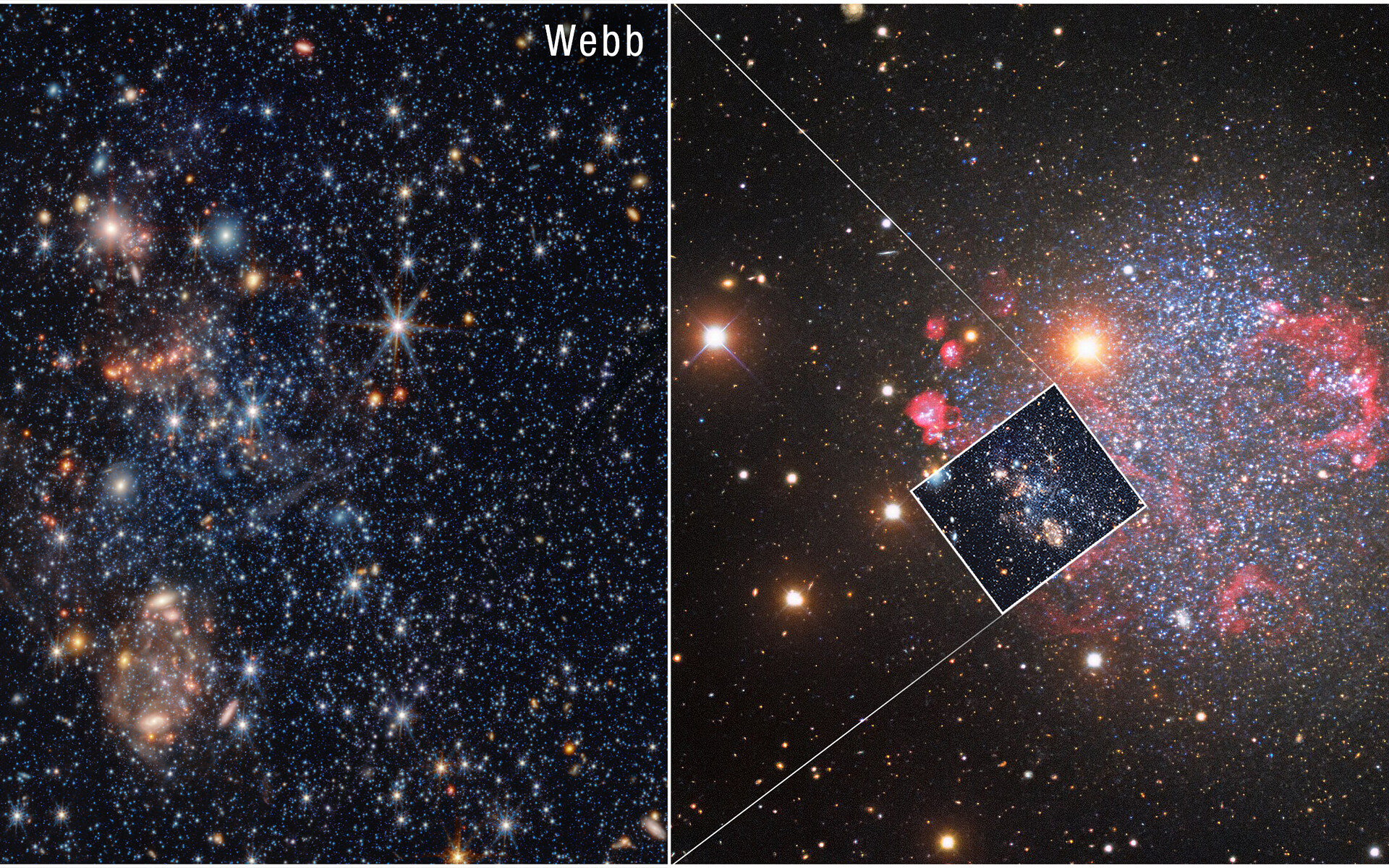
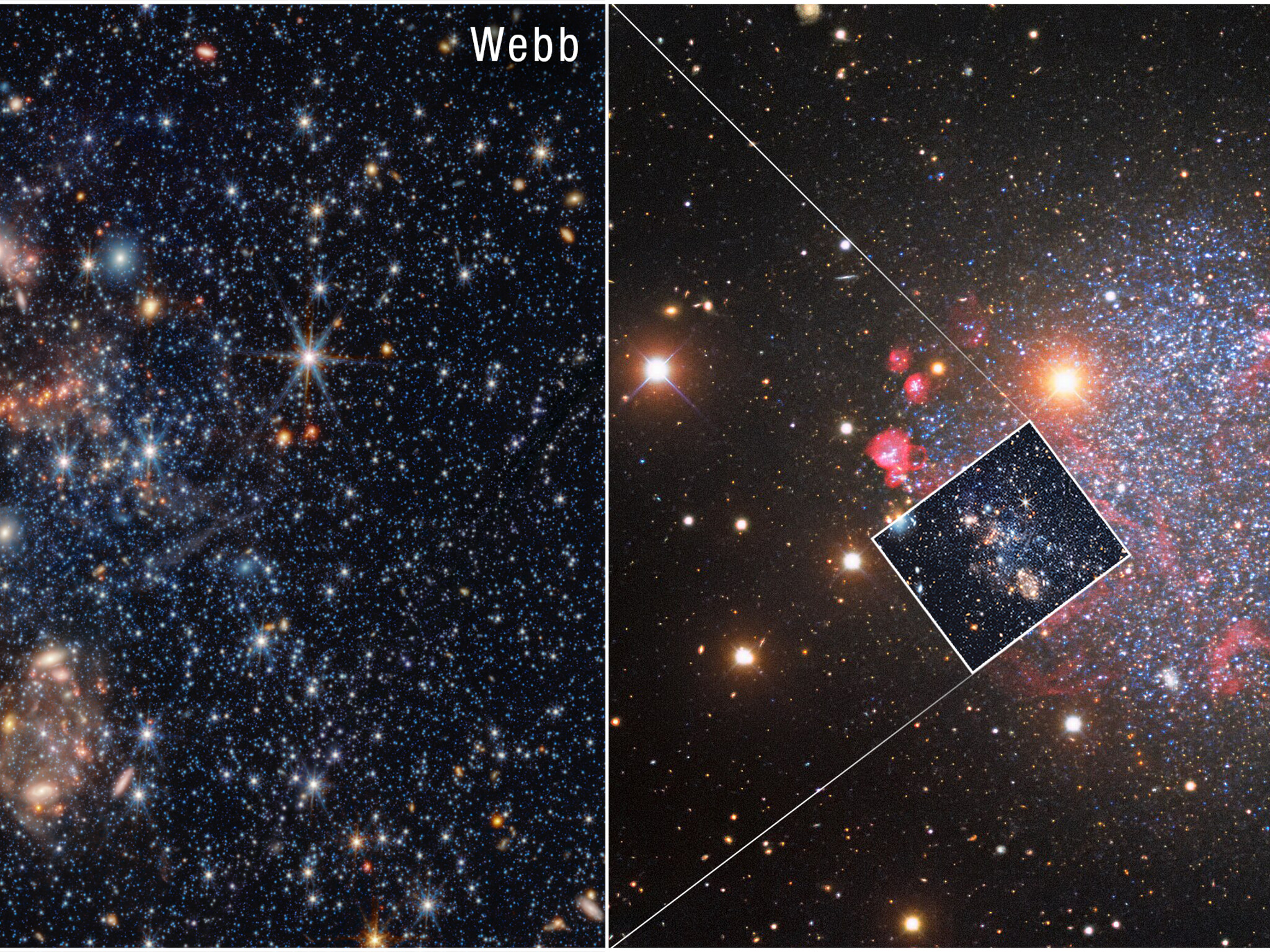
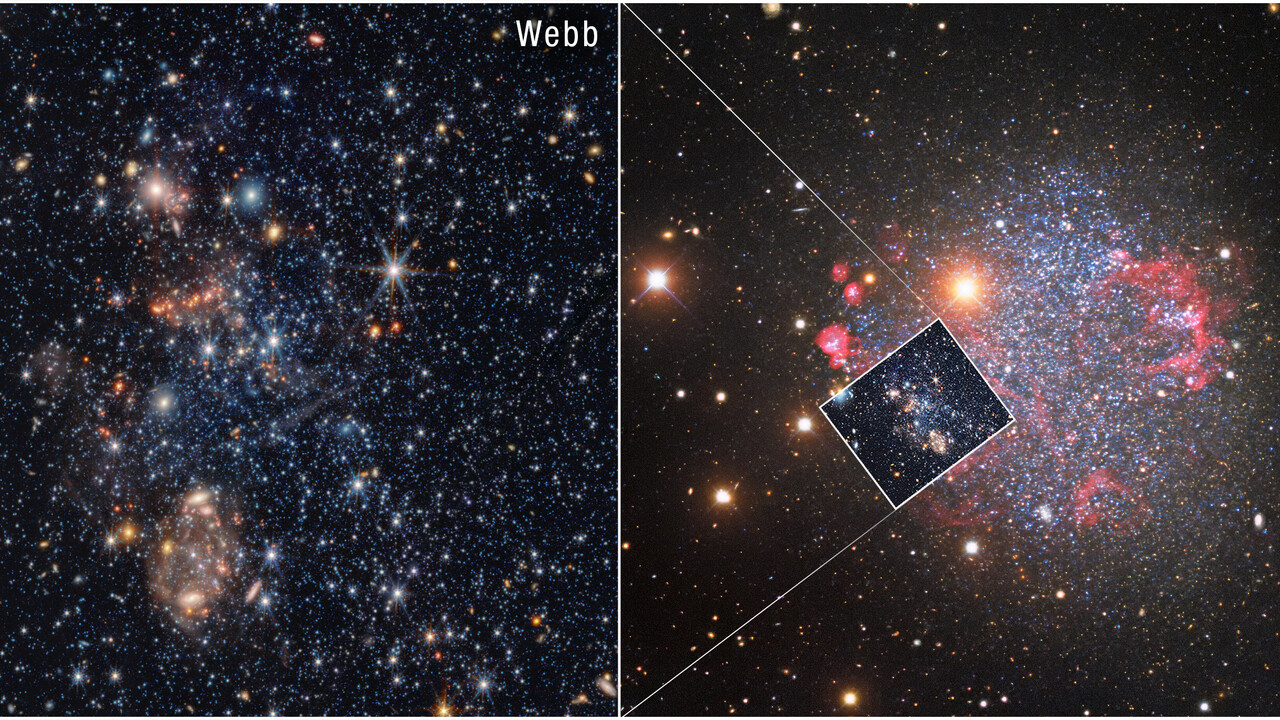
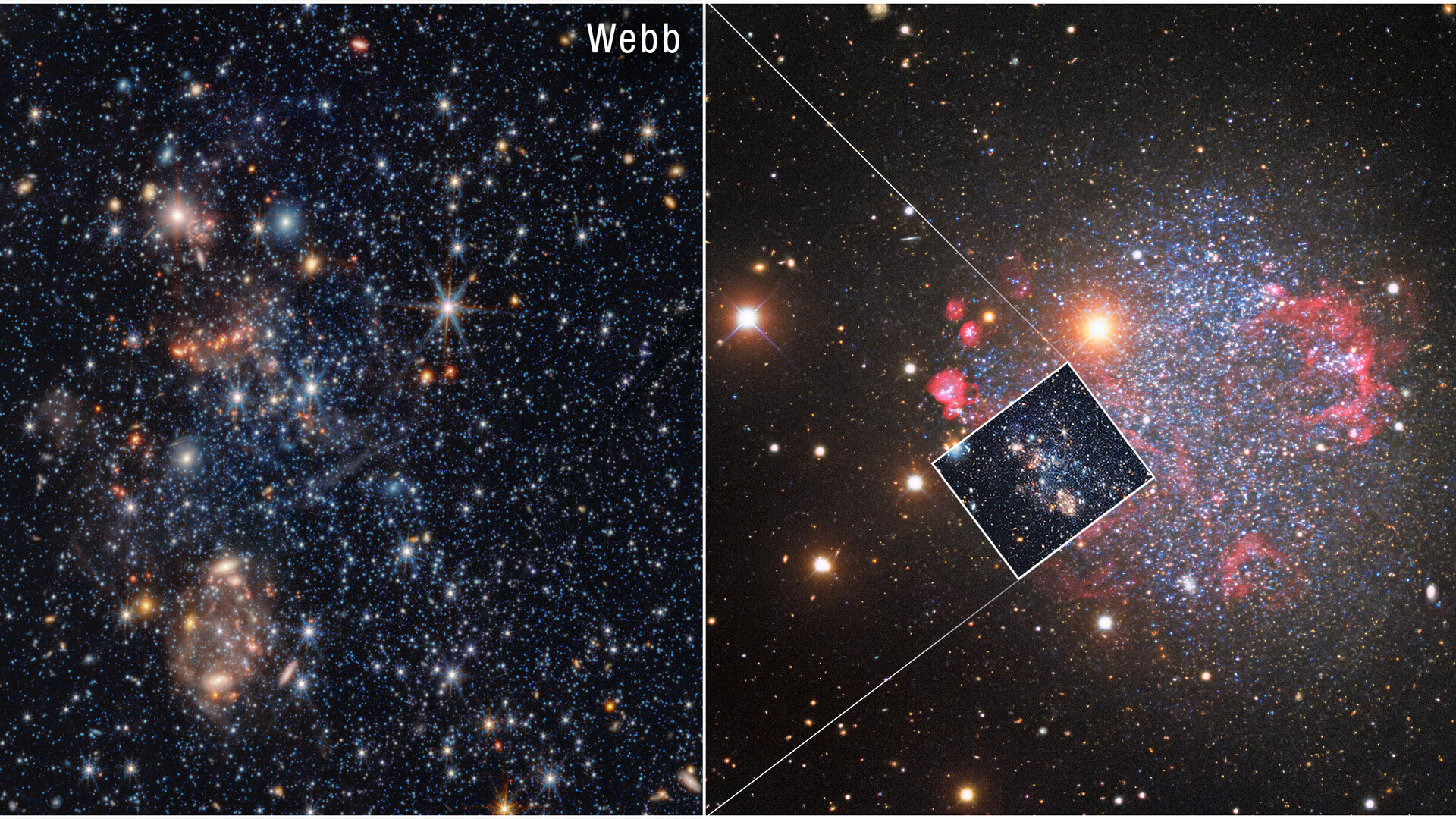
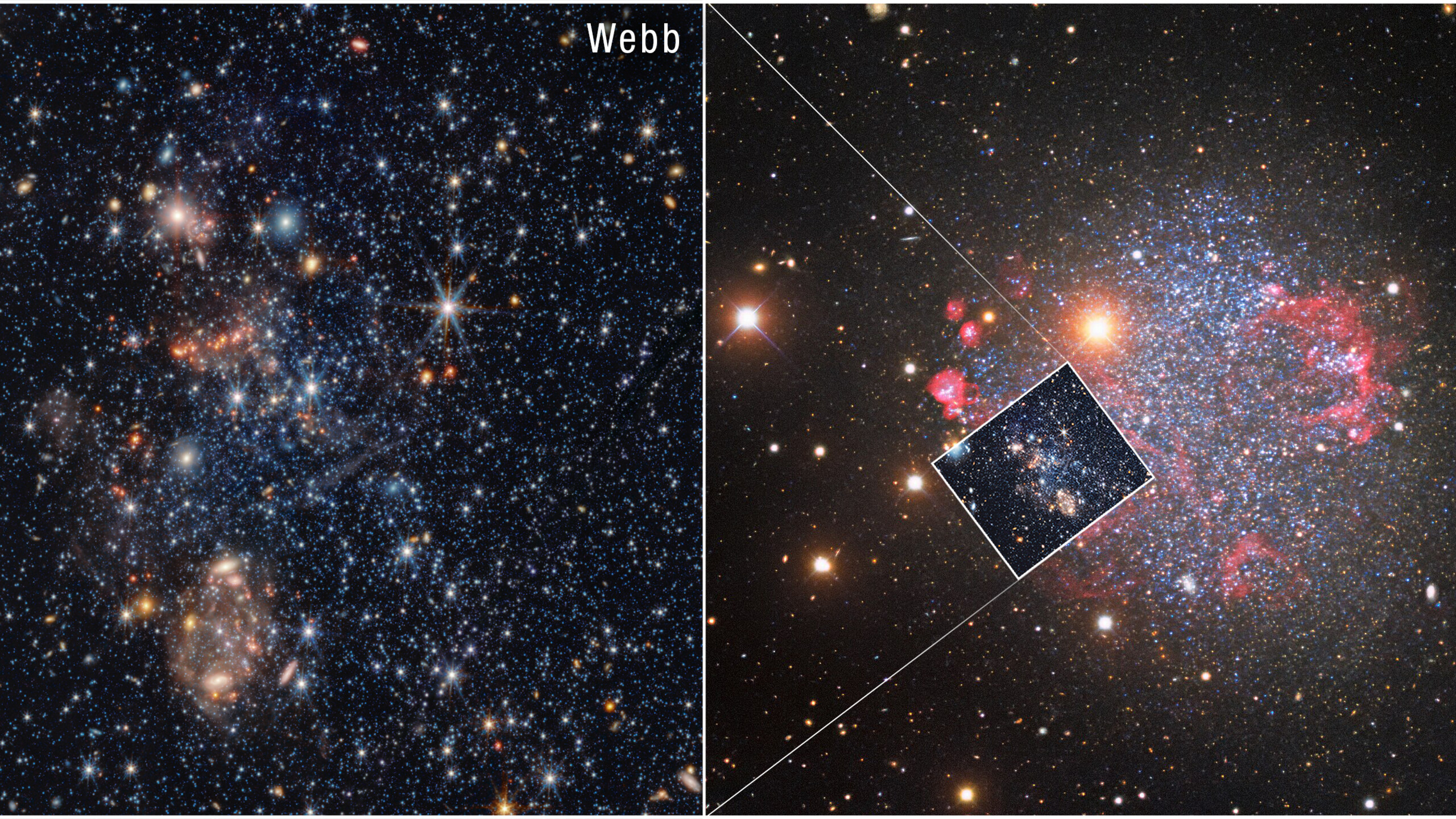
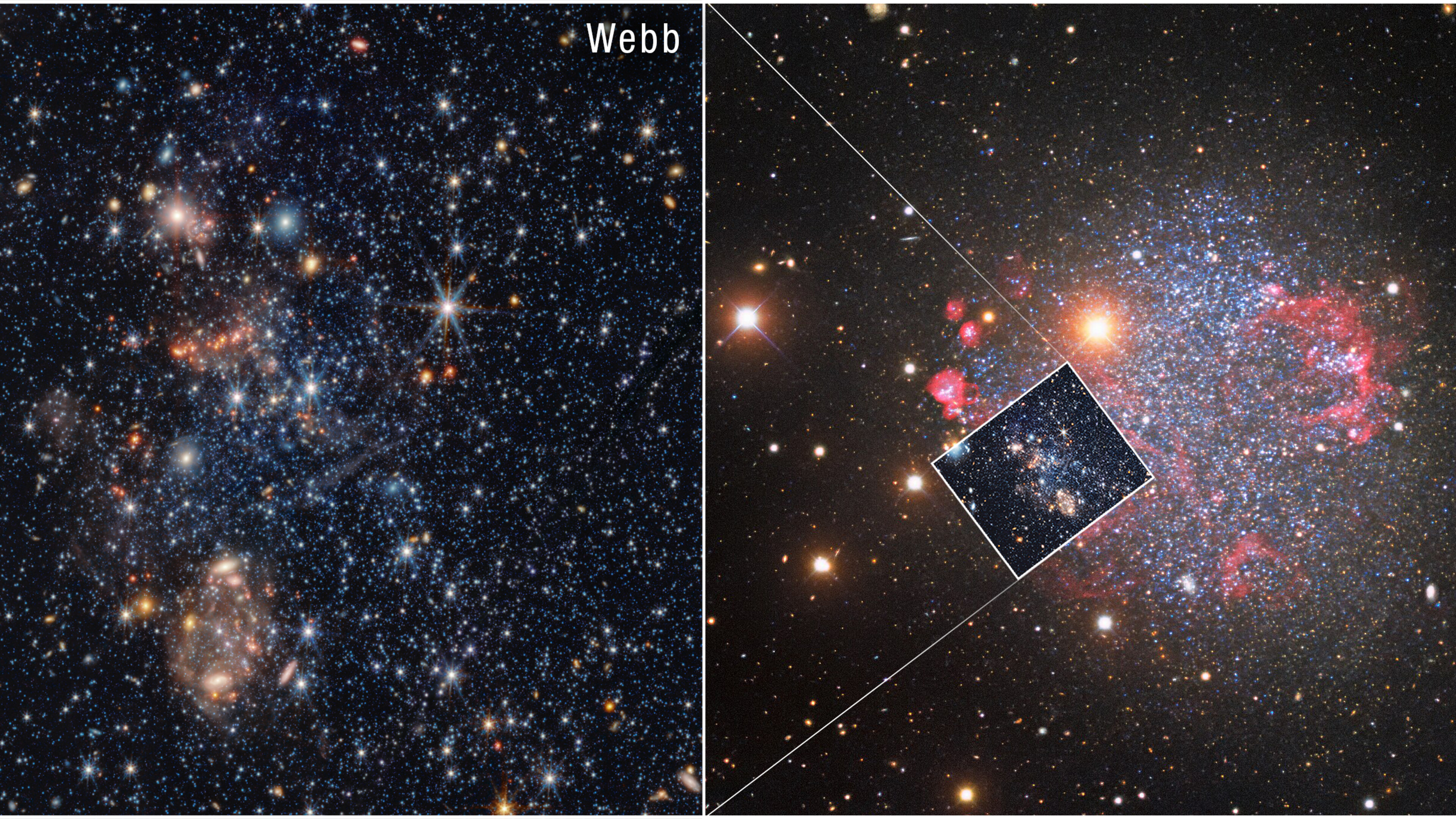
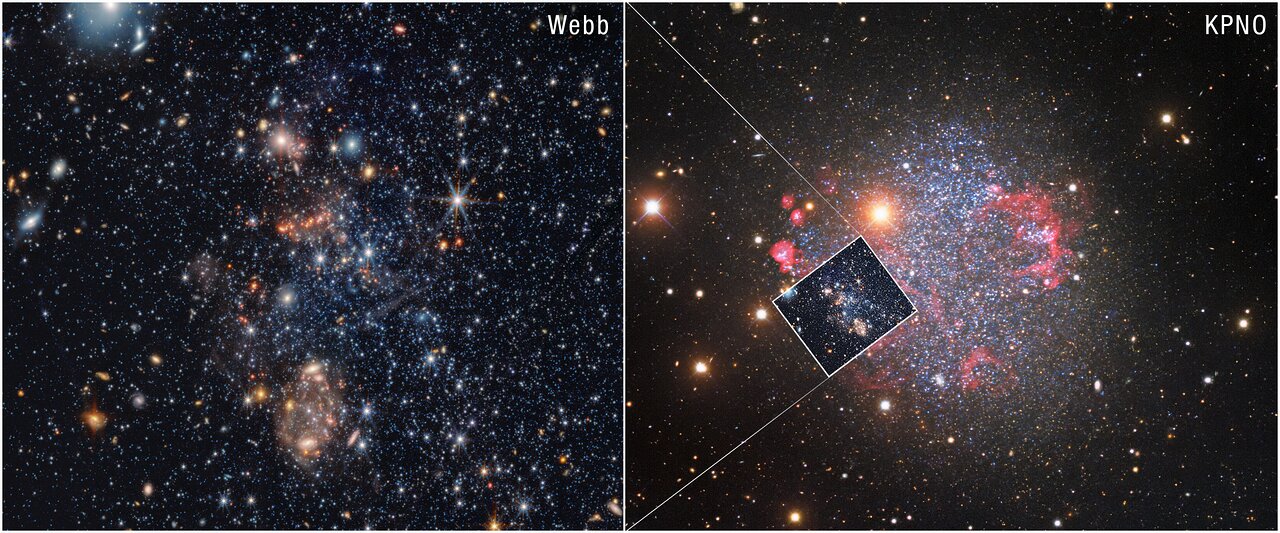
This Webb image of a portion of the nearby Sextans A galaxy is put into context using a ground-based image from the Nicholas U. Mayall 4-meter Telescope at Kitt Peak National Observatory. The image from Webb shows the galaxy in both near- and mid-infrared light, while Kitt Peak captures optical, or visible, light.
Sextans A is an irregular dwarf galaxy, and is only 4 million light-years away, which is close to the Milky Way in relative terms. It’s also a fairly small galaxy, measuring 5,000 light-years across (the Milky Way is about 100,000 light-years across). Sextans A is chemically primitive, meaning it has a very low content of metals heavier than hydrogen and helium.
The Webb image on the left was created with Webb data from proposal: 2391 (PI: J. Roman-Duval). More information about this result can be found here.
[Image description: Two panels showing different views of a small galaxy. The left panel, labeled Webb, shows a region of space filled with stars and small clumps of glowing orange and tan dust. The right panel is labeled KPNO. This image shows stars on the black background of space, with a higher concentration of them in a globe at the center. On the edges of this circular globe, there are puffs of pink gas. A small portion of the galaxy in the right panel is outlined with a white box, and the image from the left panel appears in that box at a 45-degree angle. Lines extend from the corner of the box to the panel at the left.]
Credit:STScI, NASA, ESA, CSA, KPNO, NSF's NOIRLab, AURA, E. Tarantino (STScI), P. Massey (Lowell Obs.), G. Jacoby (NSF, AURA), C. Smith (NSF, AURA), Image Processing: A. Pagan (STScI), T. A. Rector (UAA), M. Zamani (NSF's NOIRLab), D. De Martin (NSF's NOIRLab)
About the Image
| Id: | SextansA-PAHs2 | |
|---|---|---|
| Type: | Collage | |
| Release date: | 6 January 2026, 18:15 | |
| Size: | 3299 x 1374 px | |