
About the Object
| Name: | NGC 4485, NGC 4490 | |
|---|---|---|
| Distance: |
24 million light years | |
| Constellation: | Canes Venatici | |
| Category: | Galaxies MIRI NIRCam Picture of the Month | |
Coordinates
| Position (RA): | 12 30 33.39 |
|---|---|
| Position (Dec): | 41° 39' 43.51" |
| Field of view: | 5.86 x 2.22 arcminutes |
| Orientation: | North is 67.3° right of vertical |

Colours & filters
| Band | Wavelength | Telescope |
|---|---|---|
| Infrared | 1.15 μm | James Webb Space Telescope NIRCam |
| Infrared | 1.5 μm | James Webb Space Telescope NIRCam |
|
Optical
H-alpha + NII | 657 nm | Hubble Space Telescope WFC3 |
|
Infrared
P-alpha | 1.87 μm | James Webb Space Telescope NIRCam |
| Infrared | 3.0 μm | James Webb Space Telescope NIRCam |
| Infrared | 2.0 μm | James Webb Space Telescope NIRCam |
|
Infrared
PAH | 3.35 μm | James Webb Space Telescope NIRCam |
|
Infrared
Br-alpha | 4.05 μm | James Webb Space Telescope NIRCam |
| Infrared | 4.44 μm | James Webb Space Telescope NIRCam |
| Infrared | 5.6 μm | James Webb Space Telescope MIRI |
|
Infrared
PAH | 7.7 μm | James Webb Space Telescope MIRI |
A dance of dwarf galaxies
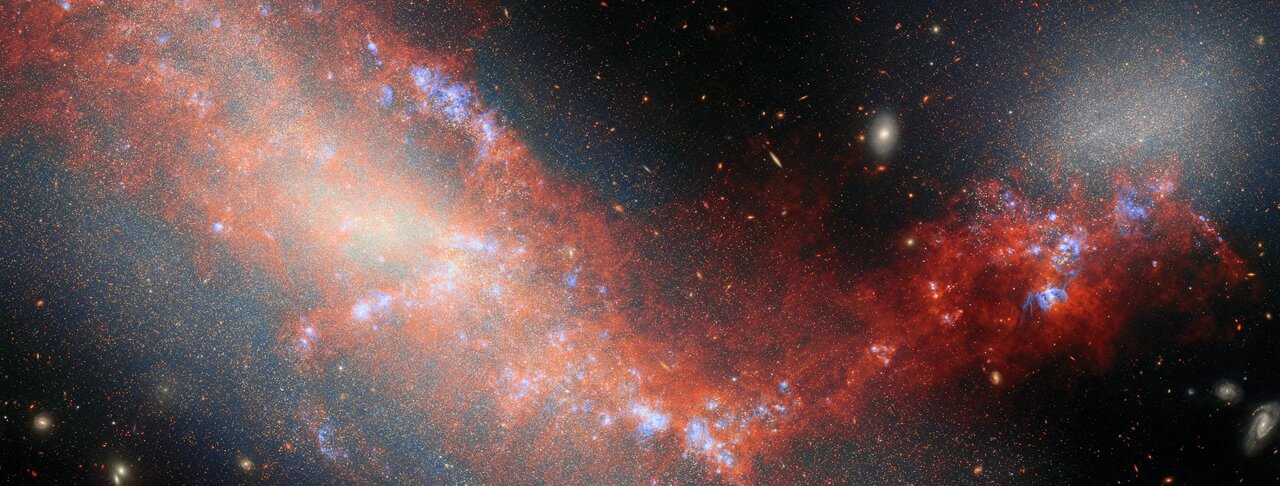
For this new ESA/Webb Picture of the Month, the NASA/ESA/CSA James Webb Space Telescope has spied a pair of dwarf galaxies engaged in a gravitational dance. These two galaxies are named NGC 4490 and NGC 4485, and they’re located about 24 million light-years away in the constellation Canes Venatici (The Hunting Dogs). Aside from the Milky Way’s own dwarf companions (the Large and Small Magellanic Clouds), this is the closest known interacting dwarf-dwarf system where astronomers have directly observed both a gas bridge and resolved stellar populations. Together NGC 4490 and NGC 4485 form the system Arp 269, which is featured in the Atlas of Peculiar Galaxies. At such a close distance (and with Webb’s impressive ability to peer through dusty cosmic clouds) these galaxies allow astronomers to witness up close the kinds of galaxy interactions that were common billions of years ago.
Dwarf galaxies likely share many similarities with young galaxies in the early Universe: they are much less massive than galaxies like the Milky Way, they typically have small amounts of metals (what astronomers call elements heavier than helium), and they contain a lot of gas and relatively few stars. When nearby dwarf galaxies collide, merge, or steal gas from one another, it can tell us how galaxies billions of years ago might have grown and evolved.
The nearby dwarf galaxies NGC 4490 and NGC 4485 form an intriguing pair. Nearly three decades ago, astronomers discovered a wispy bridge of gas connecting the two galaxies, showing that they have interacted in the past. Despite many studies with powerful telescopes like the NASA/ESA Hubble Space Telescope, the history between NGC4490 and NGC 4485 has remained mysterious.
Recently, Webb observed this curious galactic pair as part of the Feedback in Emerging extrAgalactic Star clusTers (FEAST) programme (#1783; PI: A. Adamo). The FEAST programme used Webb’s sensitive infrared eyes to reveal the formation of new stars in different types of nearby galaxies.
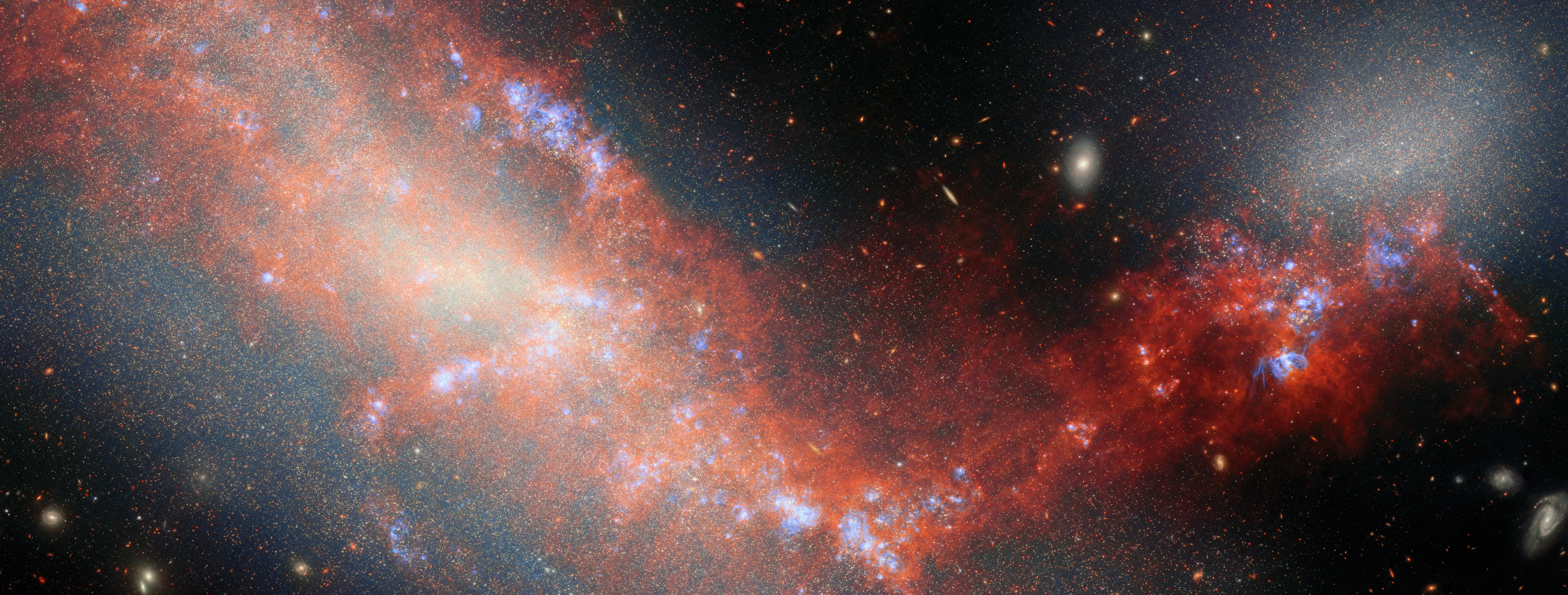
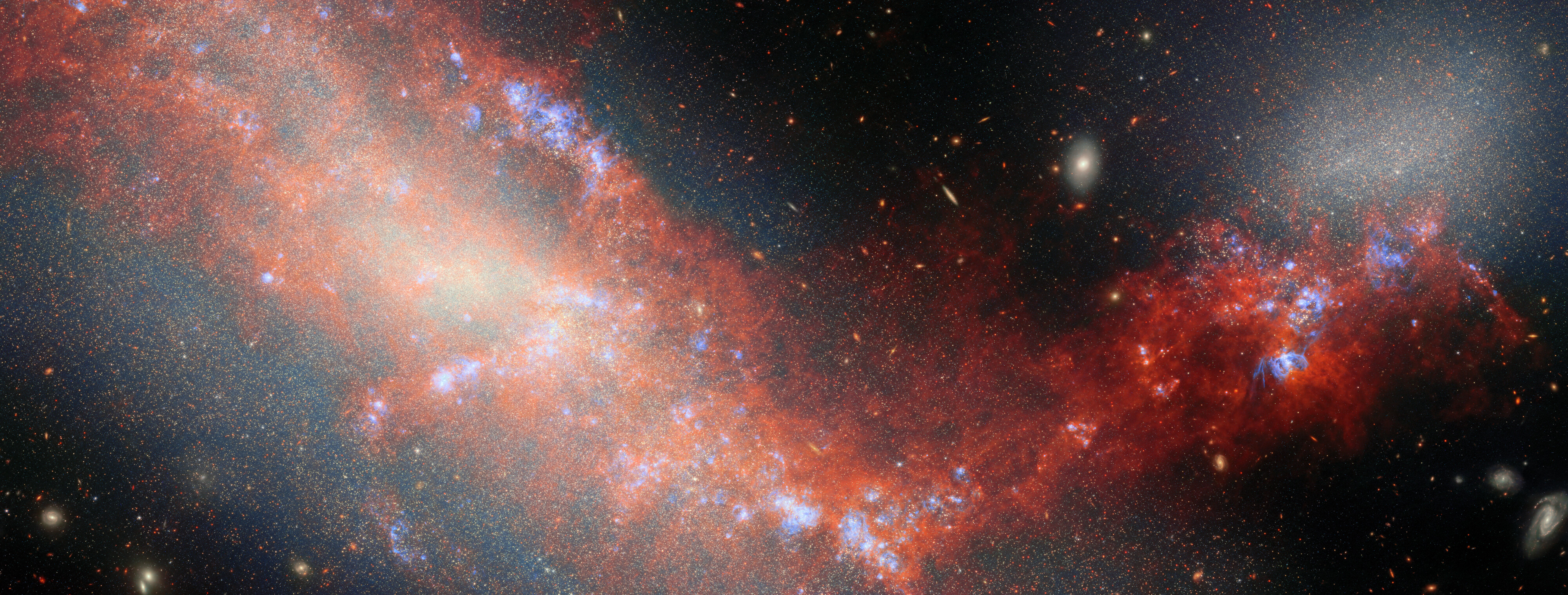
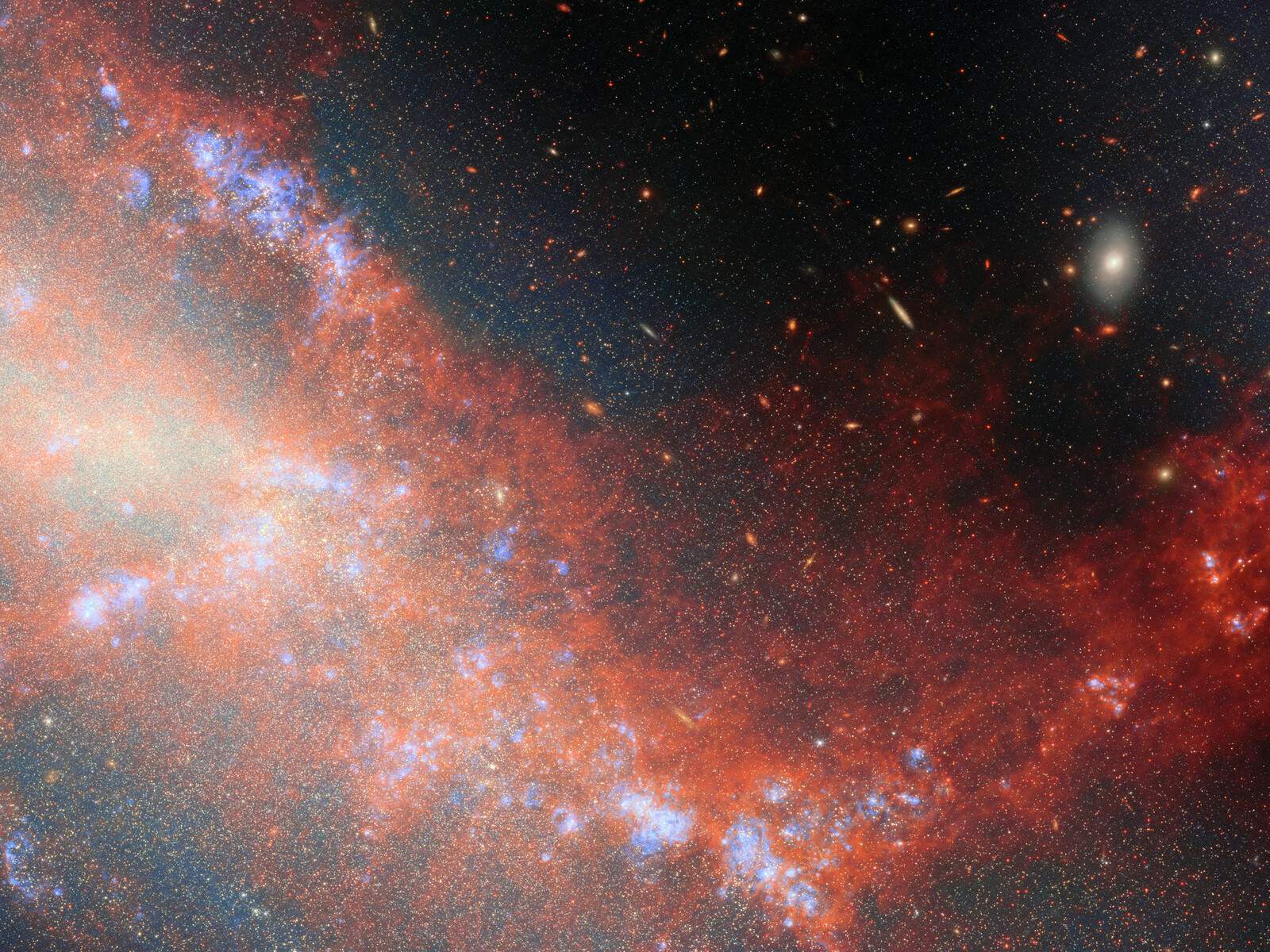
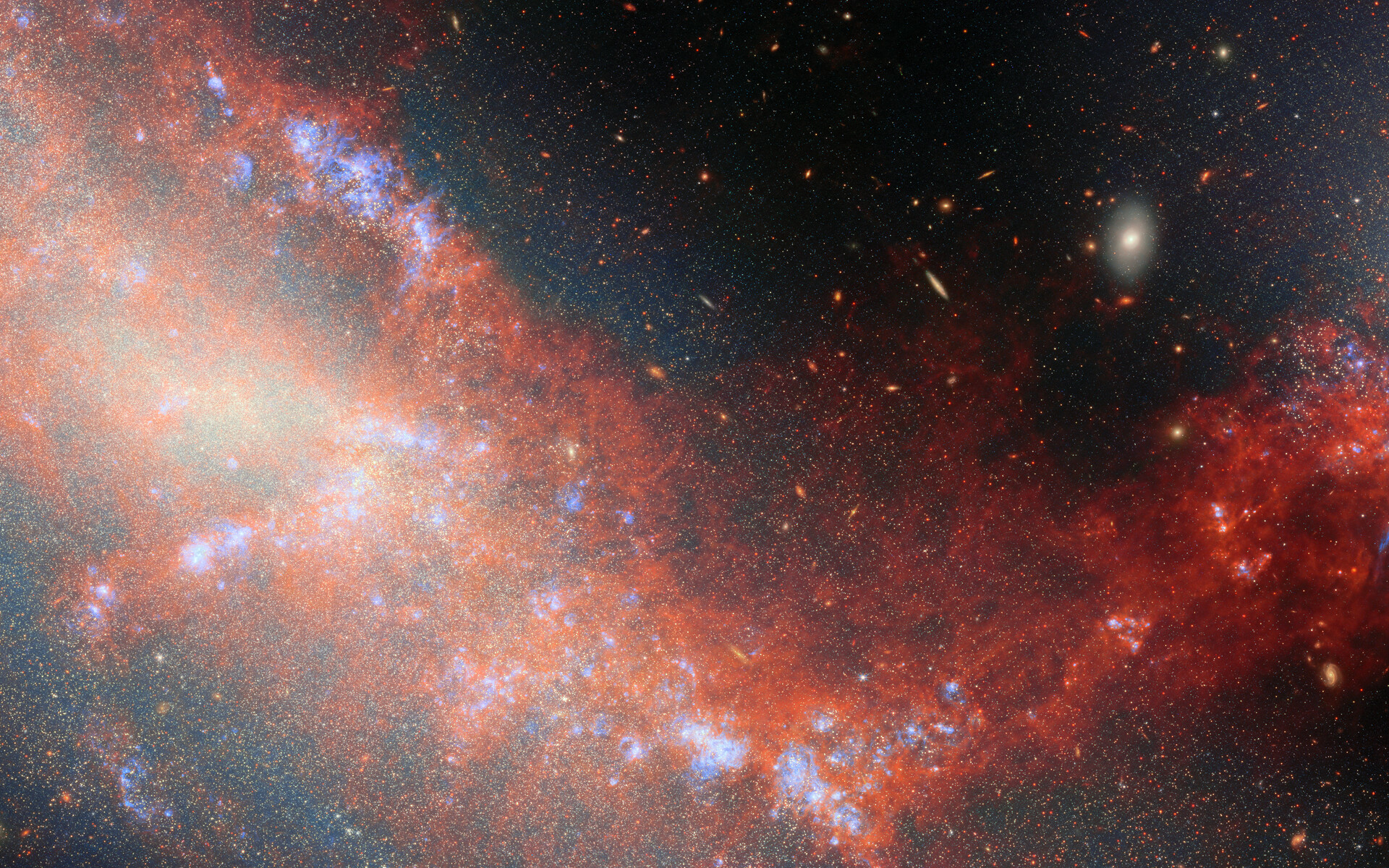
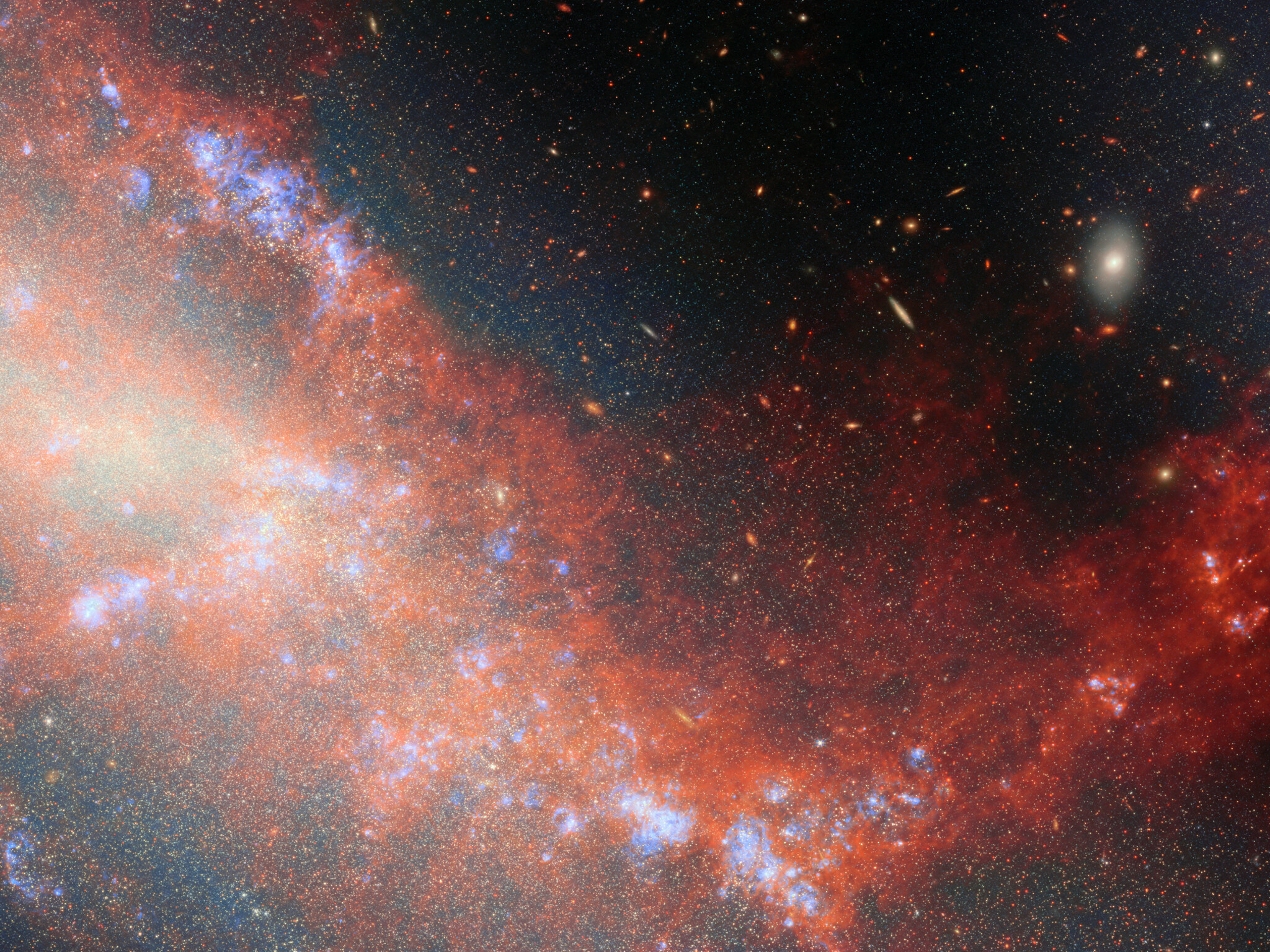
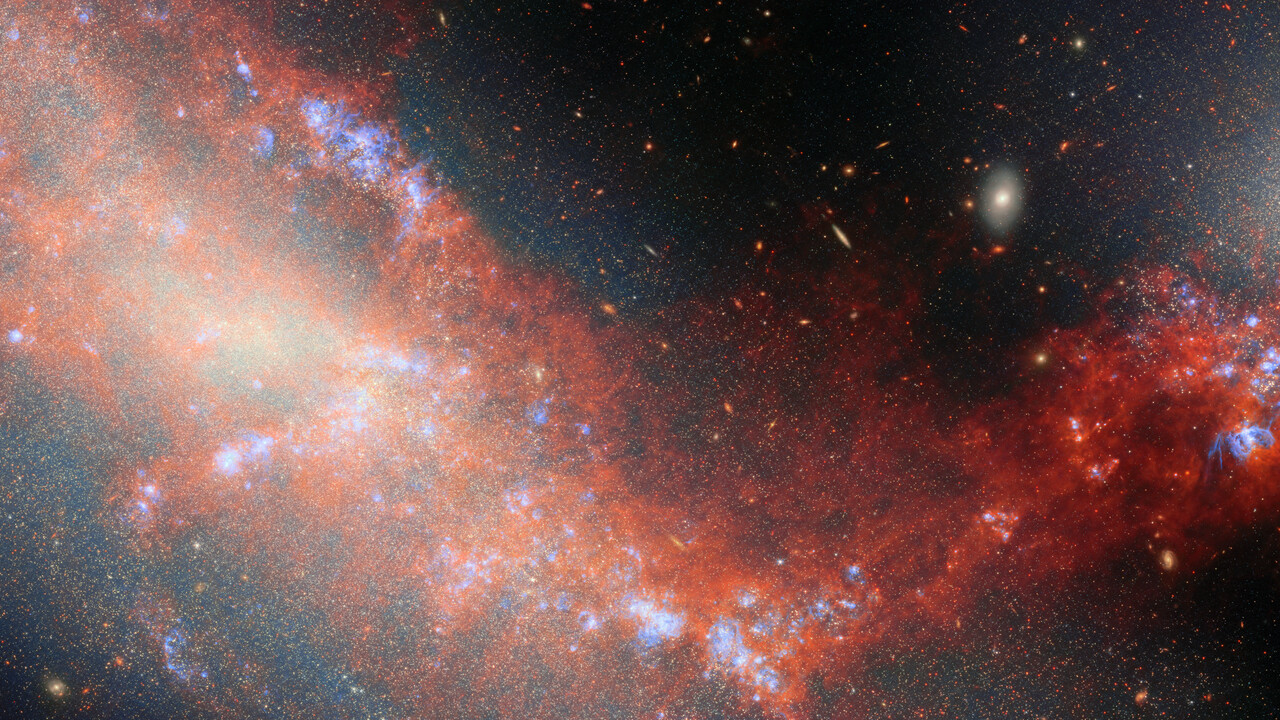
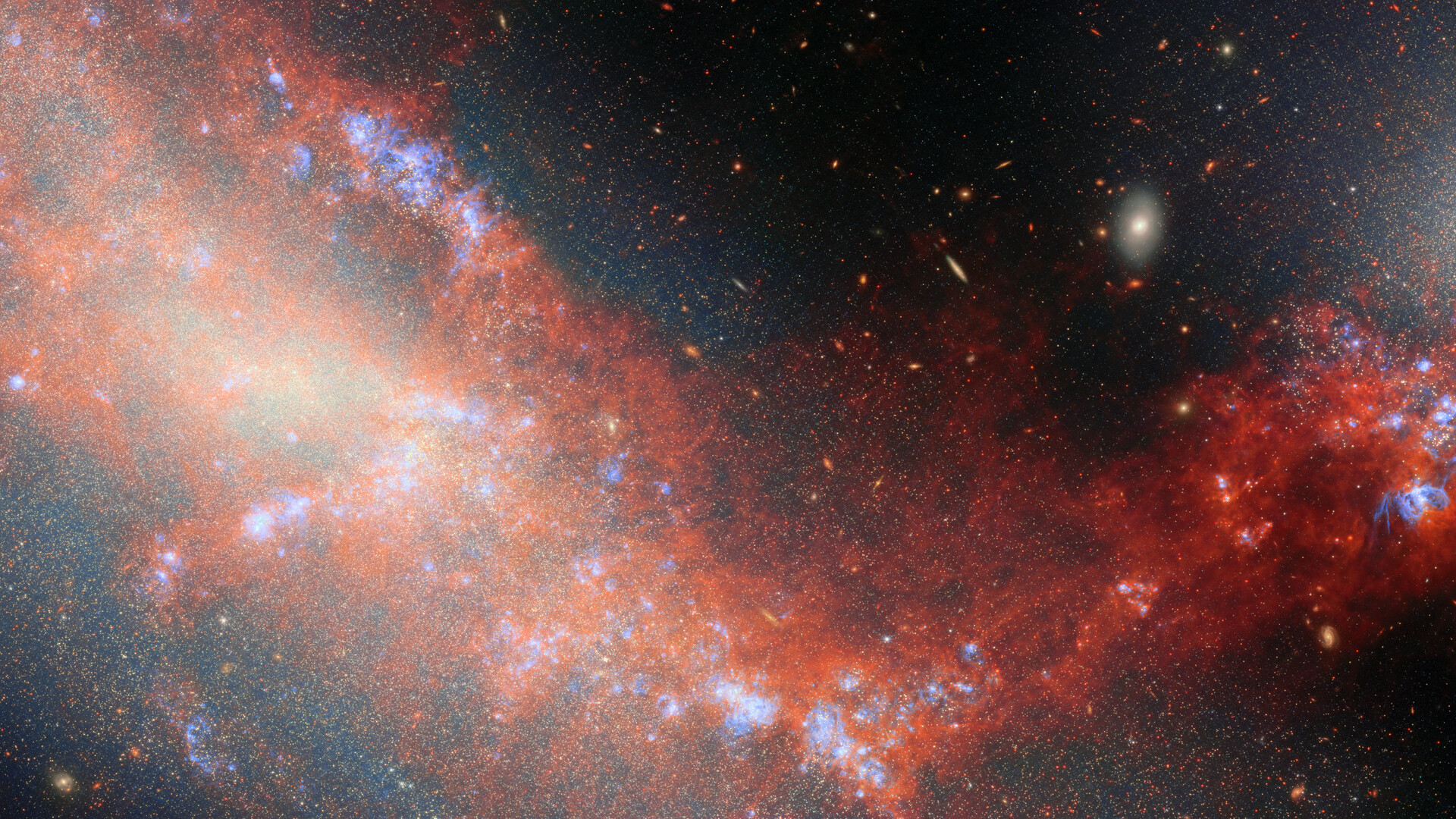
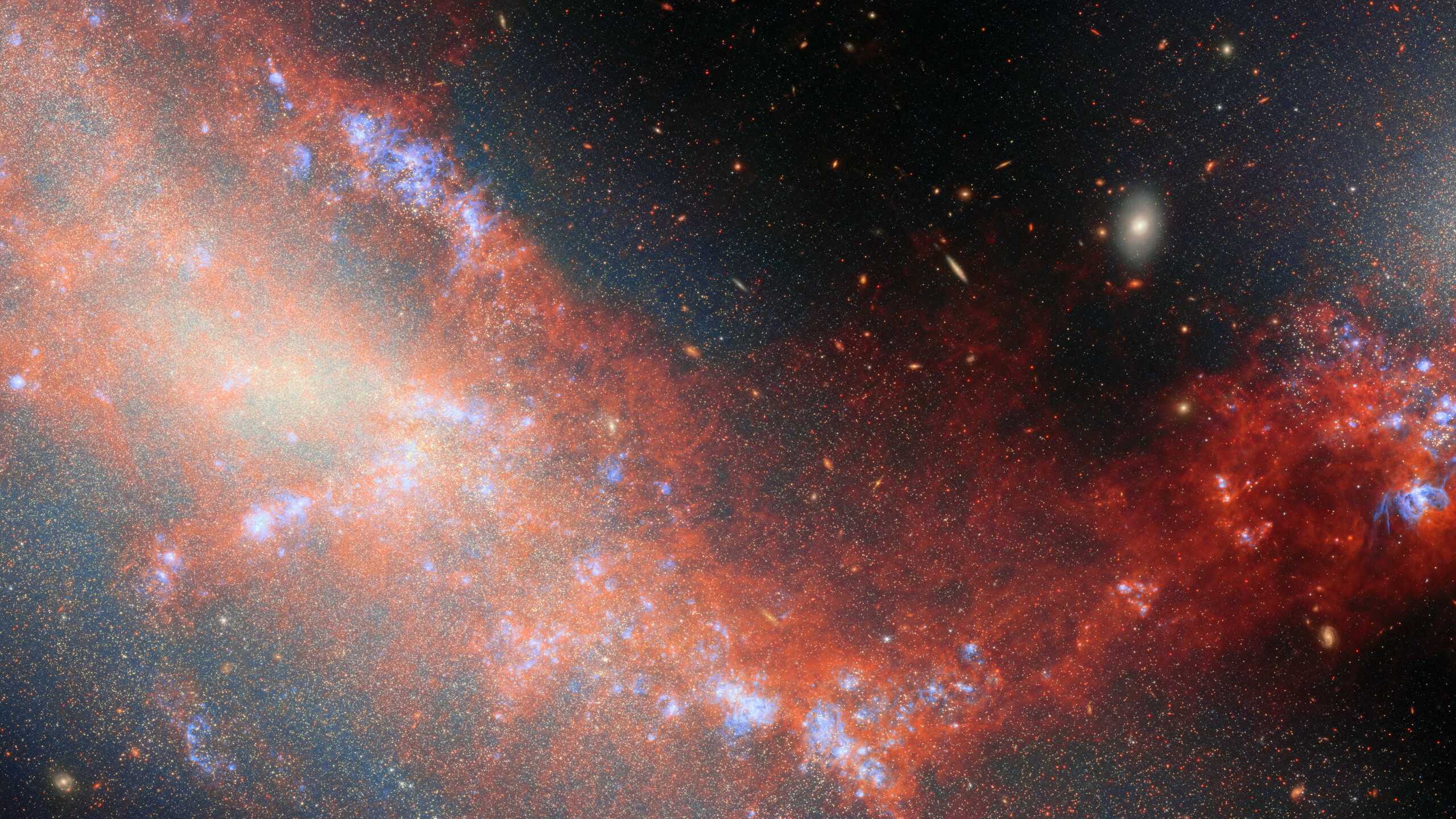
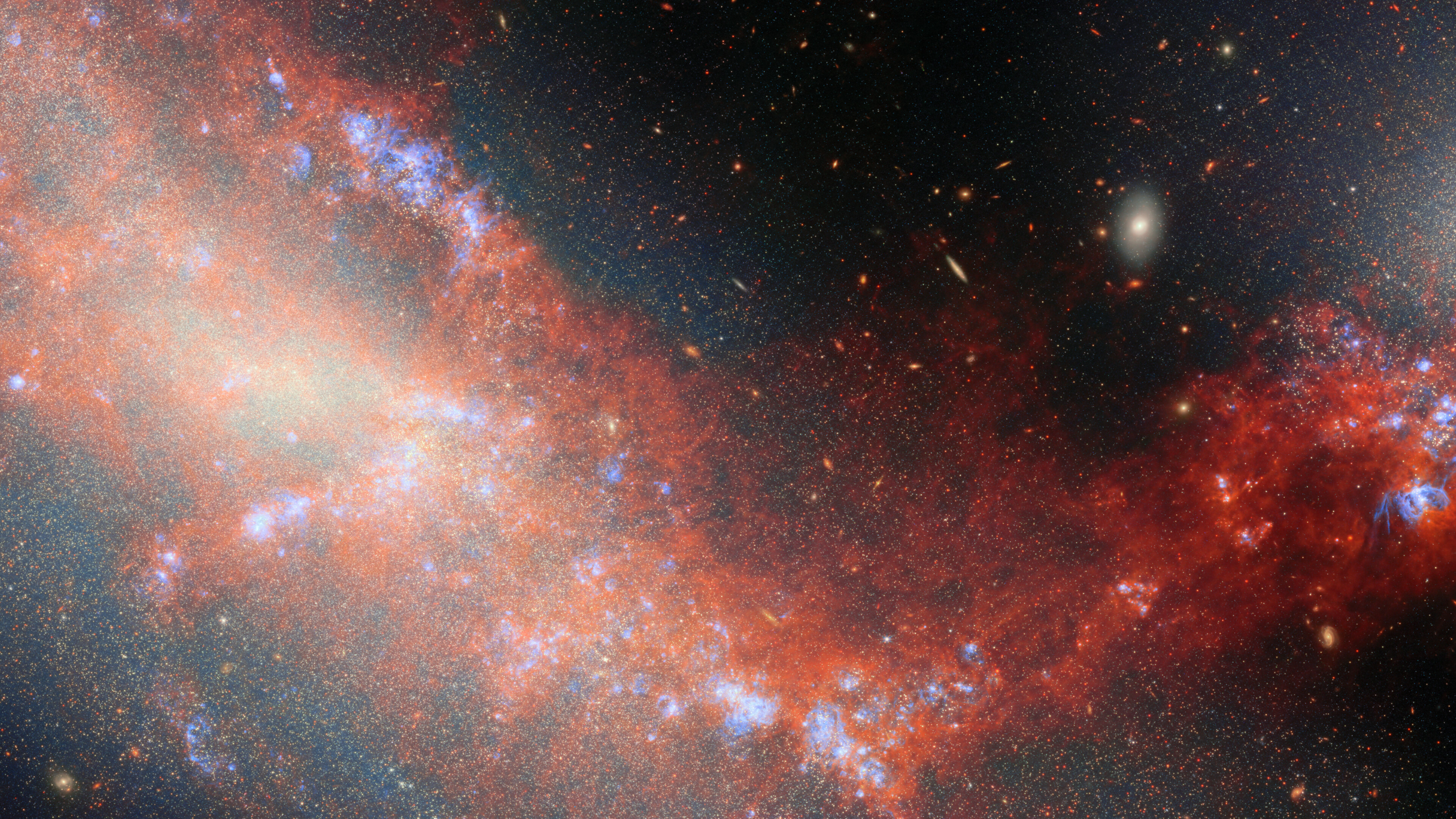
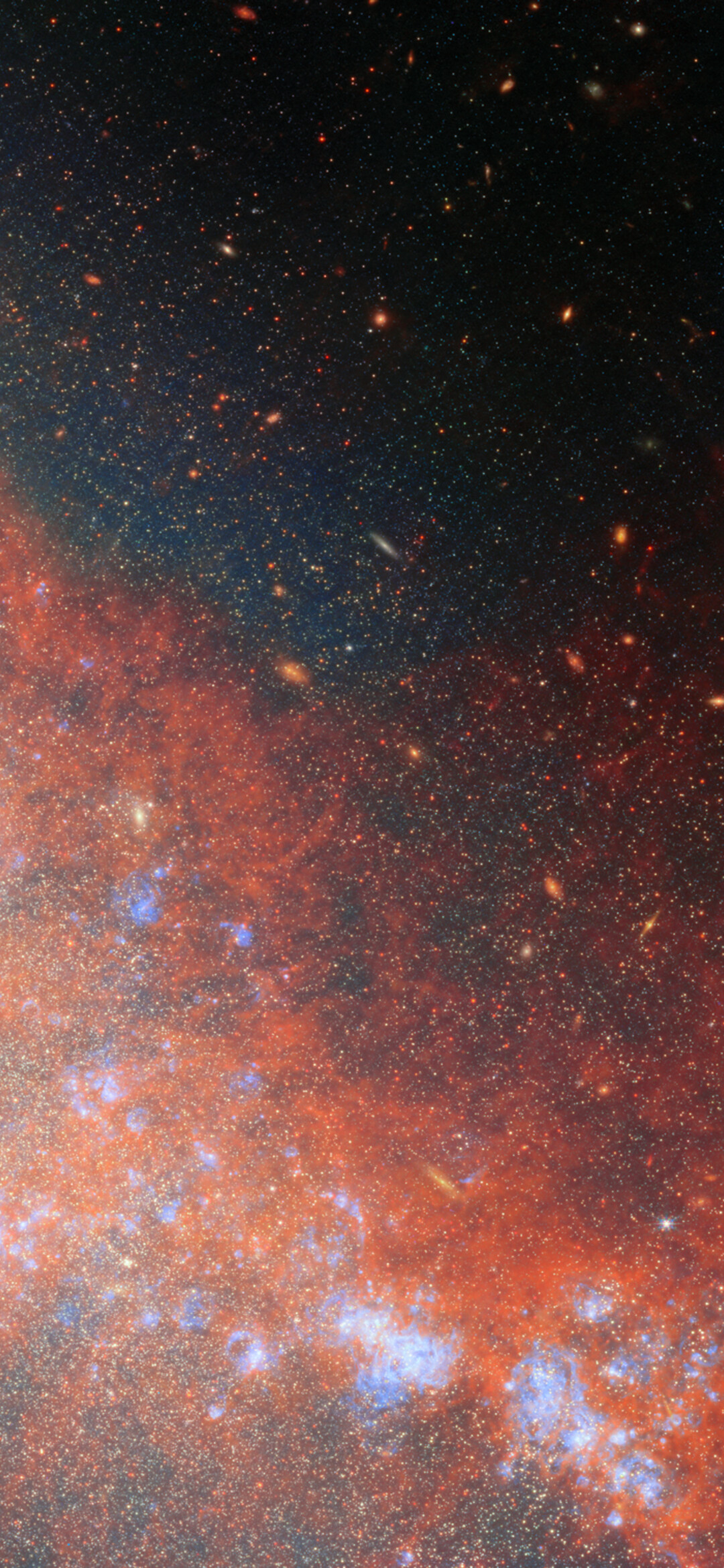
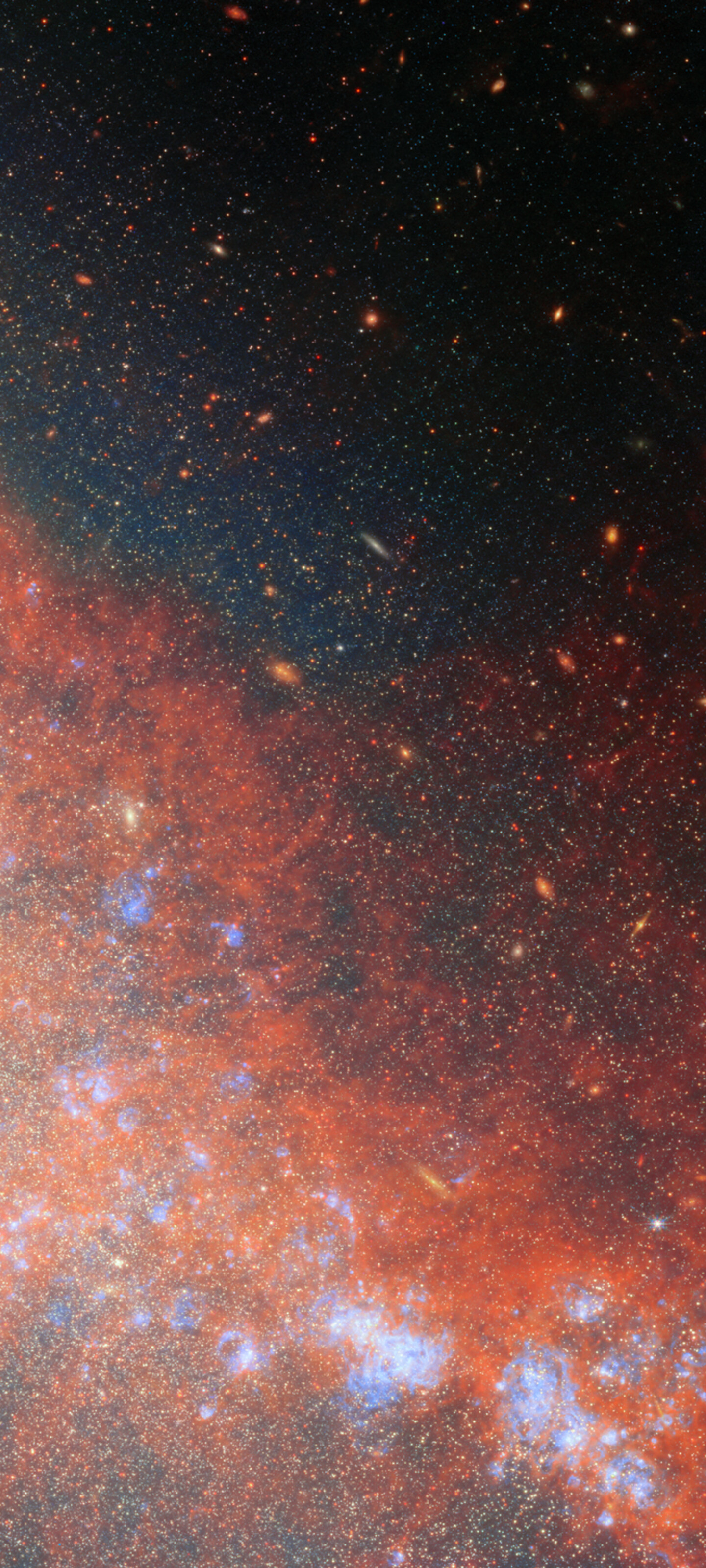
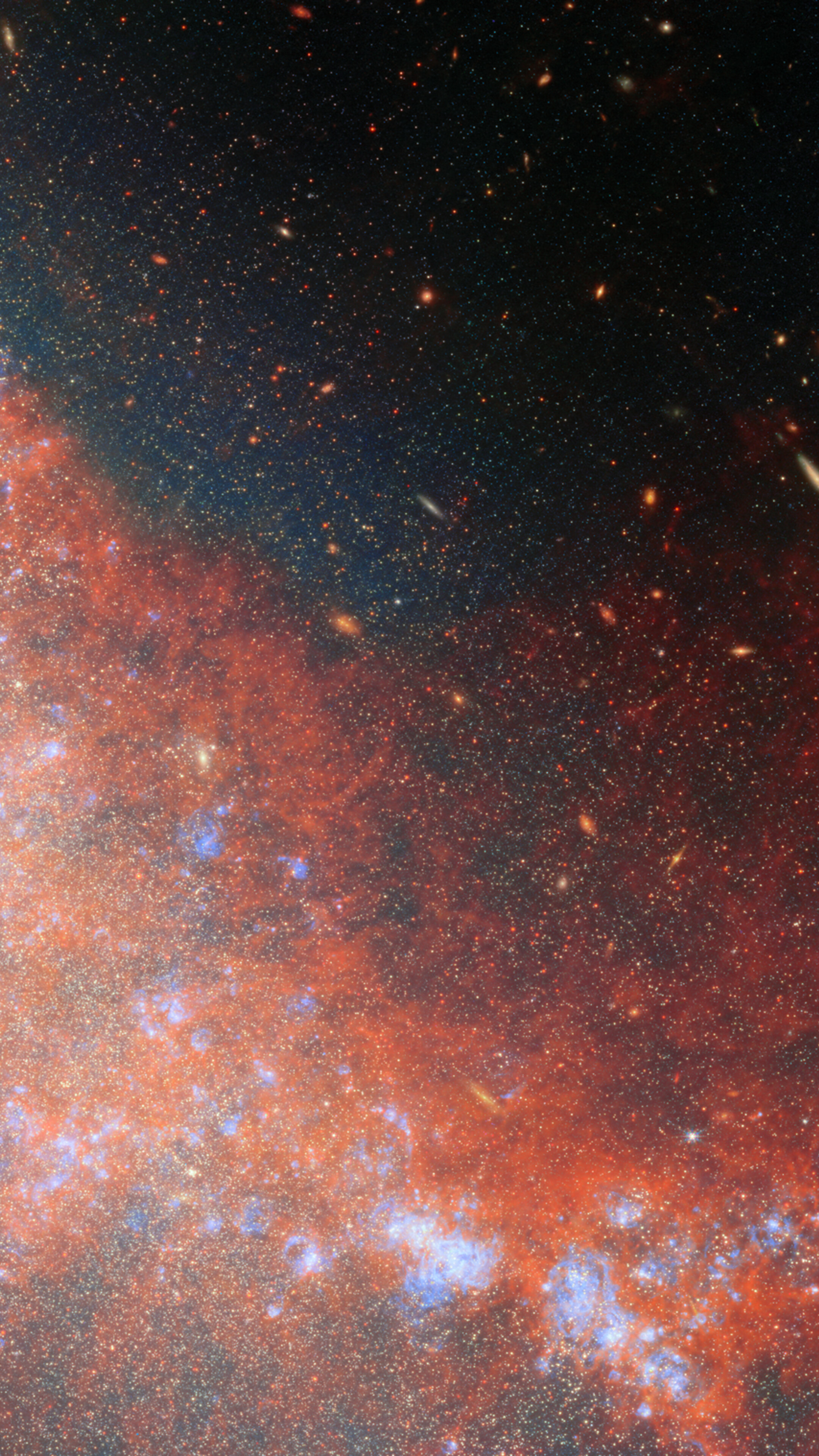
This image was developed using data from Webb’s Near-InfraRed Camera (NIRCam) and Mid-InfraRed Instrument (MIRI), as well as a single narrow-band filter from Hubble (657N). It reveals NGC 4490 and NGC 4485 in never-before-seen detail and illuminates the bridge of gas and stars that connects them. NGC 4490 dominates the image as the larger object occupying the left side of the image, while NGC 4485 is the smaller galaxy that hosts the top-right portion of the image. By dissecting these galaxies star by star, researchers were able to map out where young, middle-aged, and old stars reside, and trace the timeline of the galaxies’ interaction.
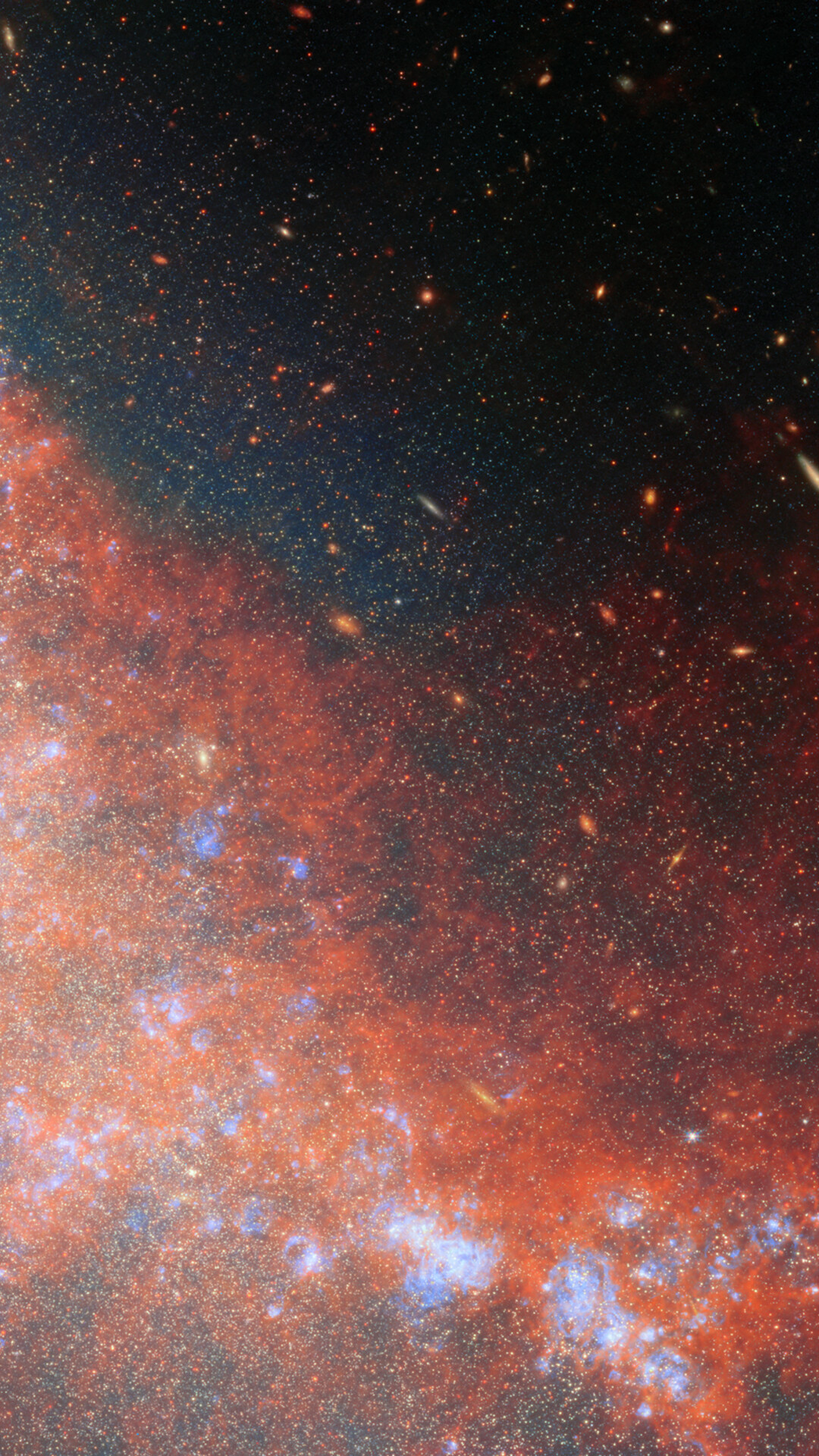
Roughly 200 million years ago, these galaxies whirled close to one another before waltzing away. The larger galaxy, NGC 4490, ensnared a stream of gas from its companion, and this gas now trails between the galaxies like dancers connected by outstretched arms. Along the newly formed bridge of gas and within the two galaxies, this interaction spurred a burst of new stars. The concentrated areas of bright blue that appear throughout the field indicate highly ionised regions of gas by the recently formed star clusters. Just 30 million years ago, these galaxies burst alight with stars once more, with new clusters coalescing where the gas of the two galaxies mixed together.
By capturing the history of the galactic dancers NGC 4490 and NGC 4485, Webb has revealed new details in how dwarf galaxies interact, giving us a glimpse of how small galaxies near and far grow and evolve.
[Image Description: This Webb image shows two interacting galaxies. NGC 4490 occupies the left side of the image, while NGC 4485 appears as a white glowing hue in the top right of the field. Both galaxies are connected by a bright stream of red stretching from the top left of the image, through the bottom centre, and ending at the right under galaxy NGC 4485. There are regions of bright blue ionised gas visible in concentrated areas of the red stream. The background is black with multiple galaxies in various shapes throughout.]
Links:
Credit:ESA/Webb, NASA & CSA, A. Adamo (Stockholm University), G. Bortolini, and the FEAST JWST team
About the Image
| Id: | potm2511a | |
|---|---|---|
| Type: | Observation | |
| Release date: | 2 December 2025, 10:00 | |
| Size: | 8791 x 3336 px | |