
Tau 042021
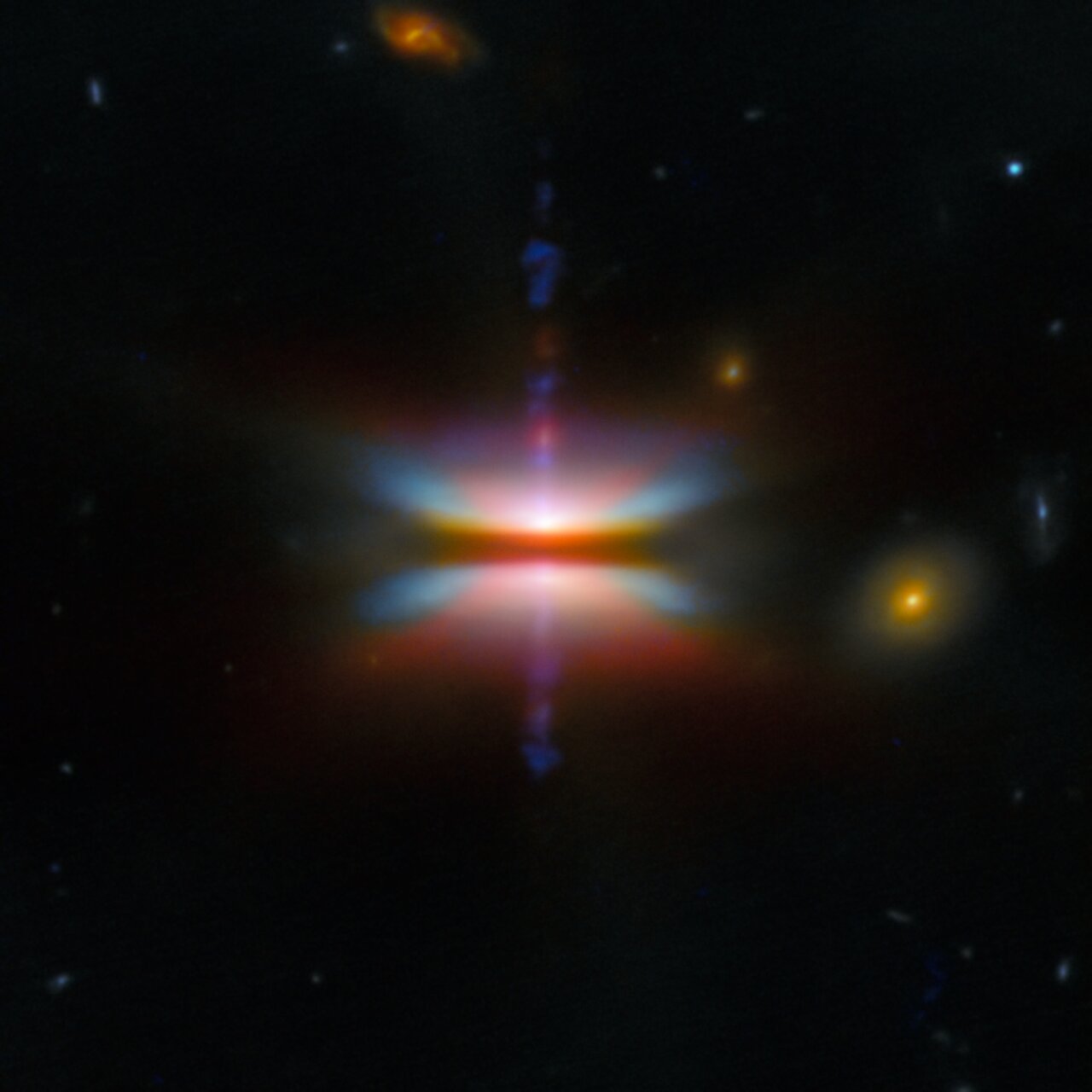
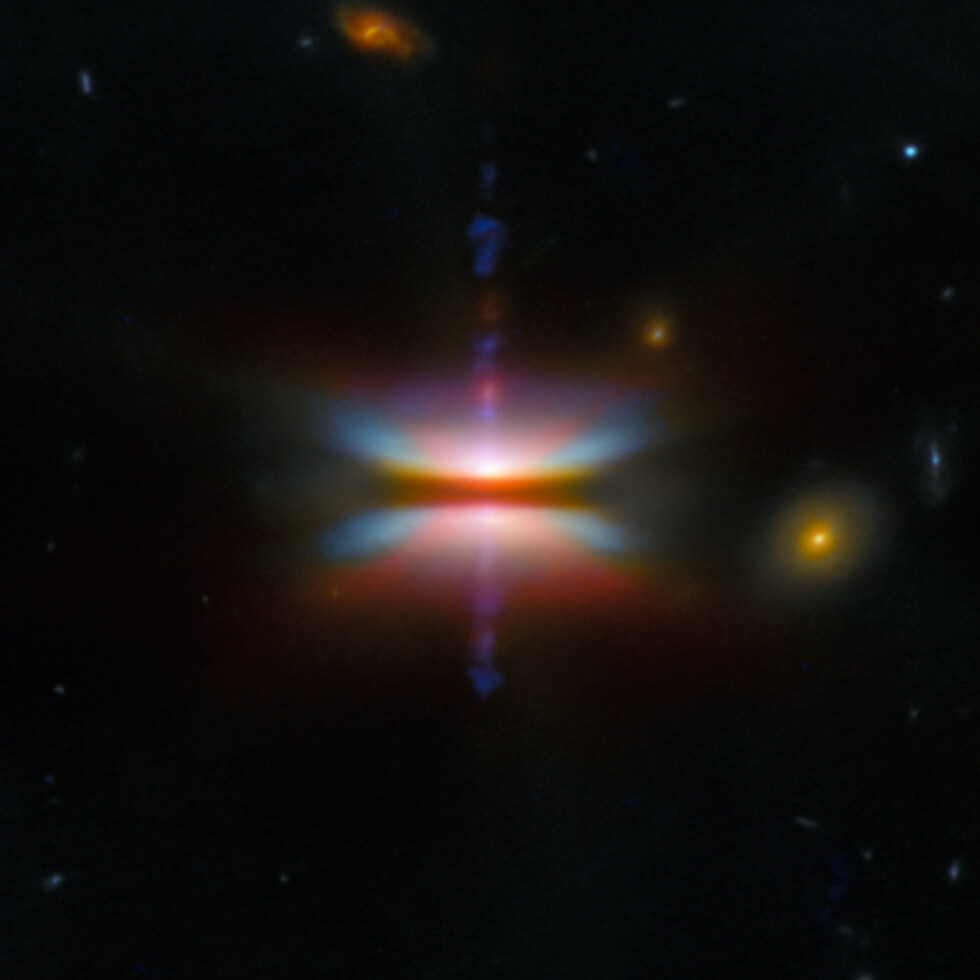
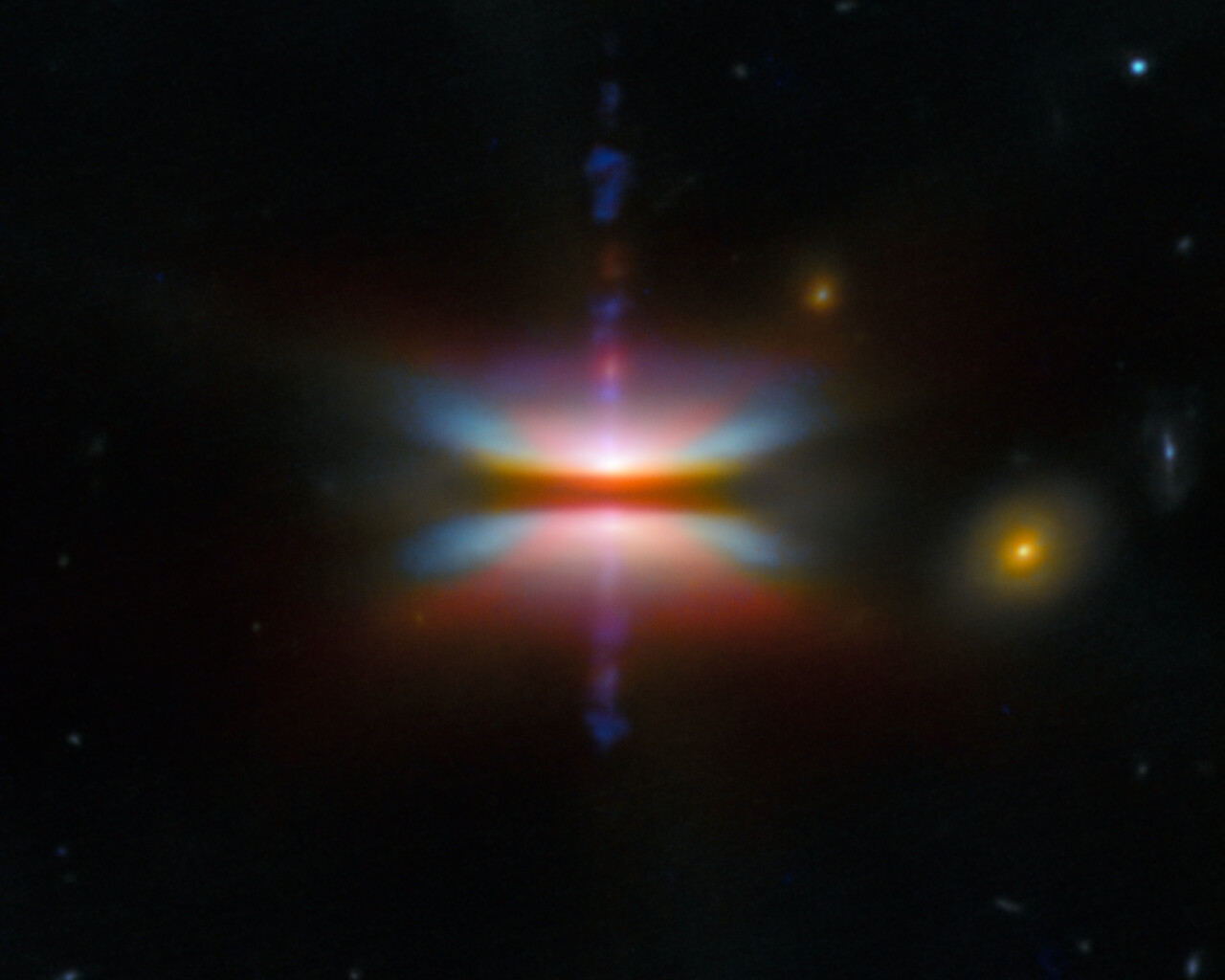
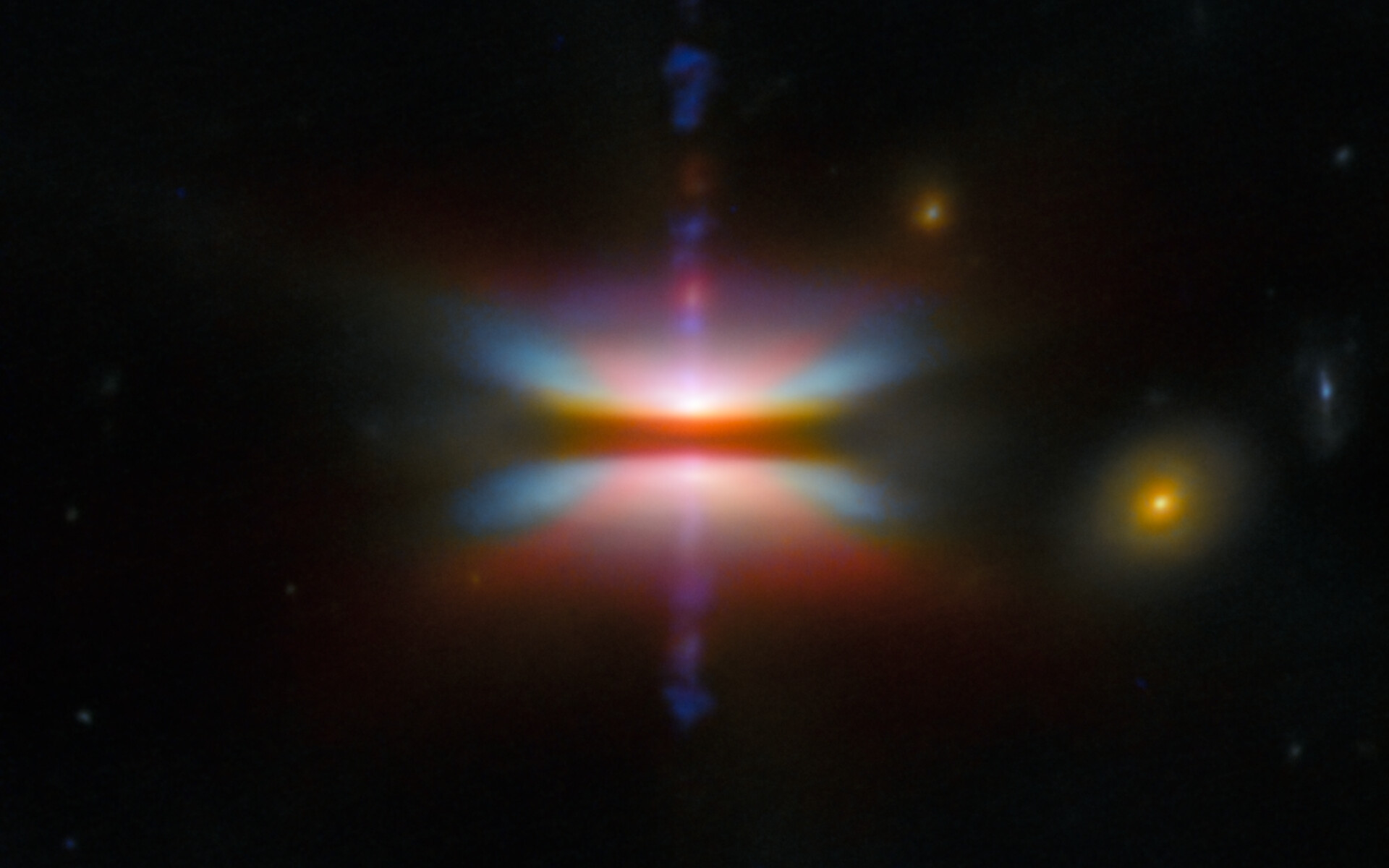
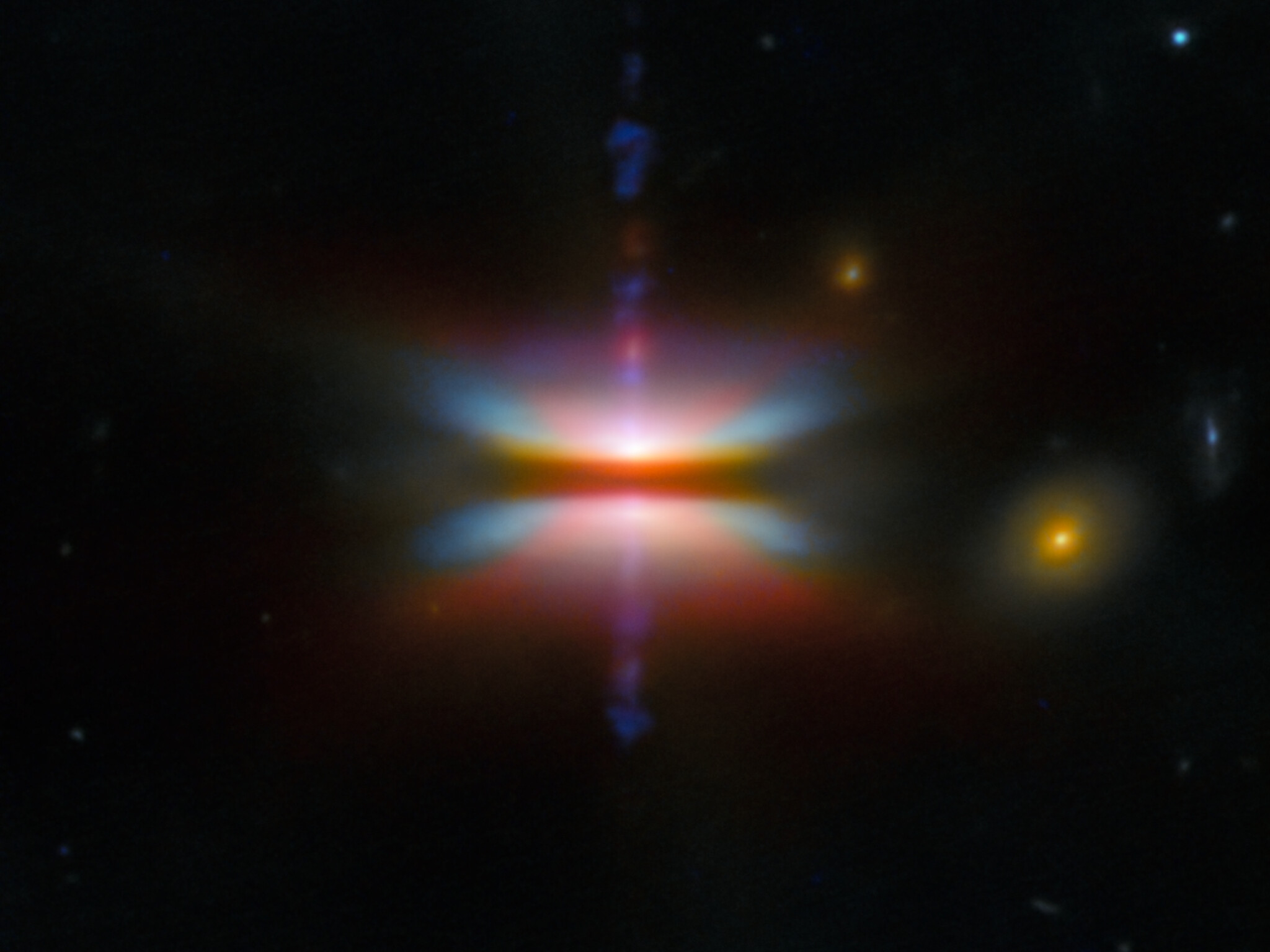
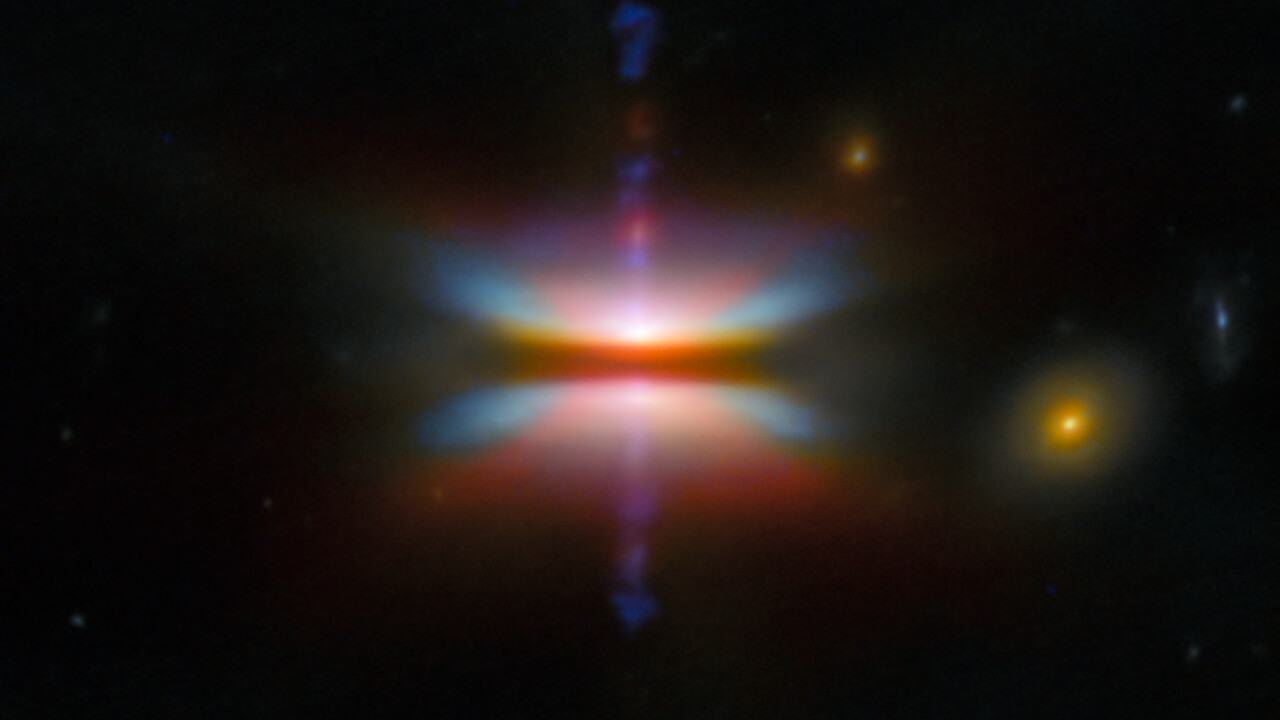
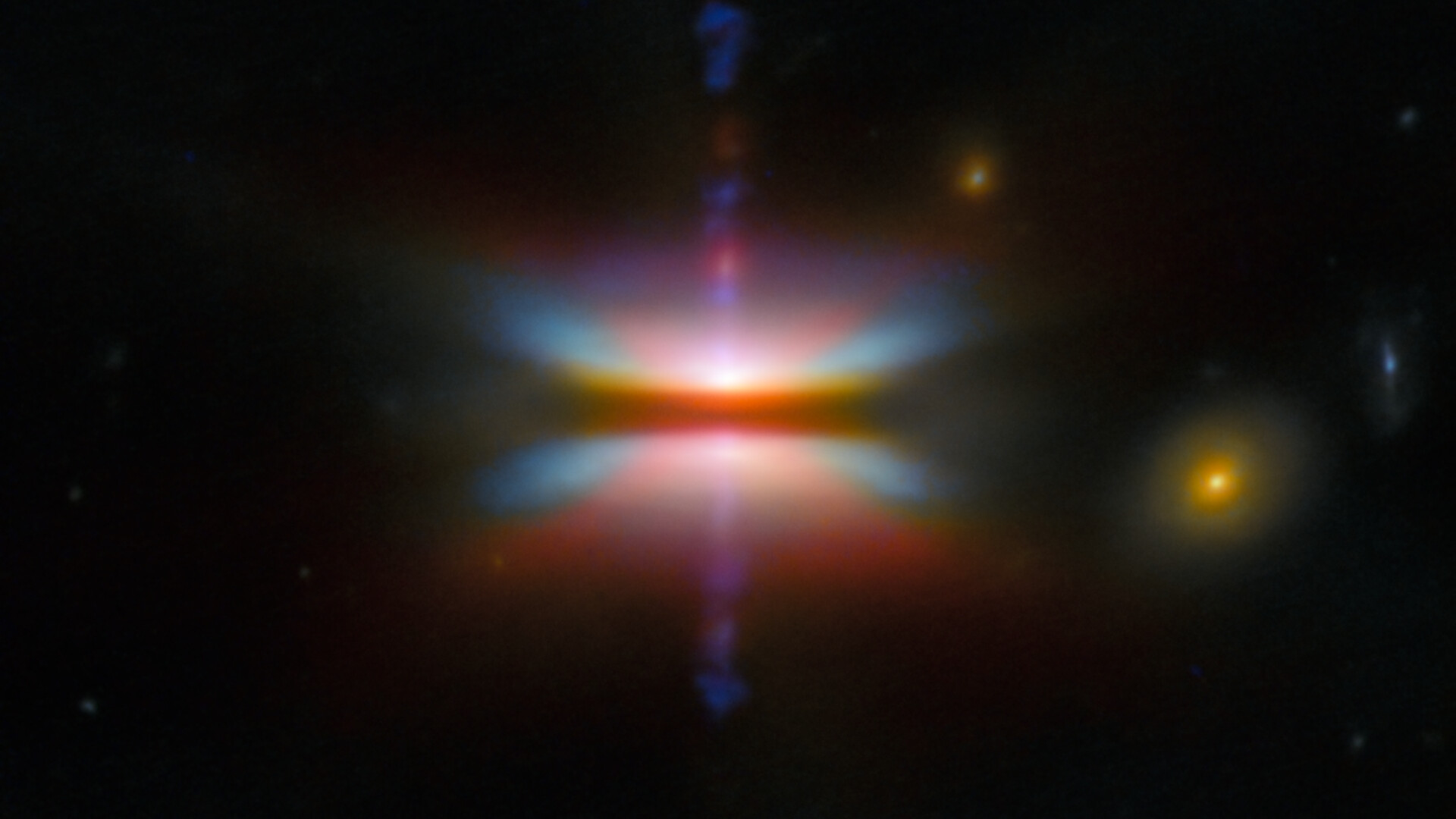
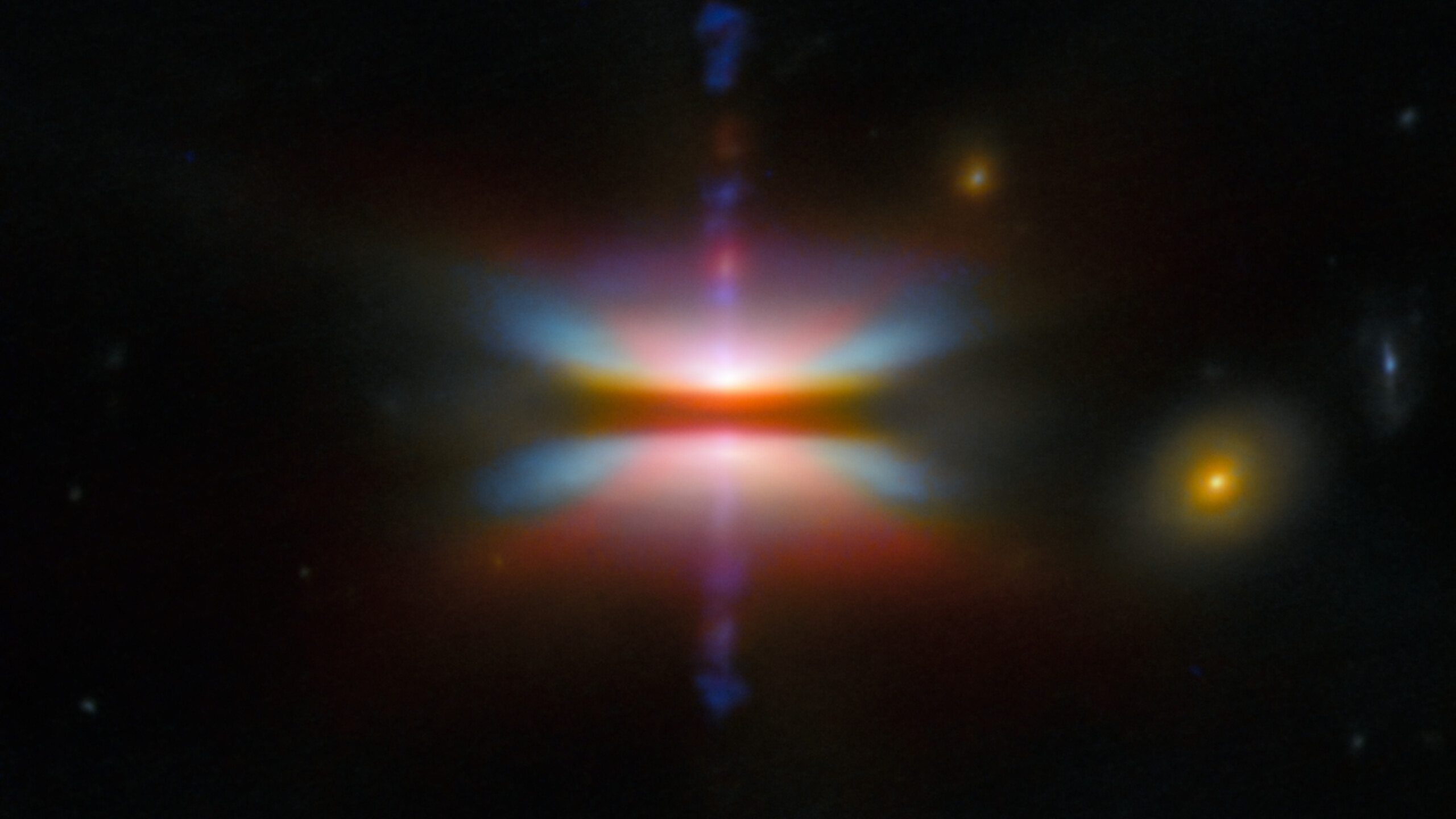
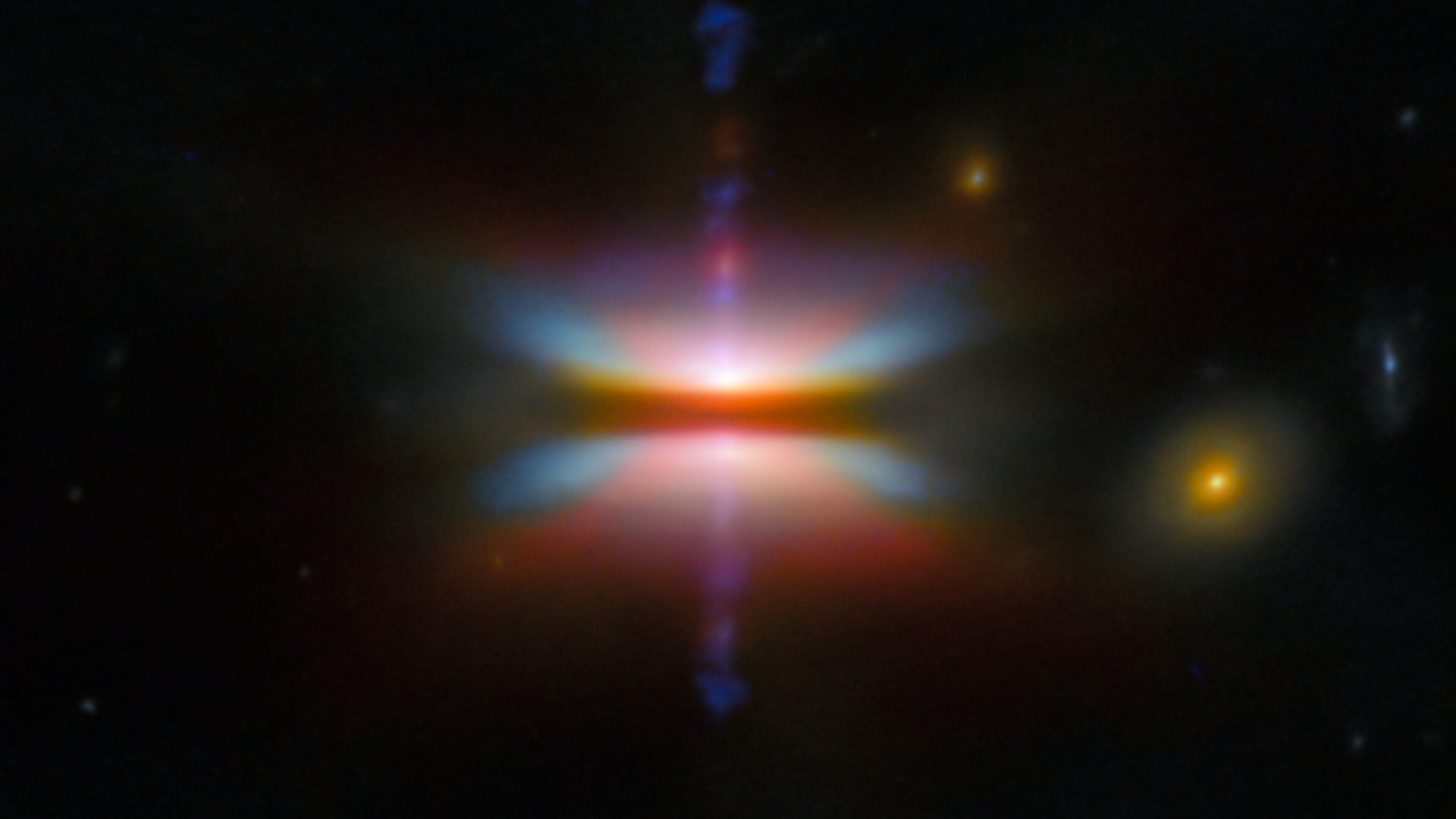
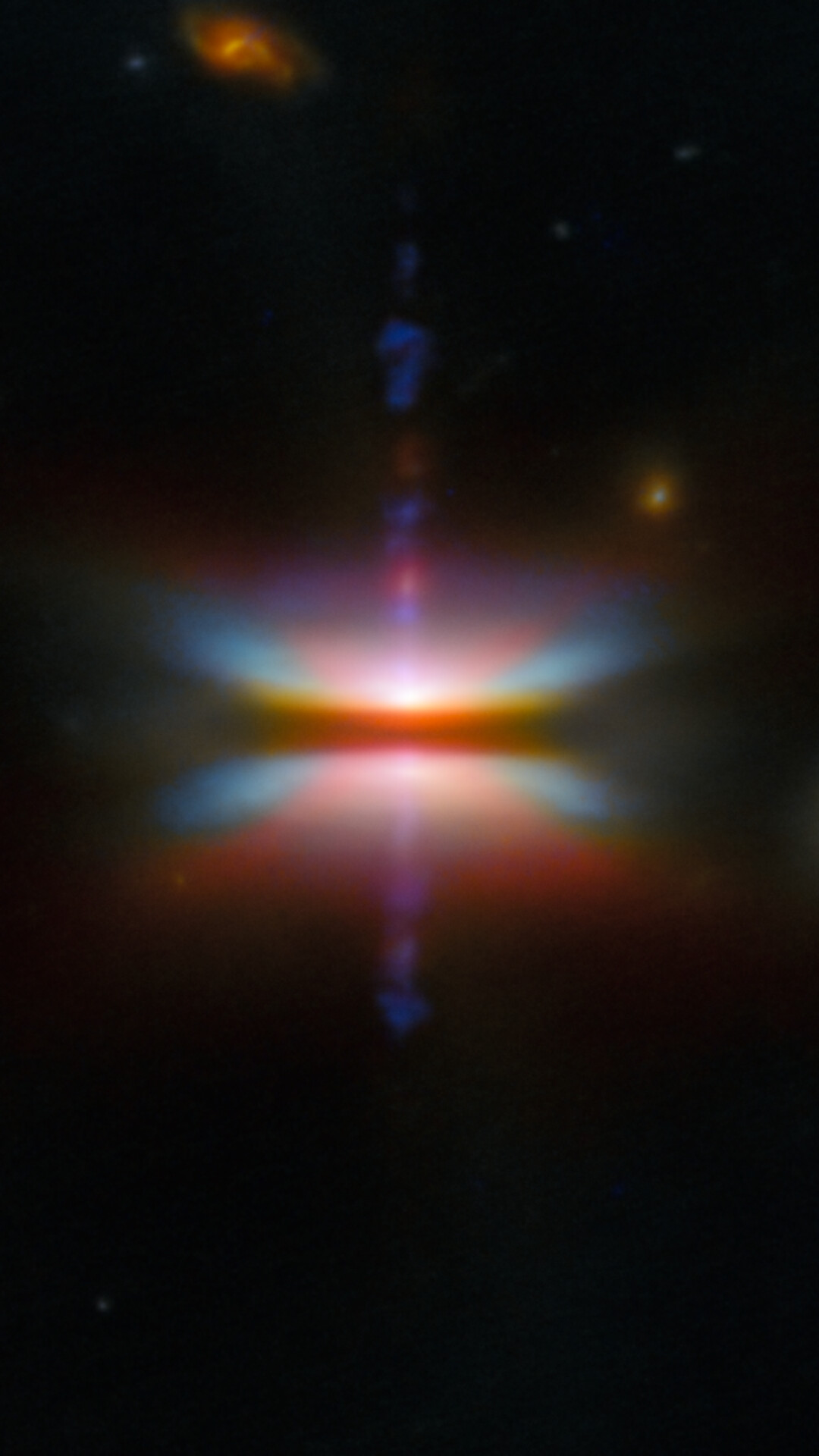
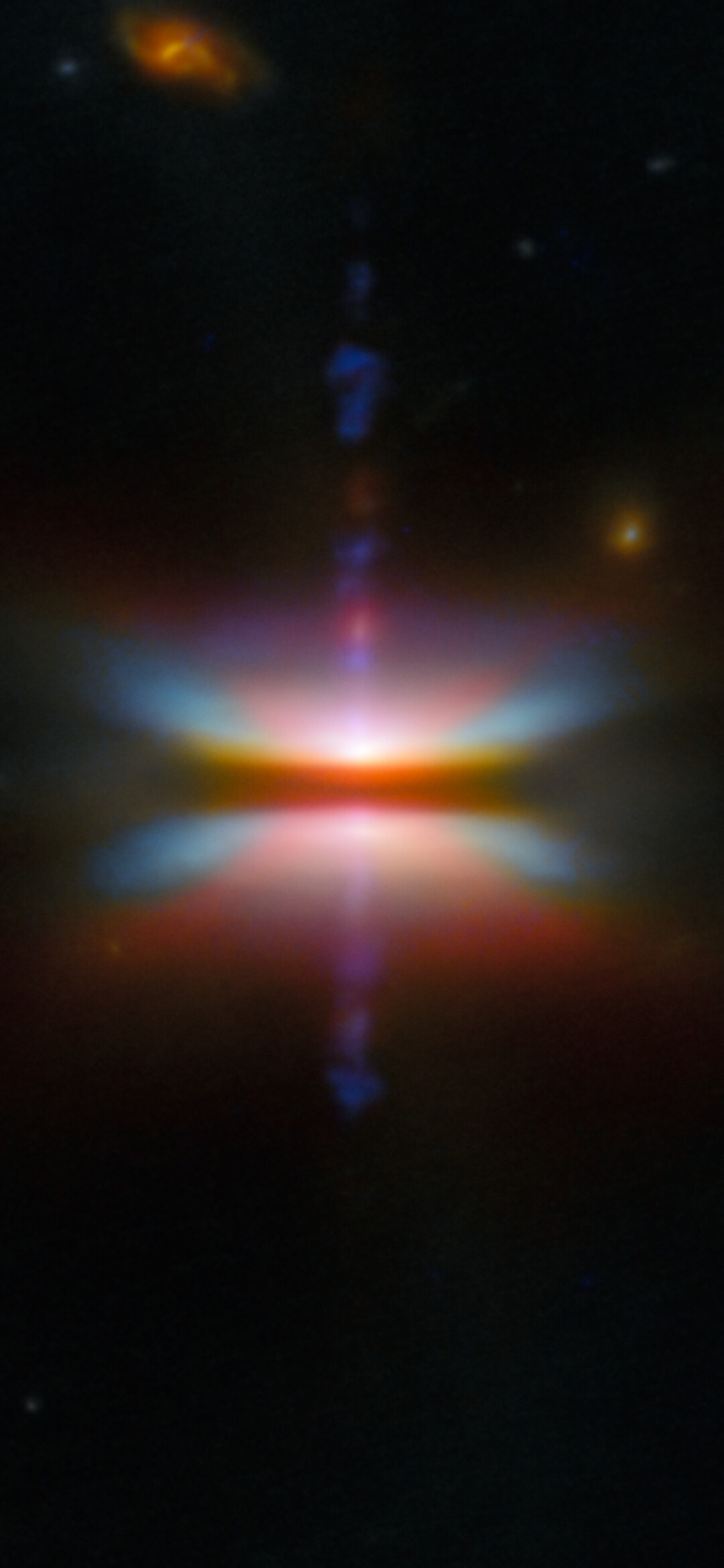
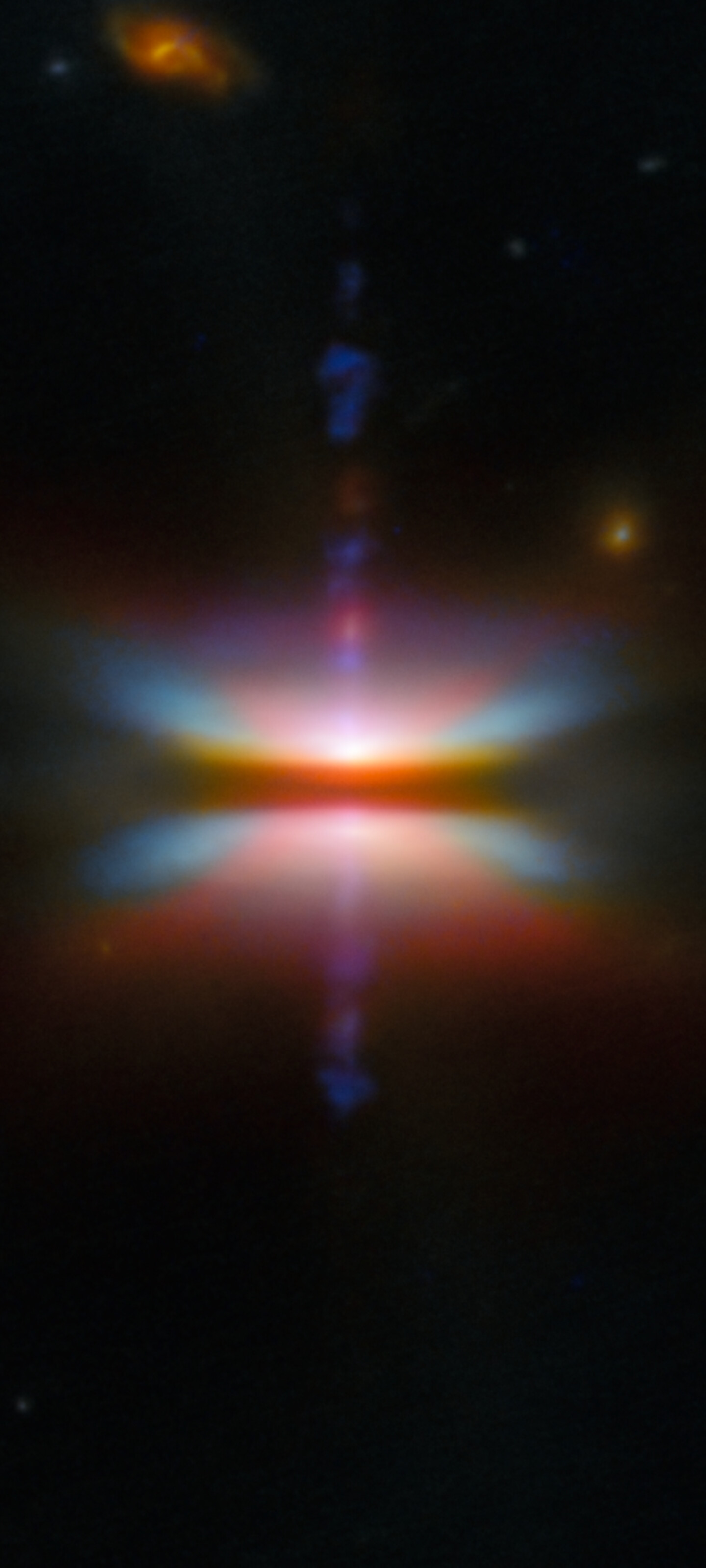
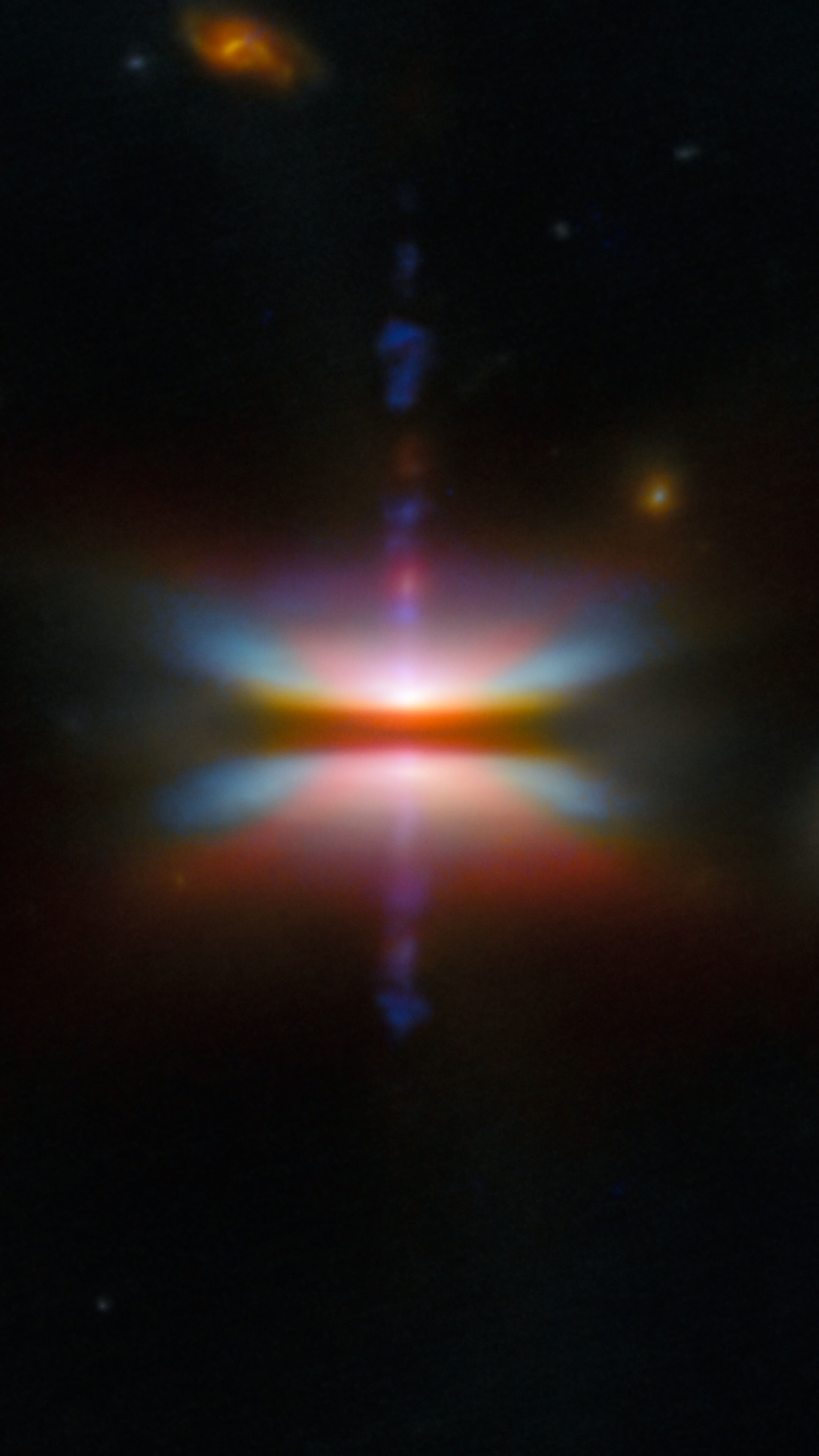
This new image from the NASA/ESA/CSA James Webb Space Telescope presents Tau 042021, a protoplanetary disc that is one of two featured for month's ESA/Webb Picture of the Month. It’s also known as 2MASS J04202144+2813491, and it is found in the constellation Taurus, around 450 light-years away. It may look like a colourful spinning top, but the light show pictured here comes from a newly born star wreathed in a churning torus of gas and dust a thousand times as wide as the distance from here to the Sun.
Protoplanetary discs like these appear around stars that have recently been born. Eventually the new star will disperse all the dust with its ferocious radiation, but before that happens there’s a chance for the dust to clump together and grow into pebbles, planetesimals and eventually planets — hence, a protoplanetary disc. Whether planets appear, and what kind of planets they are, depends on how larger and smaller dust grains migrate in the disc. An edge-on view like this shows us if dust grains are settling into a layer of large dust grains at the core of the disc. Such a layer is critical for forming planets, and the thicker it is, the better.
In this image of Tau 042021, since the disc is nearly exactly edge-on to us, it appears as a dark band running straight across the centre of the image. Larger, millimetre-sized dust grains settle in this area from the outer regions of the disc and build up, creating the conditions for planets to potentially form. Tau 042021’s central star is hidden from us behind this dusty disc, but we can see plenty of evidence for its presence, most notably the purple jets blasting straight up and down — a common feature of young stars embedded in dusty discs.
Above and below the dark band, the dust grains gradually become smaller and smaller the farther out we look, to less than a millionth of a metre in size. They are lit by the central star, creating these colourful “wings” top and bottom. Different colours in the wings mark out different kinds of molecules, indexed by Webb’s keen infrared vision; the red areas forming a cross shape are thought to be part of a wind blowing hydrogen atoms and light molecules far out of the disc. Above and to the right of the disc, three distant galaxies appear in the background.
The detailed and eye-catching view shown here combines Webb’s images, taken with the Near-Infrared Camera NIRCam and the Mid-Infrared Imager MIRI, with visible-light data from the NASA/ESA Hubble Space Telescope. The knots in the jet that is perpendicular to the disc appear in different colours between the Hubble (bluer) and Webb (redder) images because of the motion of the jet in the 12 years between the observations.
[Image Description: A close-in image of a protoplanetary disc around a newly formed star. The disc is a dark, horizontal band in the centre. Broad, conical outflows from the star emerge from the top and bottom of this disc. A thin, broken jet of gas reaches out from the disc’s centre. The jet and outflows appear in pink, purple, blue and green colours, representing the various wavelengths of light they emit.]
Links
- Oph 163131 and Tau 042021 side by side
- Wide view of Oph 163131
- Annotated close-up of Oph 163131
- Image on ESA website
ESA/Webb, NASA & CSA, ESA/Hubble, G. Duchêne
About the Image
| Id: | potm2603c | |
|---|---|---|
| Type: | Observation | |
| Release date: | 3 April 2026, 10:00 | |
| Size: | 980 x 980 px | |