
Coordinates
| Position (RA): | 22 29 24.40 |
|---|---|
| Position (Dec): | -20° 52' 19.26" |
| Field of view: | 5.81 x 4.21 arcminutes |
| Orientation: | North is 63.6° right of vertical |

Colours & filters
| Band | Wavelength | Telescope |
|---|---|---|
| Infrared | 1.15 μm | James Webb Space Telescope NIRCam |
|
Infrared
P-alpha | 1.87 μm | James Webb Space Telescope NIRCam |
|
Infrared
molecular hydrogen | 2.12 μm | James Webb Space Telescope NIRCam |
| Infrared | 3.56 μm | James Webb Space Telescope NIRCam |
| Infrared | 4.44 μm | James Webb Space Telescope NIRCam |
|
Infrared
molecular hydrogen | 4.7 μm | James Webb Space Telescope NIRCam |
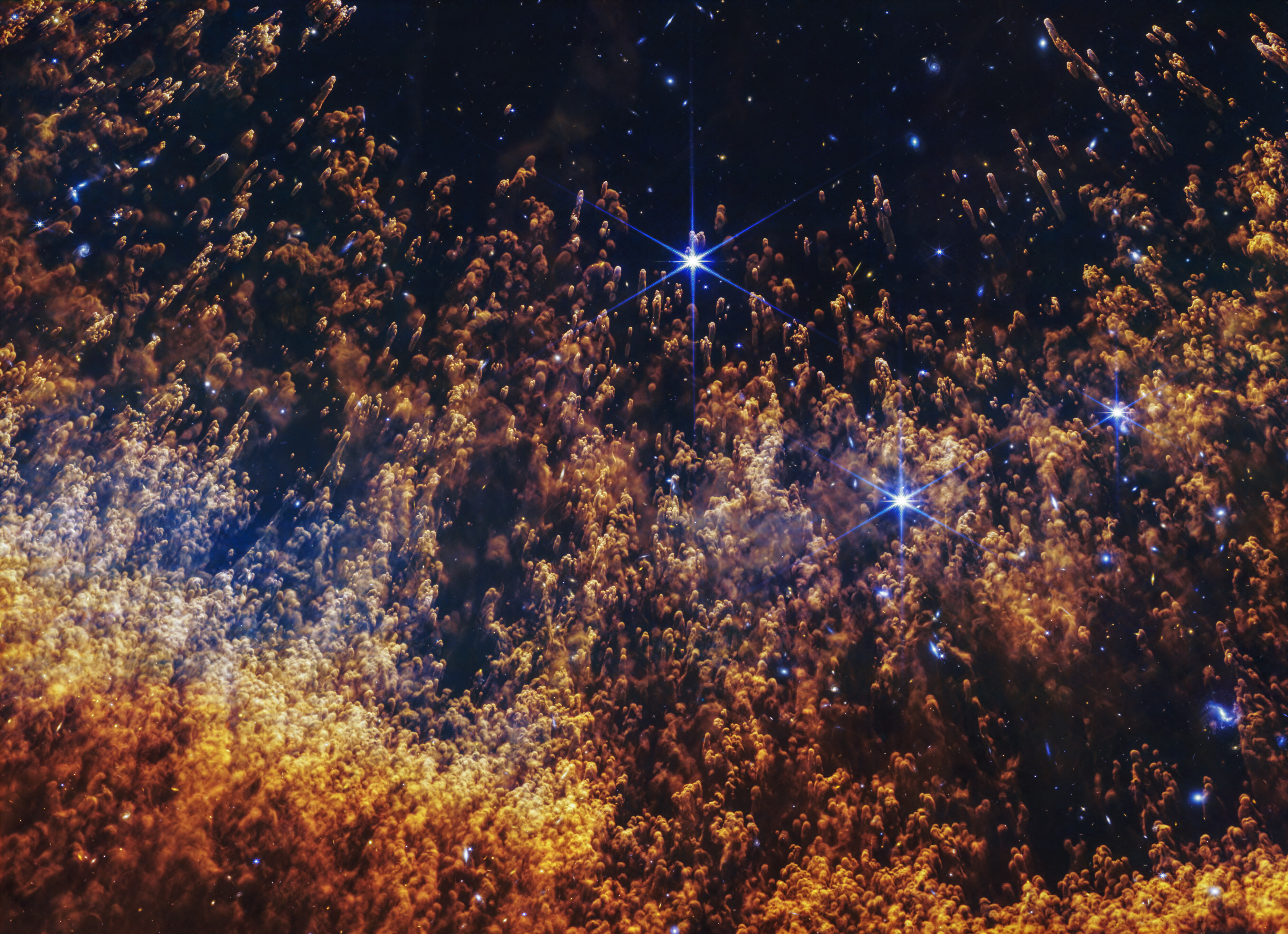
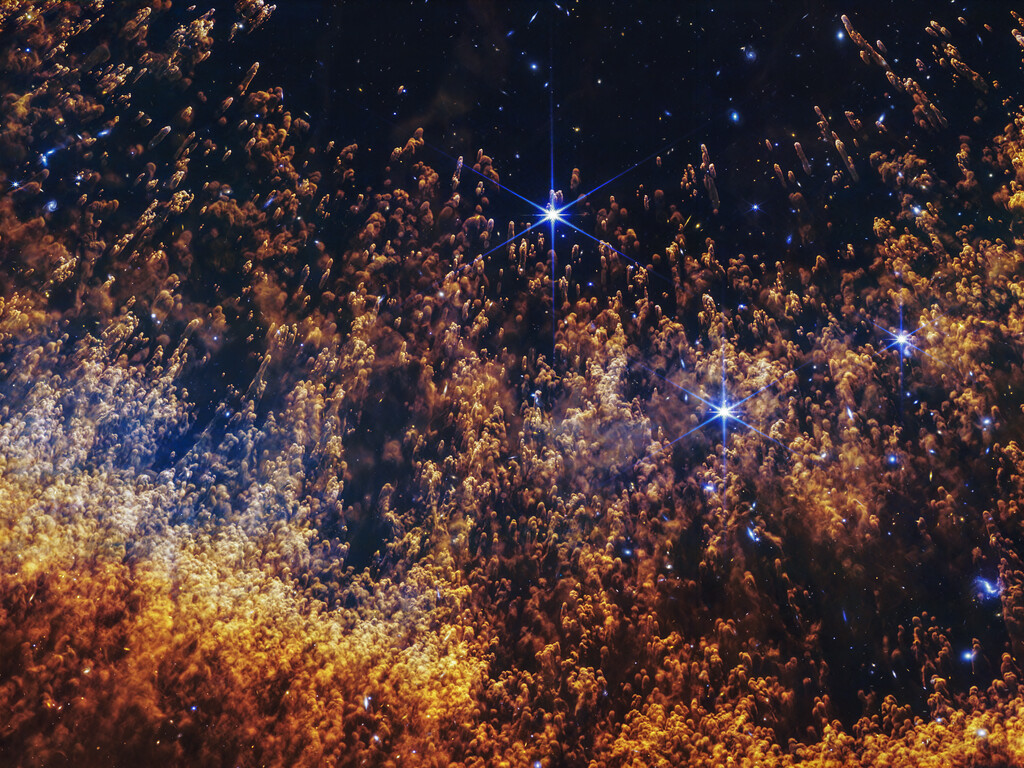
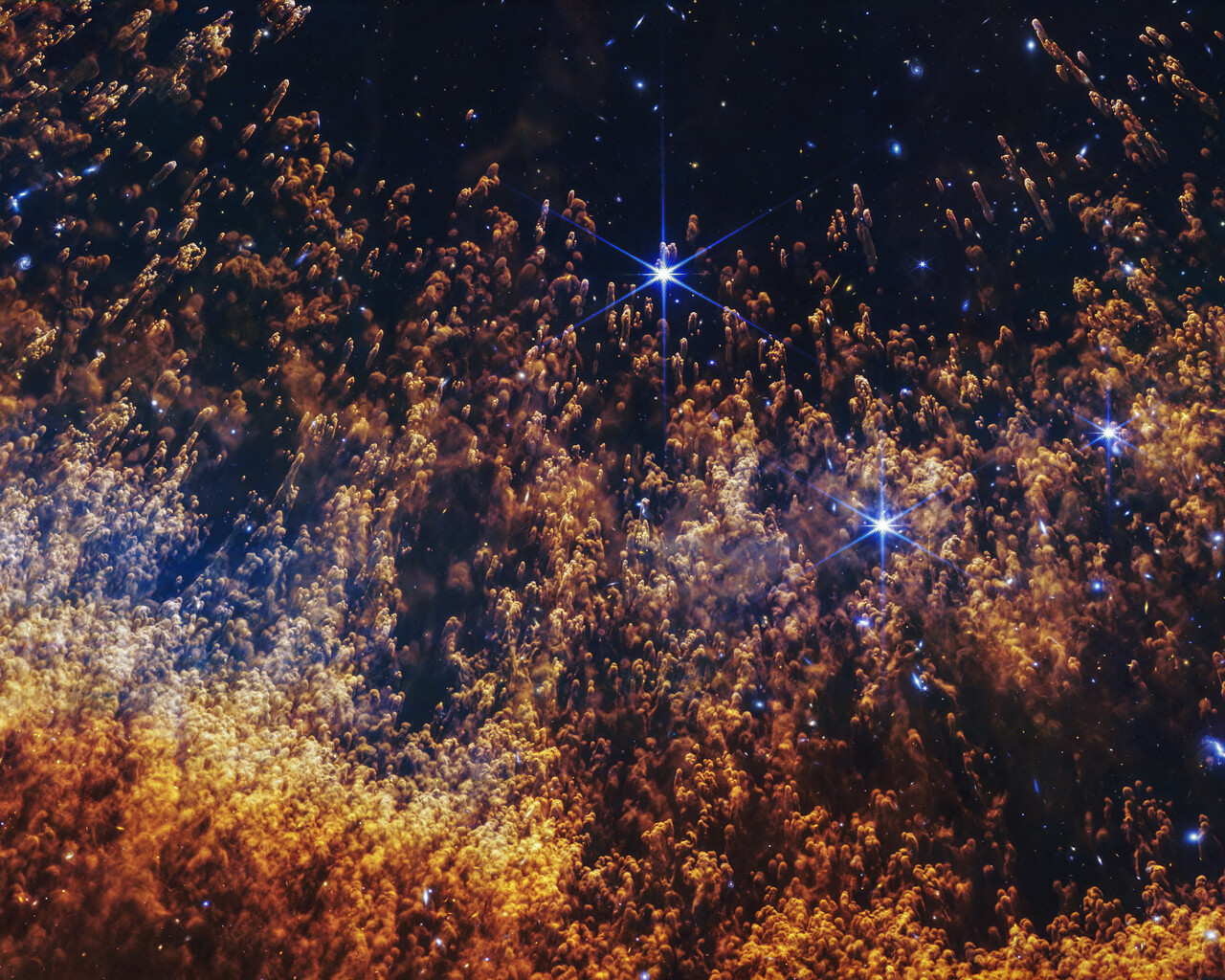
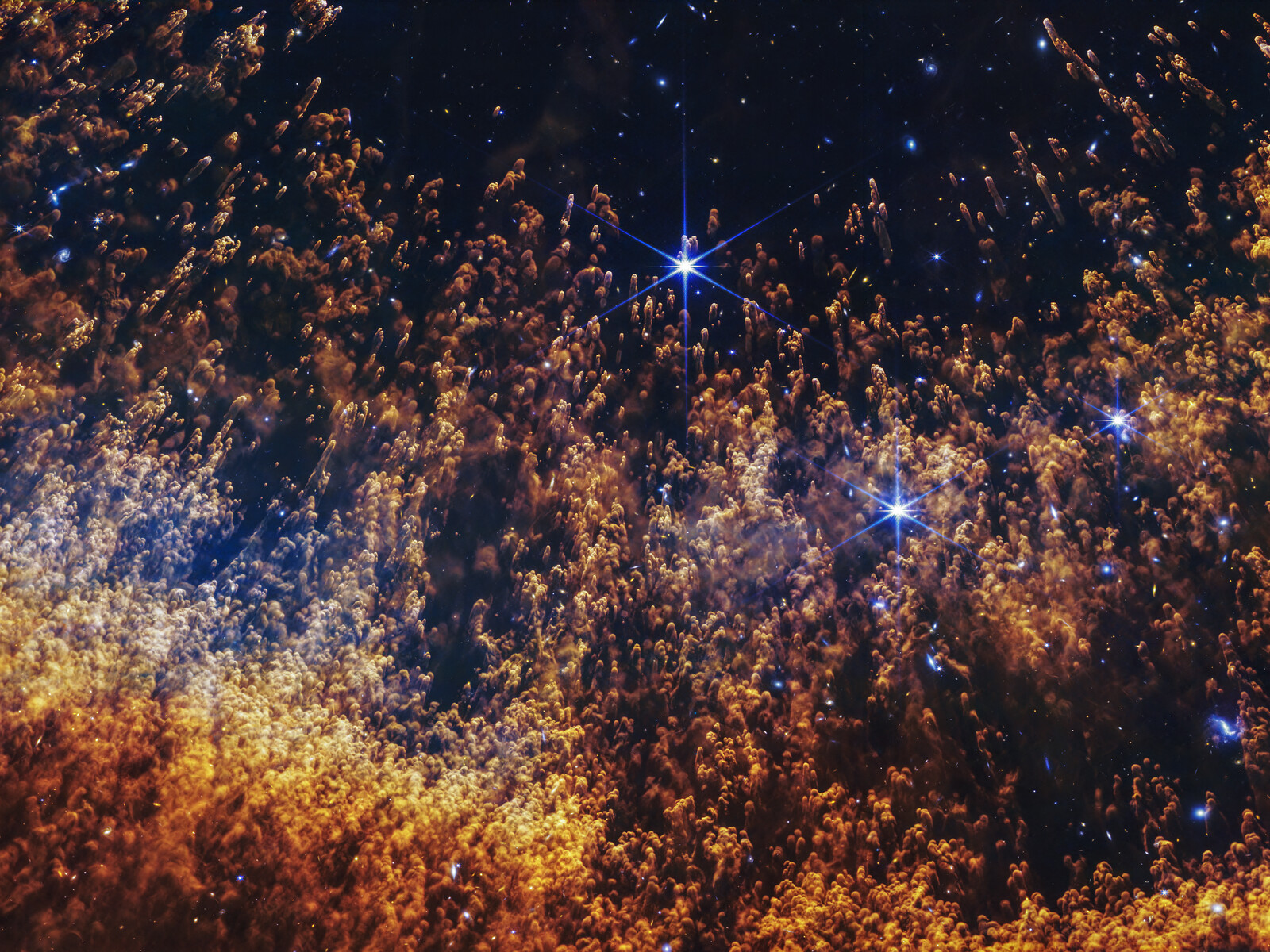
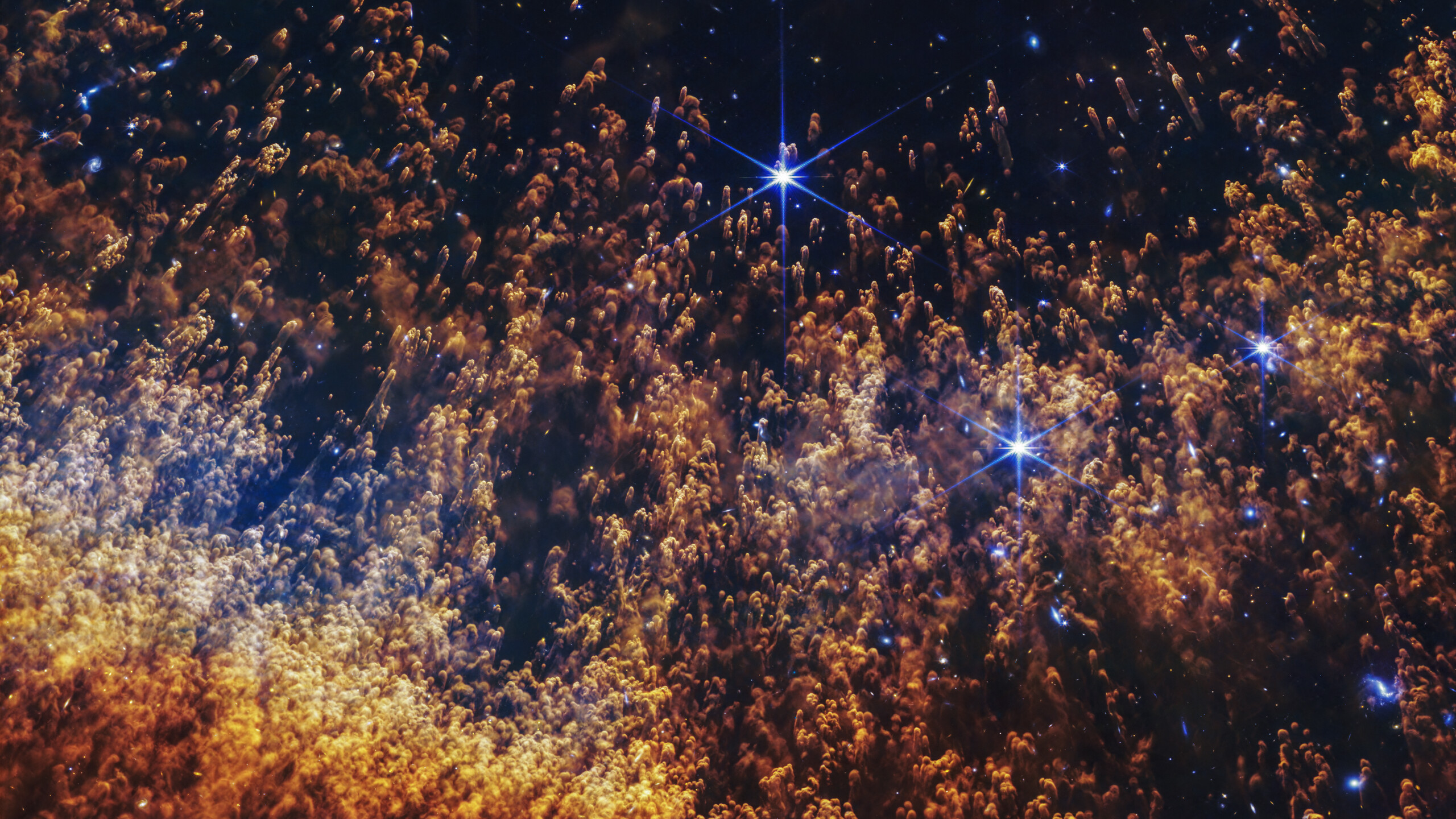
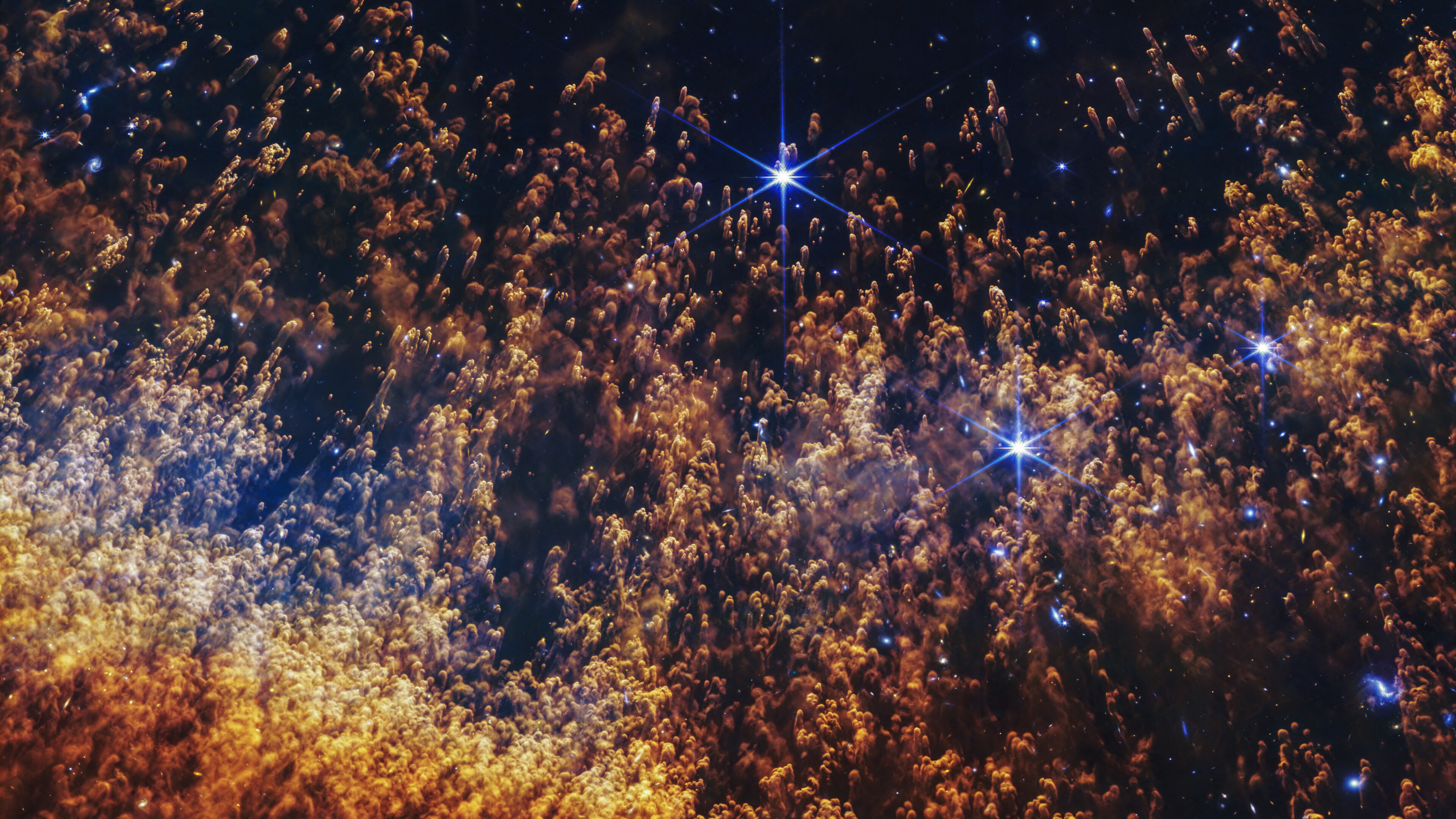
Helix Nebula (NIRCam image)

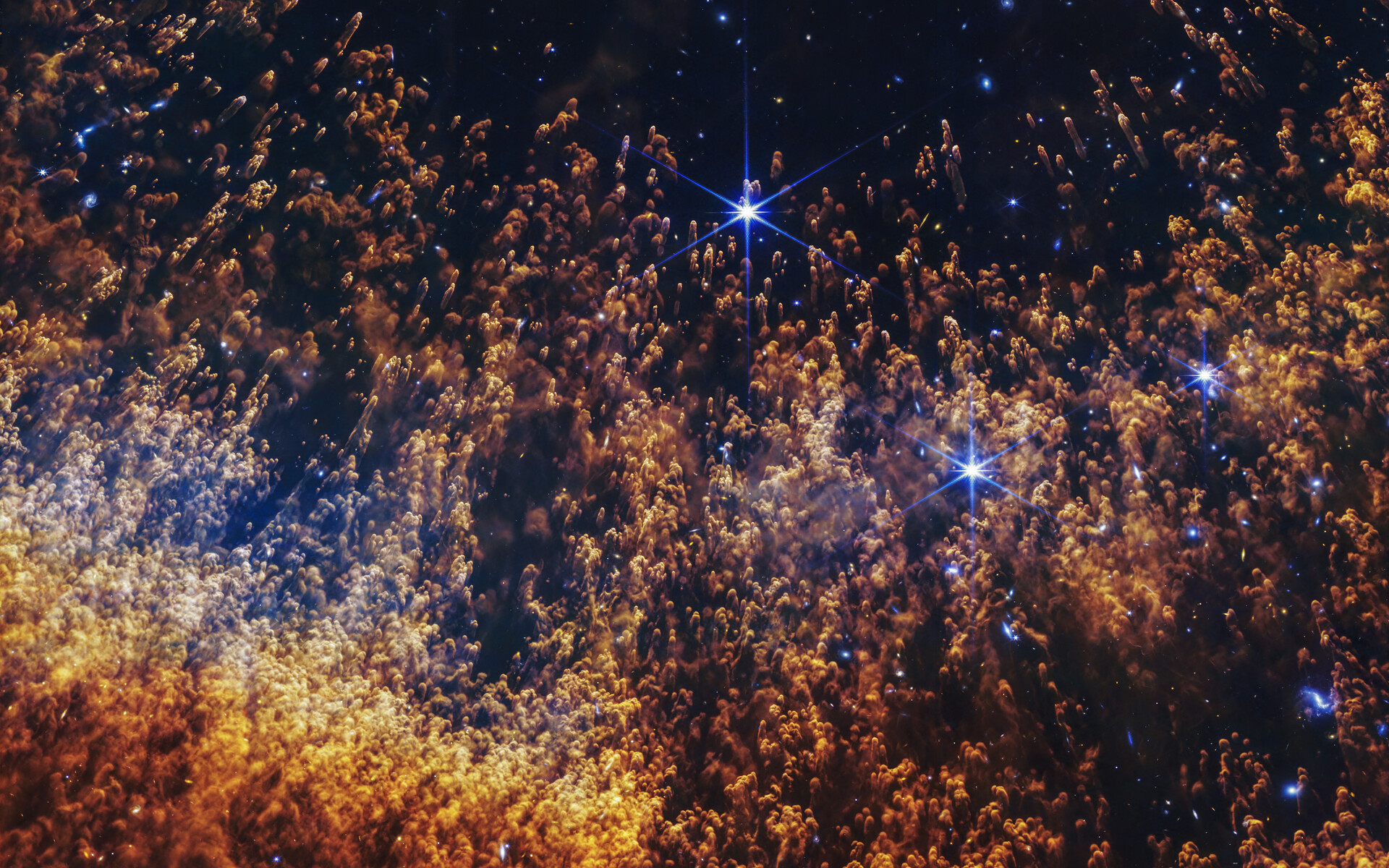
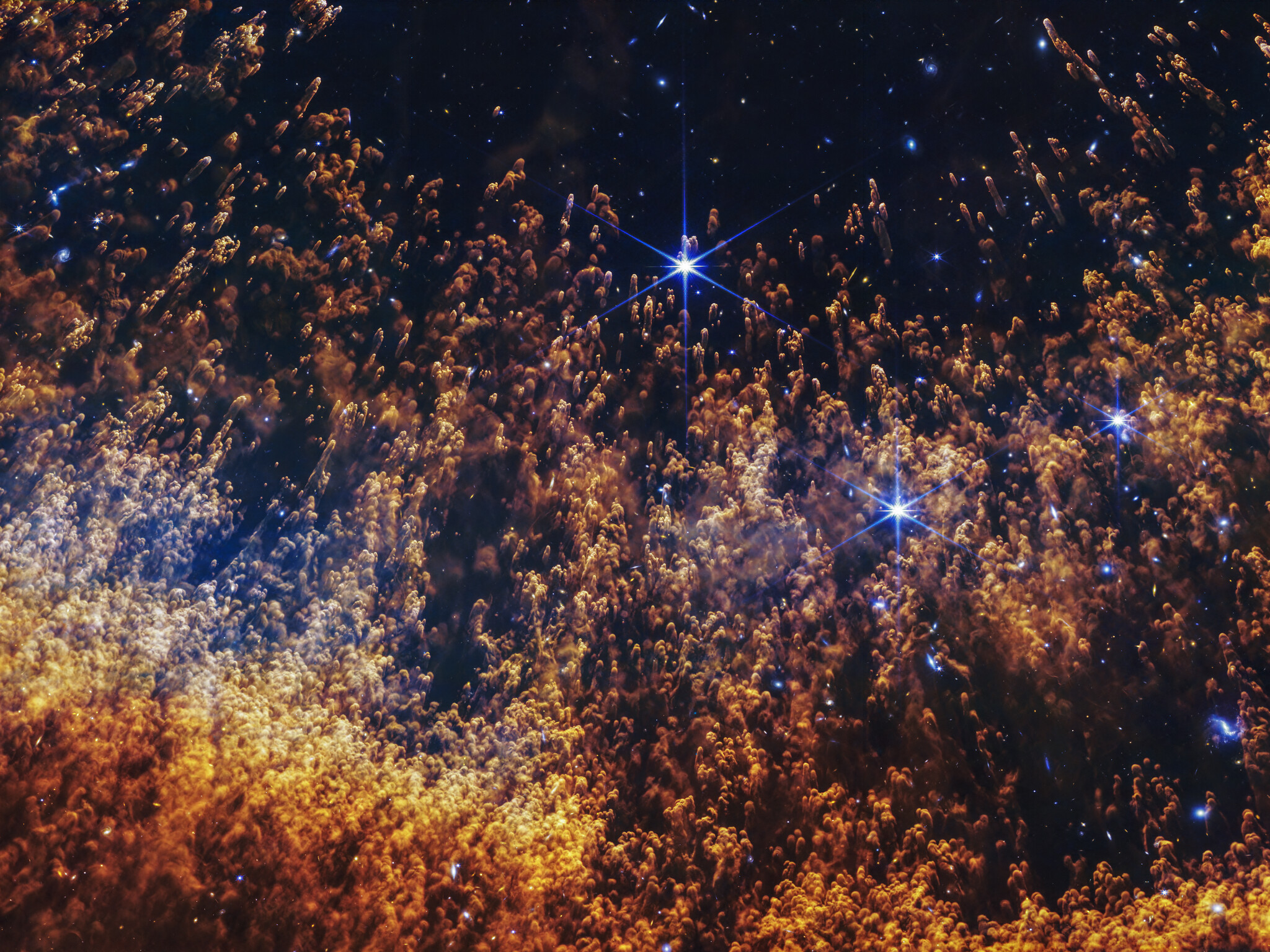
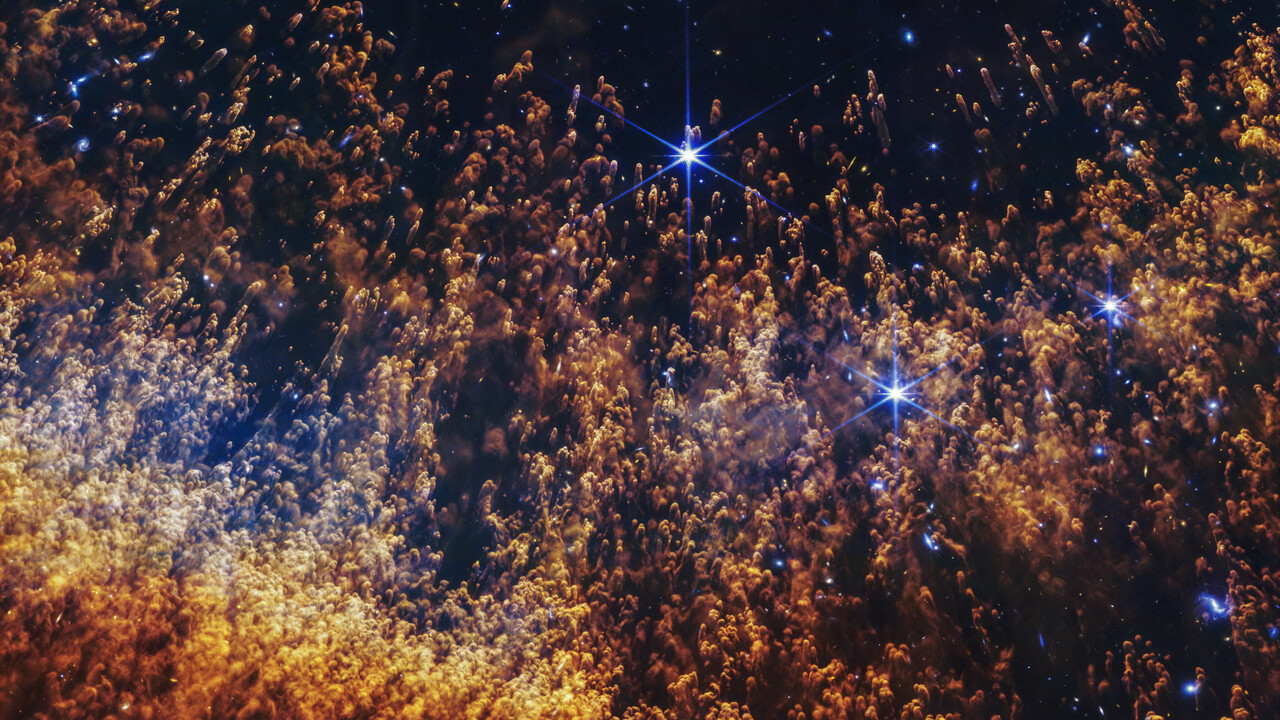
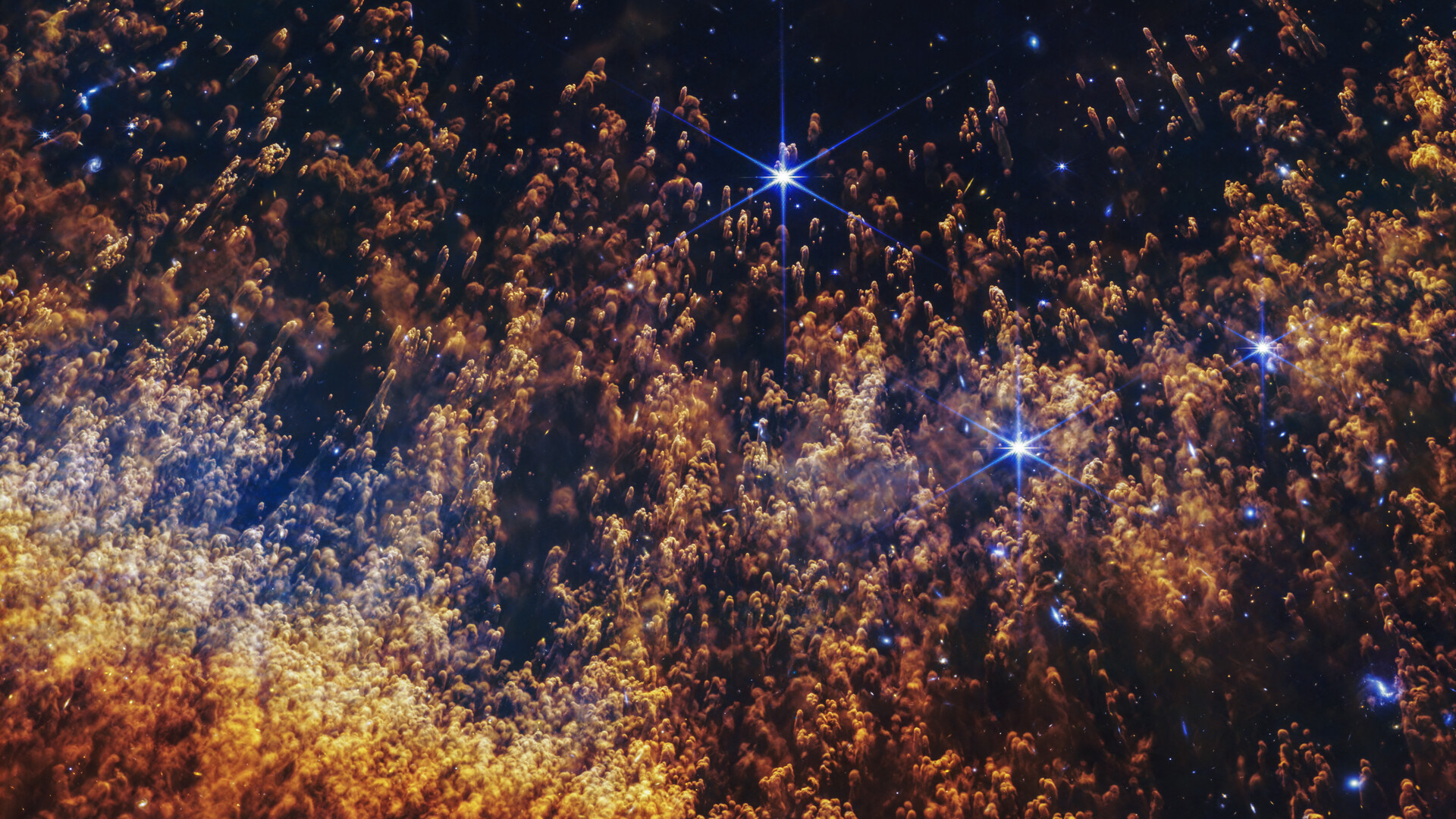
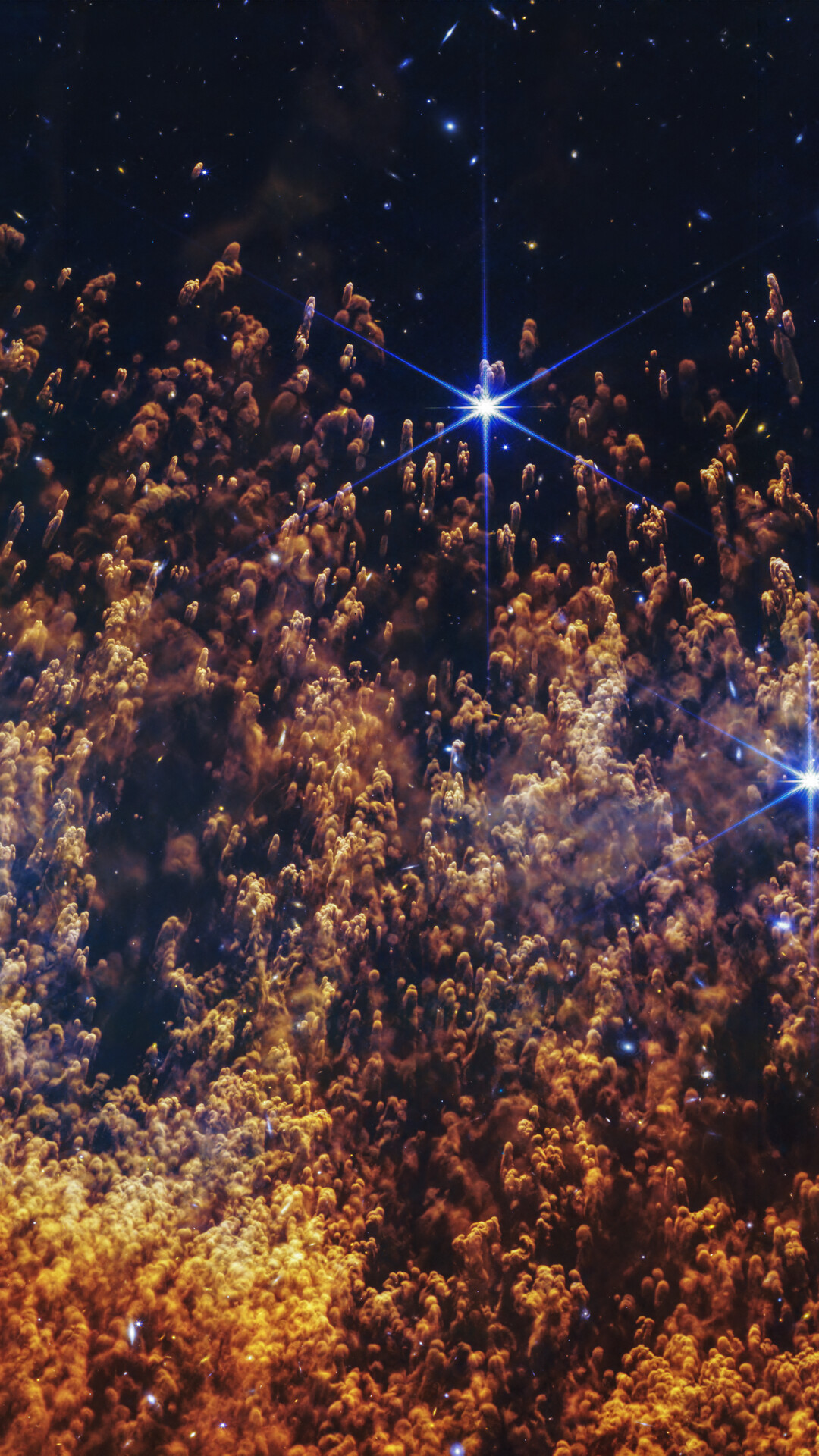
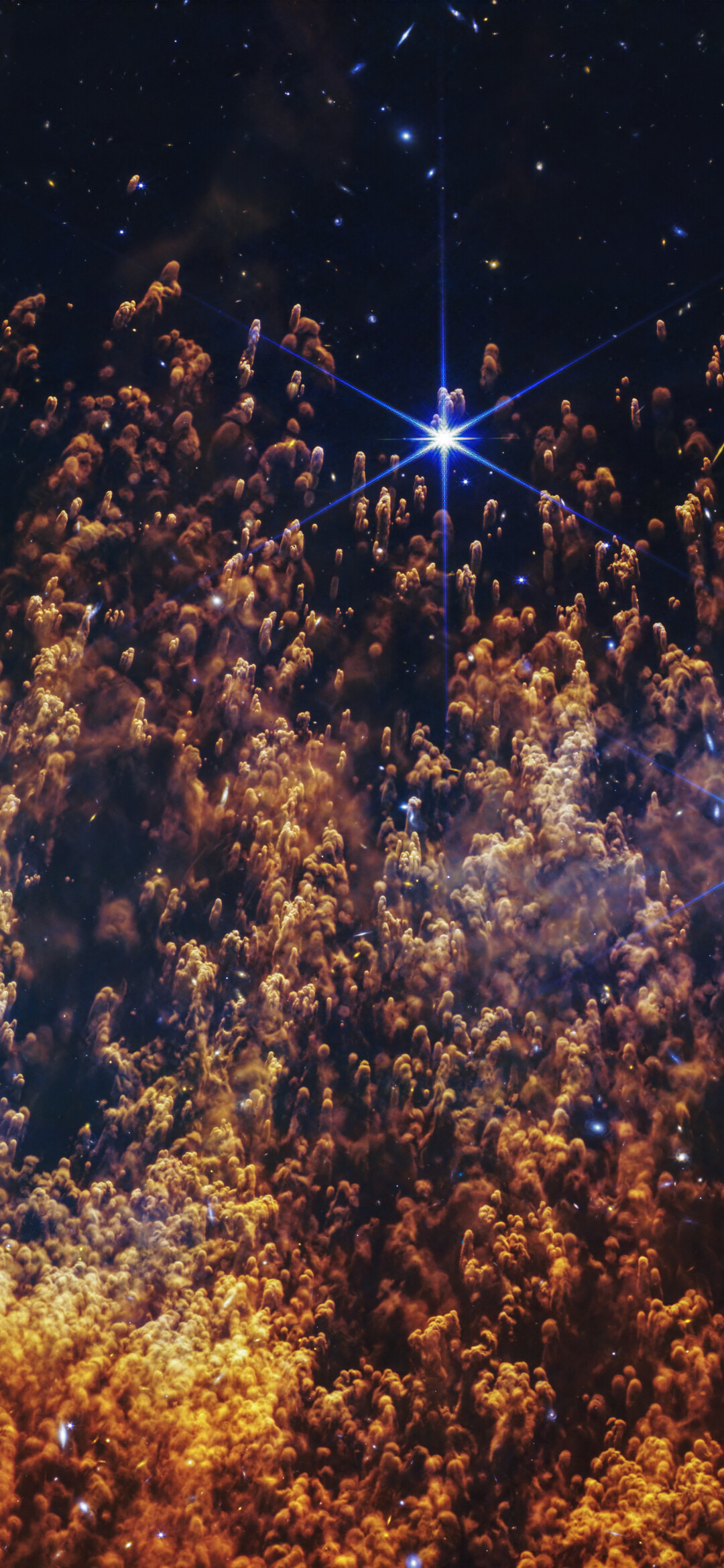
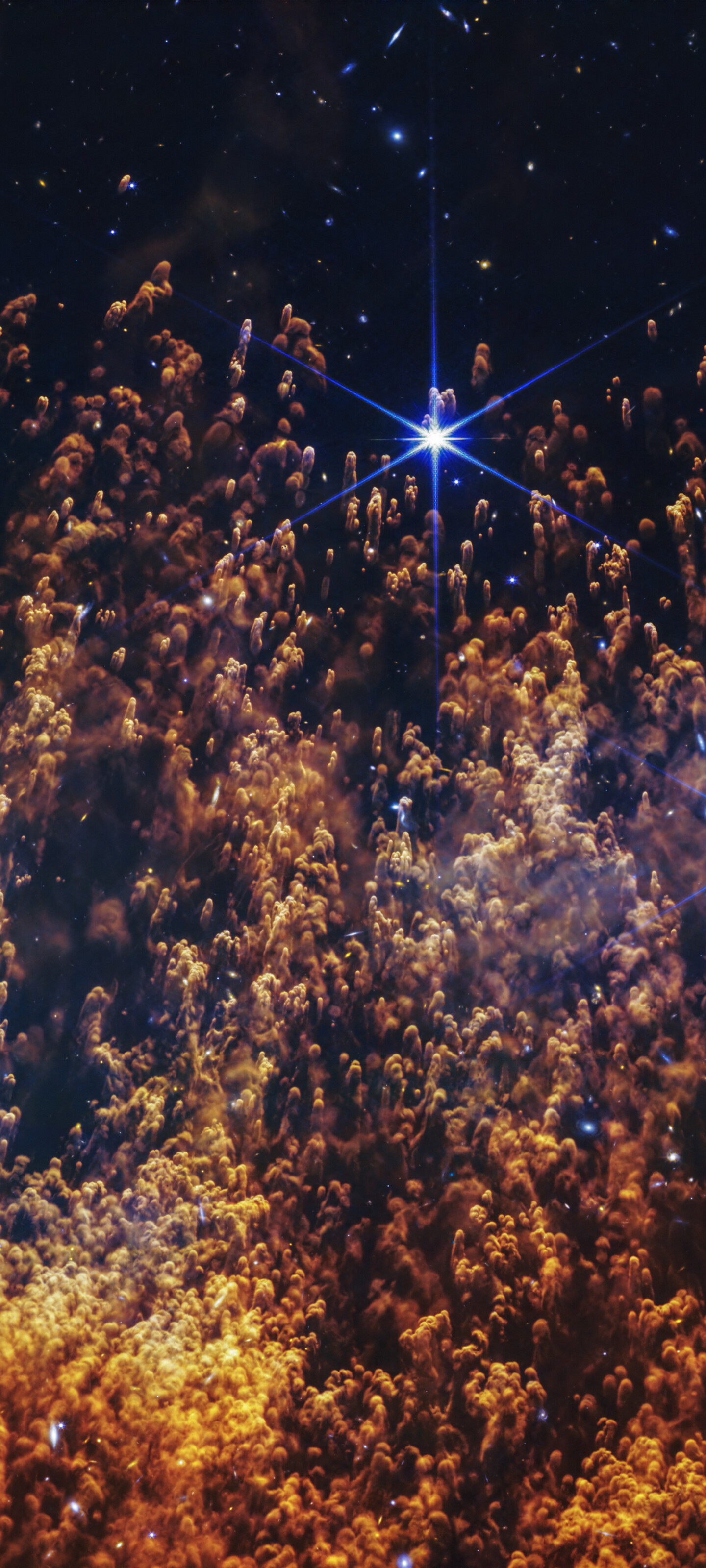
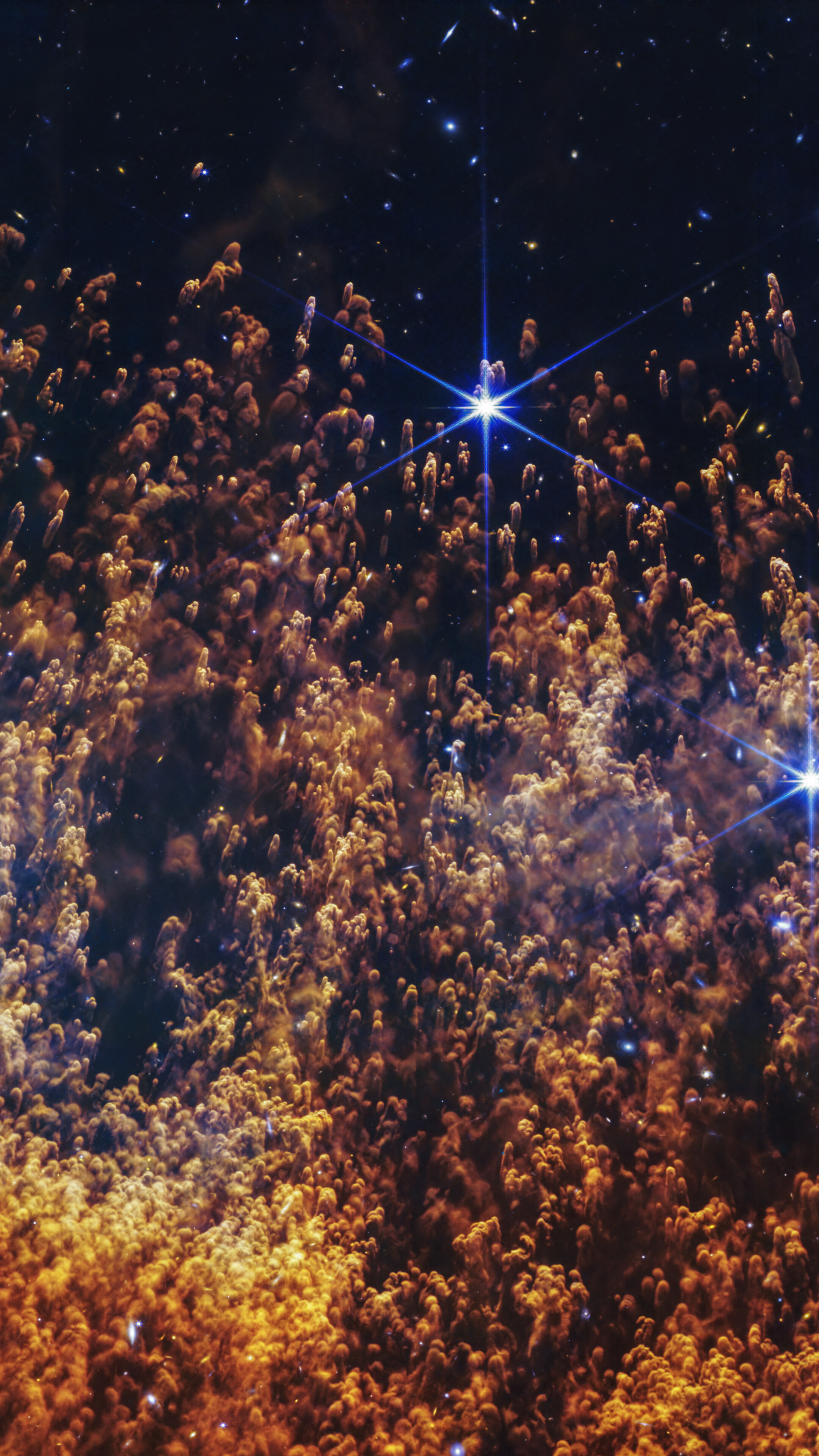
A new image from the James Webb Space Telescope of a portion of the Helix Nebula highlights comet-like knots, fierce stellar winds, and layers of gas shed off by a dying star interacting with its surrounding environment. Webb’s image also shows the stark transition between the hottest gas to the coolest gas as the shell expands out from the central white dwarf.
[Image description: A closeup of a small section of the Helix Nebula, an expanding shell of gas and dust. Thousands of orange and gold comet-like pillars stream upward from the bottom, like thin liquid blown up a sheet of glass. These pillars are around the circumference of the arced shell, which forms a partial orange semi-circle at the bottom. The pillars are more numerous and denser at the bottom, and darker red. They fade to orange and then yellow in the arc. In the top two-thirds, they are thinner and more golden, and it’s easier to see the black background of space. Several bright blue stars, some with diffraction spikes, are scattered throughout. A few larger stars are on the right side.]
Credit:NASA, ESA, CSA, STScI, A. Pagan (STScI)
About the Image
| Id: | weic2601a | |
|---|---|---|
| Type: | Observation | |
| Release date: | 20 January 2026, 16:00 | |
| Related releases: | weic2601 | |
| Size: | 11124 x 8064 px | |