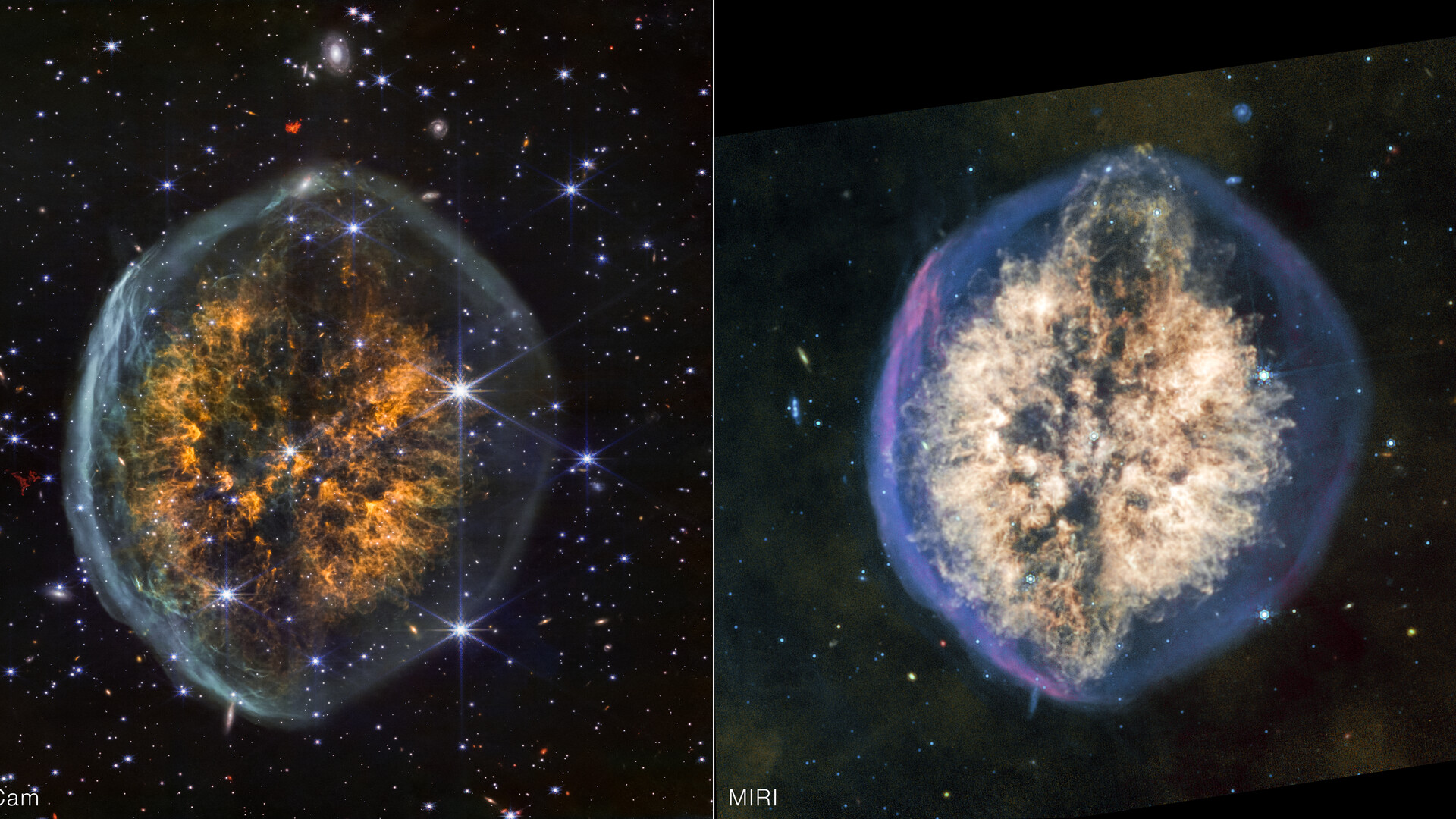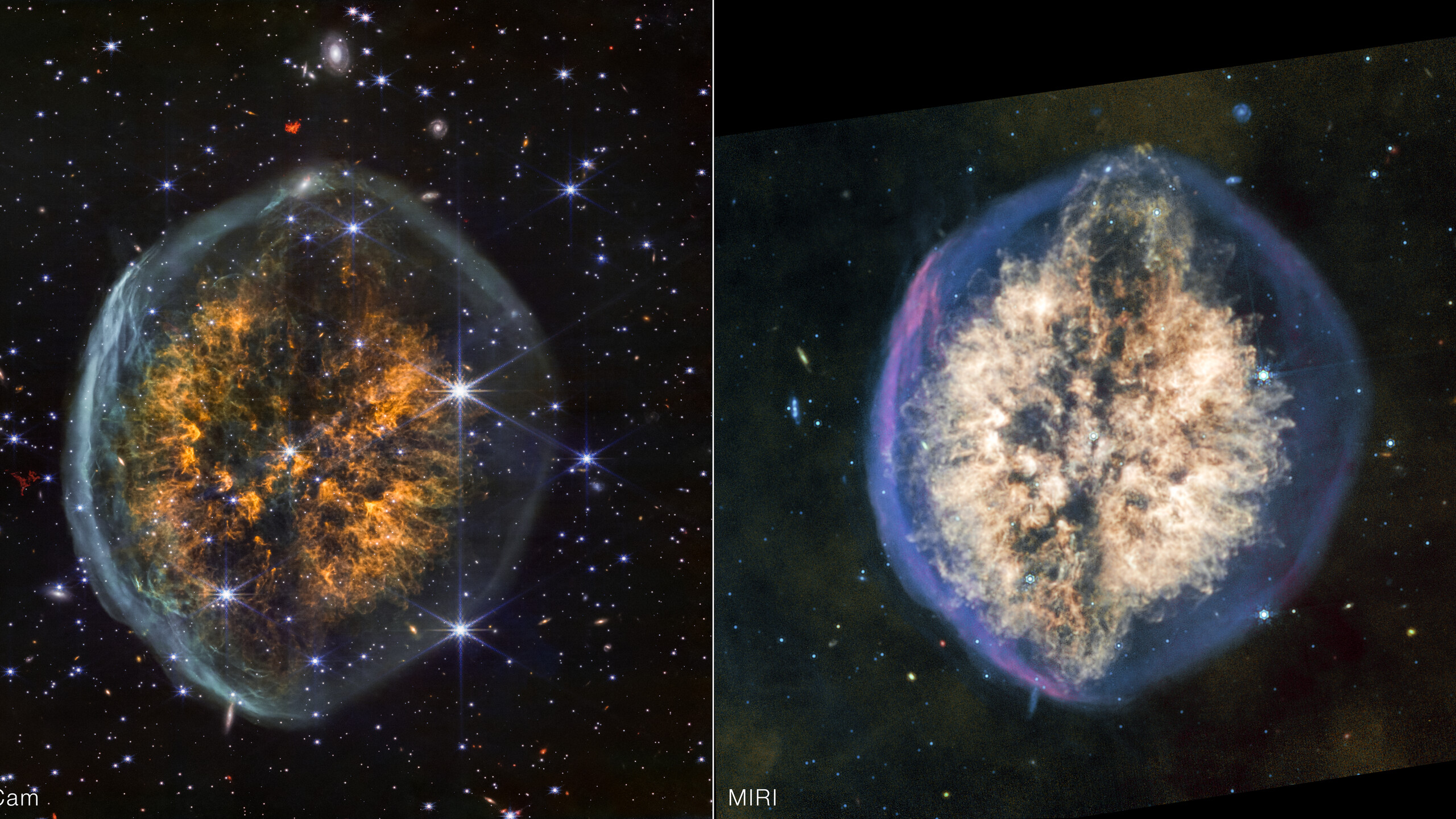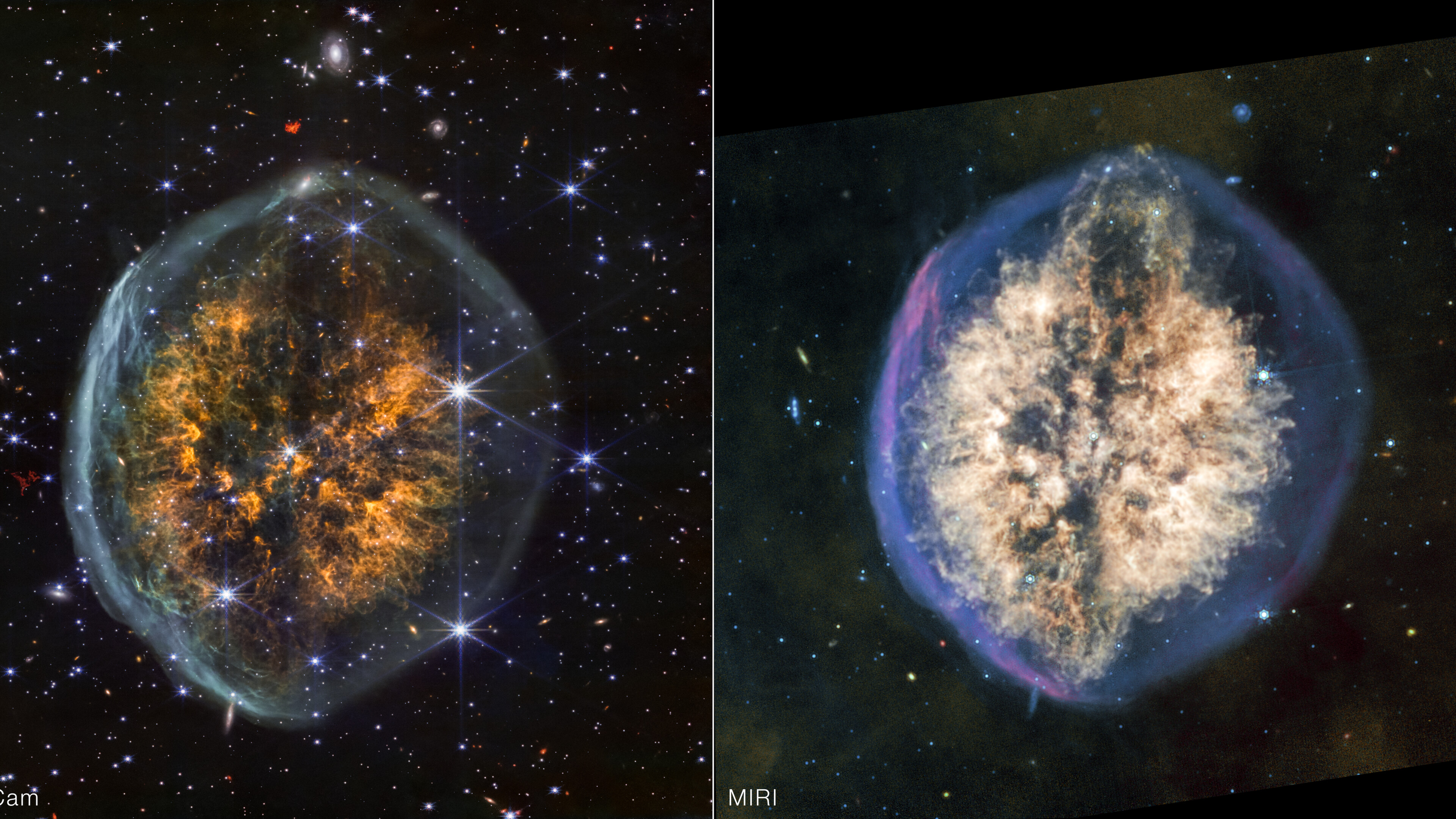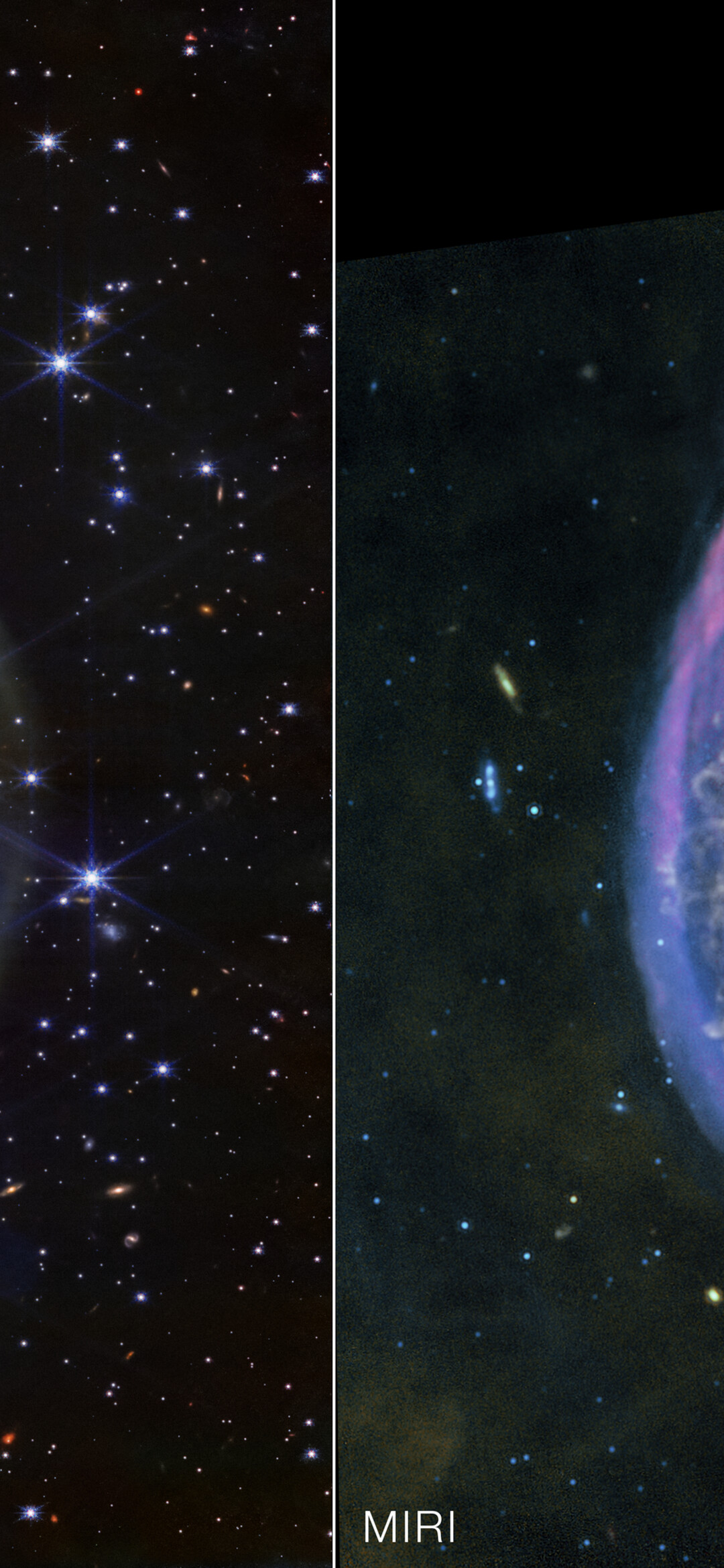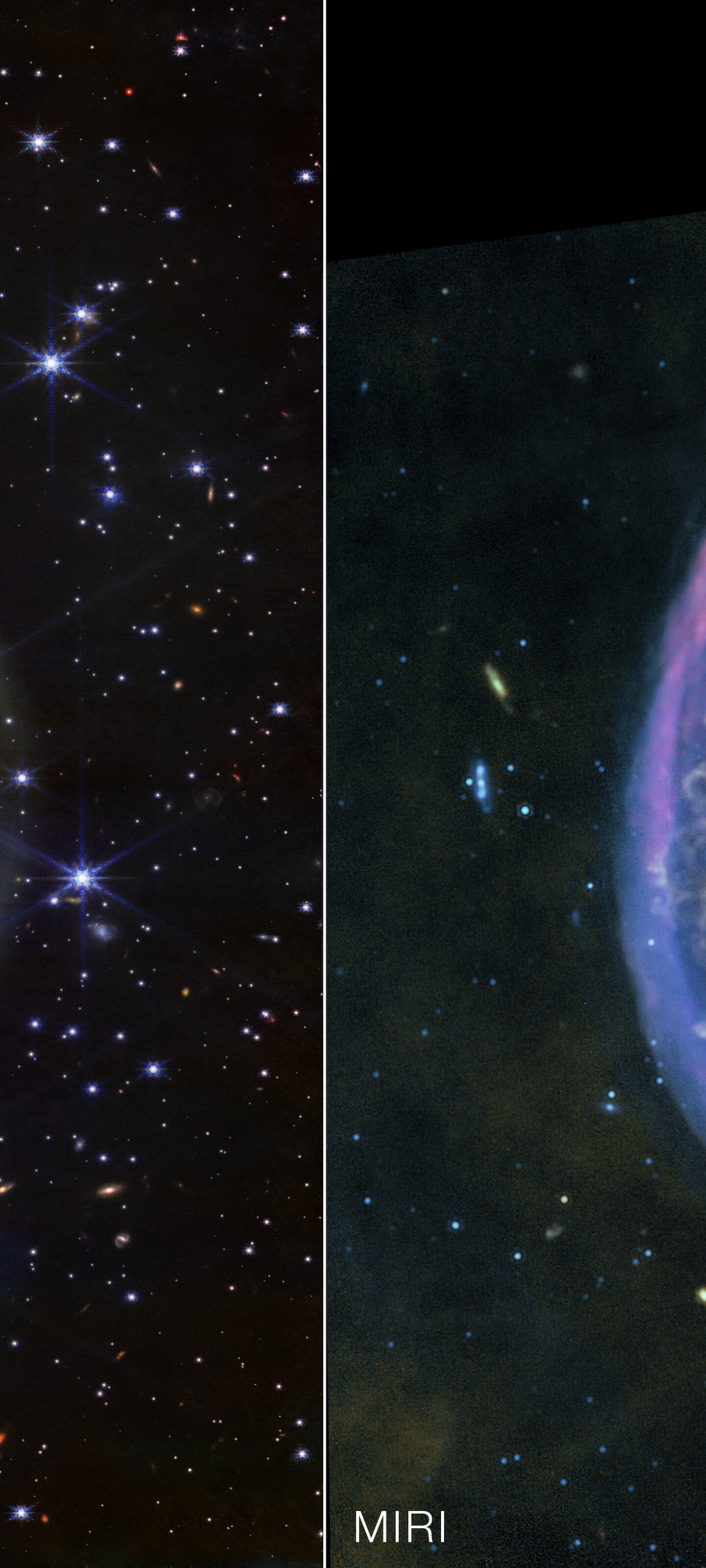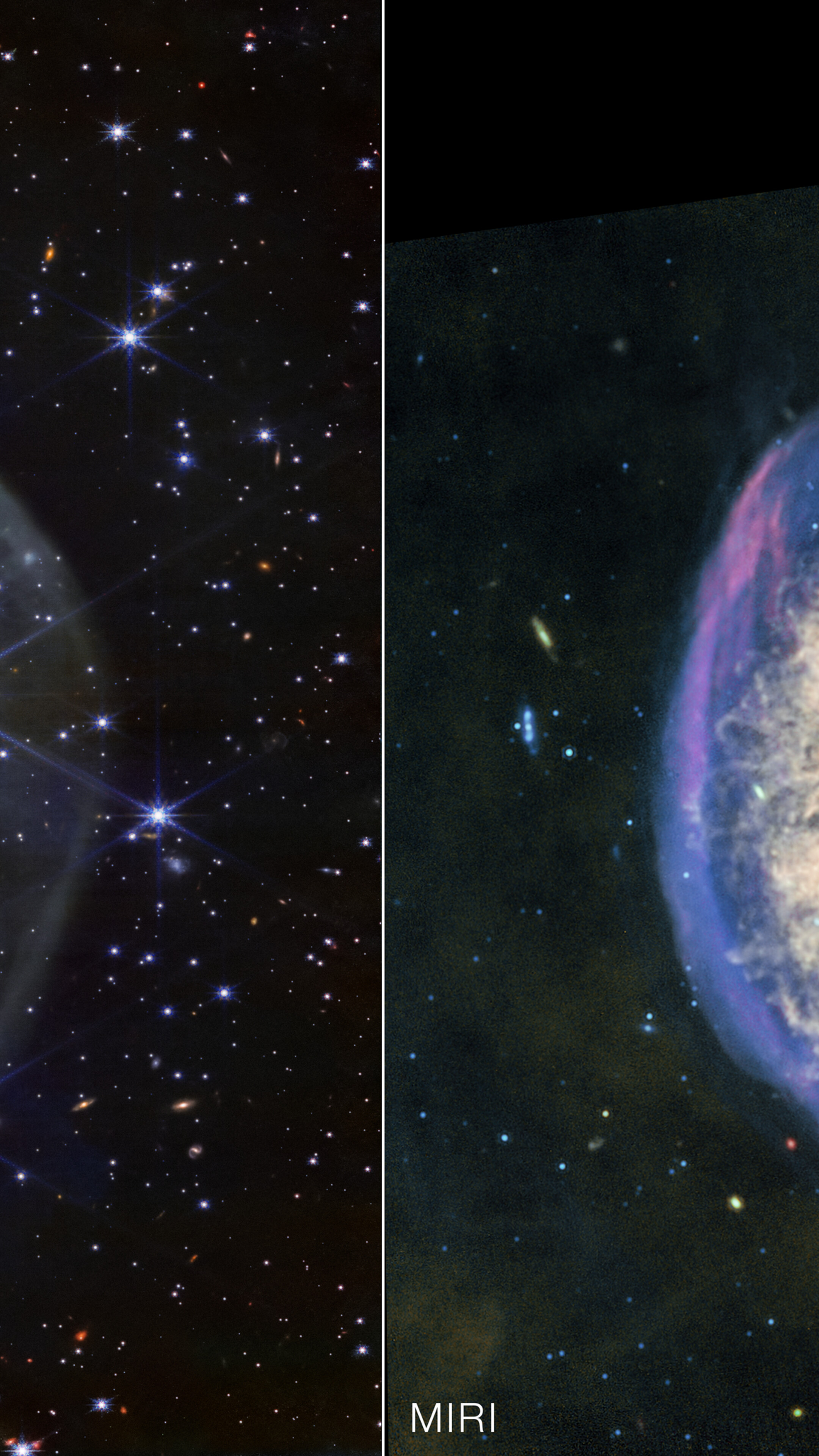

Exposed Cranium Nebula (NIRCam and MIRI images)
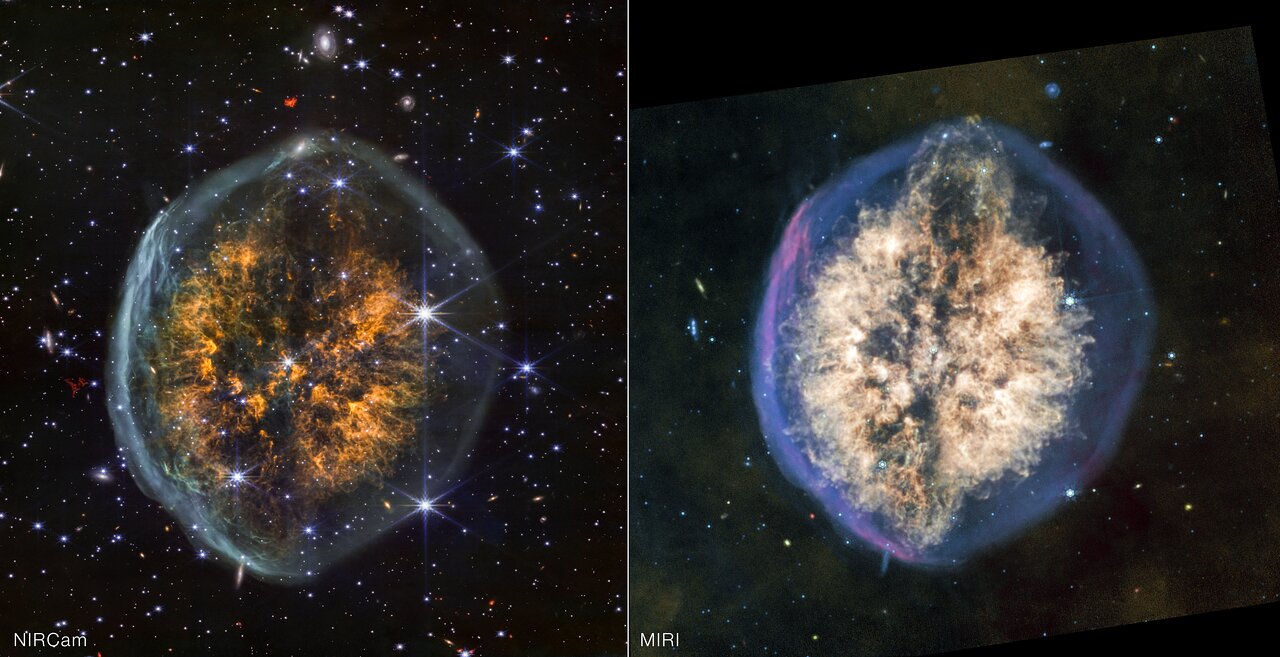
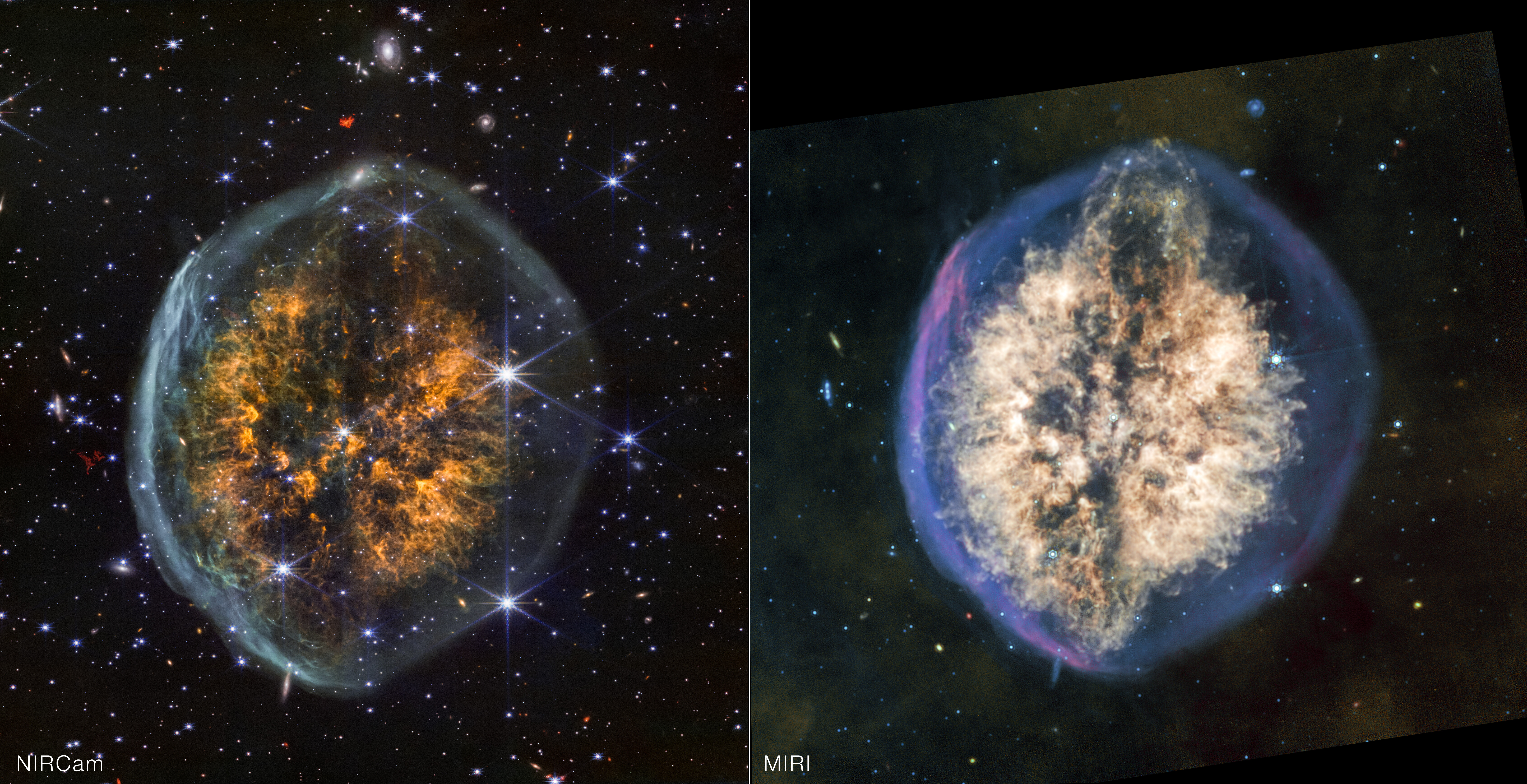
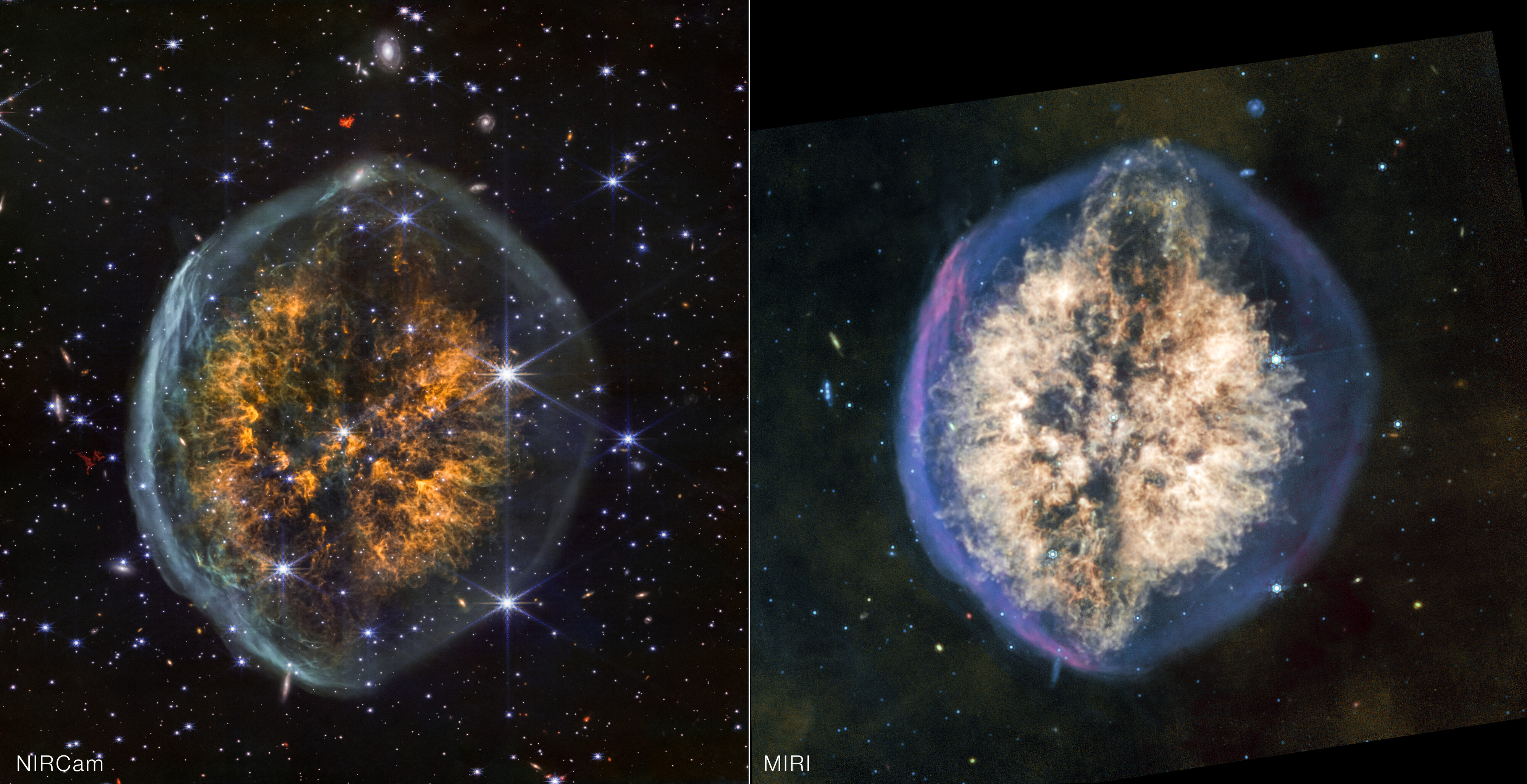
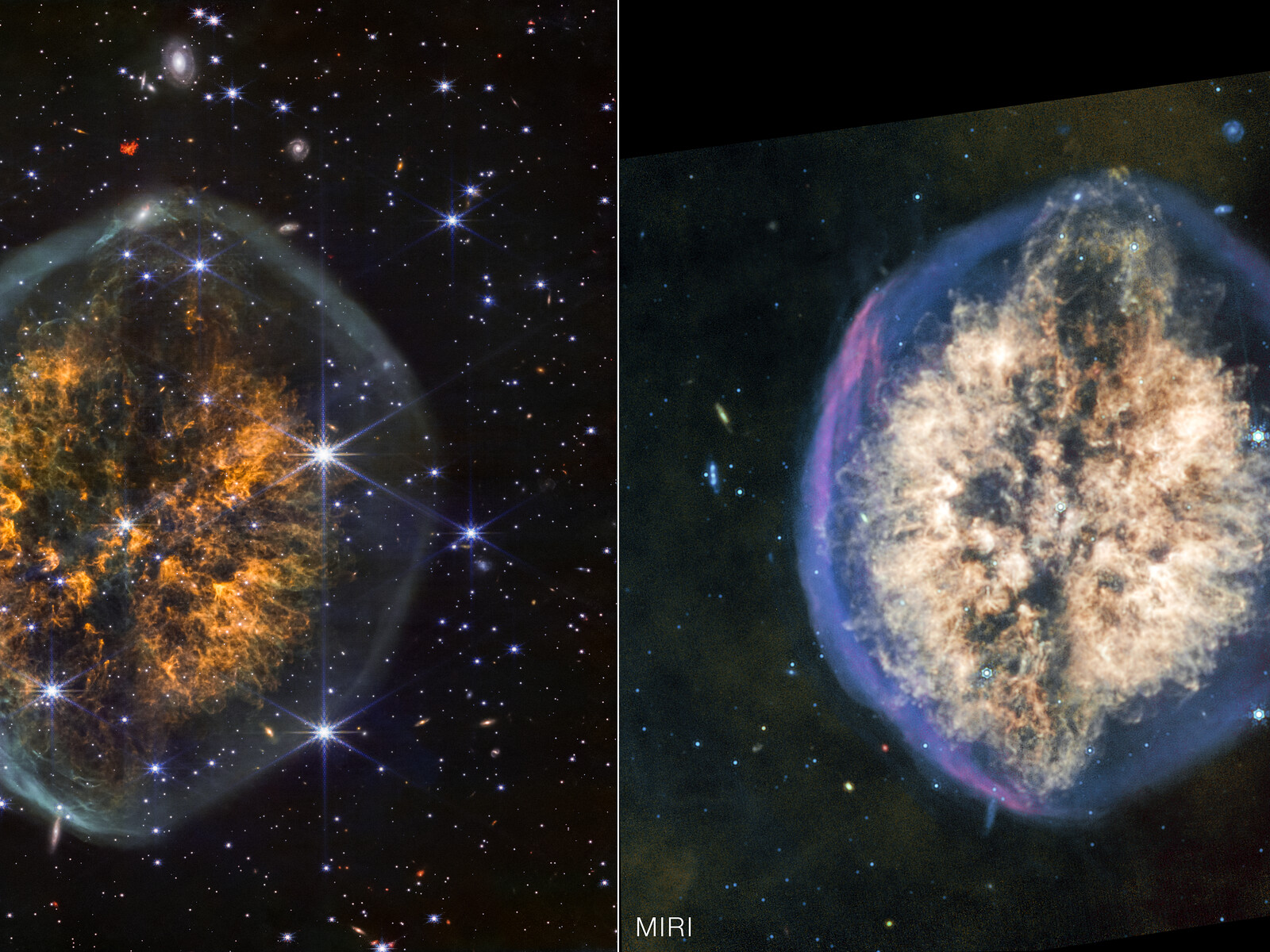
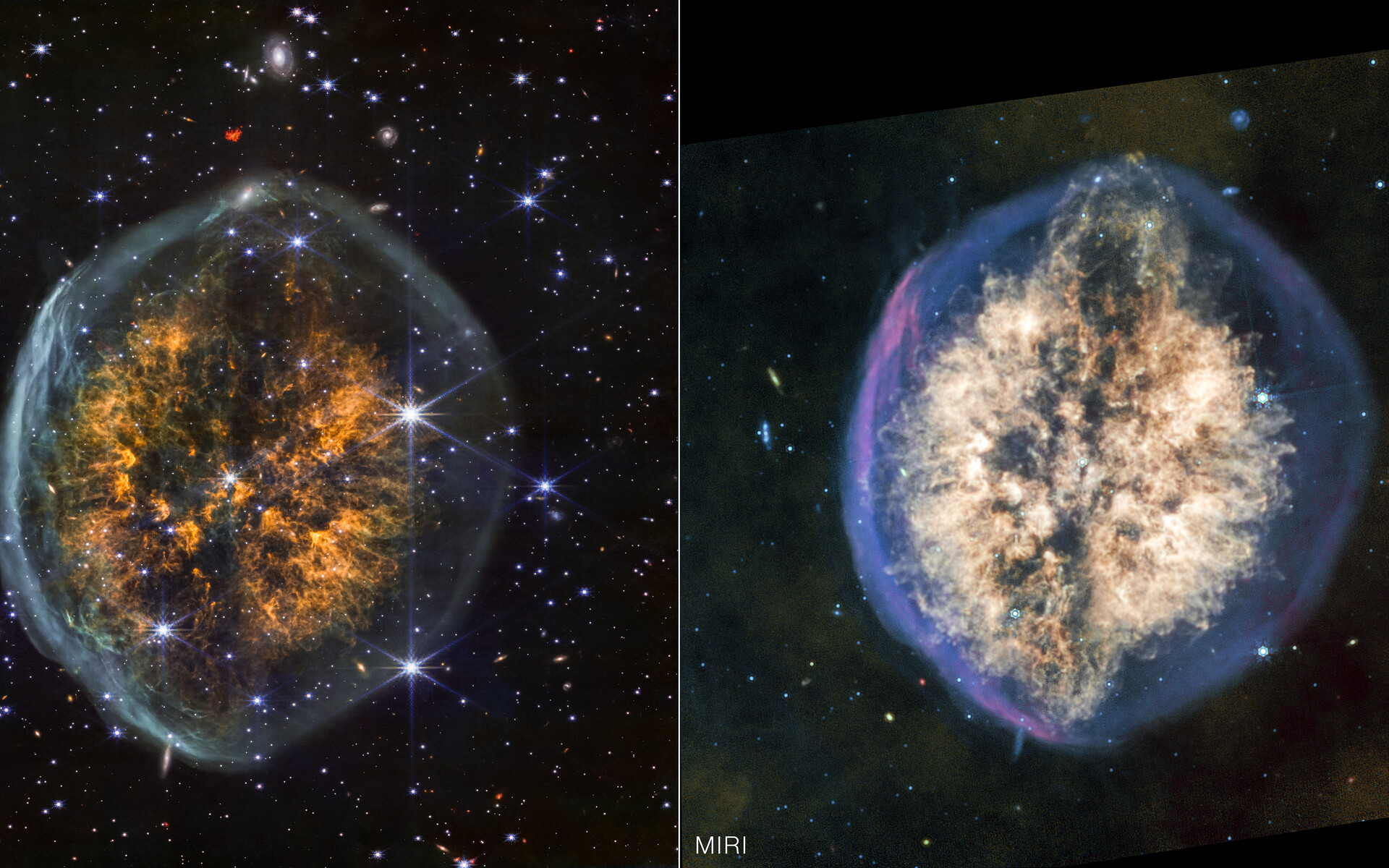
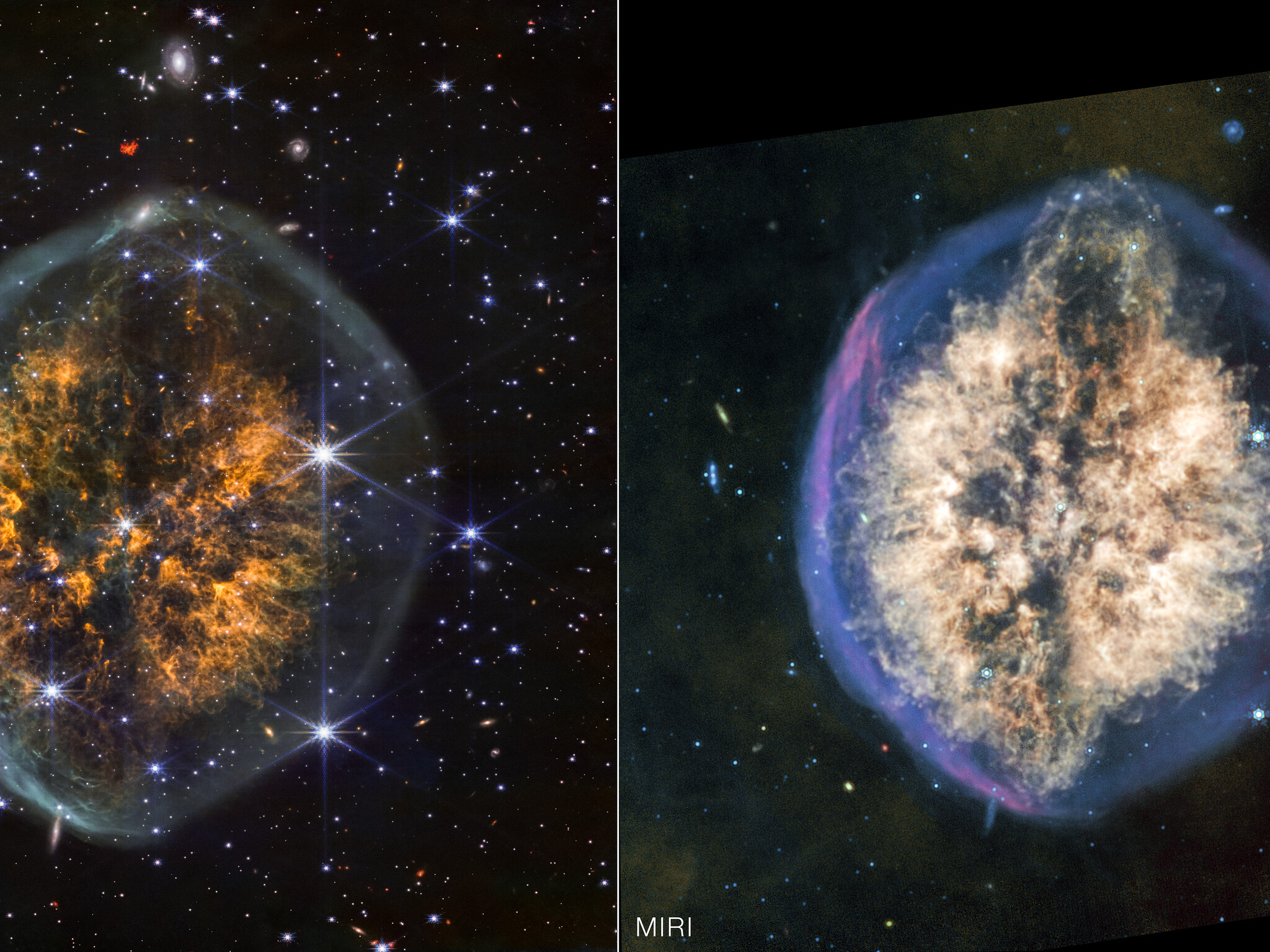
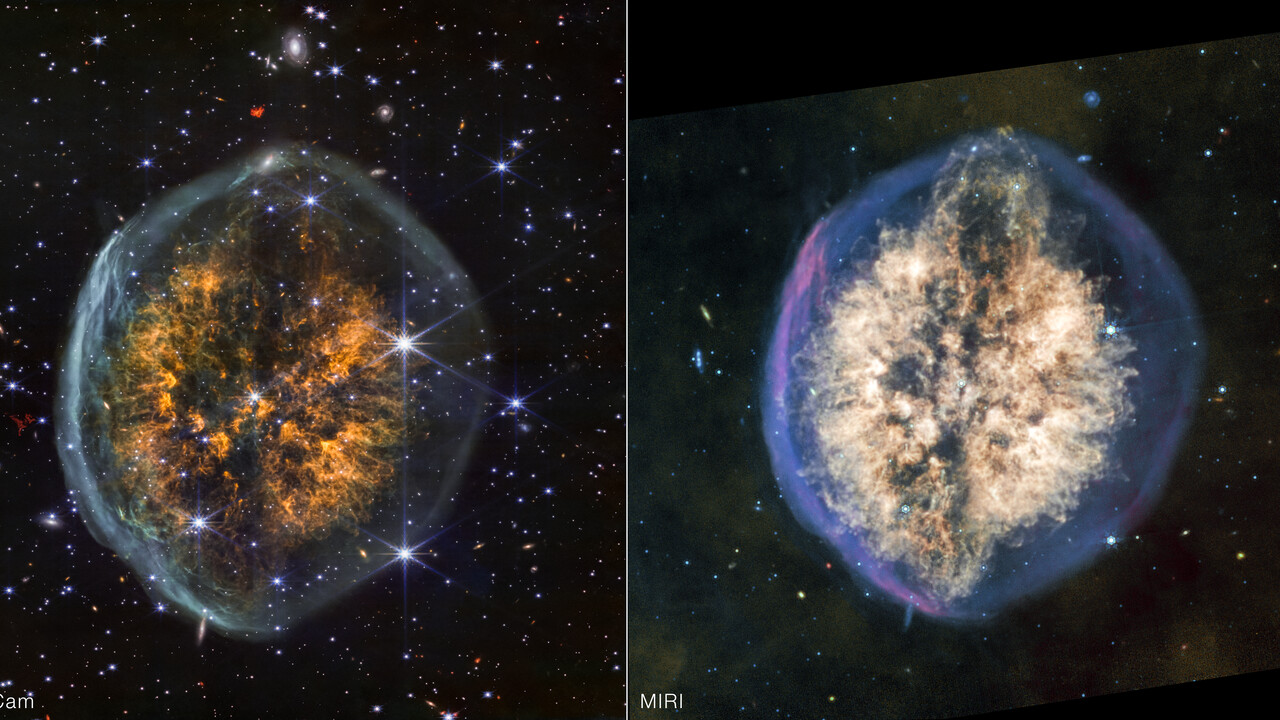
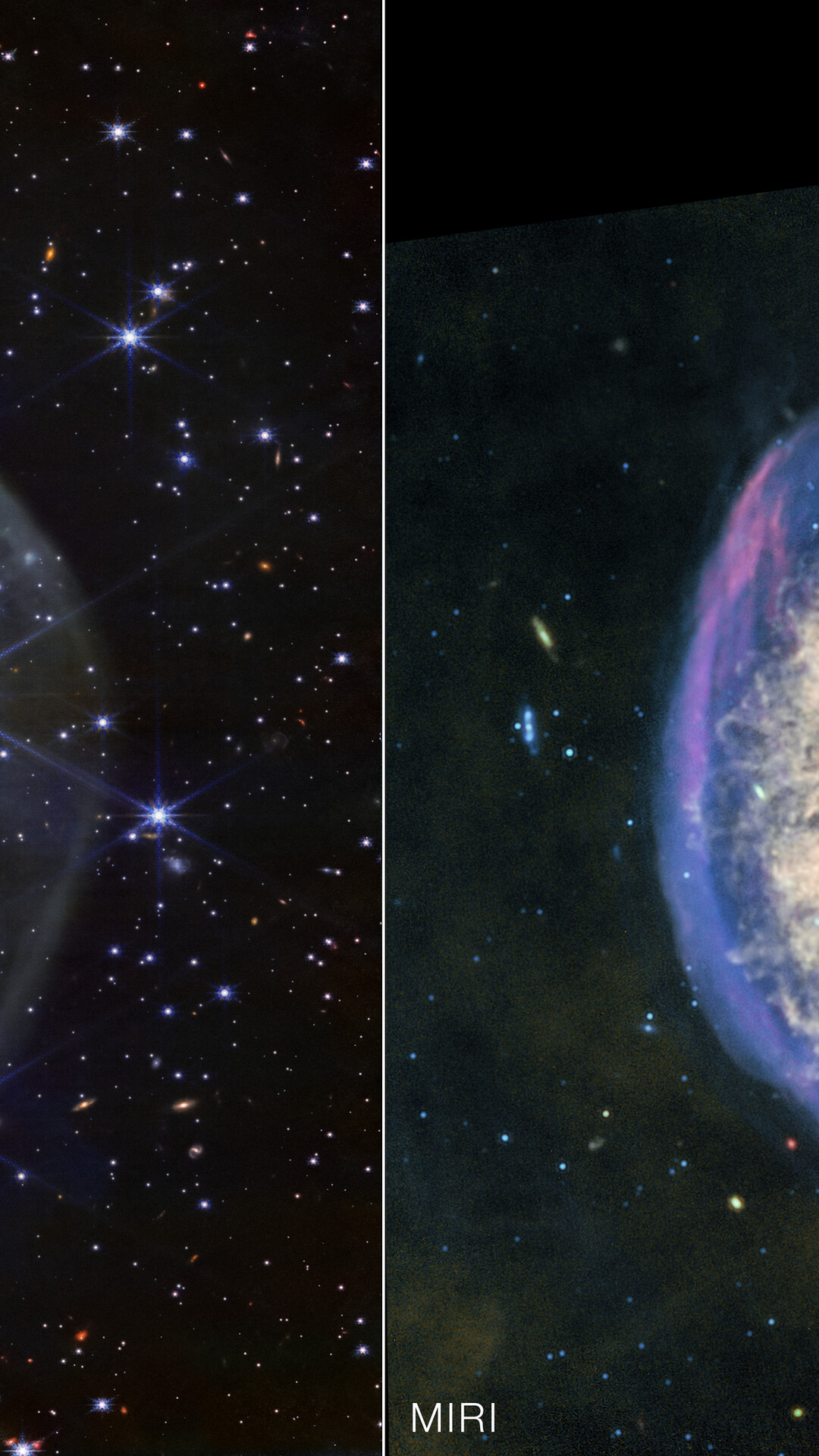
The differences in what Webb’s infrared instruments reveal and conceal within the PMR 1 “Exposed Cranium” nebula is apparent in this side-by-side view. More stars and background galaxies shine through the view of Webb’s NIRCam (Near-Infrared Camera), while cosmic dust glows more prominently in the light captured by MIRI (Mid-Infrared Instrument).
The dark centre lane that contributes to this nebula’s distinctive brain-like appearance is more noticeable in NIRCam, but its apparent role in the ejection of material at the top and bottom of the nebula is seen more clearly in MIRI’s view. Observing the cosmos in various wavelengths of light provides a more complete picture of how the universe works.
[Image description: Side-by-side images of the same nebula show how differently it appears in near-infrared, on the left, versus mid-infrared light, on the right. The left image is labeled NIRCam and the right is labeled MIRI. In the near-infrared, the nebula’s outer bubble has a white edge and its inner clouds are orange, with a distinct dark lane cutting vertically through the centre. Stars and background galaxies appear around the nebula and through the outer bubble. In the mid-infrared, the outer bubble has a bluish tint and there is more material in the inner clouds, which are coloured off-white. The vertical dark lane is still present but more interrupted and covered by the clouds. Material appears to be erupting out the top of the nebula, and this effect is mirrored to a lesser degree at the bottom, opposite end.]
Credit:NASA, ESA, CSA, STScI, Image Processing: Joseph DePasquale (STScI)
About the Image
| Id: | weic2605a | |
|---|---|---|
| Type: | Collage | |
| Release date: | 25 February 2026, 16:00 | |
| Related releases: | weic2605 | |
| Size: | 8832 x 4535 px | |