
Coordinates
| Position (RA): | 9 28 41.34 |
|---|---|
| Position (Dec): | -49° 36' 39.19" |
| Field of view: | 2.33 x 2.42 arcminutes |
| Orientation: | North is 57.3° right of vertical |

Colours & filters
| Band | Wavelength | Telescope |
|---|---|---|
|
Infrared
Silicate | 10 μm | James Webb Space Telescope MIRI |
|
Infrared
PAH | 11 μm | James Webb Space Telescope MIRI |
| Infrared | 12 μm | James Webb Space Telescope MIRI |
|
Infrared
Silicate | 18 μm | James Webb Space Telescope MIRI |
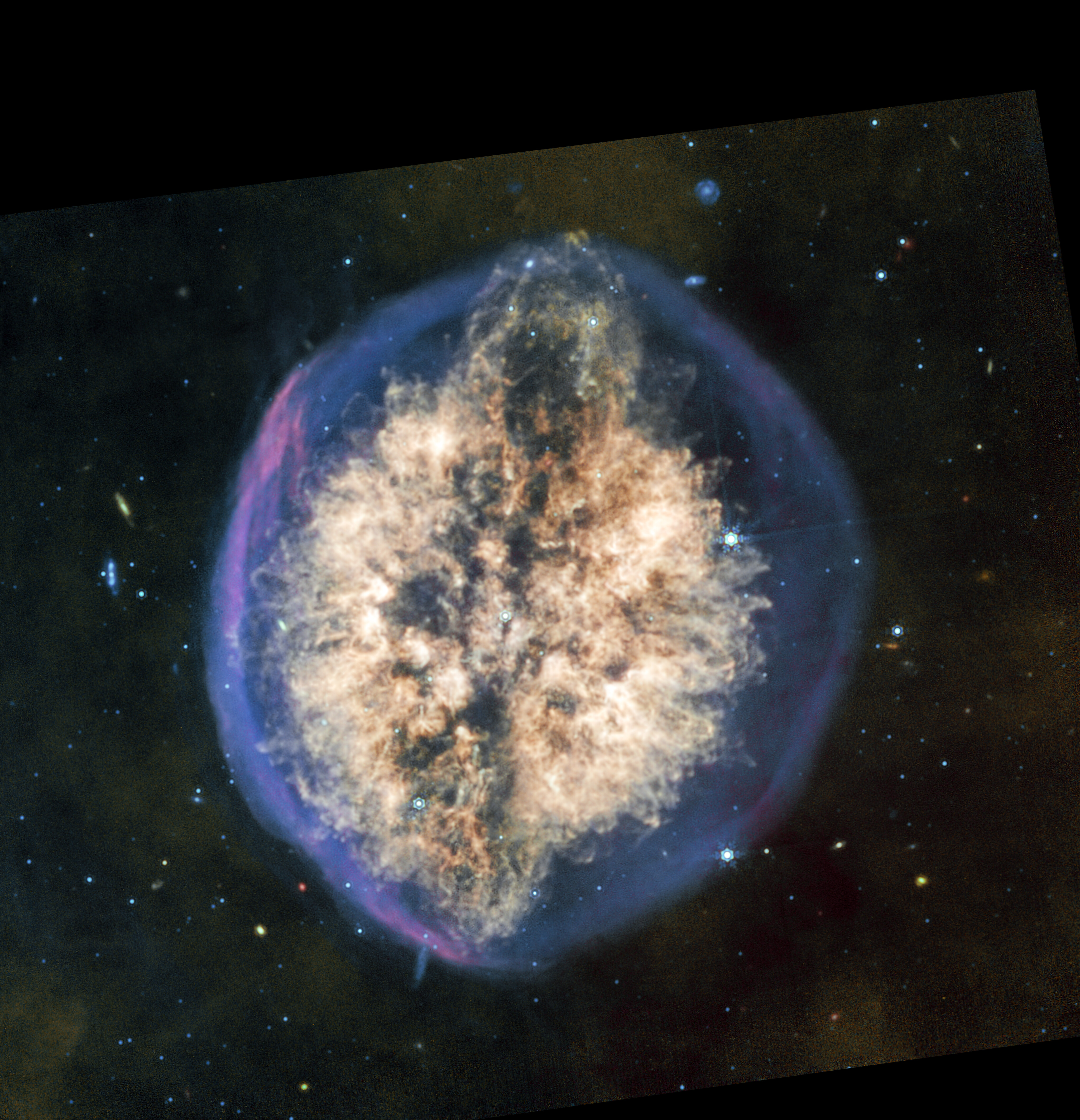
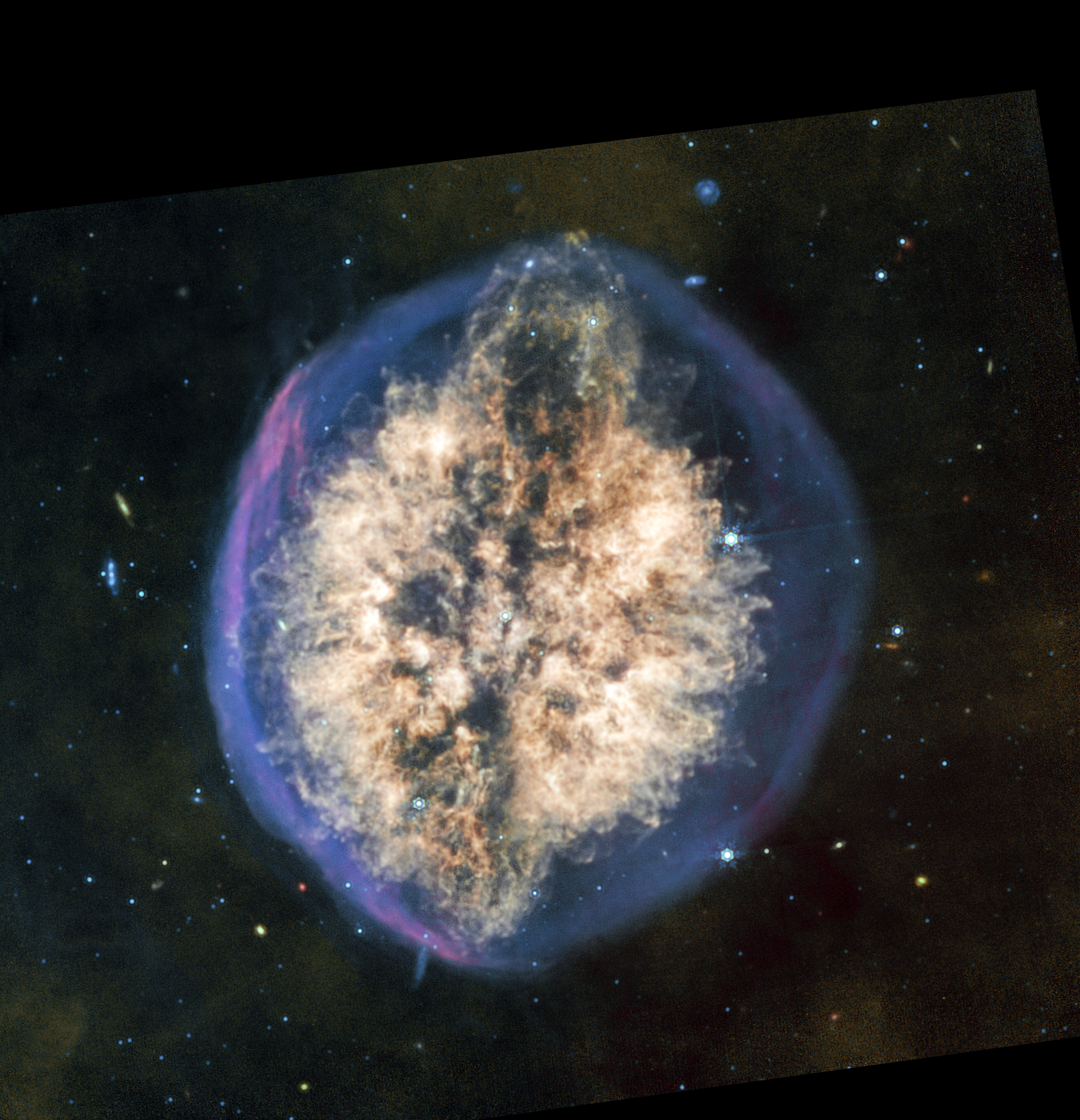
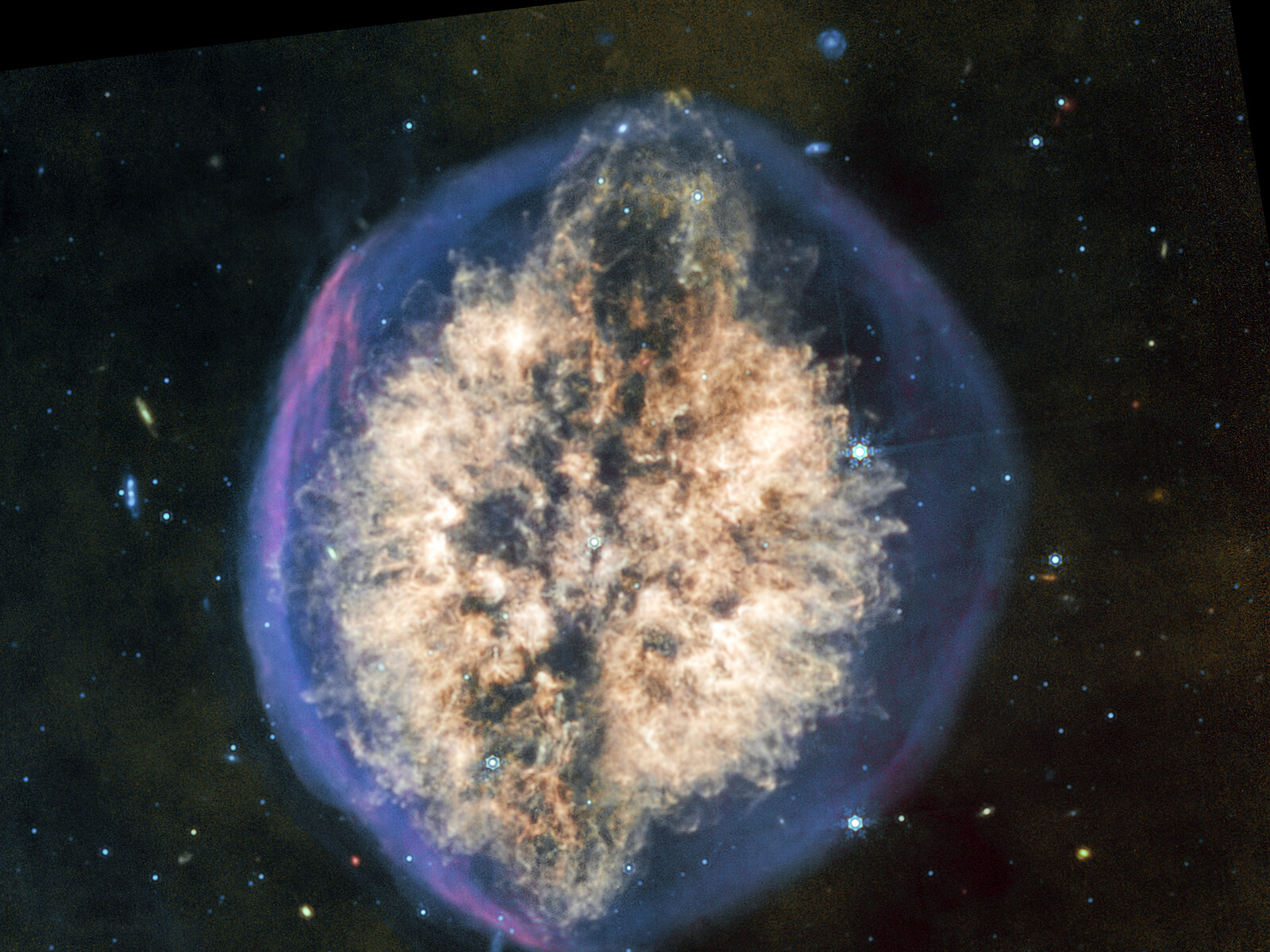
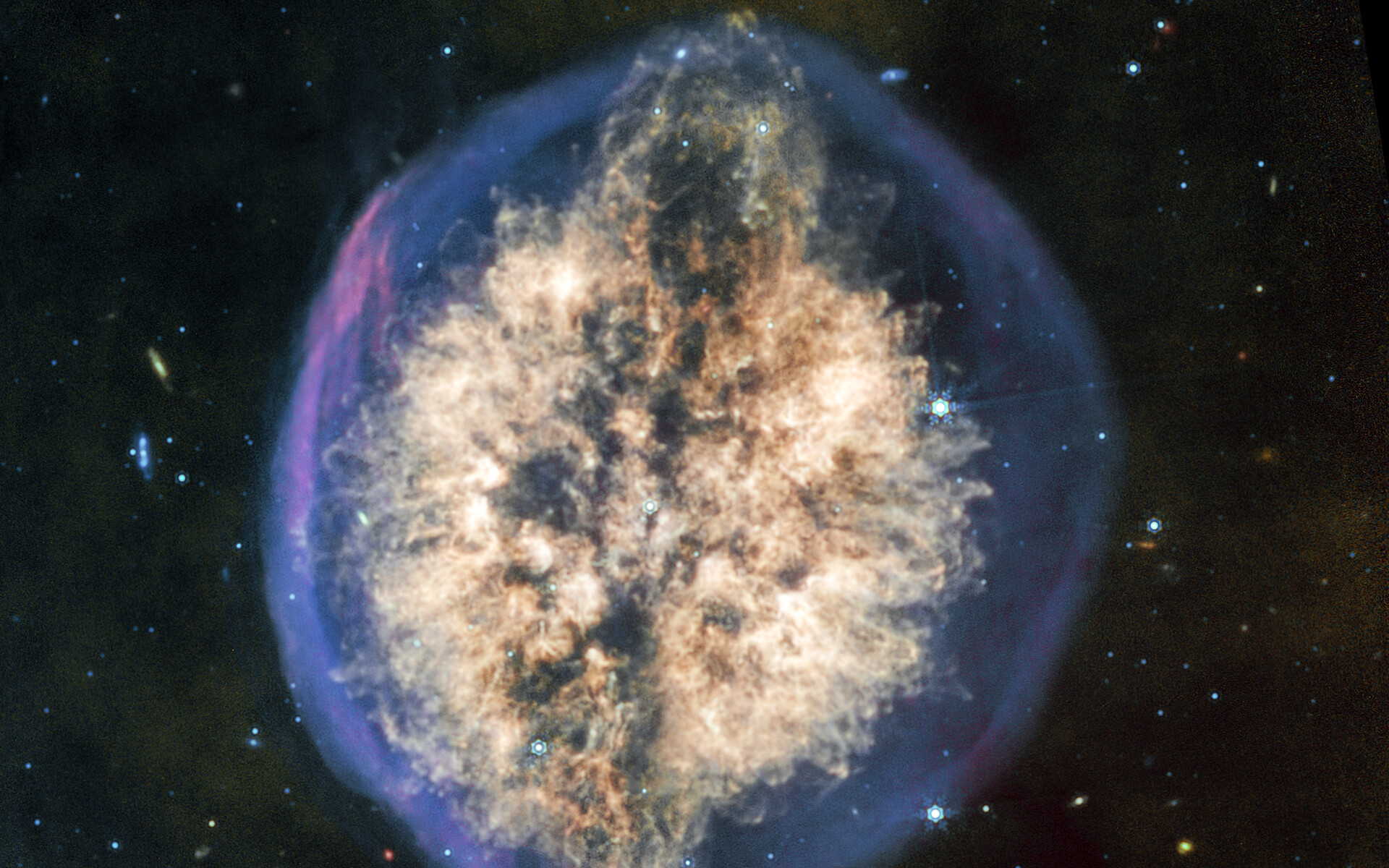
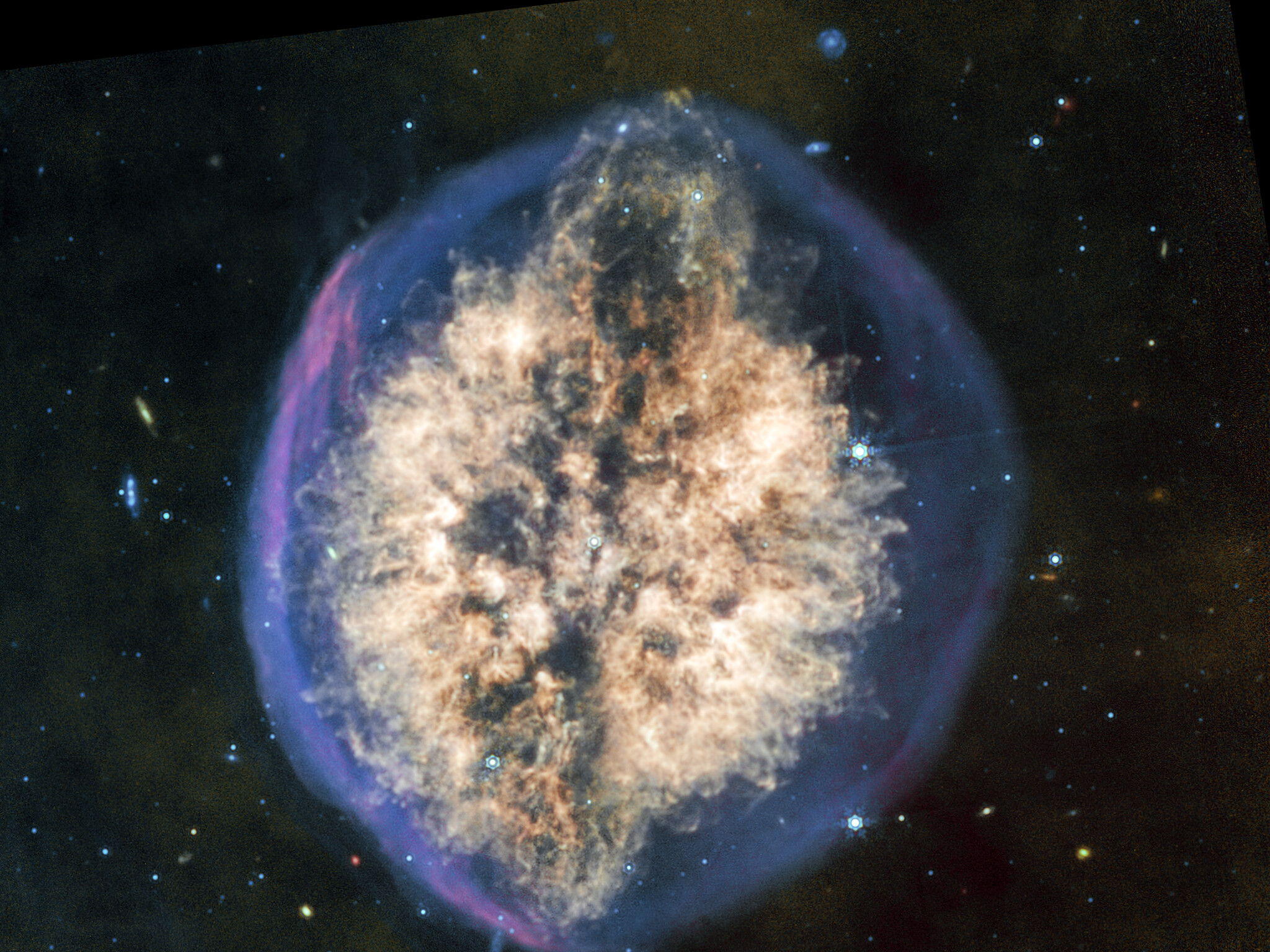
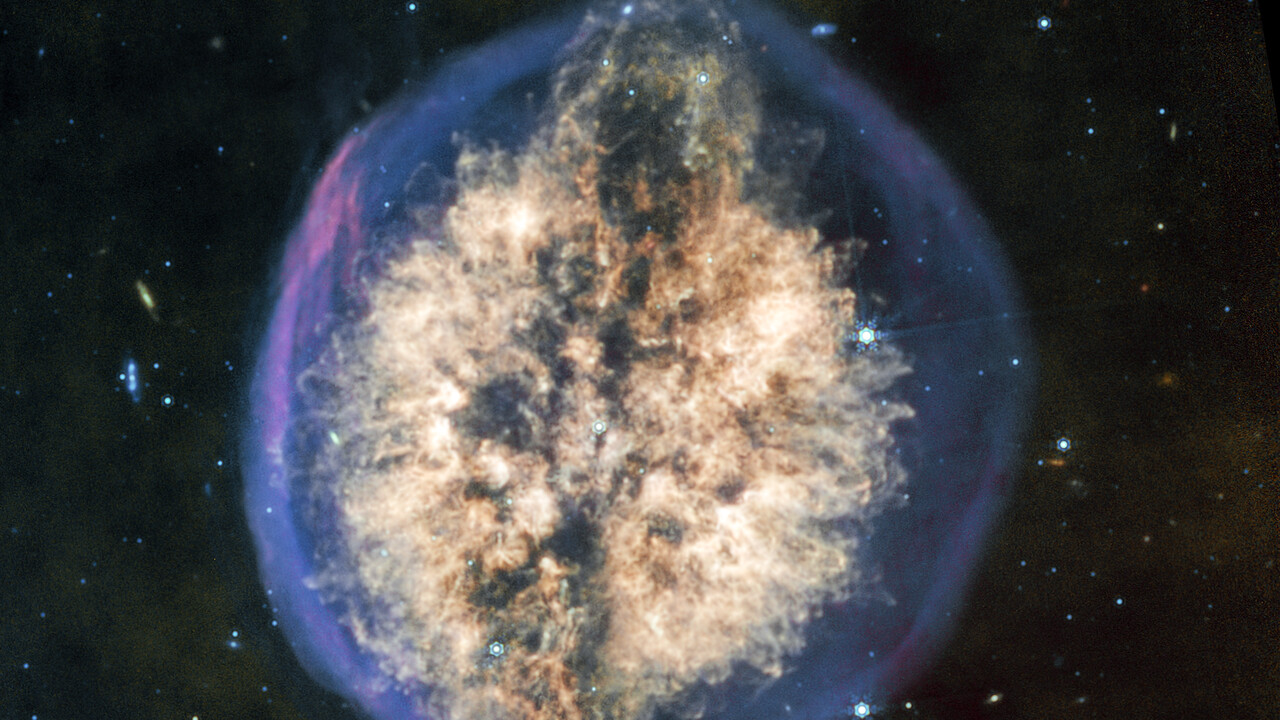
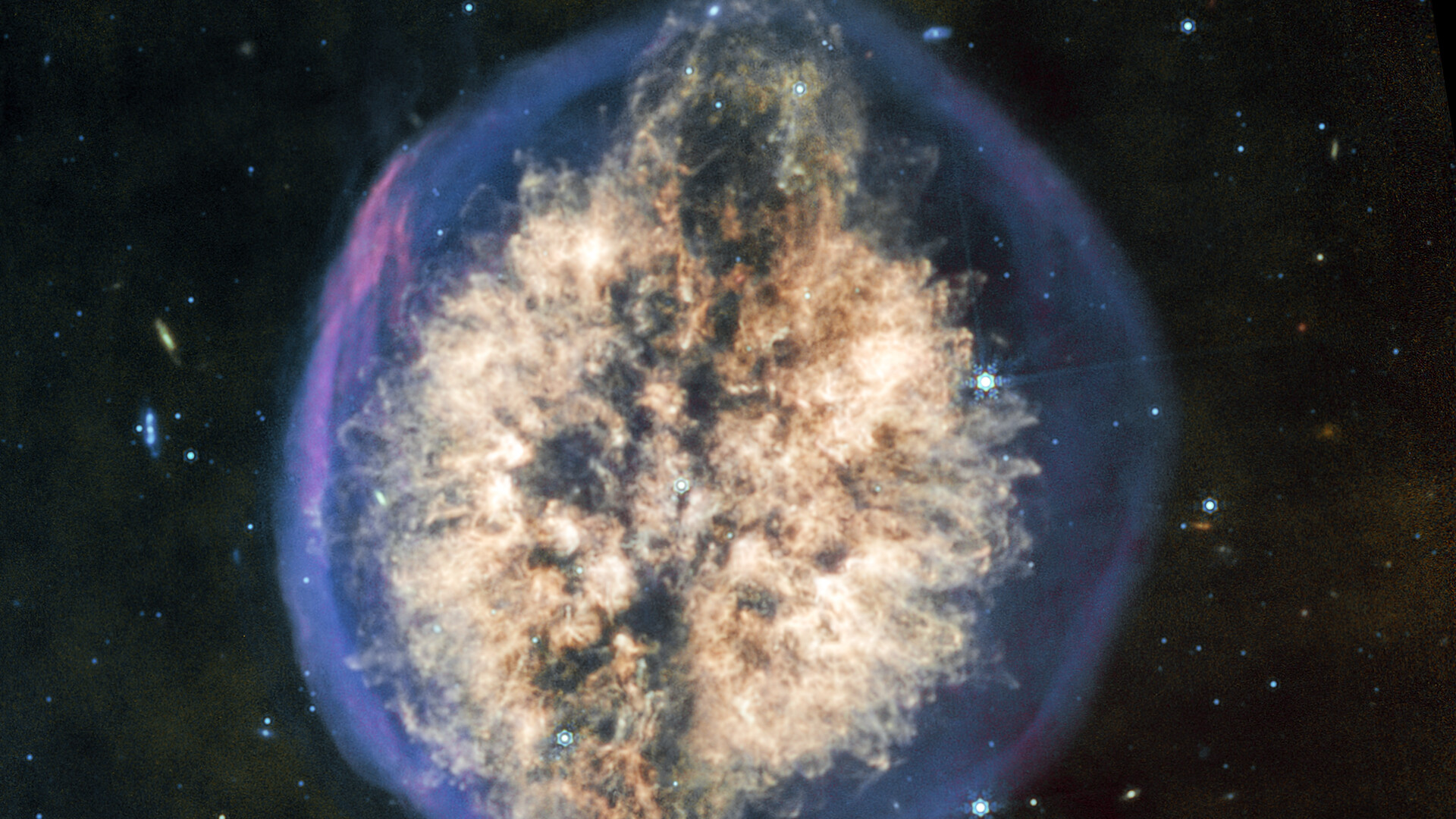
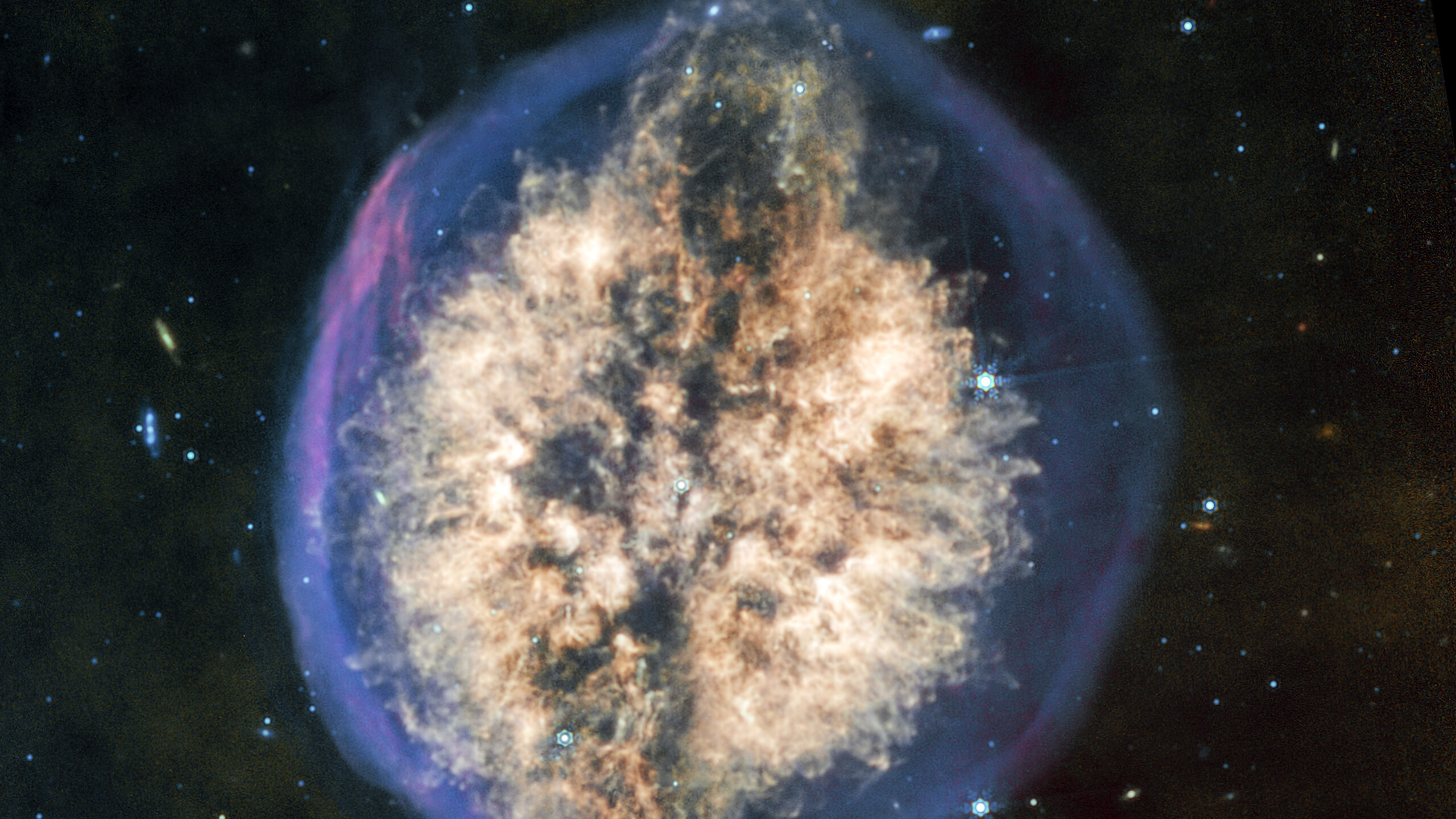
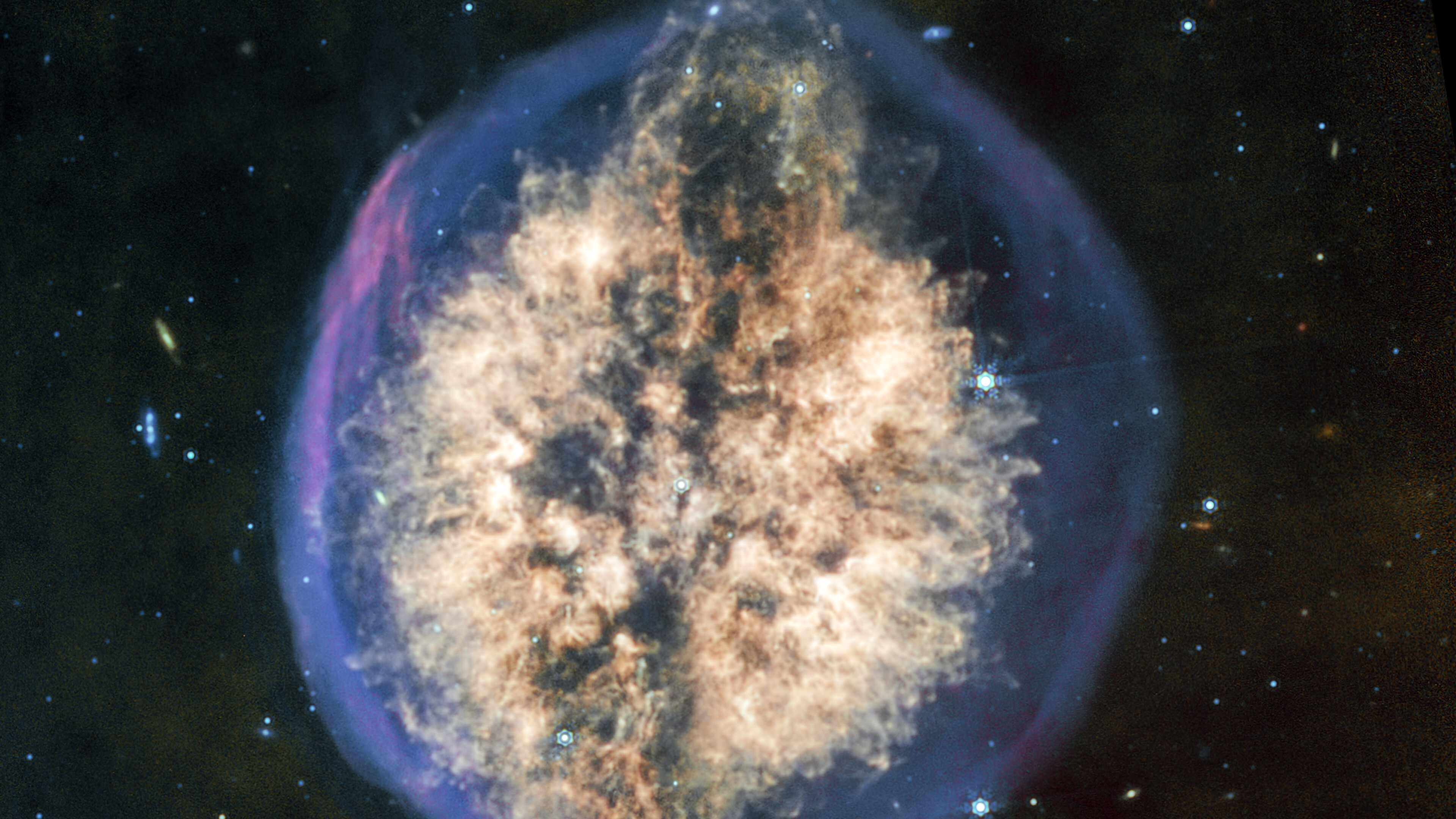
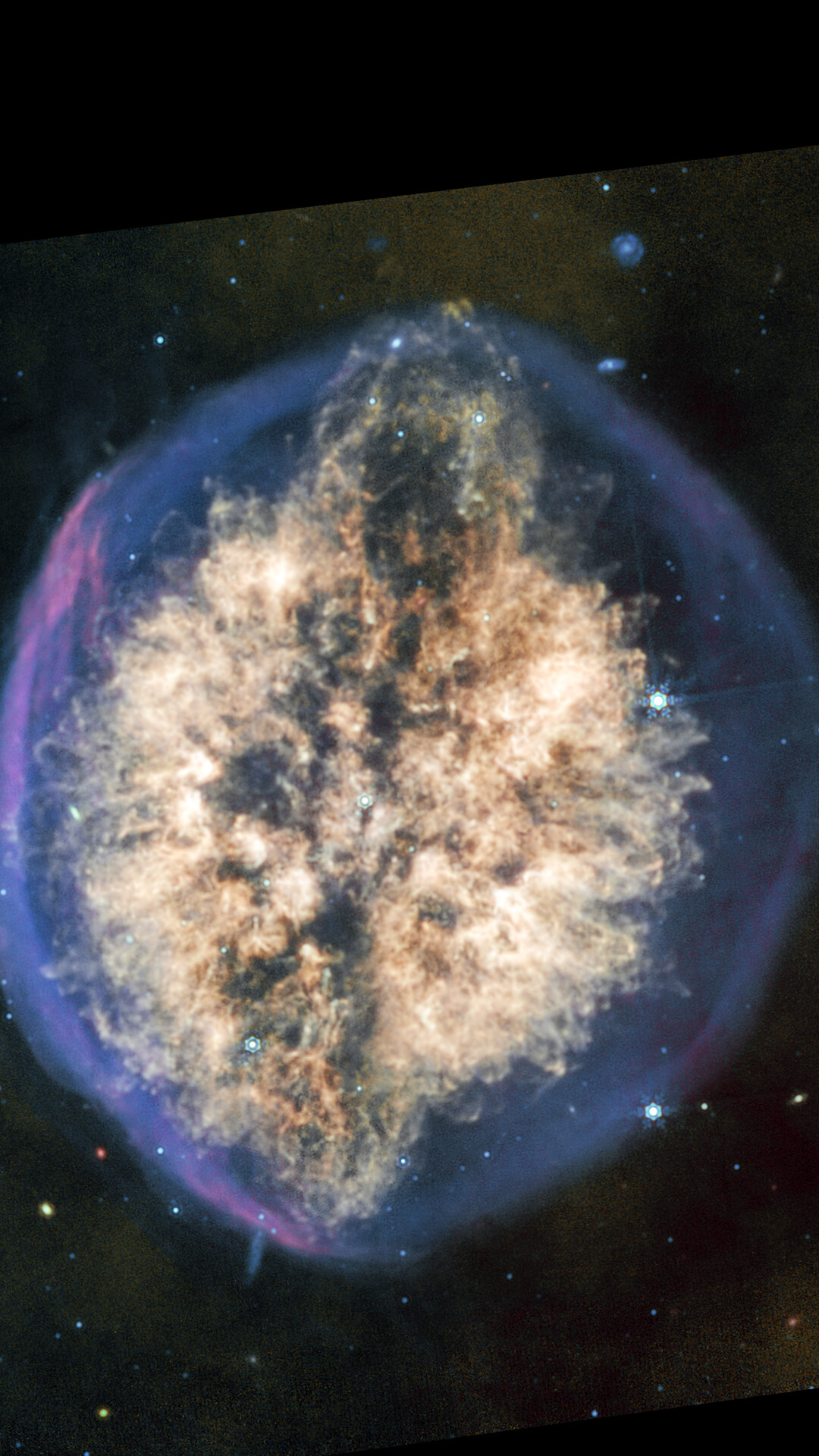
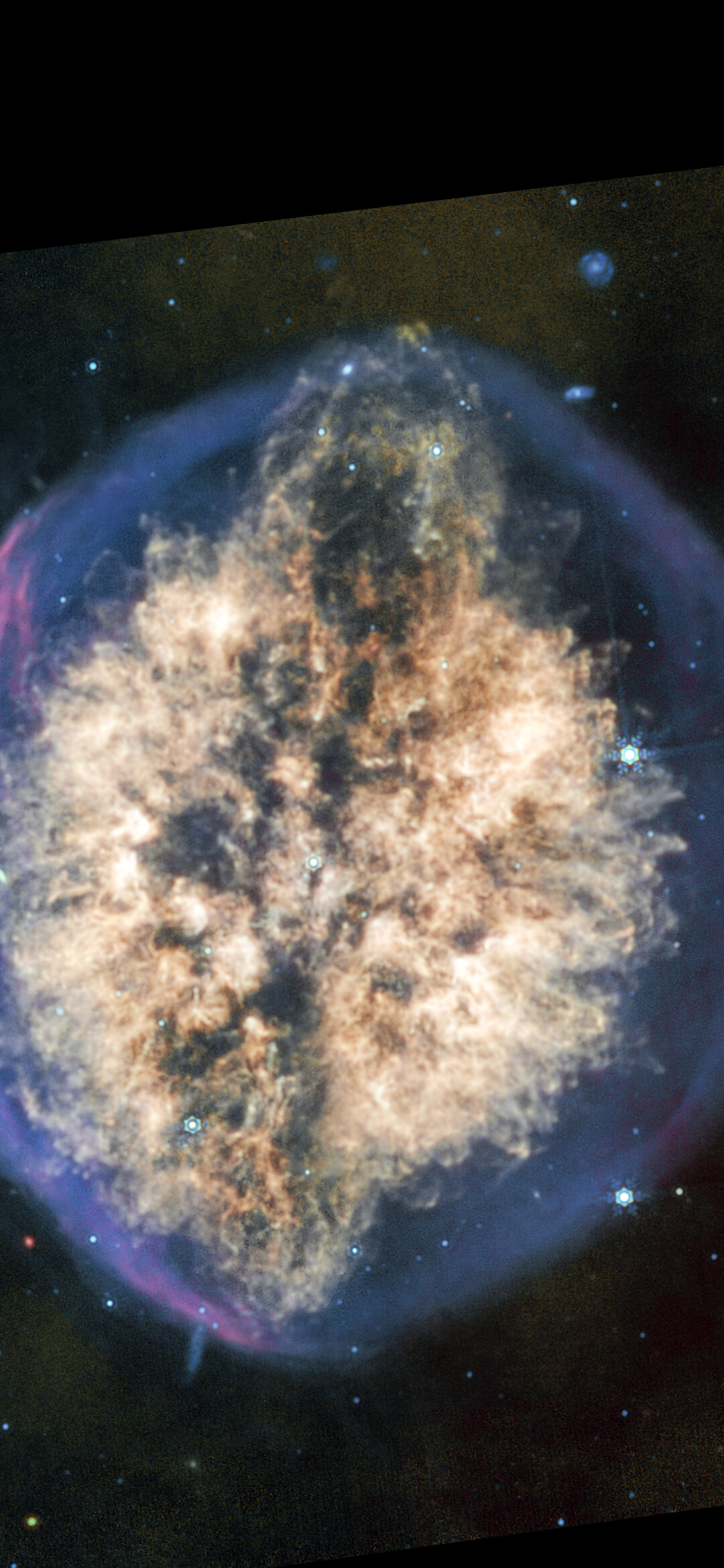
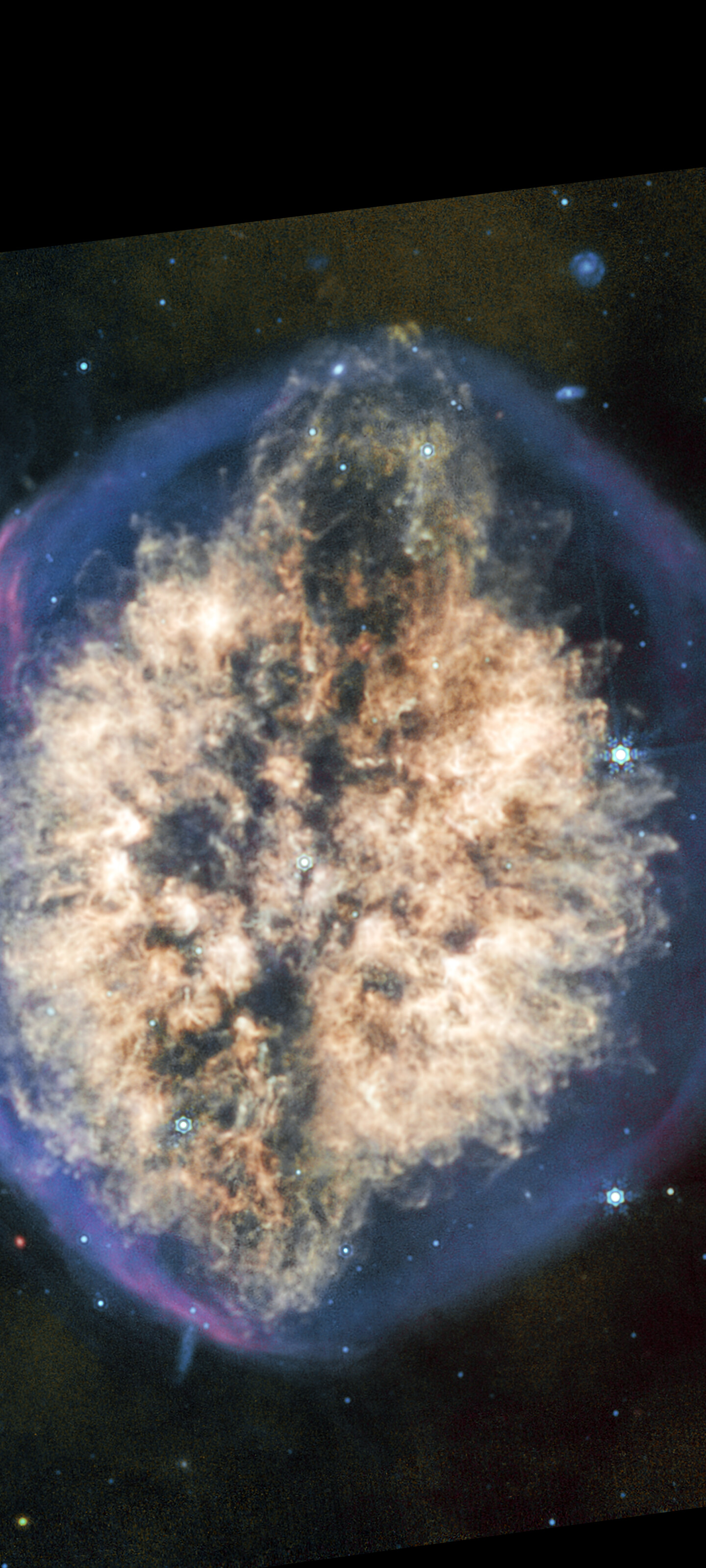
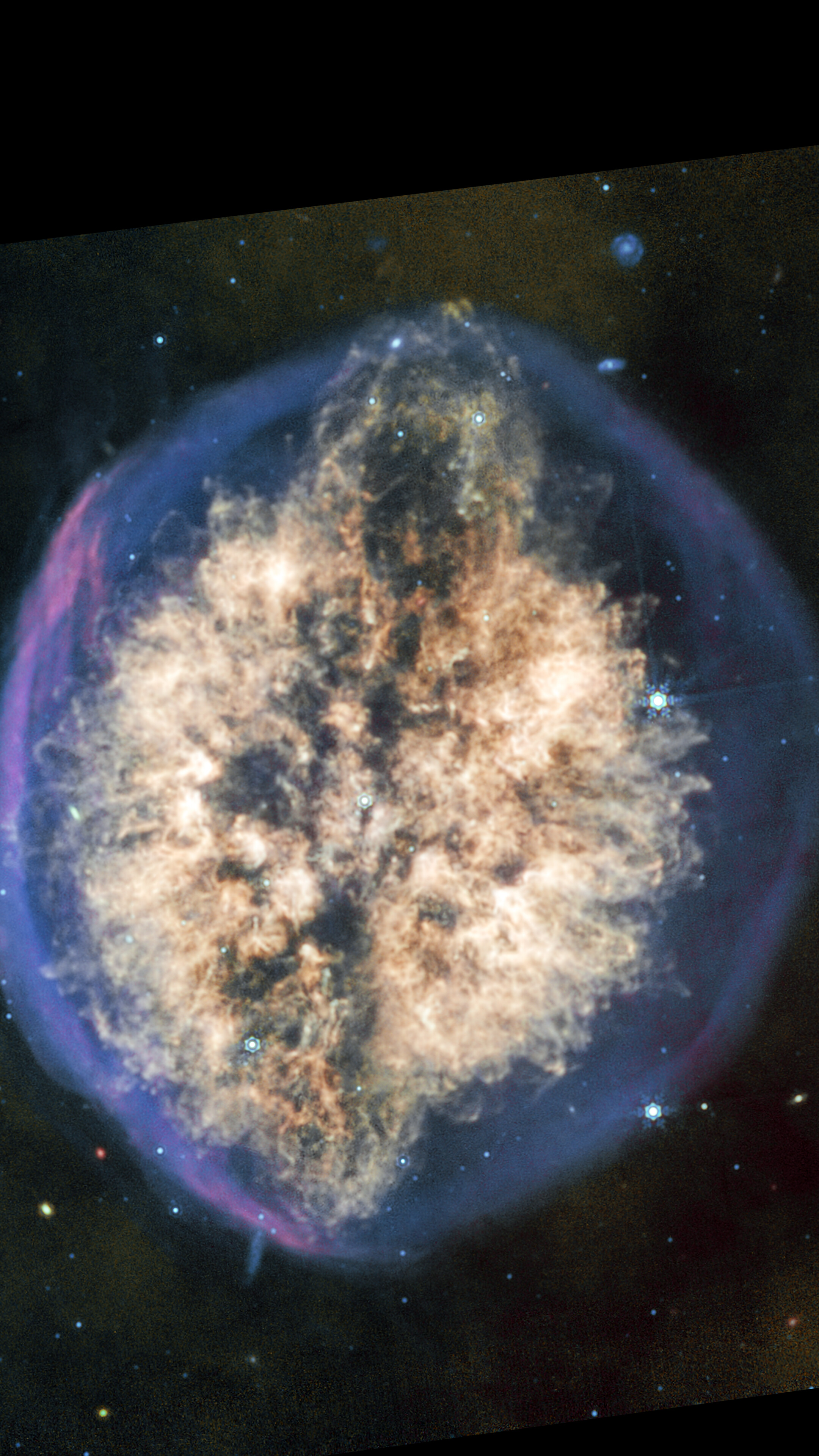
Exposed Cranium Nebula (MIRI image)
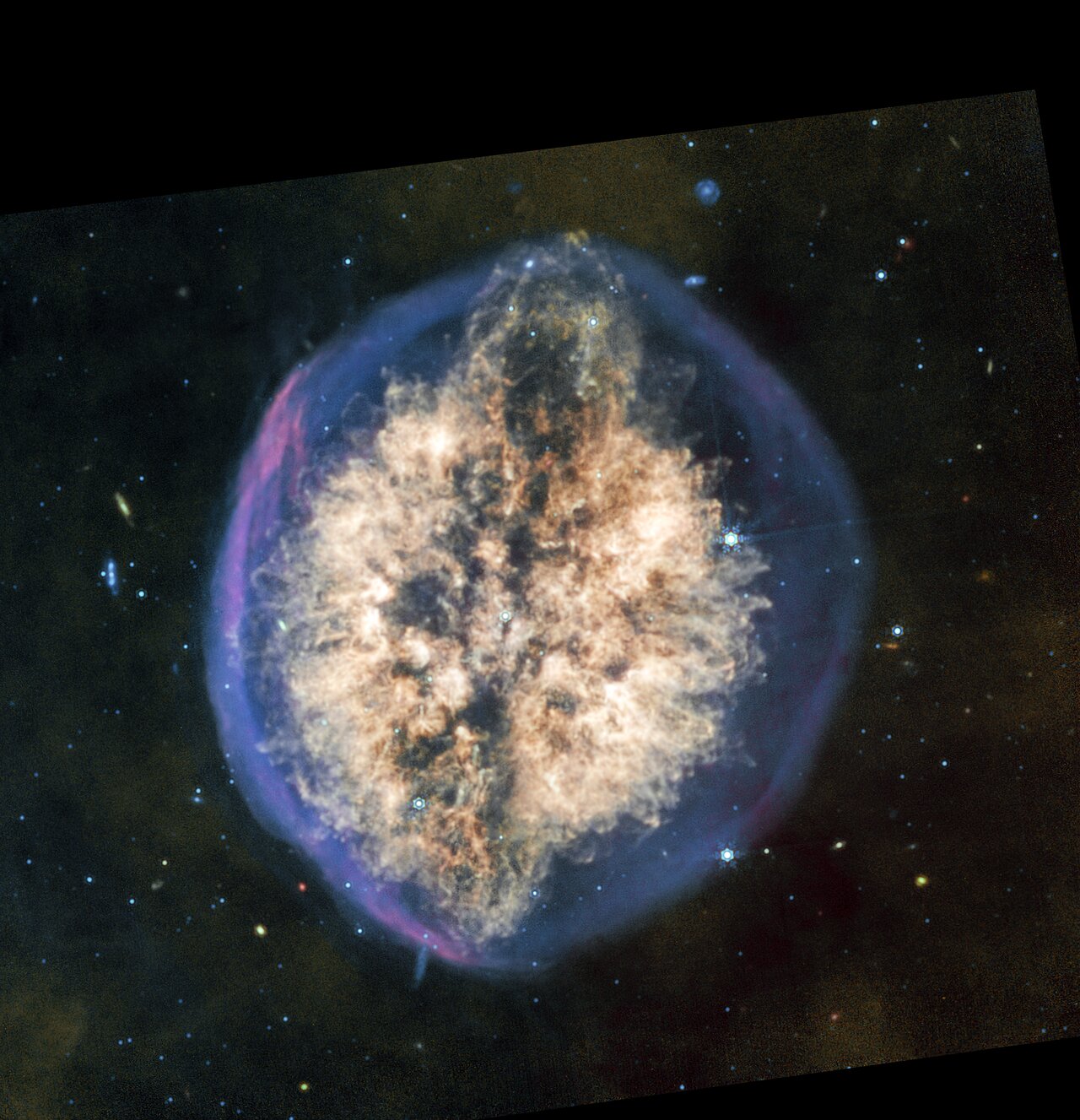
More of the dusty material in the nebula PMR 1 shows up in the mid-infrared light captured by the James Webb Space Telescope’s MIRI (Mid-Infrared Instrument). Fewer stars and background galaxies appear in this image than in the near-infrared light captured by Webb’s NIRCam (Near-Infrared Camera) instrument. Seeing the nebula in different wavelengths of infrared light will give astronomers a better idea of how much material the dying star at the heart of the nebula is shedding, and what phase of its decline Webb has captured.
Like NIRCam, MIRI also shows two distinctly different-looking phases of the nebula’s formation — an outer shell primarily of hydrogen that was blown off first, then a more complex and structured mix of material closer to the centre of the nebula. Together, these episodes give the nebula the unusual appearance of a brain inside a semi-transparent skull.
The MIRI instrument shows the ejection of material at the top of the nebula more prominently than NIRCam, interrupting the overall oval, brain-like shape. Less prominent is a potential twin ejection on the opposite, bottom side, hinting at a potential bipolar outflow that, with further analysis, can shed light on the dynamics at play inside this “exposed cranium.”
[Image description: A nebula appears like a transparent bubble with a blue edge, inside which are two hemispheres of off-white material being blown out from the centre, interspersed vertically by a dark lane that gives the overall appearance of a brain seen from above. At the top of the nebula the dark lane ends in an oval, with the inner off-white material arcing overtop, giving the impression of an eruption. The bottom of the nebula mirrors this effect, but less dramatically. A few scattered background galaxies can be seen around the outer bubble.]
Credit:NASA, ESA, CSA, STScI, Image Processing: Joseph DePasquale (STScI)
About the Image
| Id: | weic2605d | |
|---|---|---|
| Type: | Observation | |
| Release date: | 25 February 2026, 16:00 | |
| Related releases: | weic2605 | |
| Size: | 4545 x 4713 px | |