
Coordinates
| Position (RA): | 7 29 10.81 |
|---|---|
| Position (Dec): | 20° 54' 43.72" |
| Field of view: | 1.77 x 1.77 arcminutes |
| Orientation: | North is 170.0° left of vertical |

Interactive Sky View
Background Survey Options
Colours & filters
| Band | Wavelength | Telescope |
|---|---|---|
| Infrared (Blue) | 1.15 μm | James Webb Space Telescope NIRCam |
|
Infrared
(Cyan) P-alpha | 1.87 μm | James Webb Space Telescope NIRCam |
|
Infrared
(Yellow) molecular hydrogen | 2.12 μm | James Webb Space Telescope NIRCam |
|
Infrared
(Orange) PAH | 3.35 μm | James Webb Space Telescope NIRCam |
|
Infrared
(Red) Silicate | 10 μm | James Webb Space Telescope MIRI |
Lion Nebula (NIRCam + MIRI image)
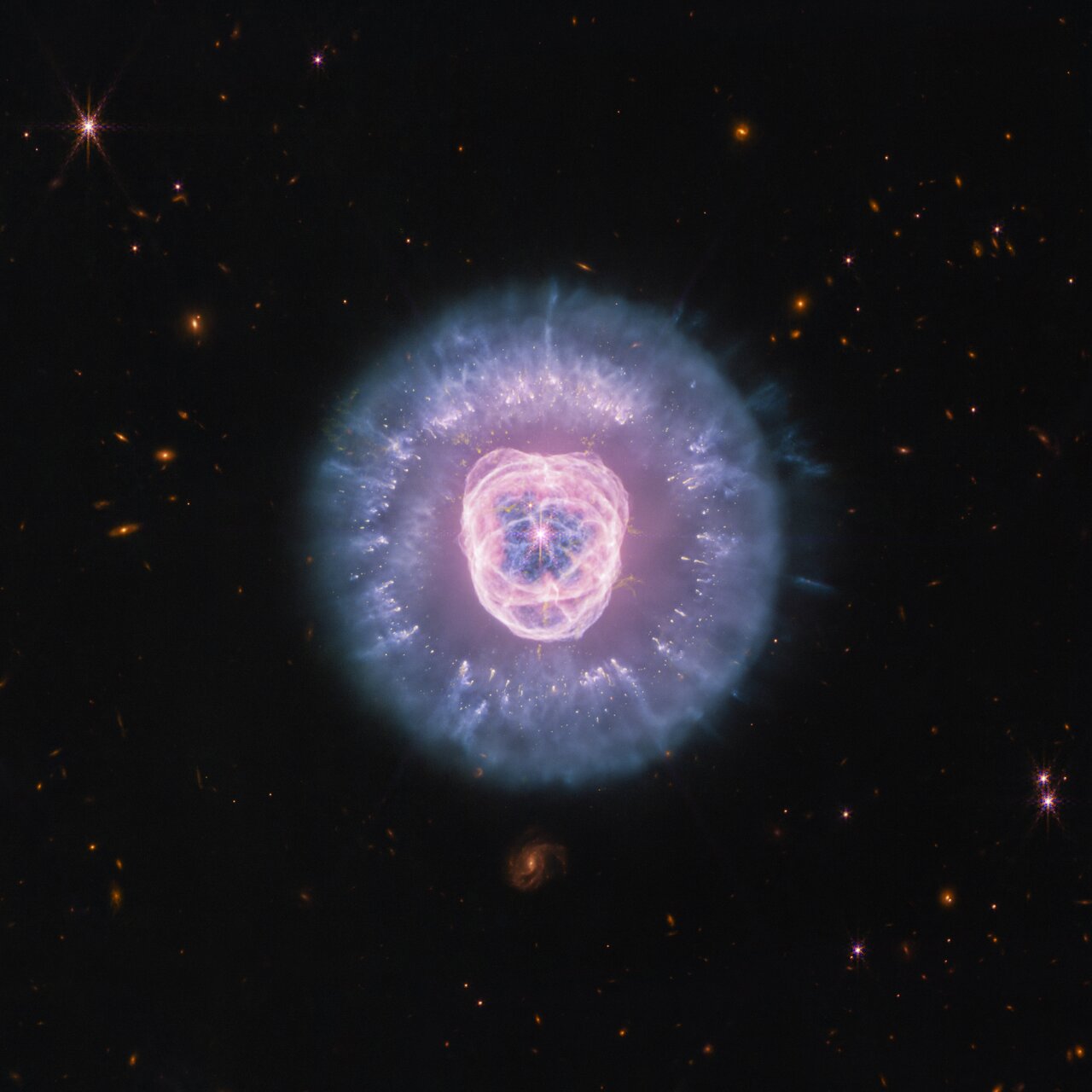
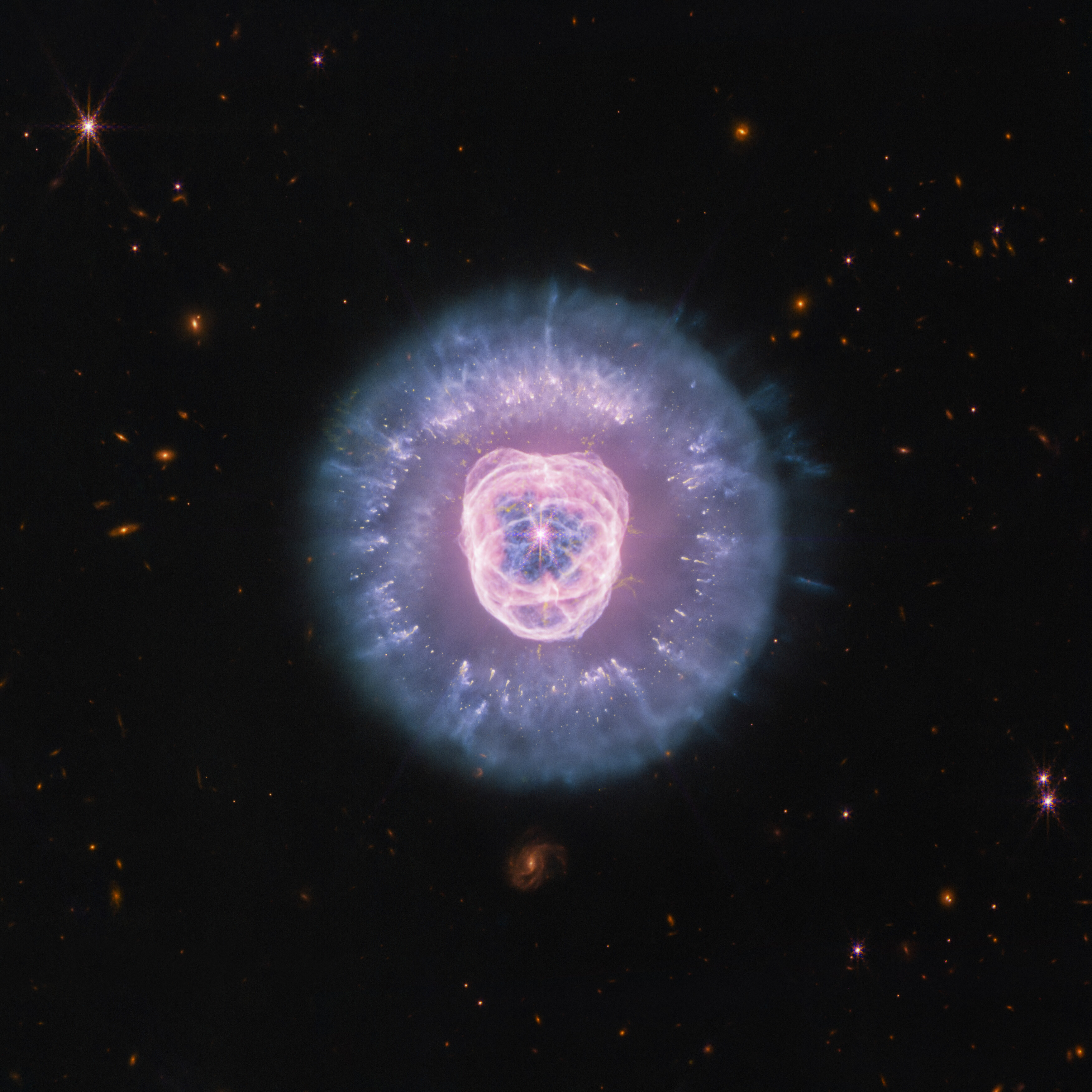
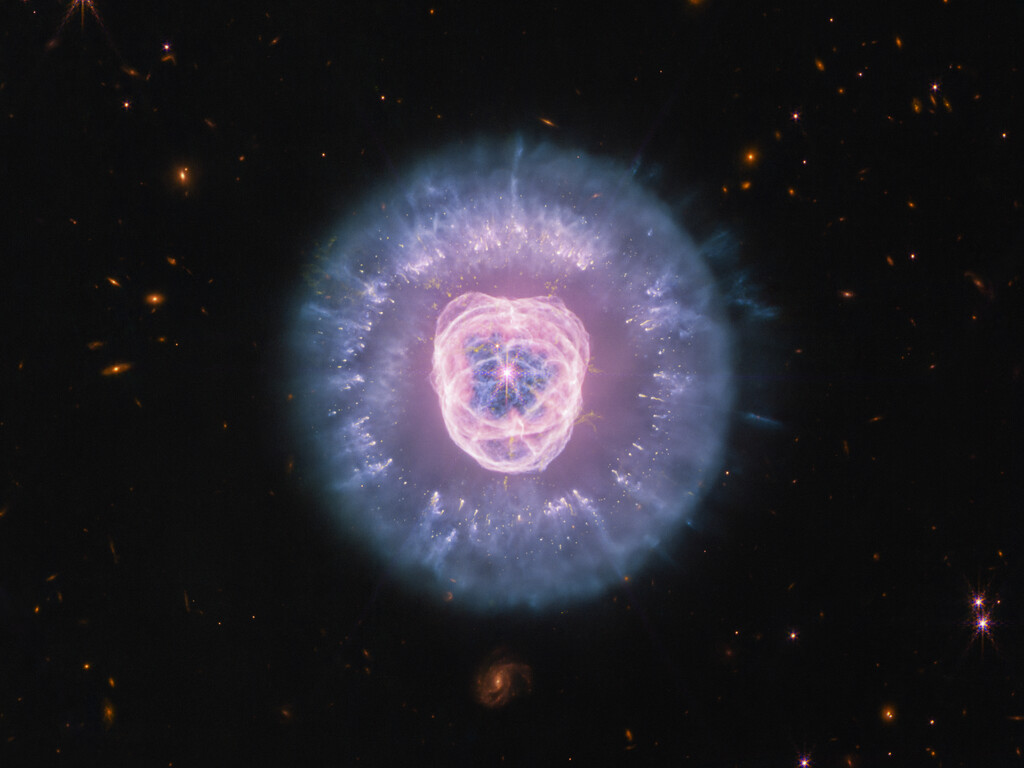
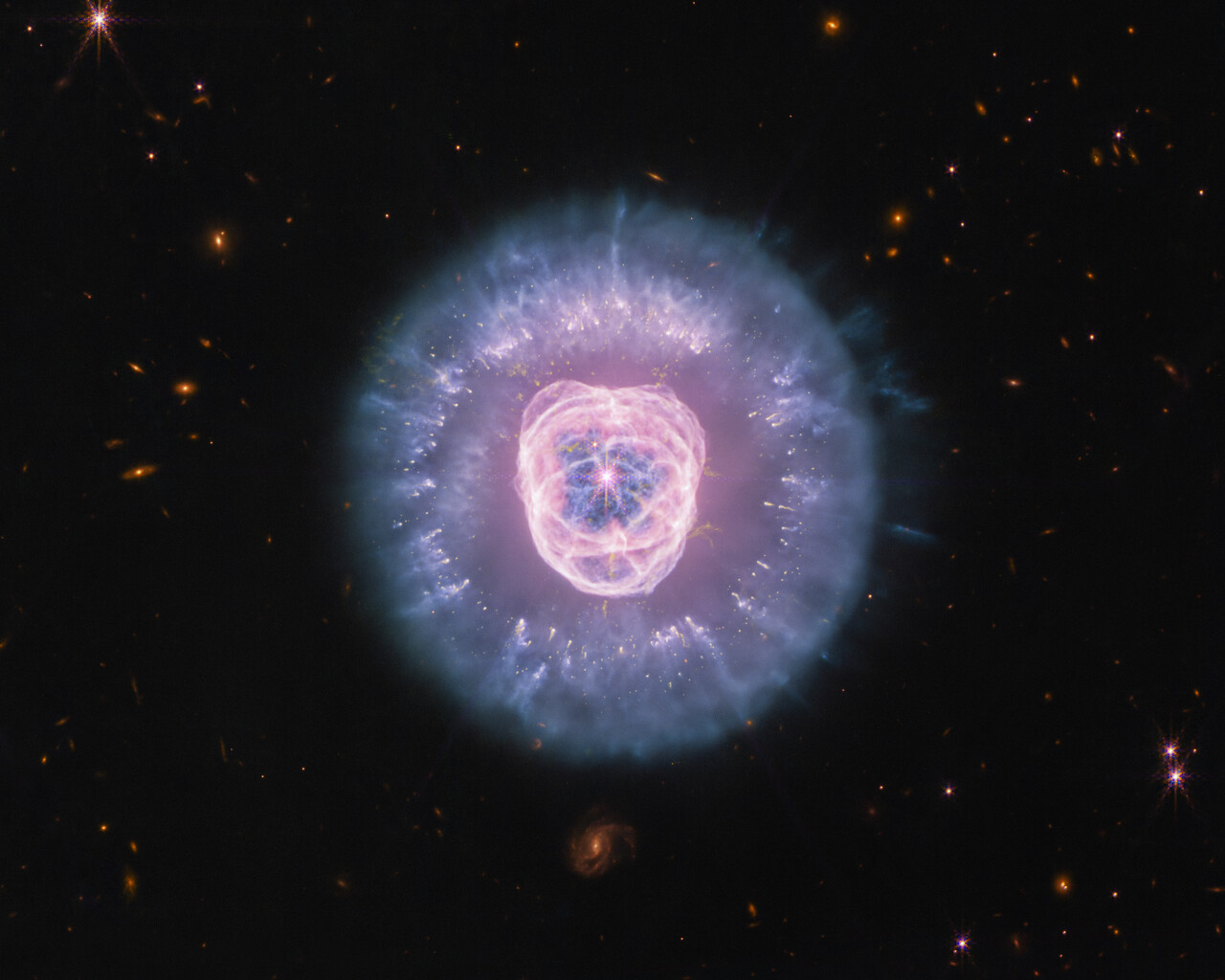
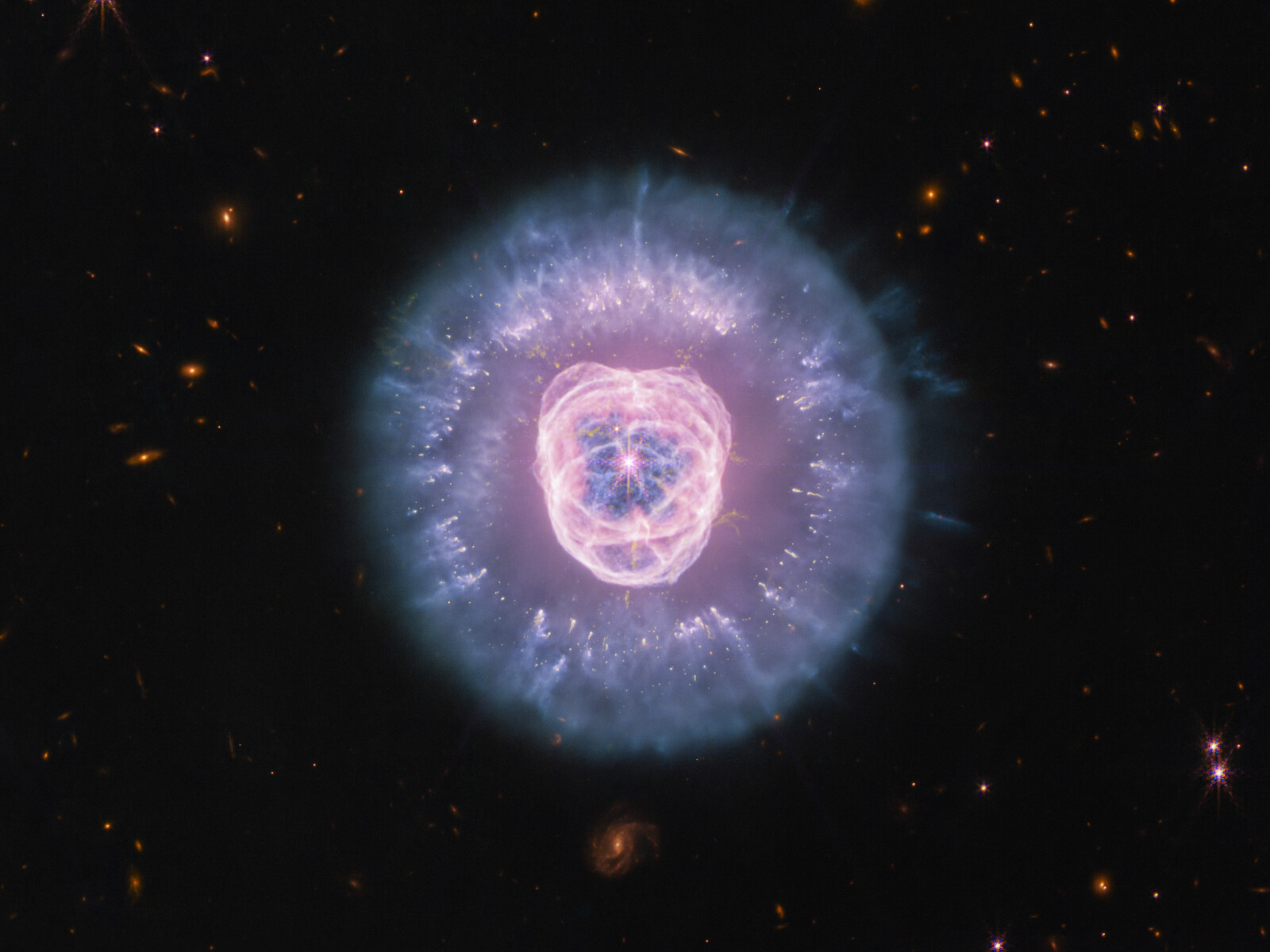
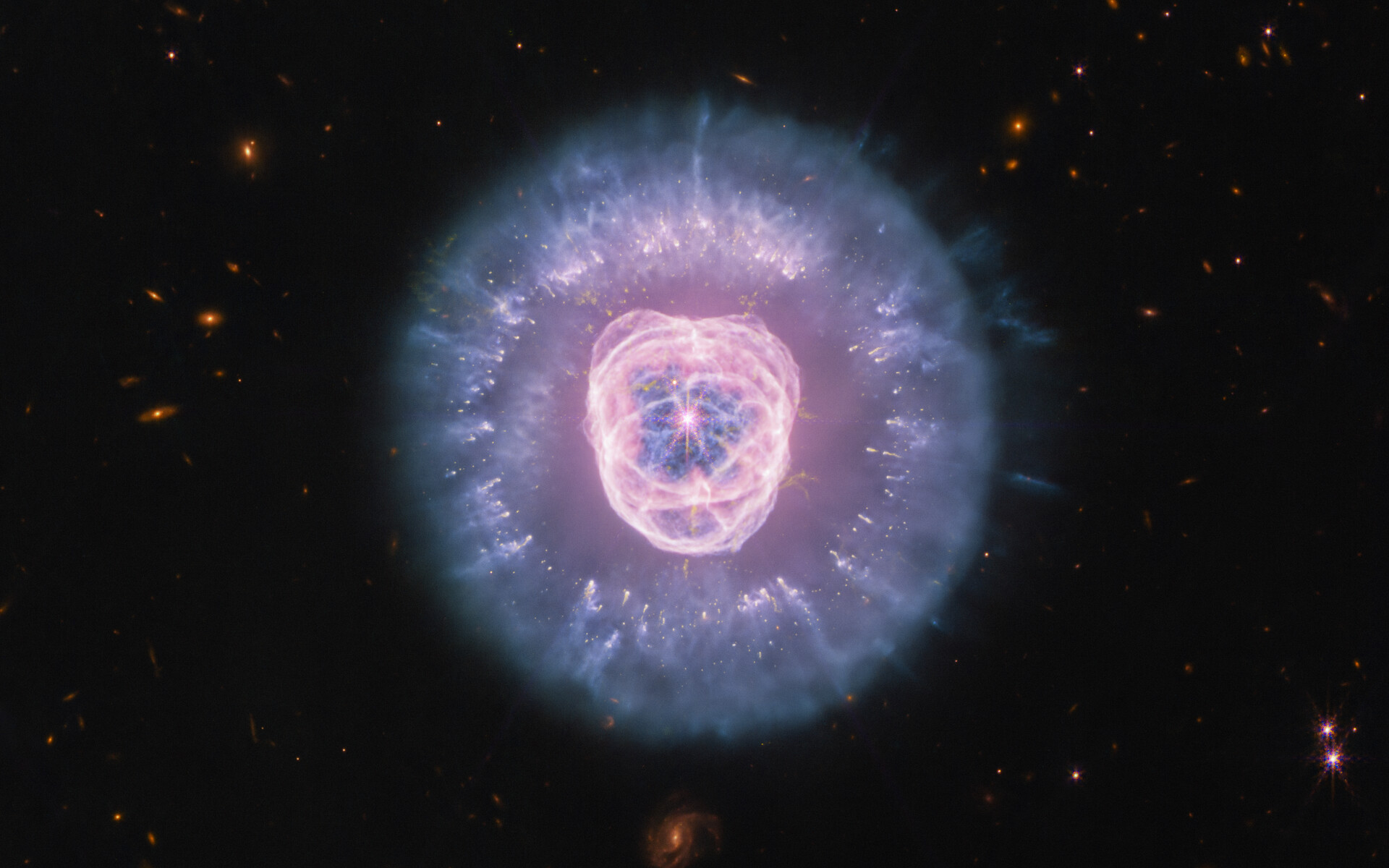
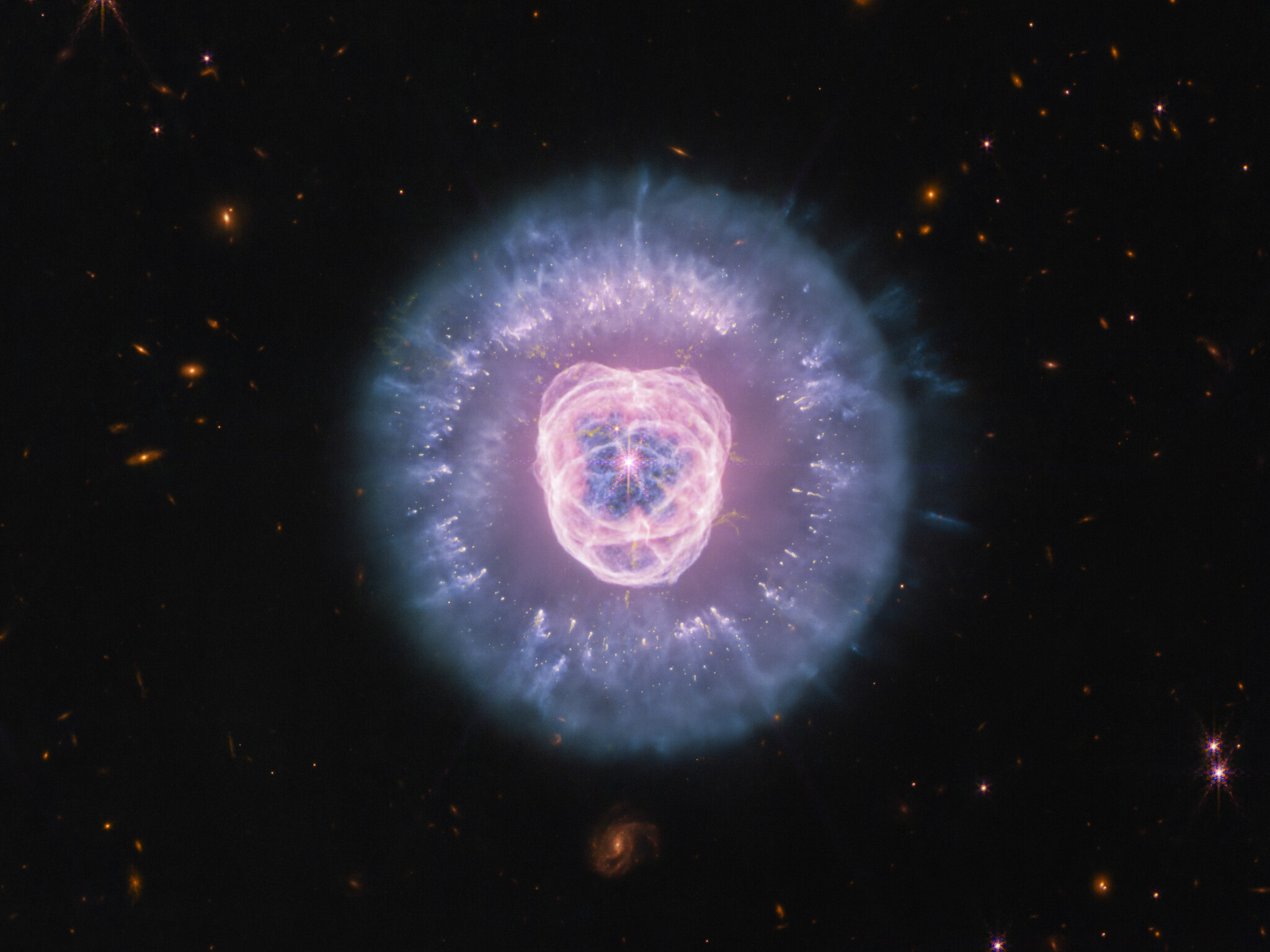
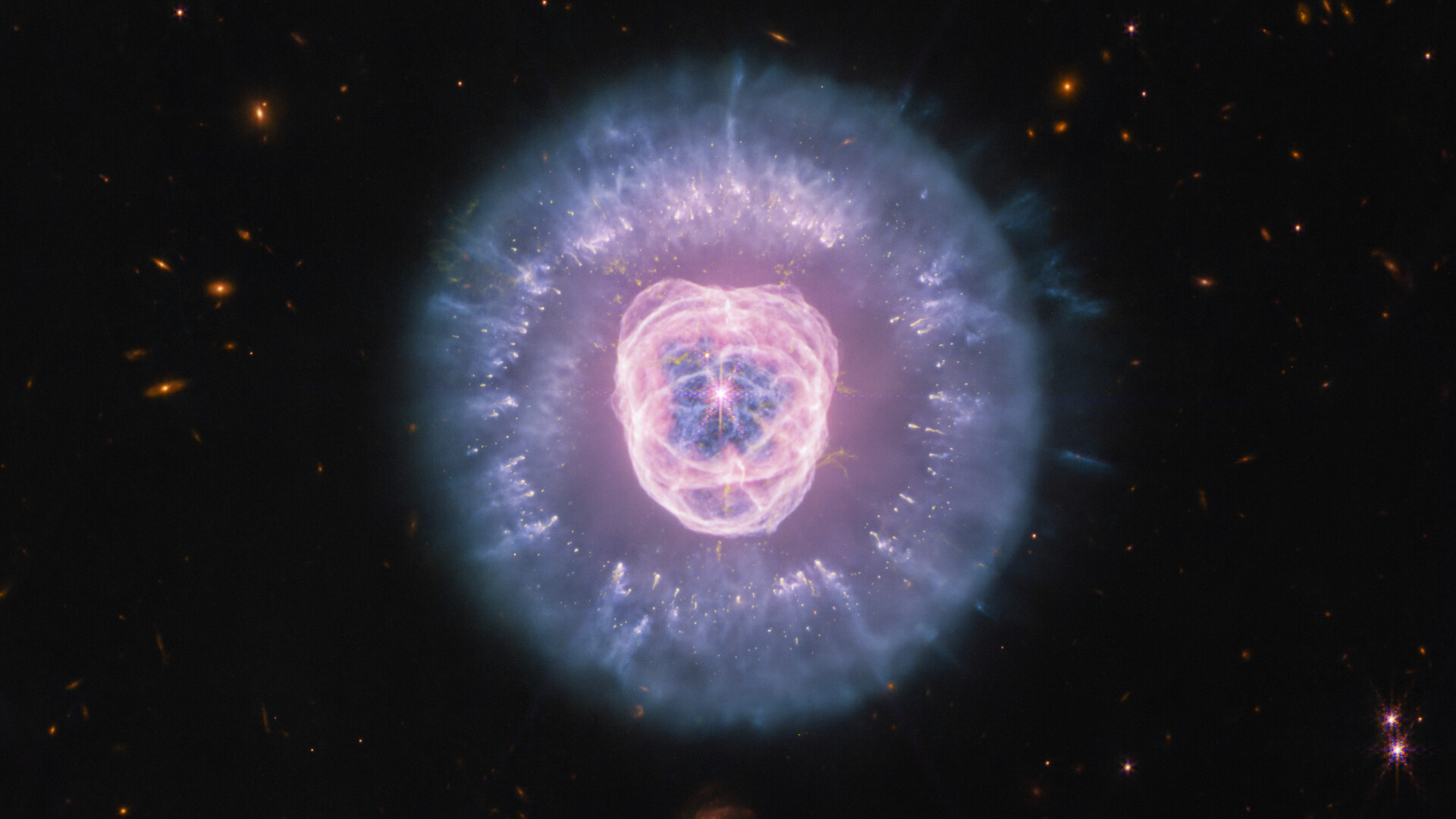
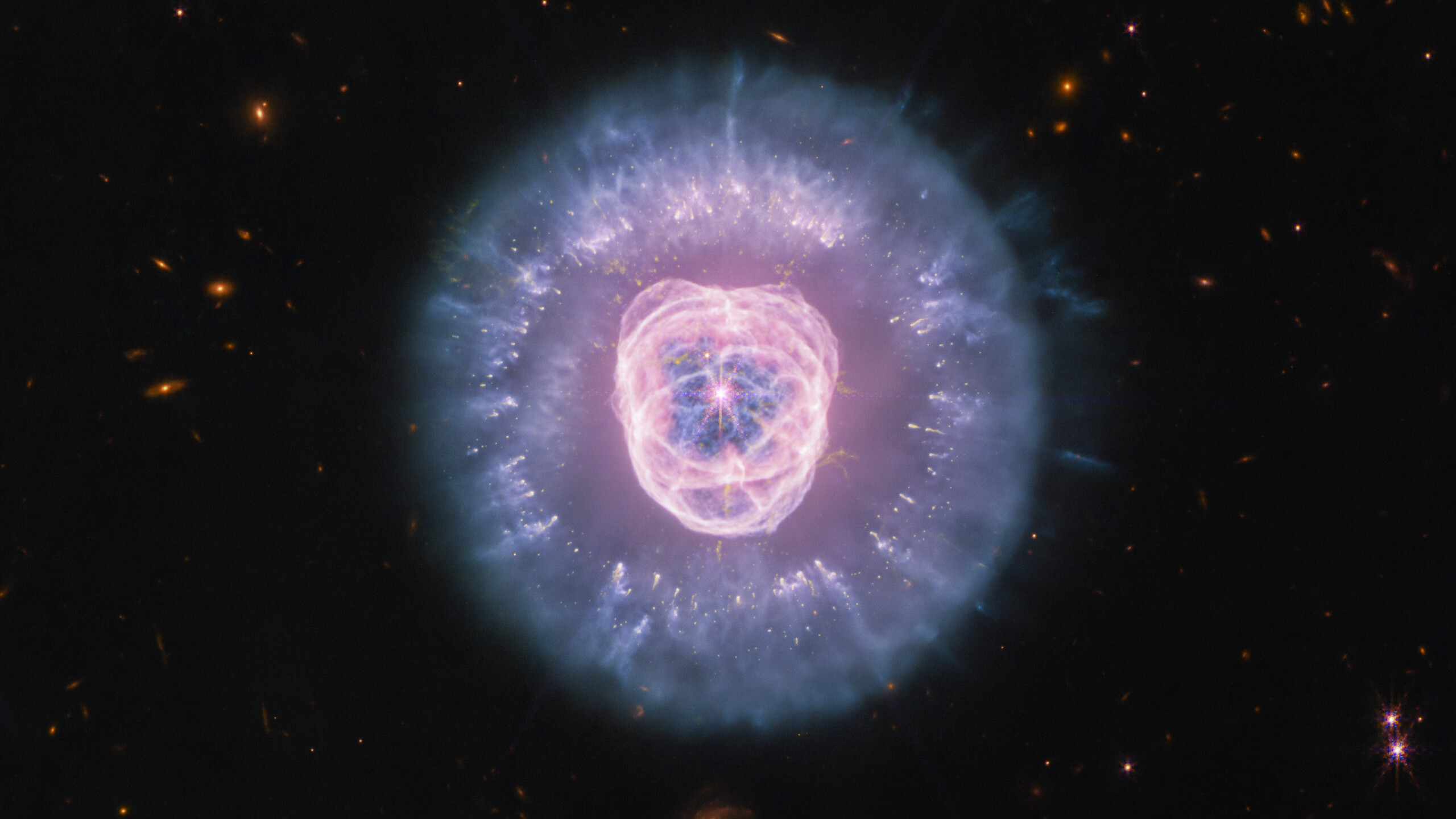
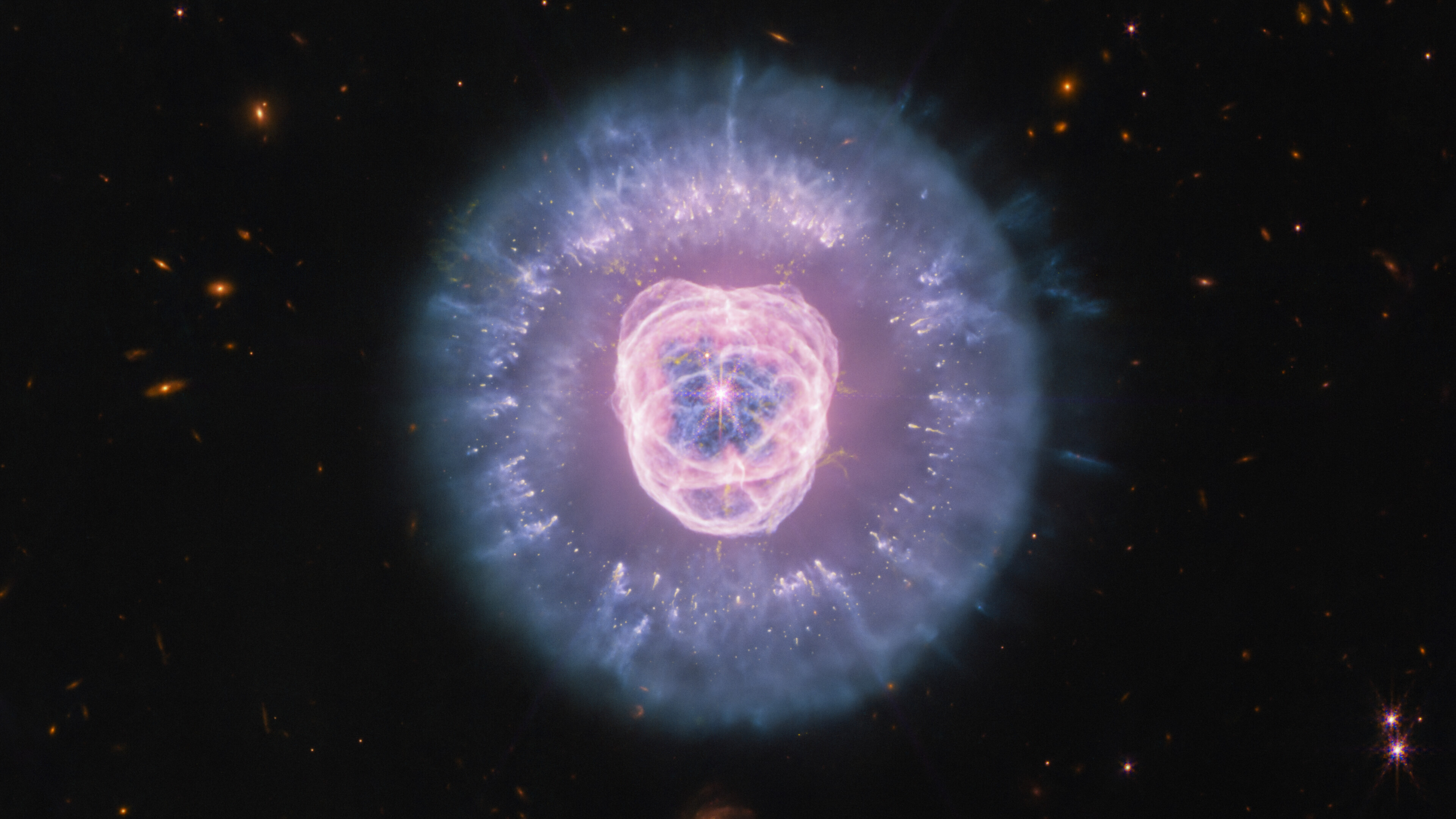
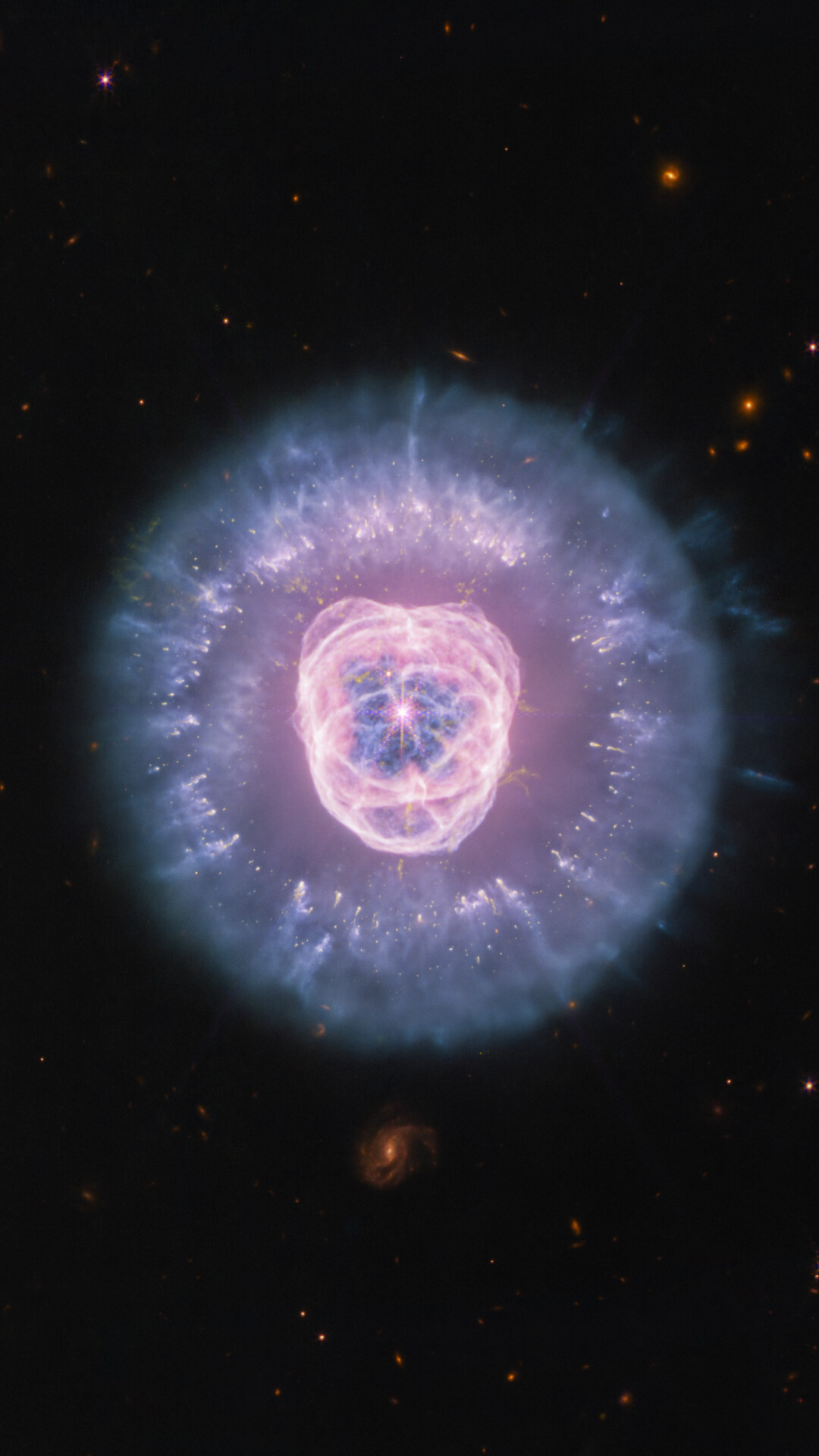
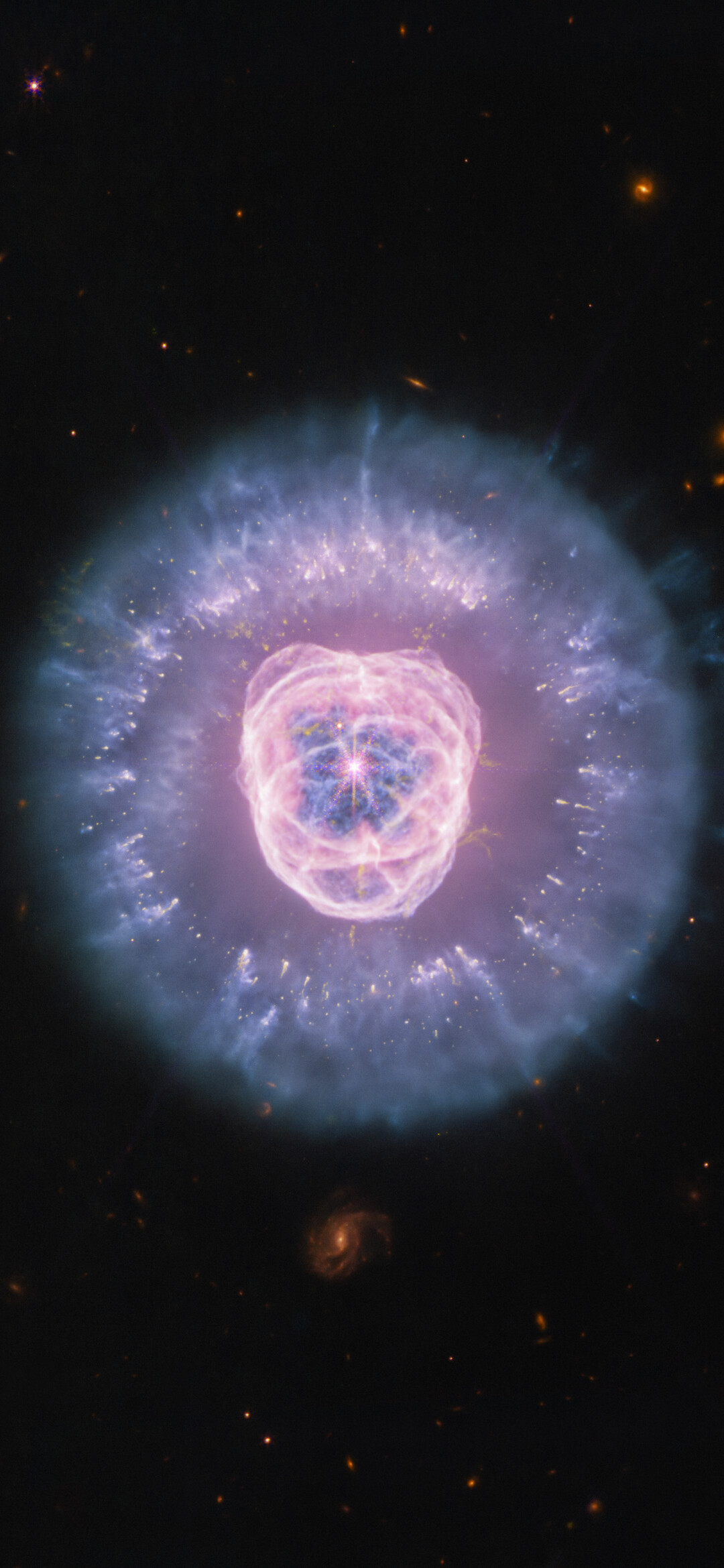
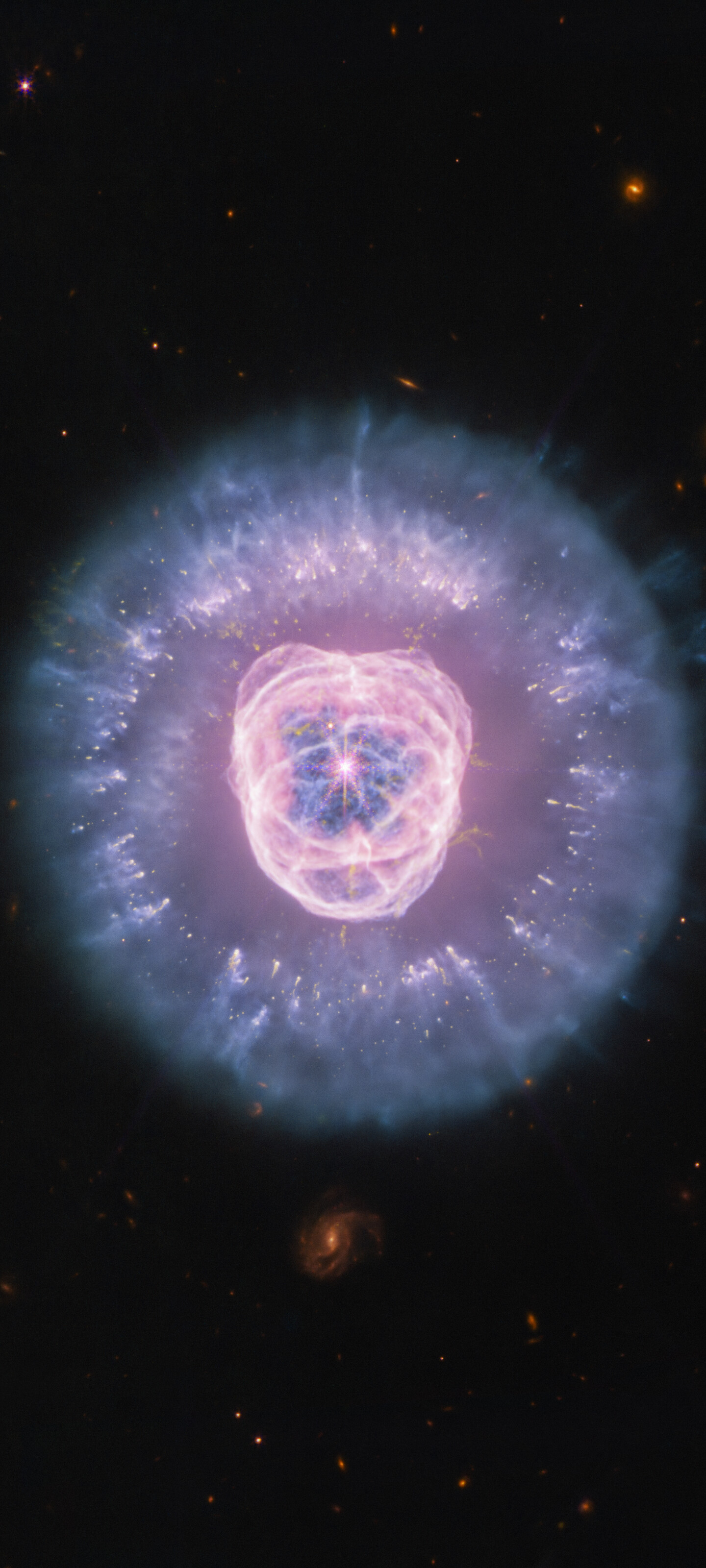
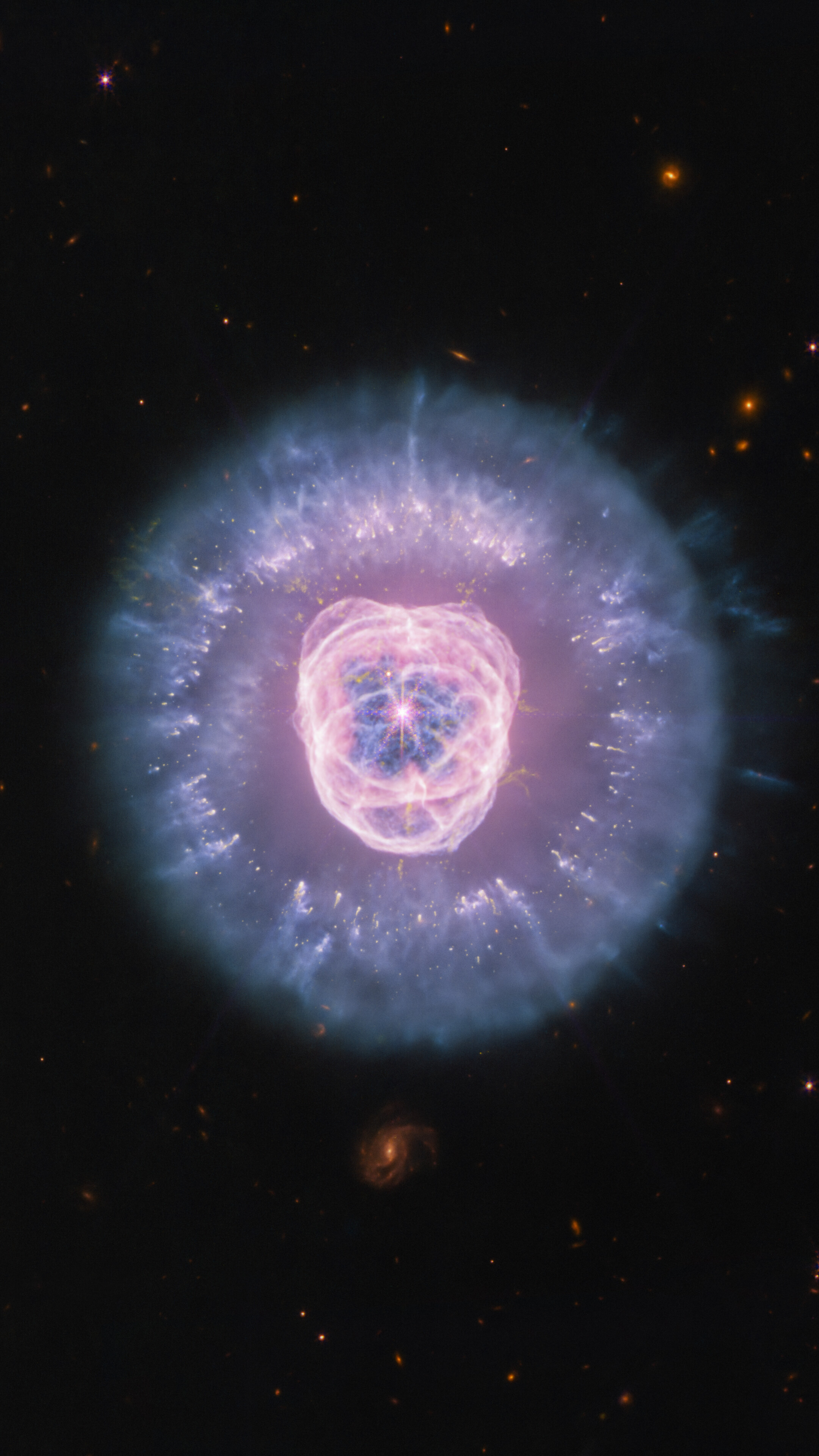
The James Webb Space Telescope recently imaged planetary nebula NGC 2392, which is nicknamed the Lion Nebula due to its distinct shape. This near- and mid-infrared composite image reveals the complex structure of the nebula, which has formed and continues to be sculpted by the remains of a dying star. The stellar core, also known as a white dwarf, is located at the centre and looks like the button nose of the lion.
The central dying star is so hot that its radiation is “cooking” everything from the inside and producing a bubble of ionized hydrogen gas as it does. The gas bubble, which is the lion’s “face,” features cavernous shells and rings with tendrils that are expanding and destroying dust upon encounter.
However, not all dust is obliterated from the scene. The lion’s mane is the interior of a dust shell that is being illuminated by the central star’s core. Within the mane some compact clumps of dust (red and orange) have managed to survive so far and are protecting the material that lies behind them. Additional clumps of molecular hydrogen appear yellow.
The Lion Nebula is a snapshot in time. It’s taken several thousand years for the gas and dust to be shaped in this way, and it continues to change as the star drives away the material. Astronomers estimate NGC 2392 will eventually disperse in about 10,000 years, which is a relatively short period in astronomical terms.
[Image description: Planetary nebula NGC 2392, also called the Lion Nebula, against the black background of space. The nebula is in the centre, circular in shape, and looks like a male lion’s head. In the very centre is a small, pinkish-white circle with eight-point diffraction spikes, a white dwarf star. Surrounding the star are light purple-pink cavernous bubbles and shell-like rings. The bubbles and shells collectively form an oval with two small, wide arcs near the top, reminiscent of a lion’s face and its ears. What appears to be extended outward from the lion’s face is a thick ring of purple-blue material. The width of the ring is consistent throughout and resembles a mane. The area closest to the lion’s face looks cloudy, while the edges of the mane look like there are clumps of dust with comet-like tails and strands. In the background are distant galaxies and stars. Some galaxies appear as small yellow and orange points of light and others with visible spiral structures. A couple of the stars have diffraction spikes.]
Credit:NASA, ESA, CSA, STScI. Image Processing: A. Pagan (STScI).
About the Image
| Id: | weic2616a | |
|---|---|---|
| Type: | Observation | |
| Release date: | 10 August 2026, 16:00 | |
| Related releases: | weic2616 | |
| Size: | 3505 x 3505 px | |