
About the Object
| Name: | Galactic Centre | |
|---|---|---|
| Distance: |
26000 light years | |
| Constellation: | Sagittarius | |
| Category: | MIRI NIRCam Stars | |
Coordinates
| Position (RA): | 17 45 40.05 |
|---|---|
| Position (Dec): | -29° 0' 28.05" |
| Field of view: | 2.48 x 1.80 arcminutes |
| Orientation: | North is 14.9° right of vertical |


Interactive Sky View
Background Survey Options
Colours & filters
| Band | Wavelength | Telescope |
|---|---|---|
| Infrared (Purple) | 1.15 μm | James Webb Space Telescope NIRCam |
|
Infrared
(Blue) molecular hydrogen | 3.23 μm | James Webb Space Telescope NIRCam |
|
Infrared
(Blue) molecular hydrogen | 2.12 μm | James Webb Space Telescope NIRCam |
|
Infrared
(Cyan) Br-alpha | 4.05 μm | James Webb Space Telescope NIRCam |
| Infrared (Green) | 5.6 μm | James Webb Space Telescope MIRI |
|
Infrared
(Yellow) PAH | 7.7 μm | James Webb Space Telescope MIRI |
|
Infrared
(Orange) Silicate | 10 μm | James Webb Space Telescope MIRI |
| Infrared (Red) | 15 μm | James Webb Space Telescope MIRI |
| Infrared (Red) | 12 μm | James Webb Space Telescope MIRI |
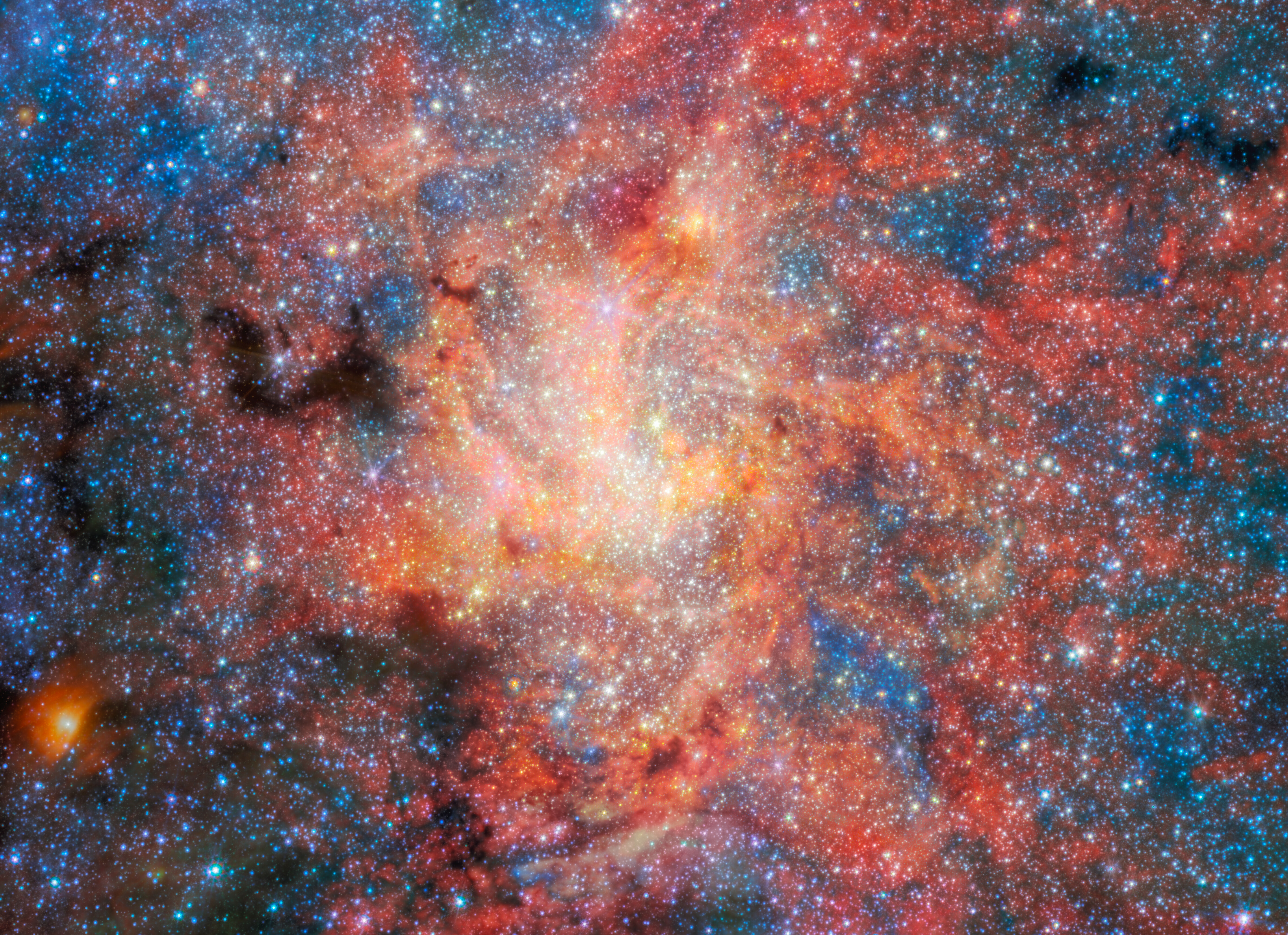
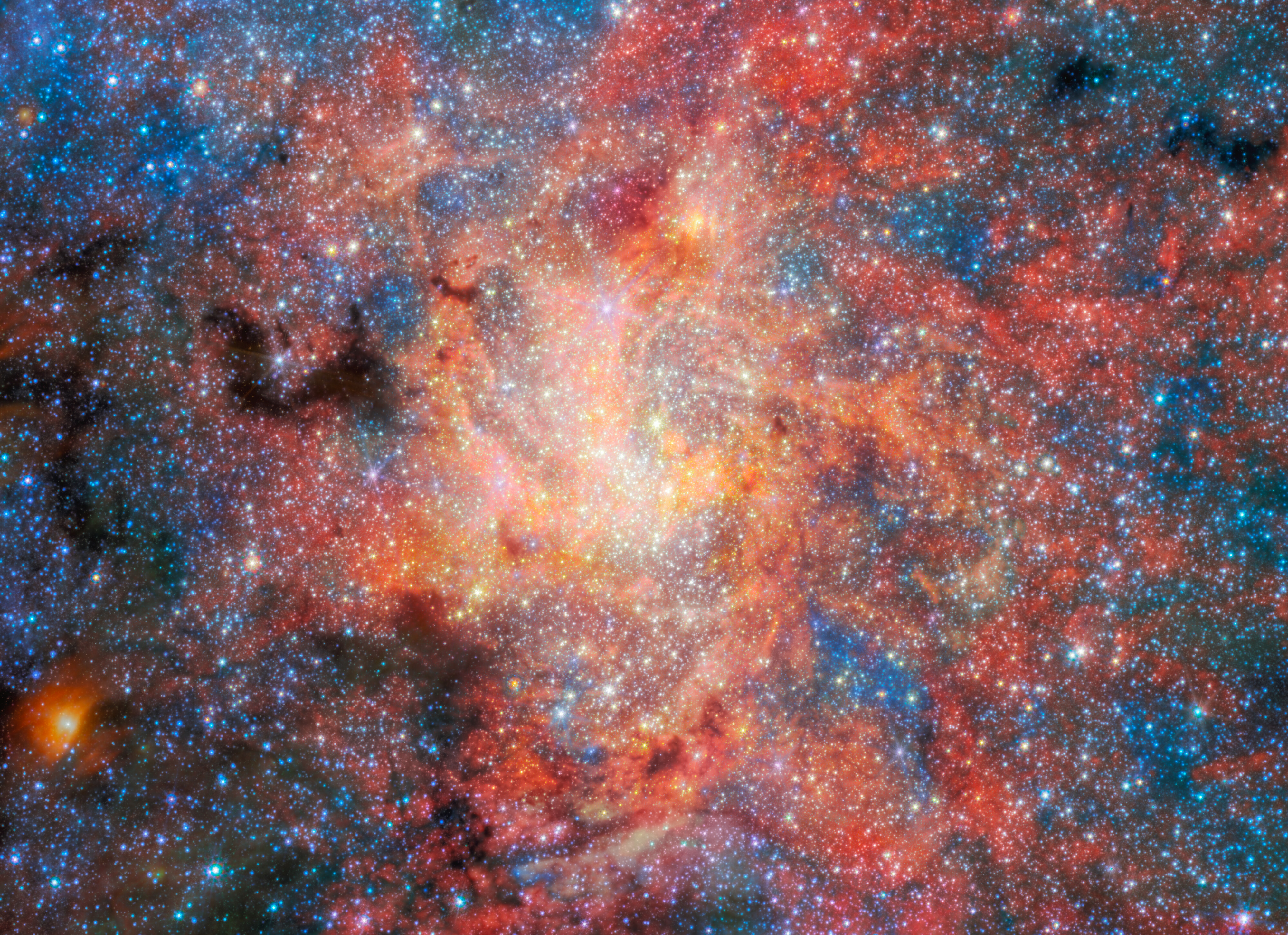
IRS 3 Field (NIRCam and MIRI image)
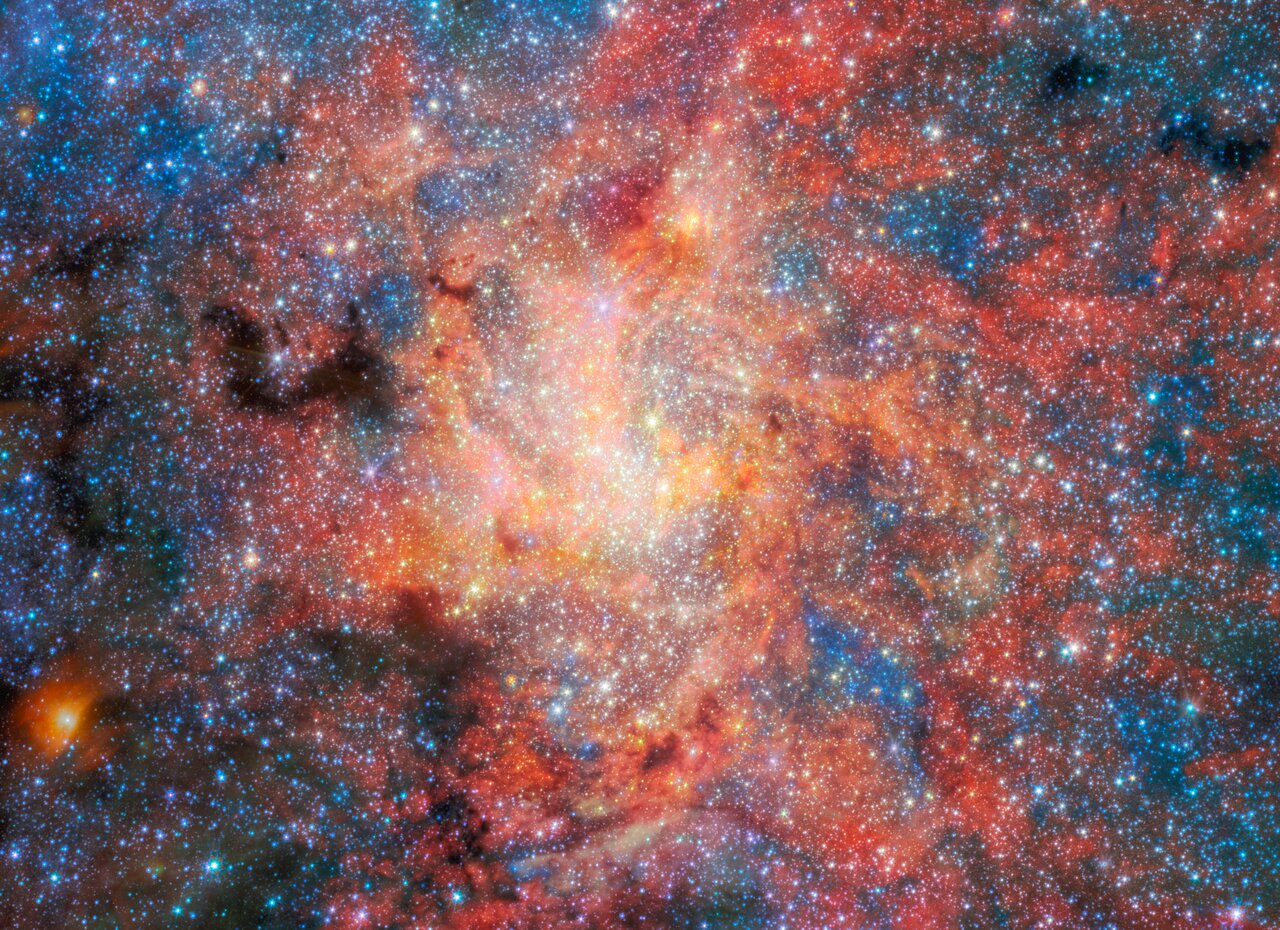
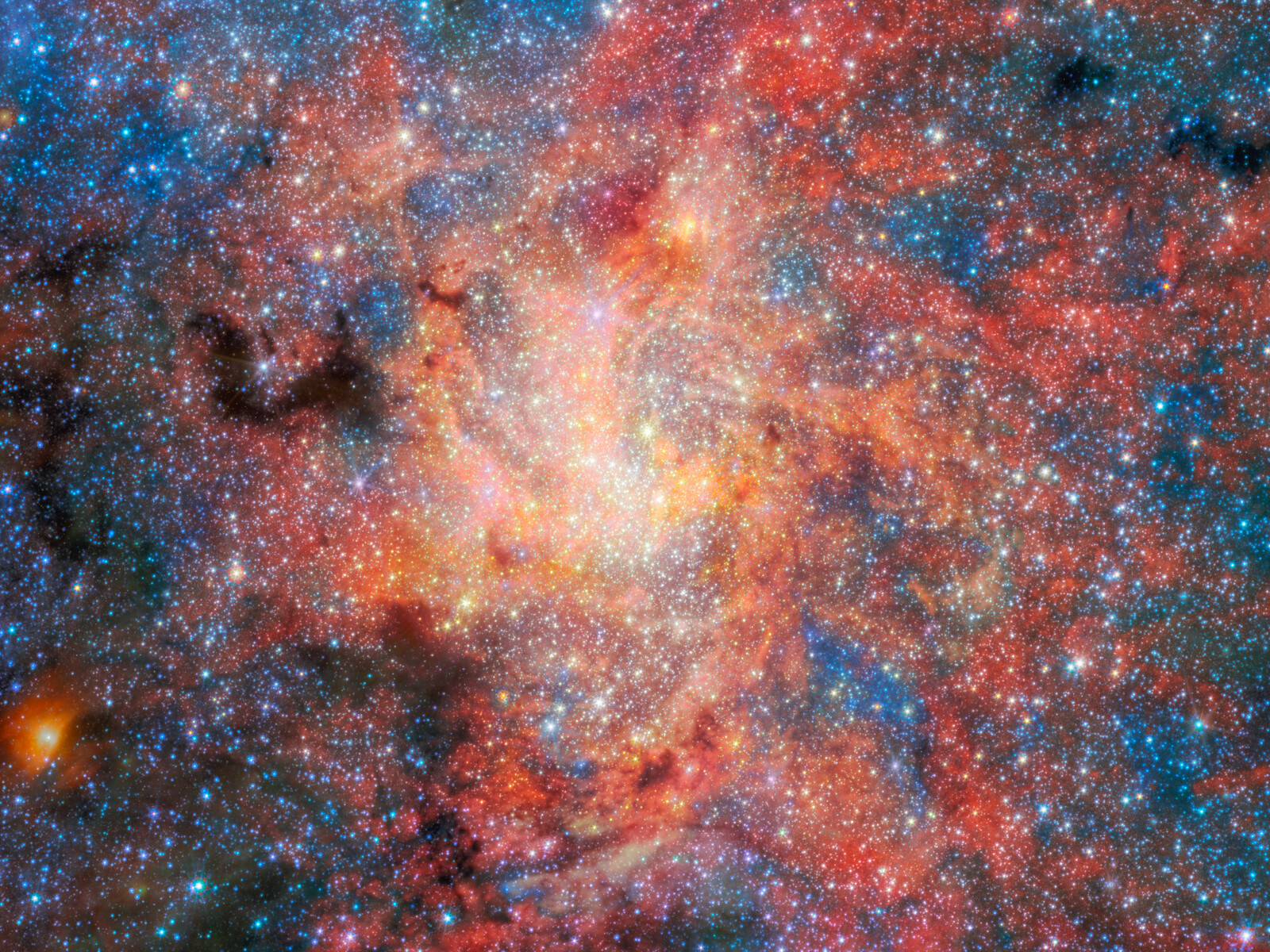
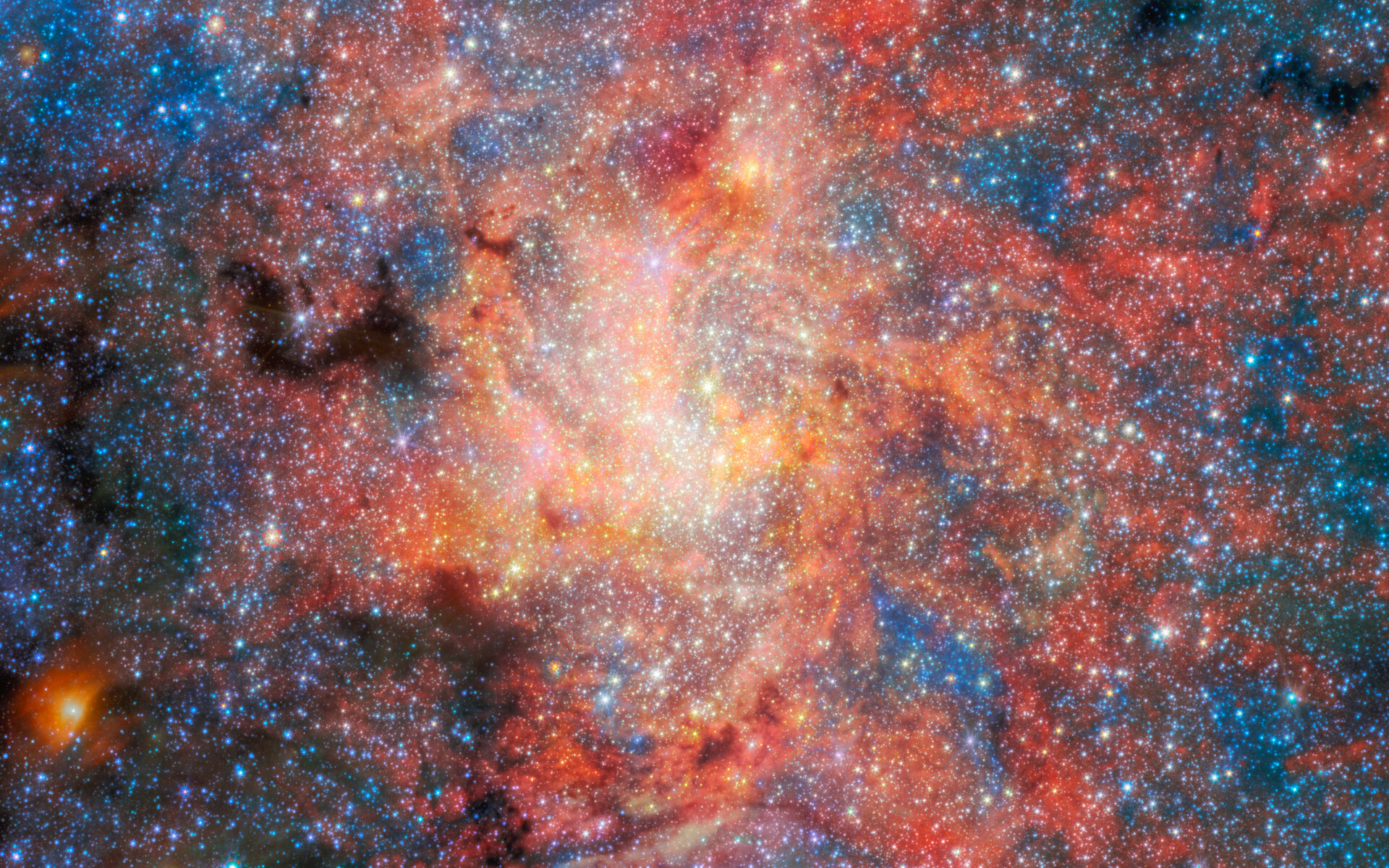
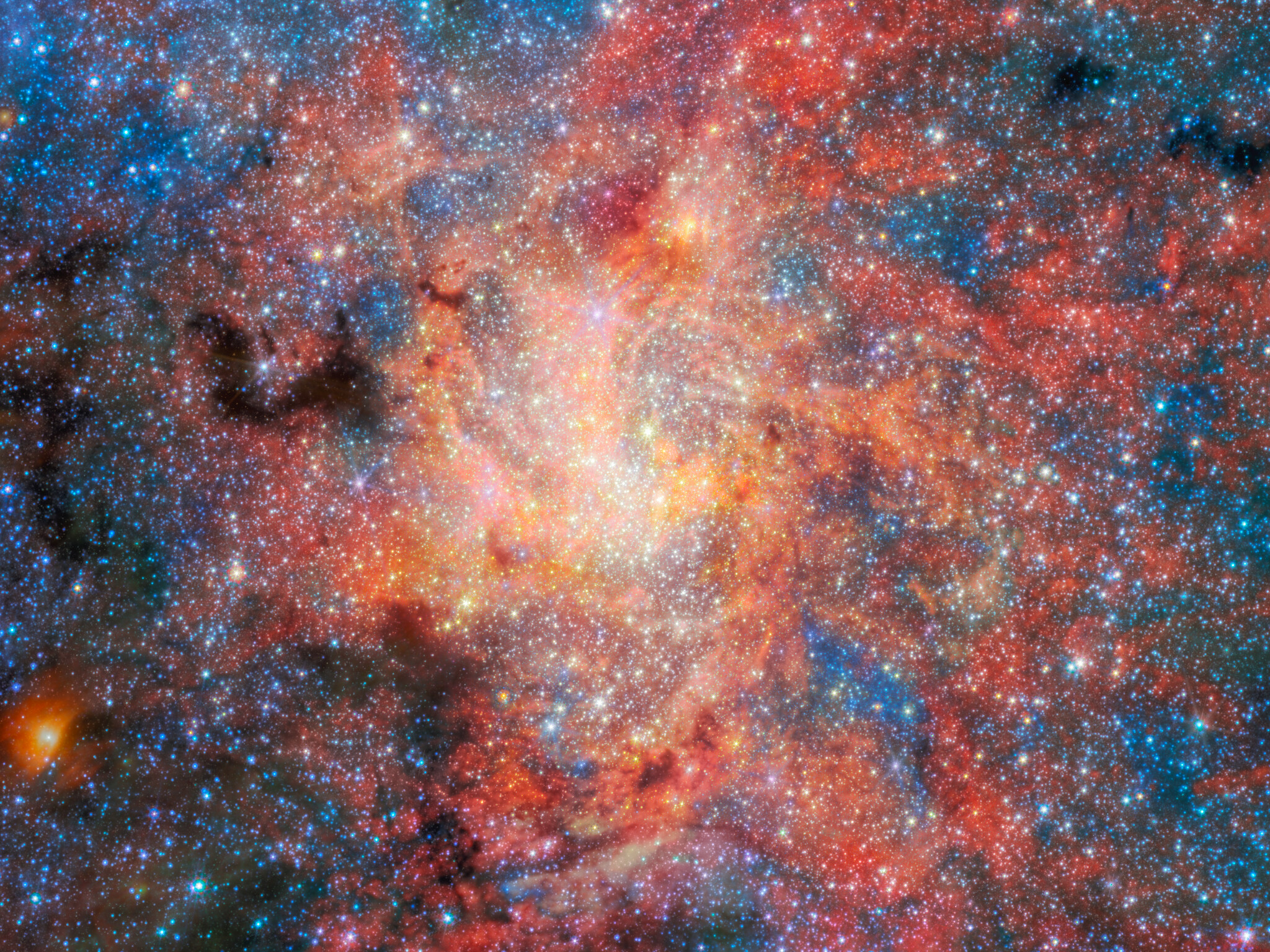
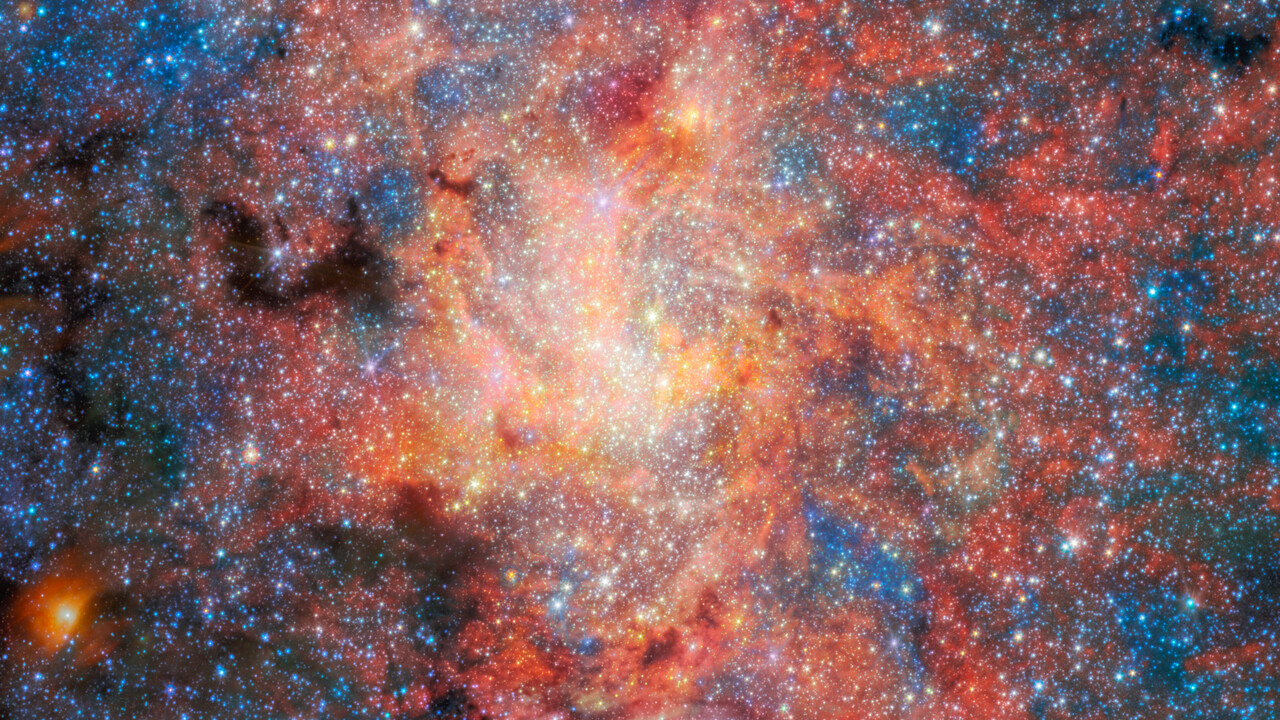
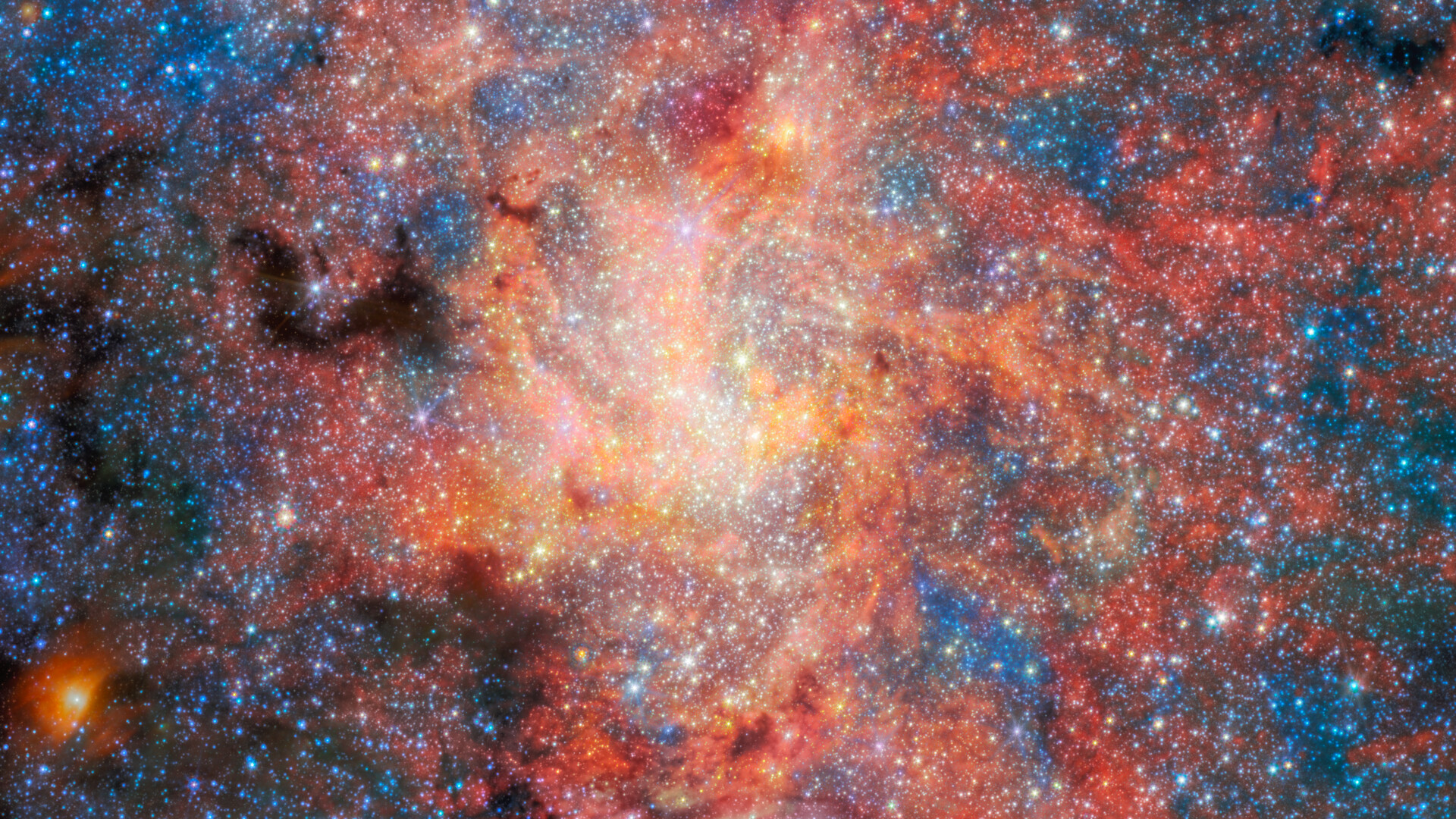
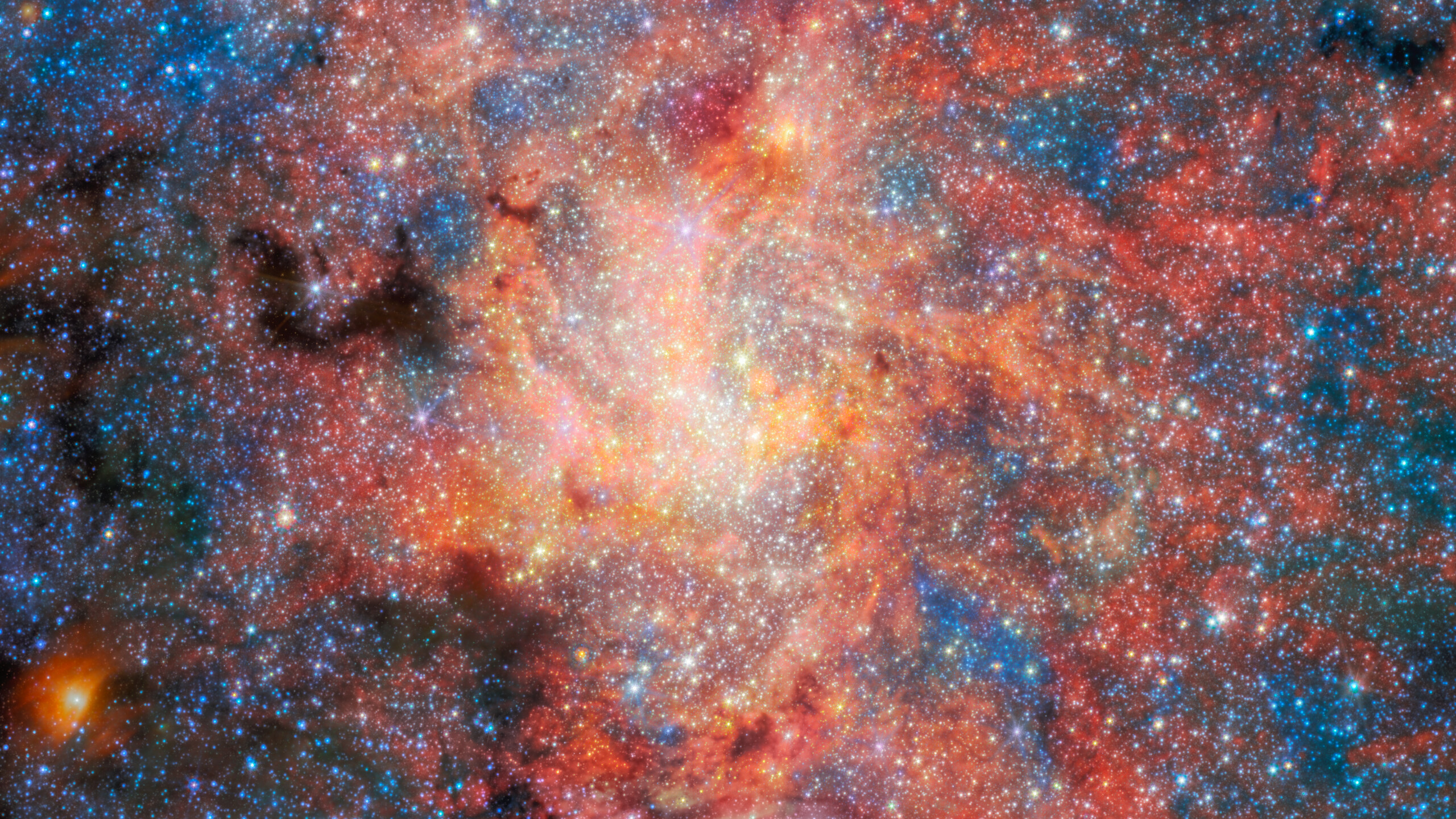
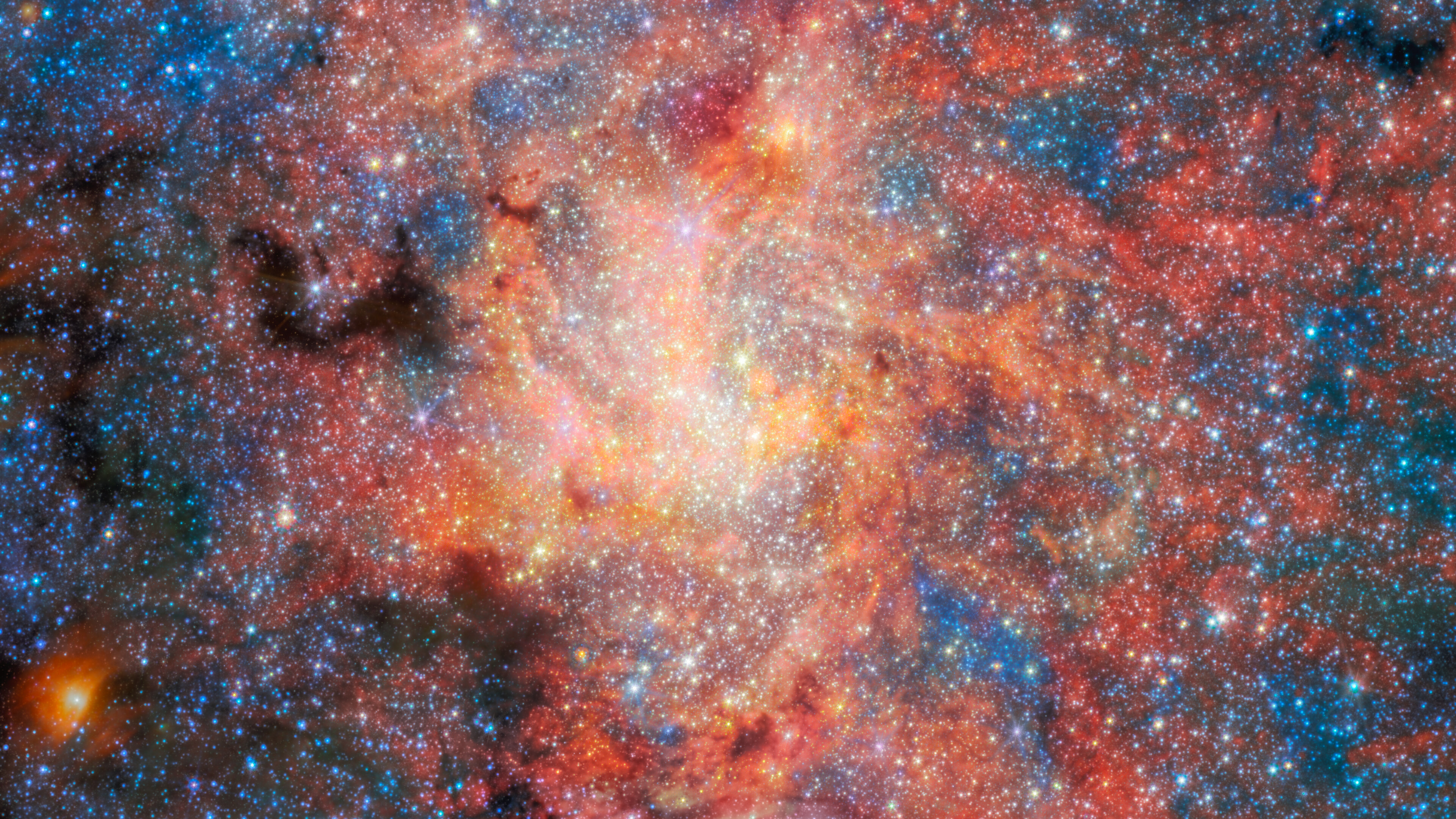
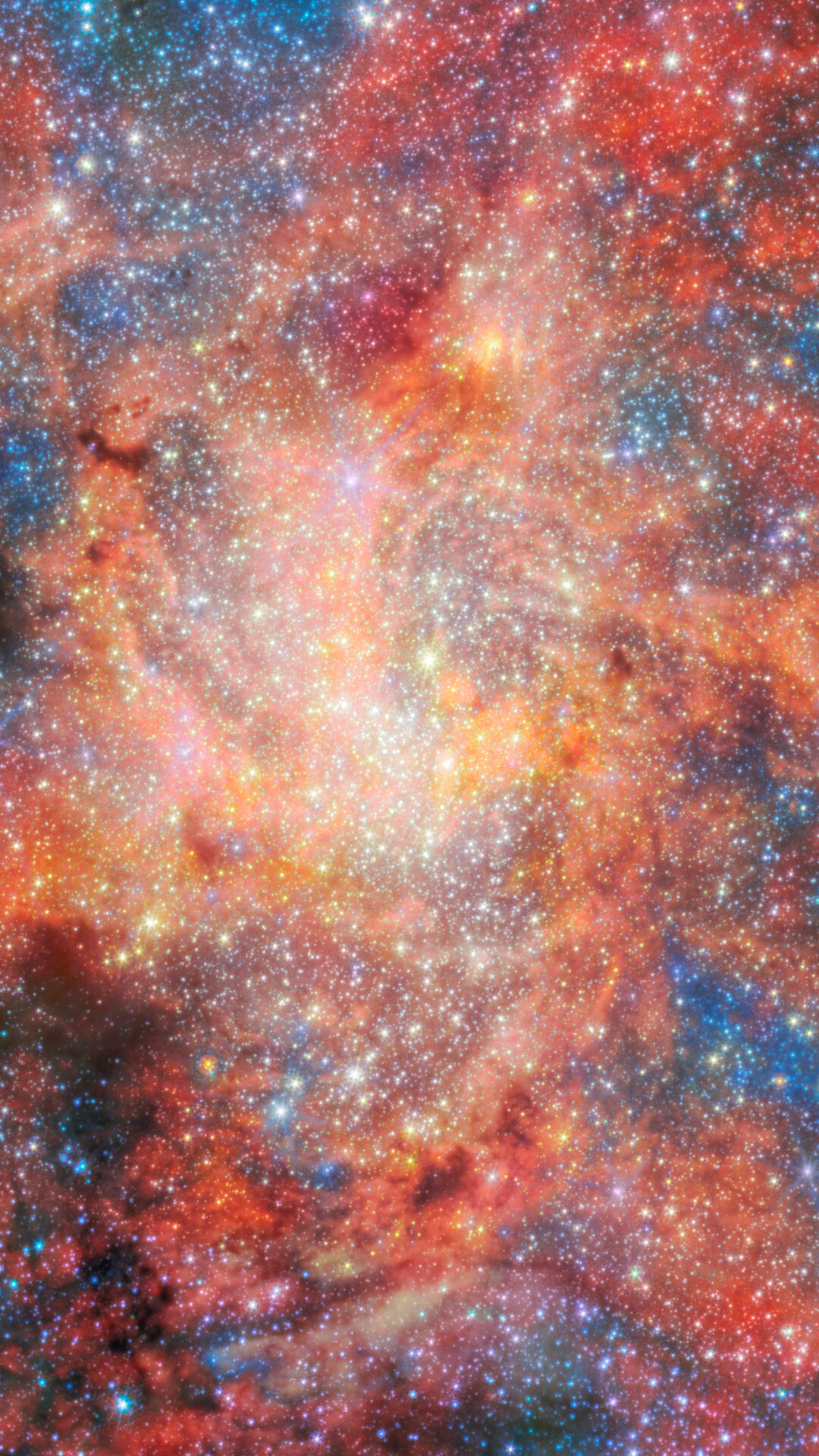
This image features data from Webb’s NIRCam (Near Infrared Camera) and MIRI (Mid Infrared Instrument) to capture the most detailed mid-infrared view yet of the field that hosts the highly evolved star IRS 3, which is located just 0.55 light-years from Sagittarius A*, the Milky Way galaxy's central supermassive black hole.
An international team of astronomers have discovered that dust and water can form and survive surprisingly close to this supermassive black hole. The observations reveal that the evolved star IRS 3 continues to enrich its surroundings with newly formed material despite the intense radiation environment around Sagittarius A*.
The data in this image were taken with Webb programmes #1939 (J. Lu), #3571 (F. Yusef-Zadeh), #2491 (N. B. Sabha), and #2075 (C. Chan).
[Image description: A dense star field fills the entire image, with countless stars scattered across a backdrop of glowing clouds in shades of red, orange, pink, white, and blue. At the centre, a brilliant concentration of stars creates a bright, almost white core surrounded by intricate filaments and wisps of illuminated gas and dust that radiate outward. Dark, irregular patches of opaque dust interrupt the glowing clouds, particularly toward the left side of the image, where they appear as silhouetted shapes against the brighter background. The surrounding stellar population varies in brightness and colour, with cool blue stars and warmer orange and red stars distributed throughout the scene.]
Credit:ESA/Webb, NASA & CSA, F. Peißker, J. Lu, F. Yusef-Zadeh, N. B. Sabha, C. Chan
About the Image
| Id: | weic2617a | |
|---|---|---|
| Type: | Observation | |
| Release date: | 11 August 2026, 10:00 | |
| Related releases: | weic2617 | |
| Size: | 4756 x 3454 px | |