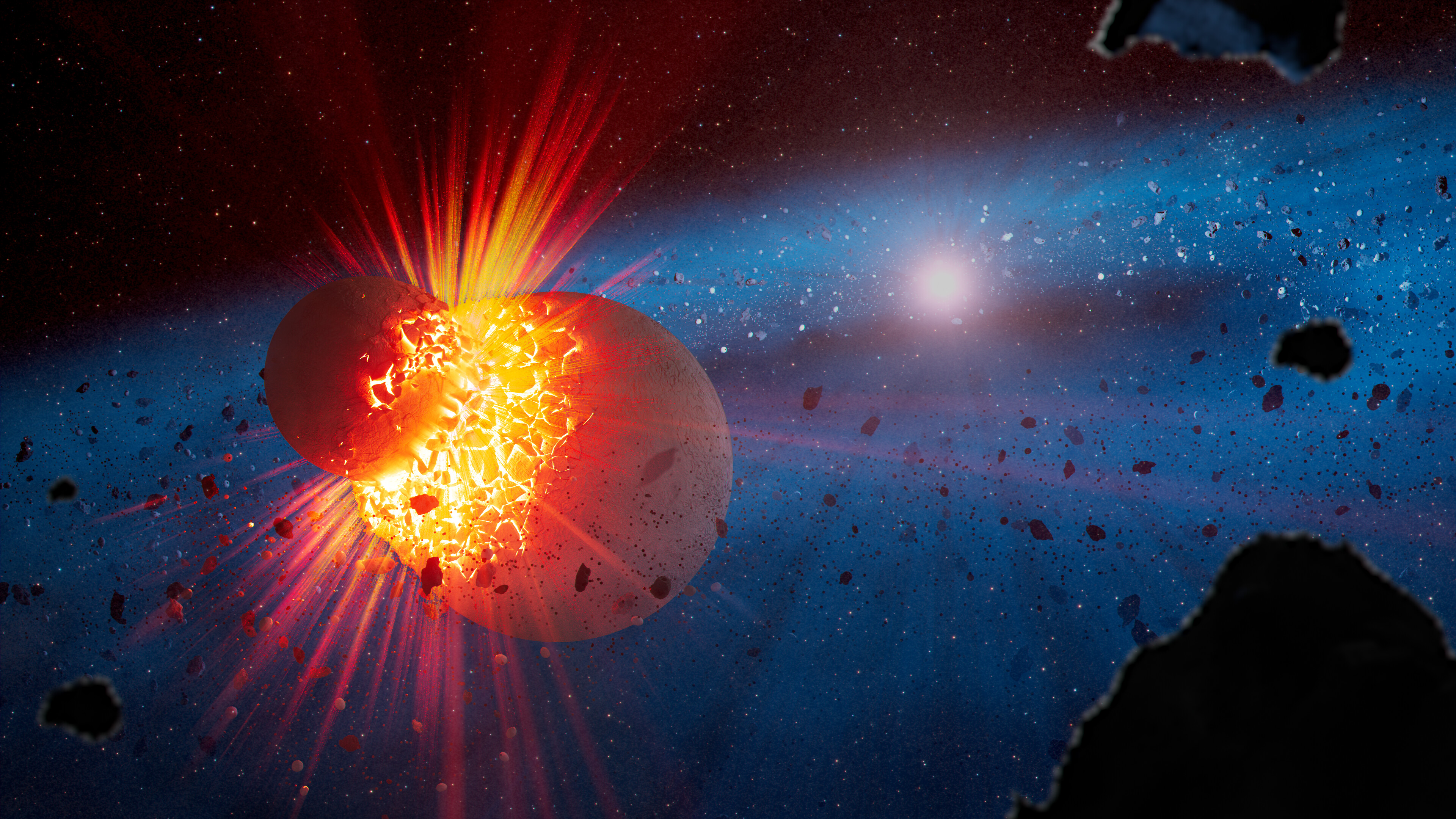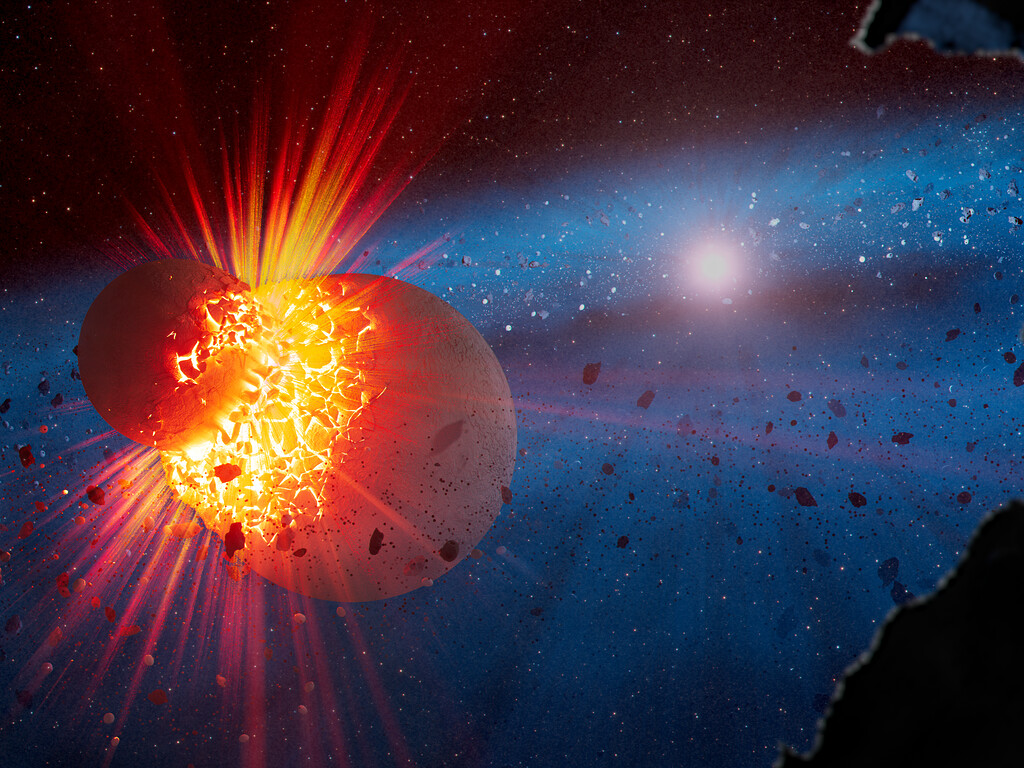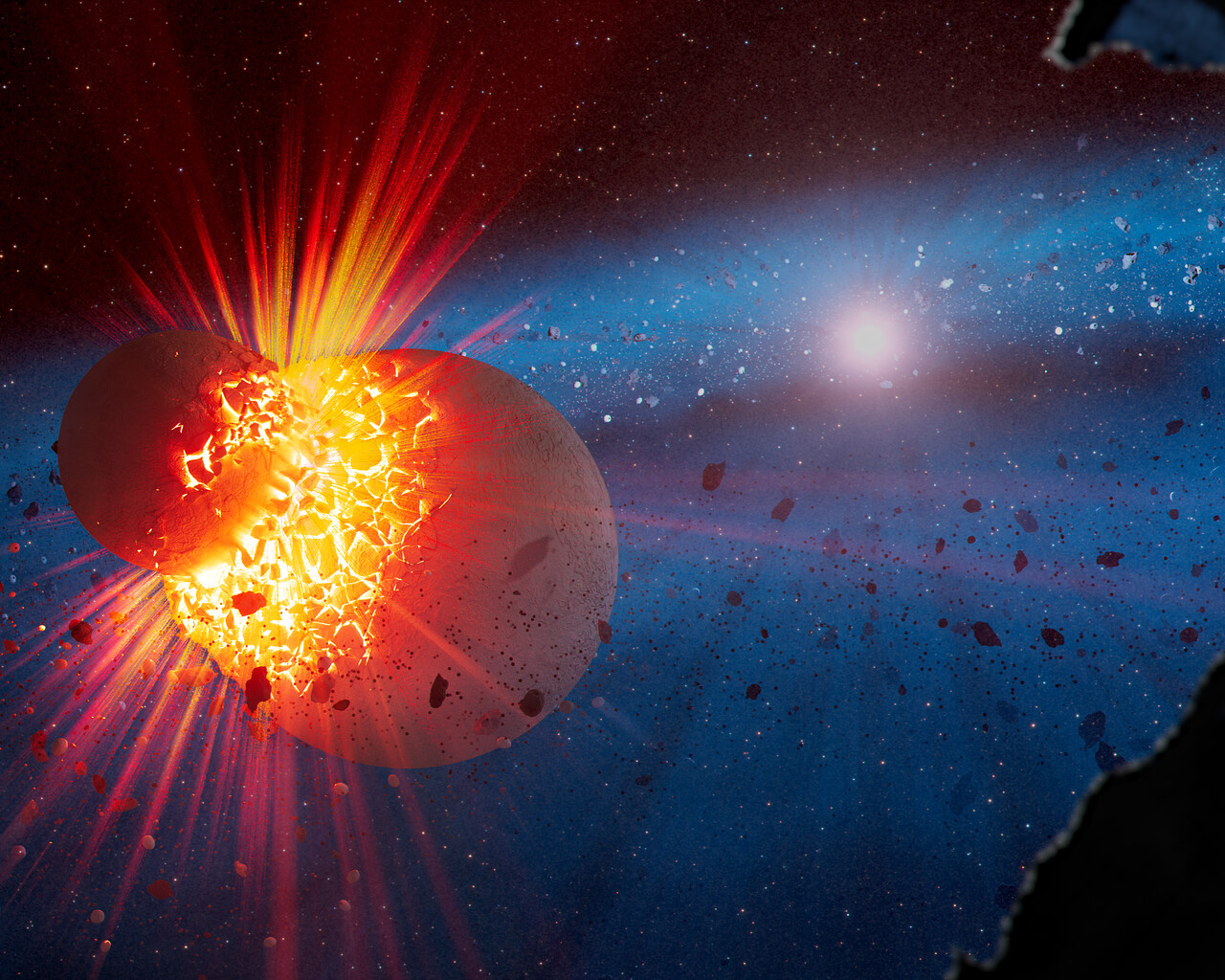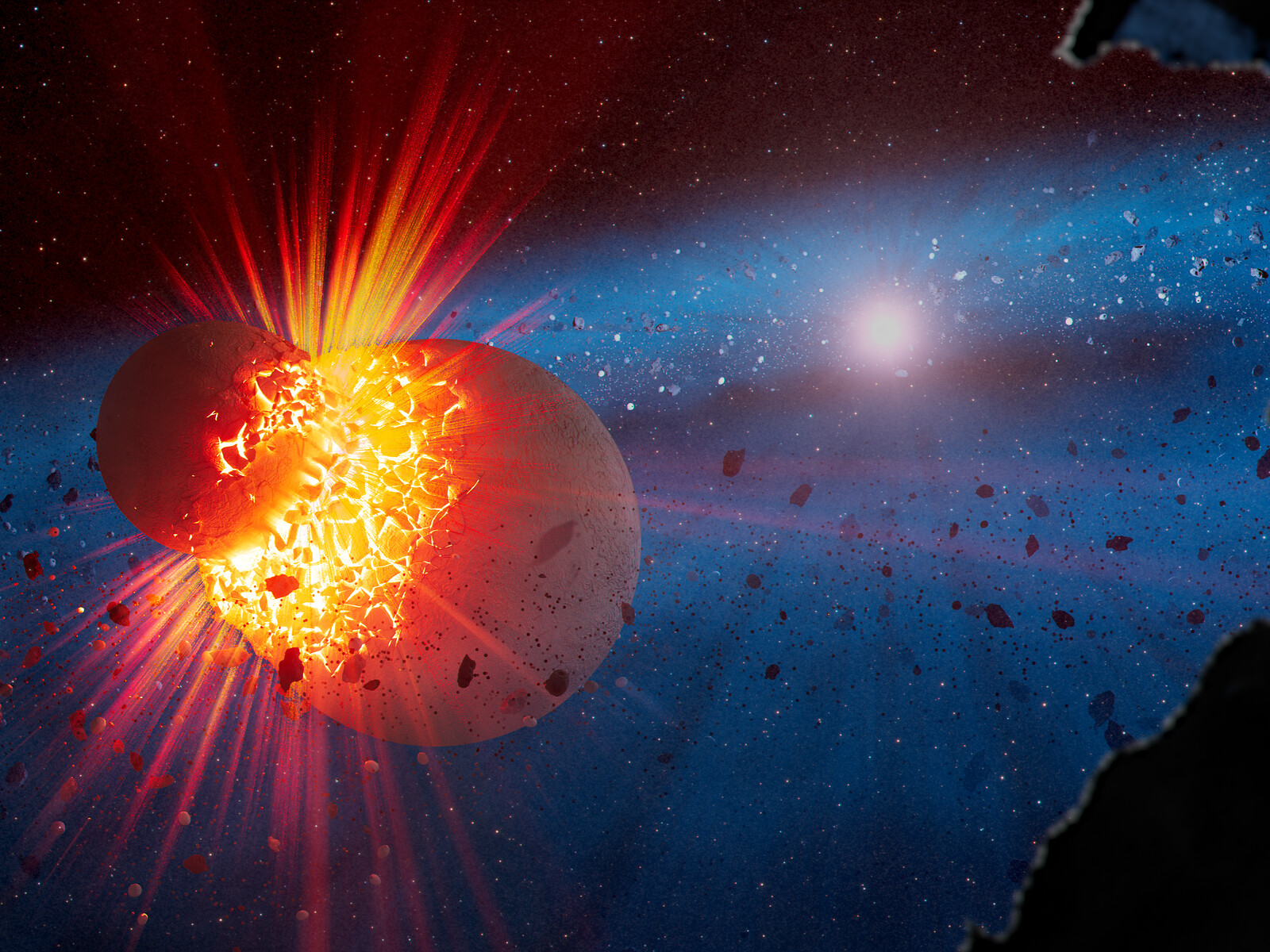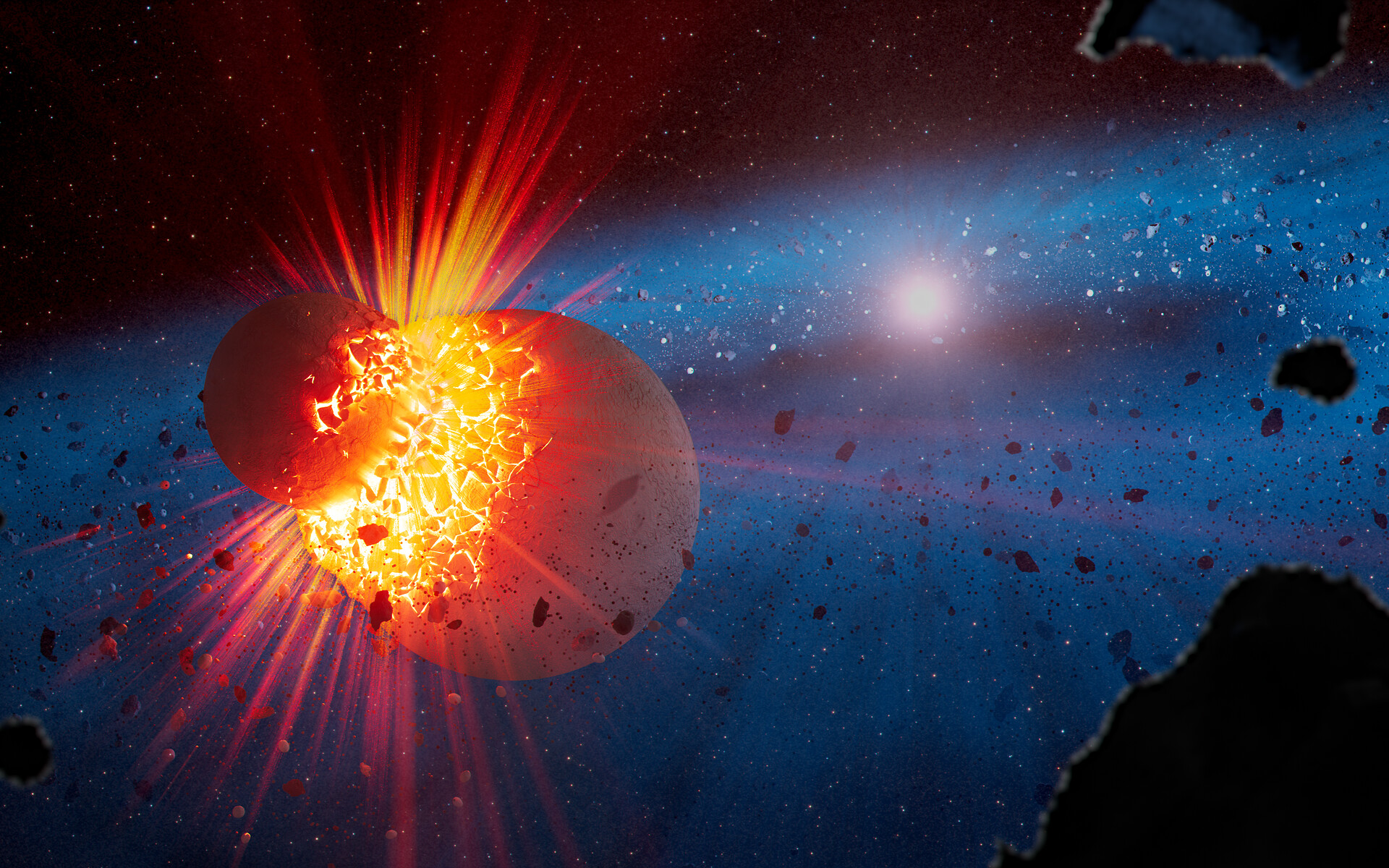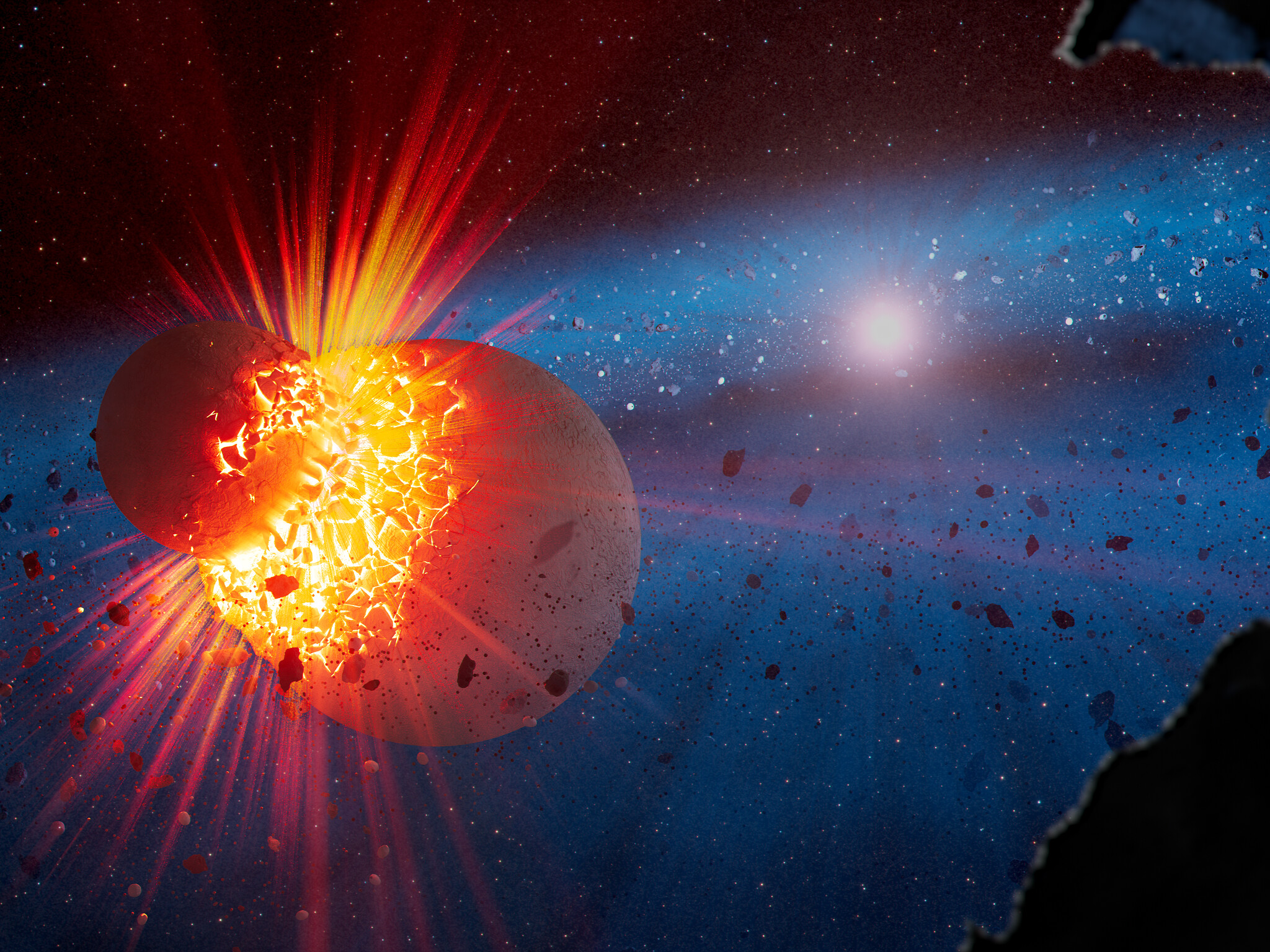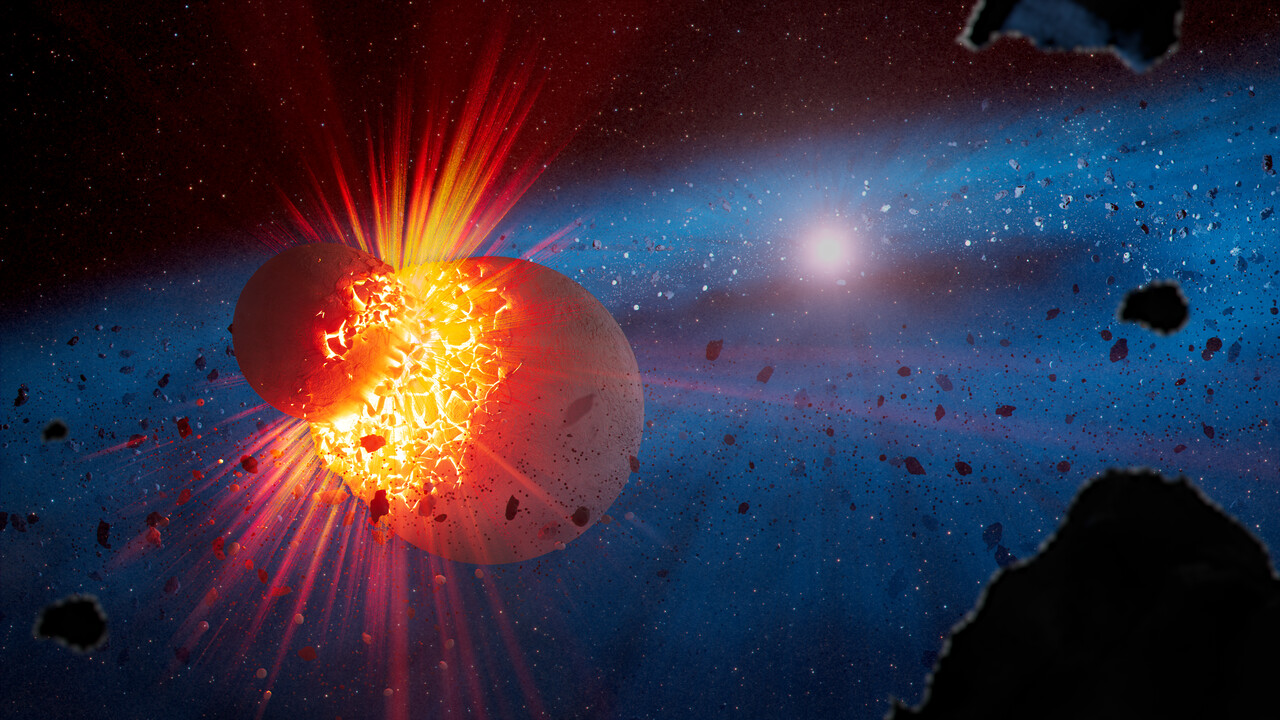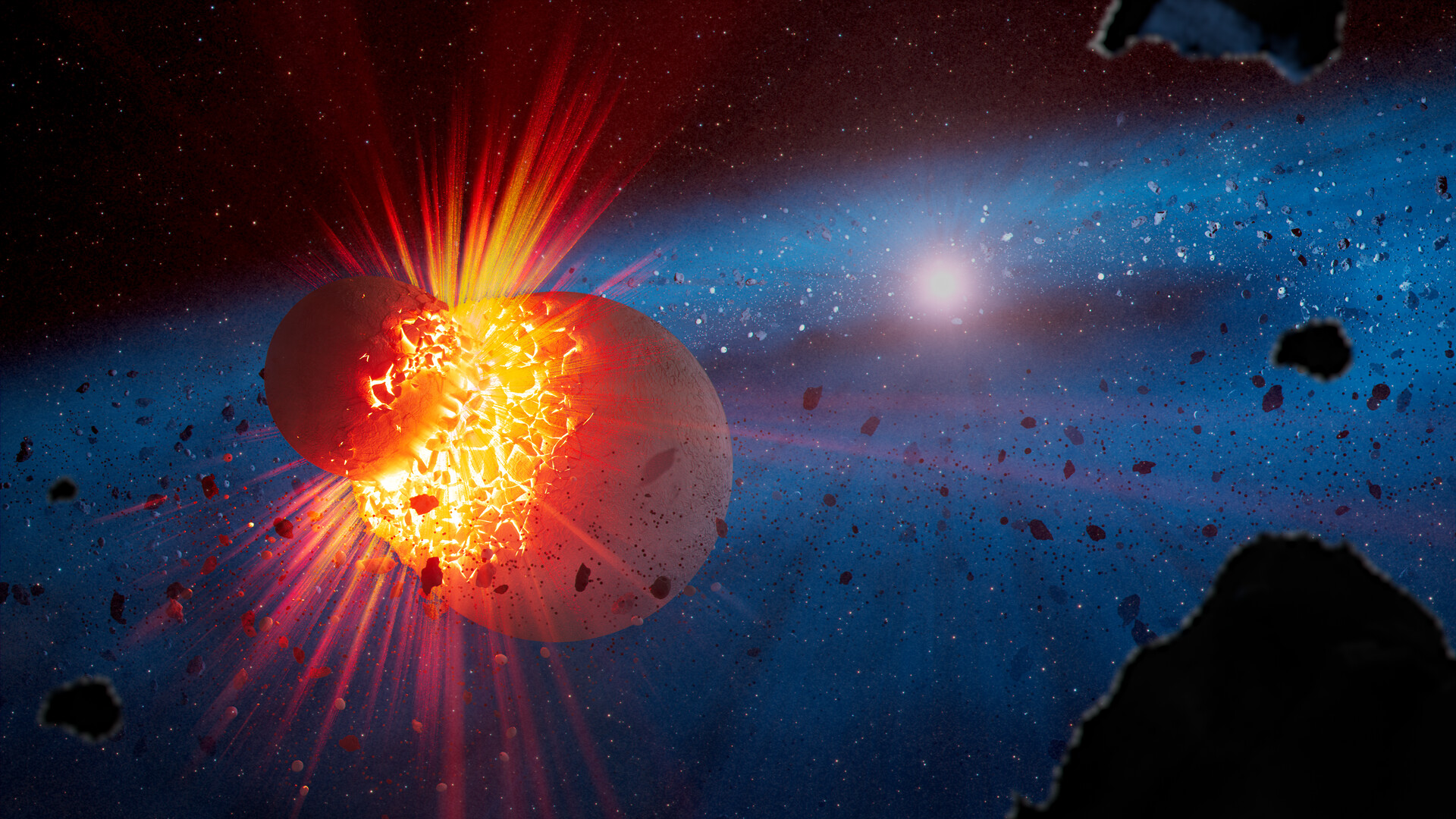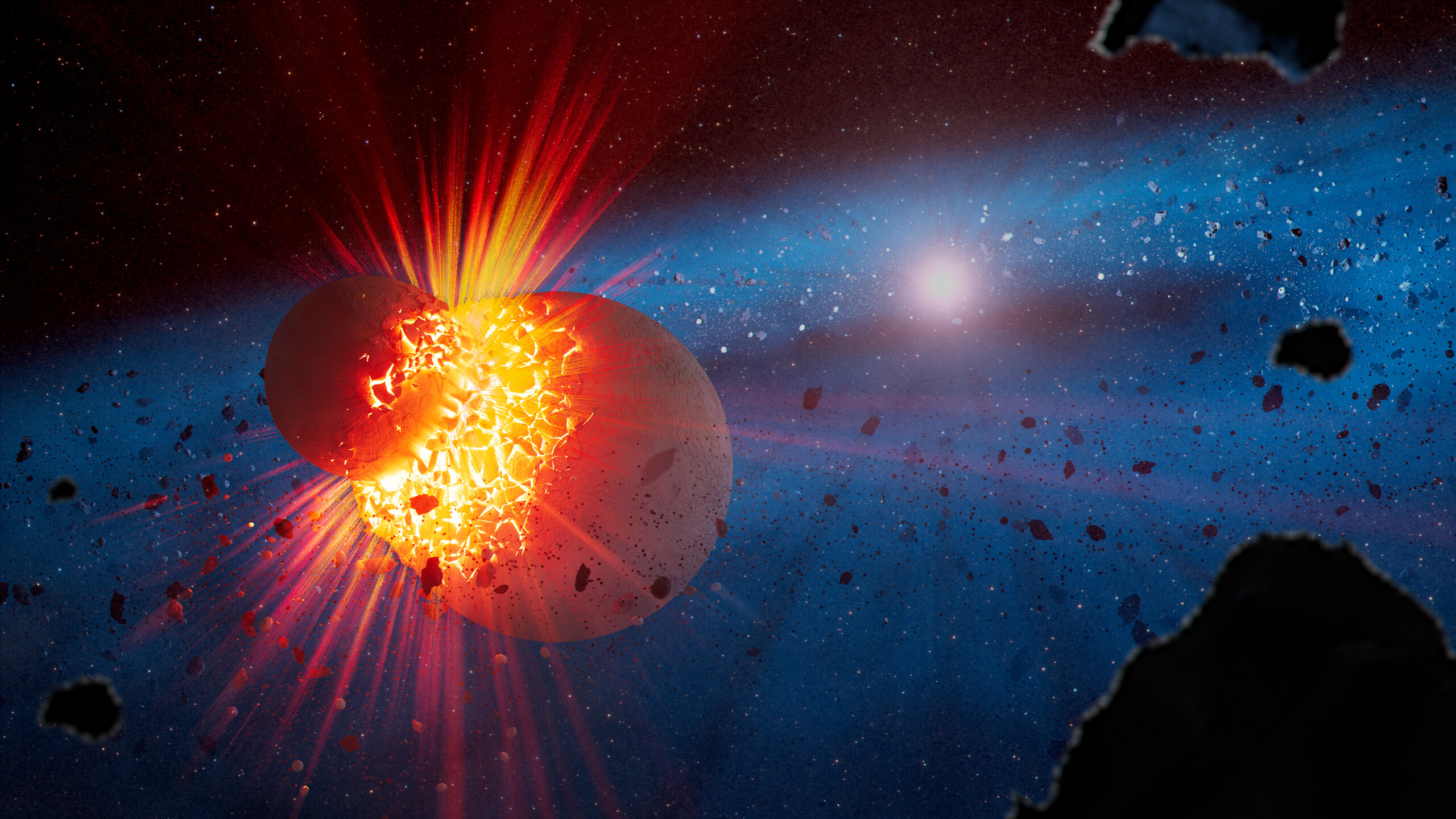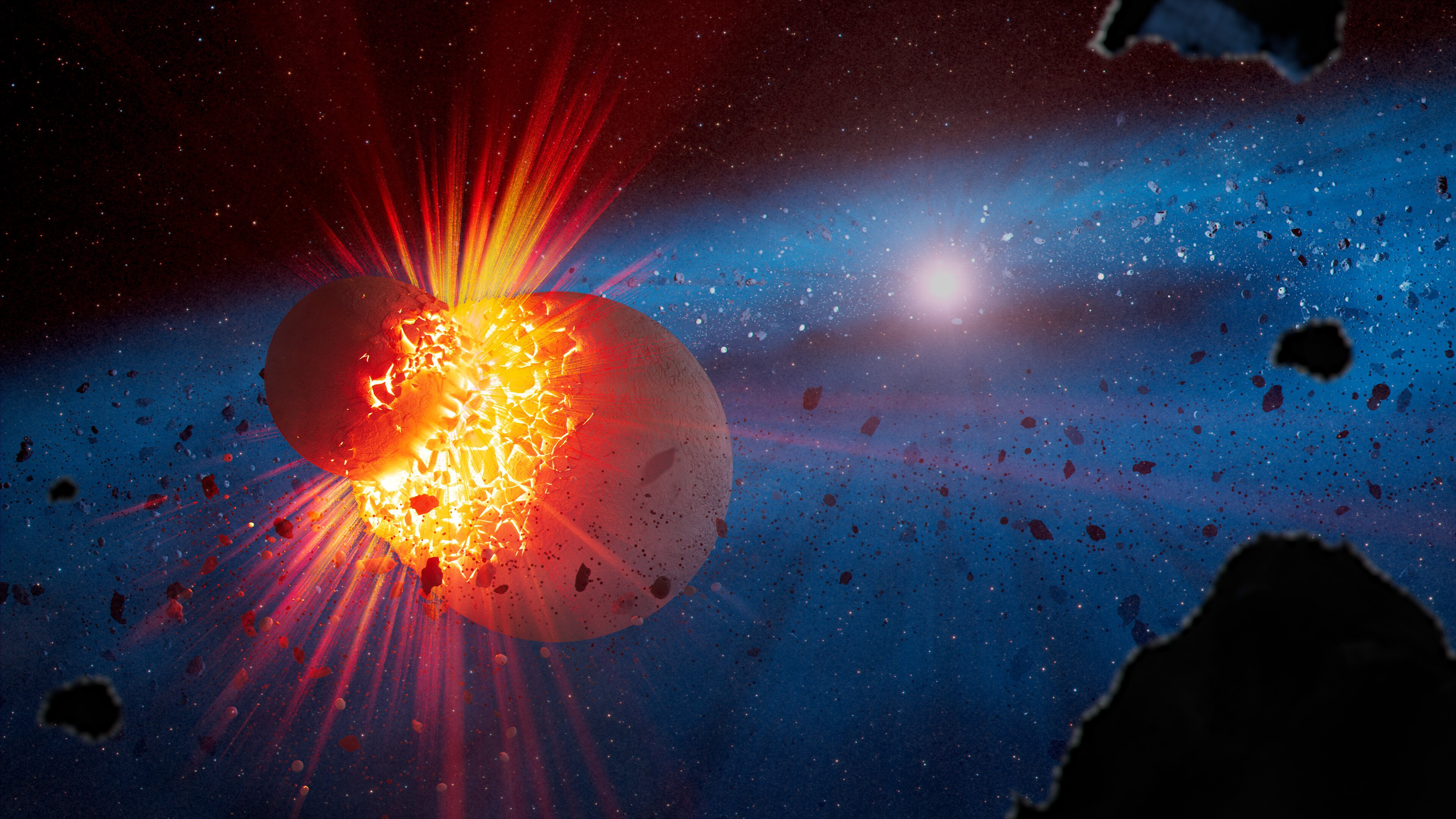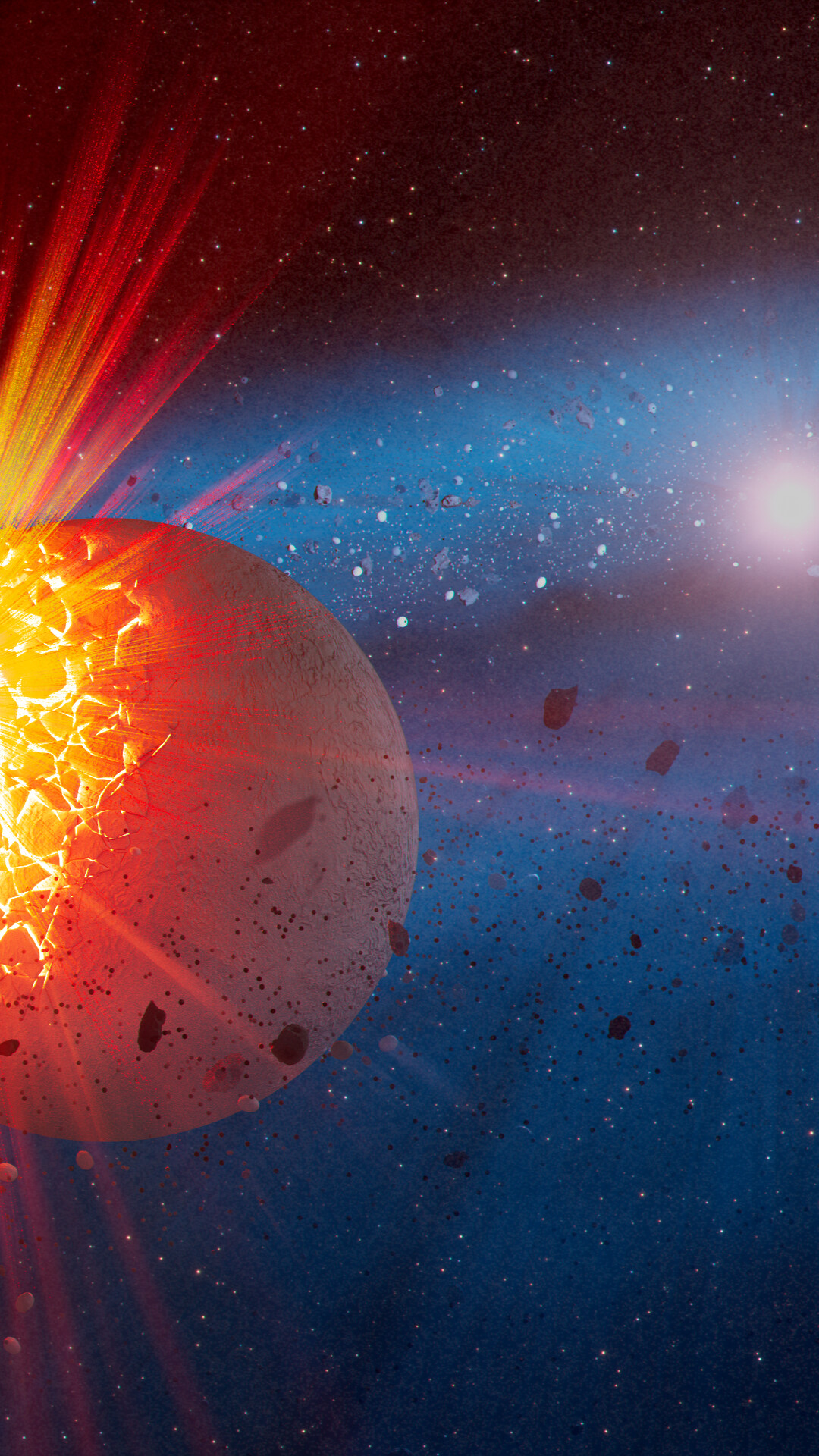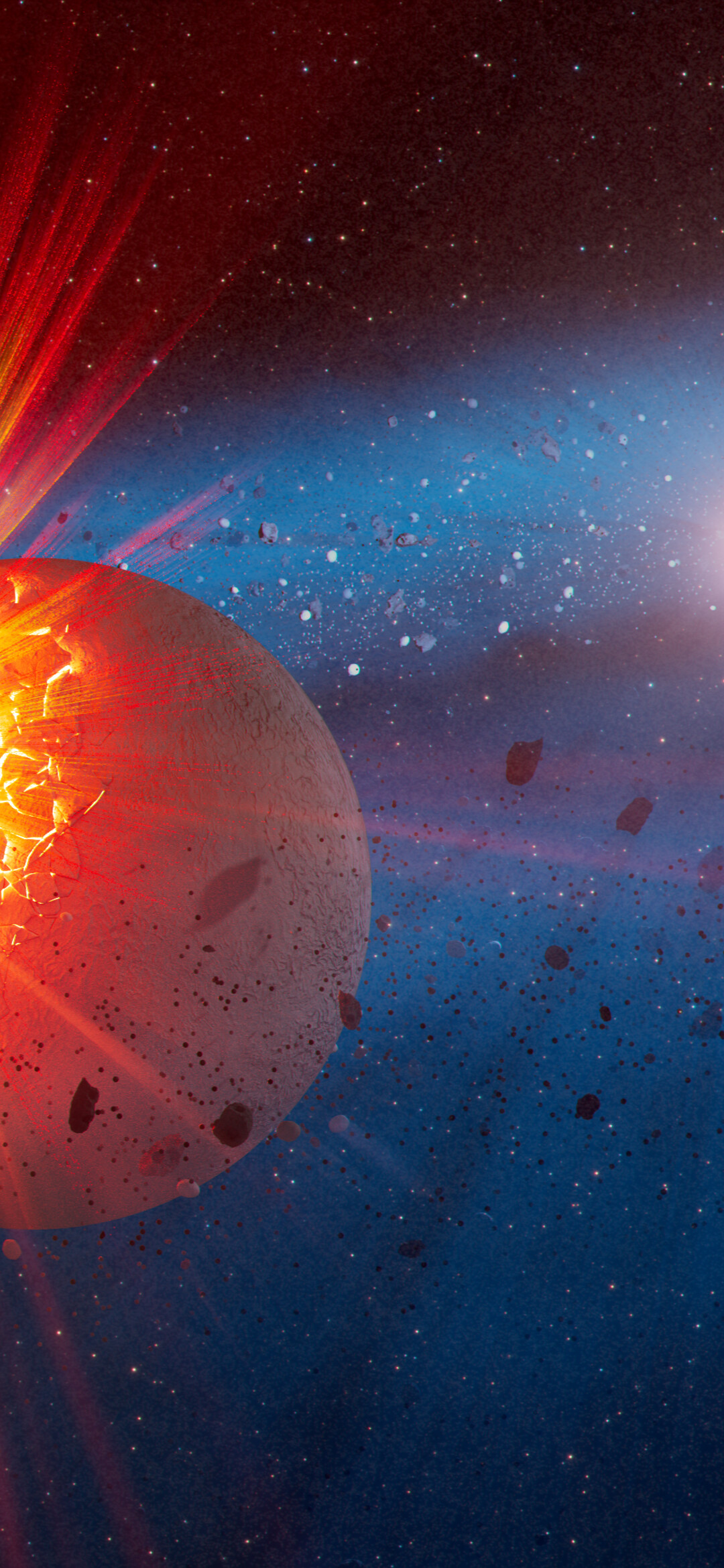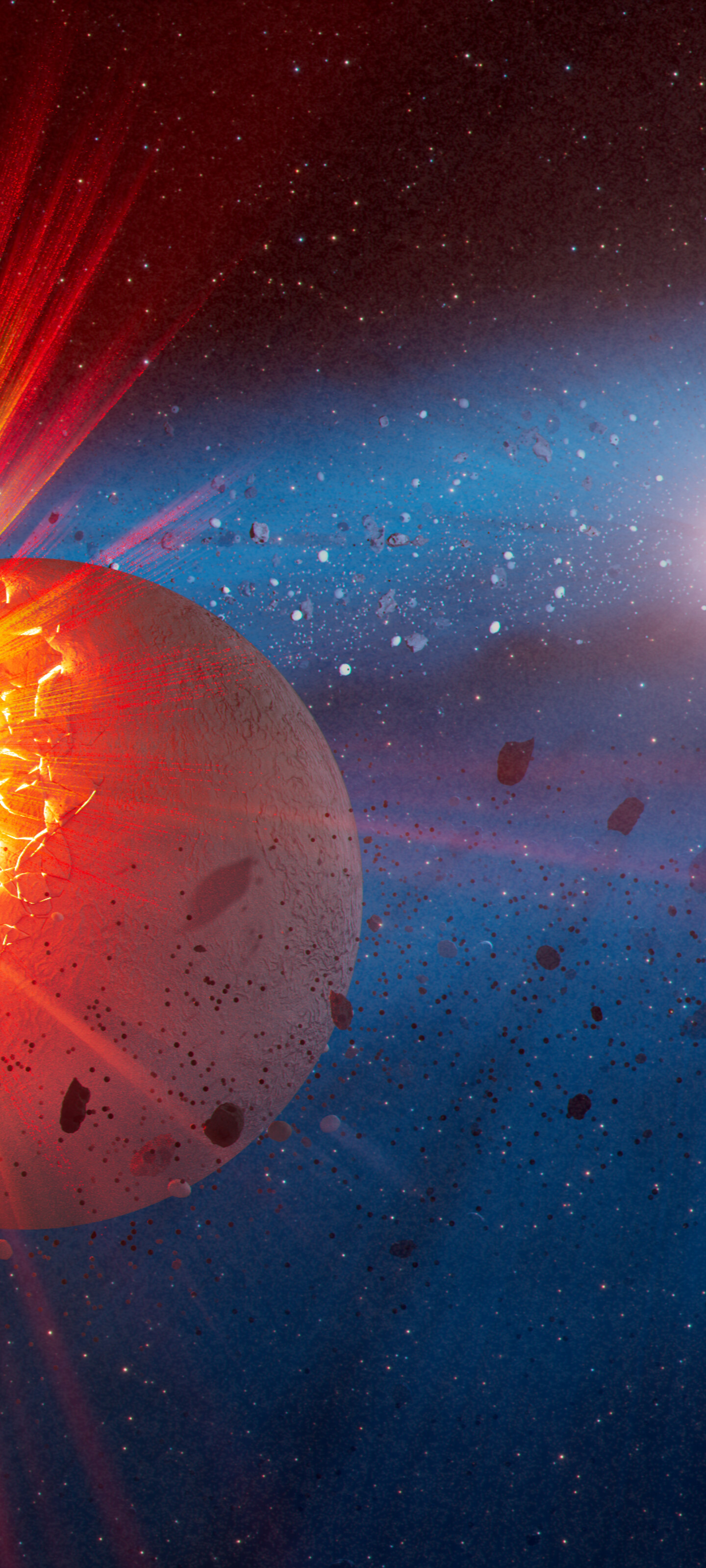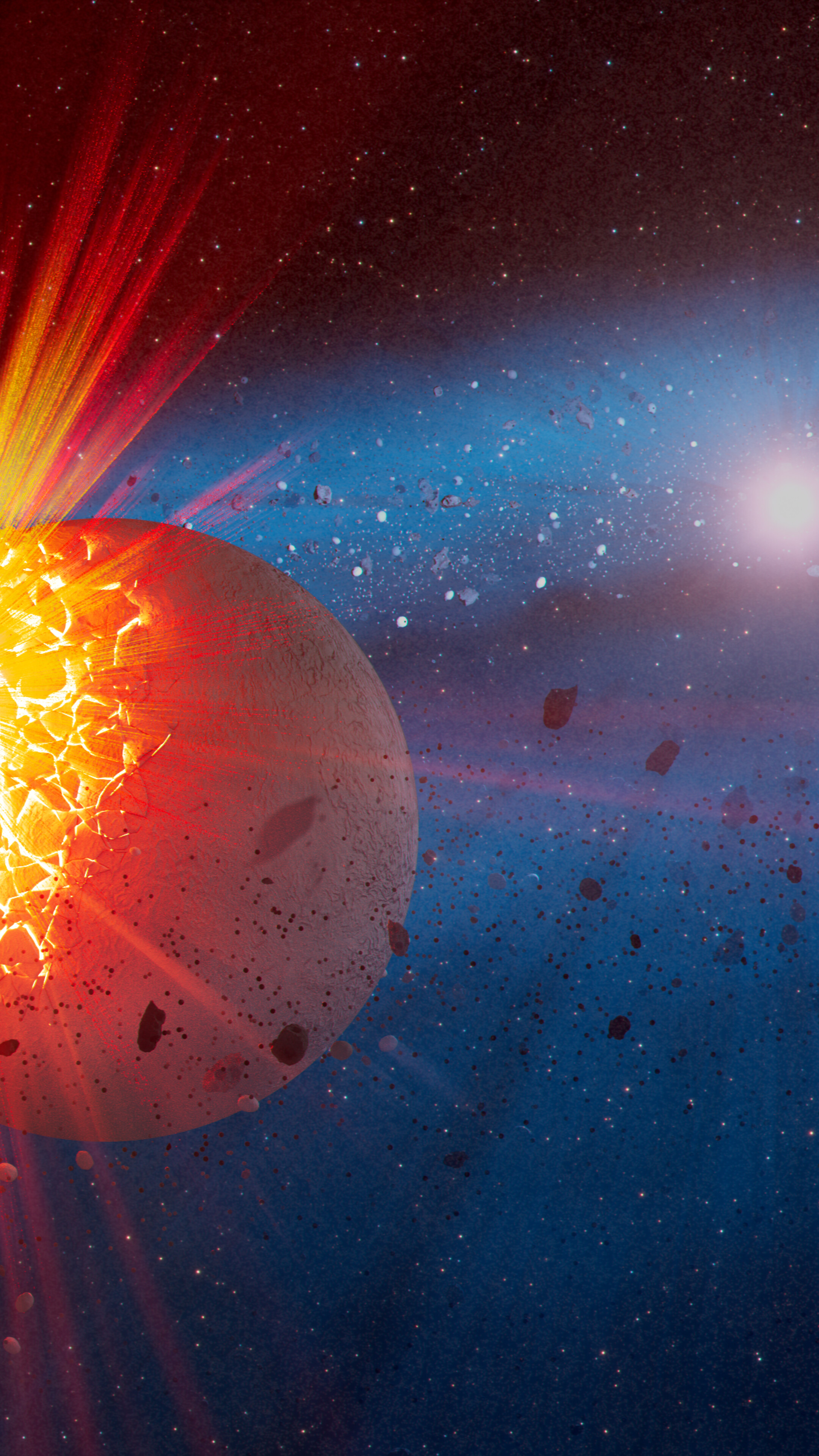

Extreme debris disc (artist’s concept)
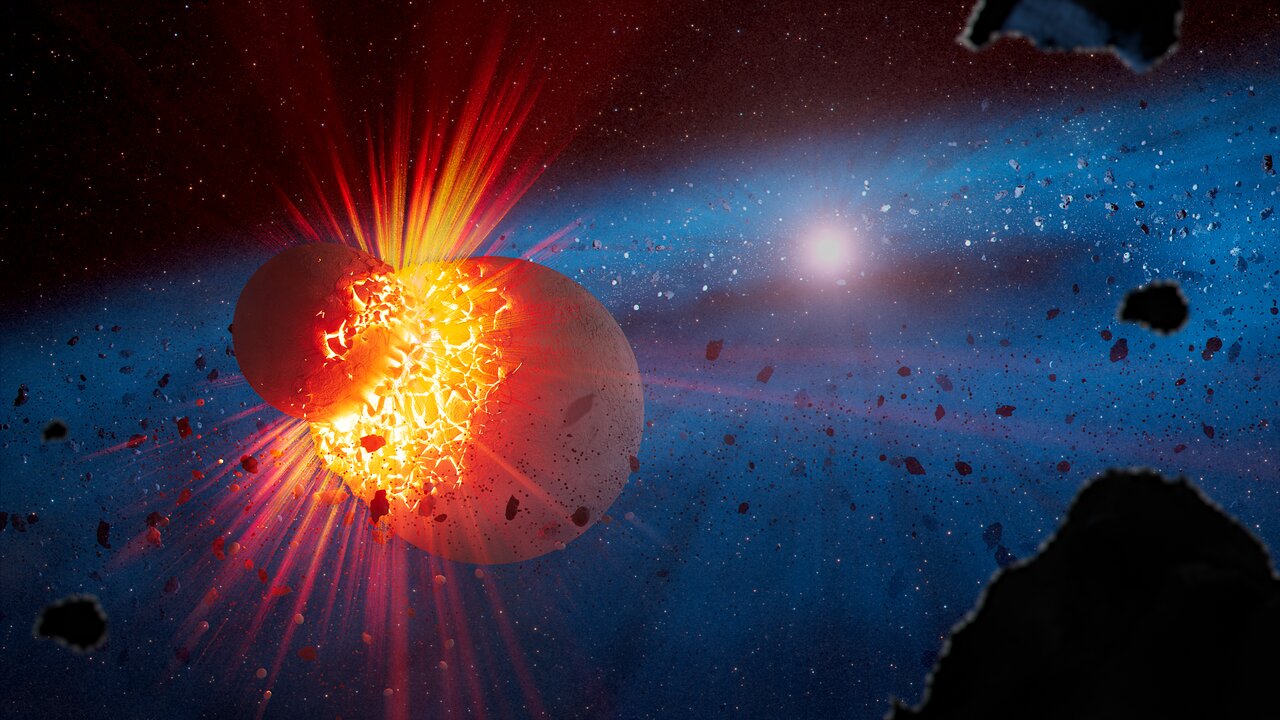
Extreme debris discs, a subclass of debris discs, contain unusually large amounts of warm dust close to their stars, in the region comparable to where rocky planets orbit in our Solar System. Studying the composition of these discs, particularly their silica content, can provide information on the type of collisions — whether they are head-on or less direct, like grazing — and the general size of the crashing bodies (Mars-sized or Moon-sized) that are contributing to their dust content. This artist’s concept portrays one such collision.
Analysing the composition of extreme debris discs benefits our collective understanding of our solar system, which may have experienced more than one extreme debris disc phase.
[Image description: Artist’s concept of a star and its debris disc against the black background of space. The star is in the background, right of center, and depicted as a small, luminous sphere. The debris disc is a large blue ring that encircles the star. The debris disc is angled toward the viewer, so that the portion nearest to the viewer extends beyond the bottom frame of the illustration. Many dark, rocky fragments are scattered throughout the debris disc. In the foreground, toward the left, is a small planetary embryo colliding into the left side of a larger spherical object. The impact site glows bright yellow and orange and has a mottled appearance, as though chunks of both colliding bodies are breaking up and being destroyed. Orange-yellow streams of vapor extend outward from the collision area. Behind the debris disc and its star are many small stars in the background.]
Credit:NASA, ESA, CSA, J. Olmsted (STScI)
About the Image
| Id: | weic2618a | |
|---|---|---|
| Type: | Artwork | |
| Release date: | 1 October 2026, 16:00 | |
| Related releases: | weic2618 | |
| Size: | 3840 x 2160 px | |