
Coordinates
| Position (RA): | 3 45 15.78 |
|---|---|
| Position (Dec): | 32° 6' 16.44" |
| Field of view: | 3.16 x 3.16 arcminutes |
| Orientation: | North is 108.2° left of vertical |


Interactive Sky View
Background Survey Options
Colours & filters
| Band | Wavelength | Telescope |
|---|---|---|
| Infrared (Blue) | 1.62 μm | James Webb Space Telescope NIRCam |
| Infrared (Blue) | 1.82 μm | James Webb Space Telescope NIRCam |
| Infrared (Green) | 3.6 μm | James Webb Space Telescope NIRCam |
| Infrared (Red) | 4.44 μm | James Webb Space Telescope NIRCam |
IC 348 Crop: Stars and faint outflows
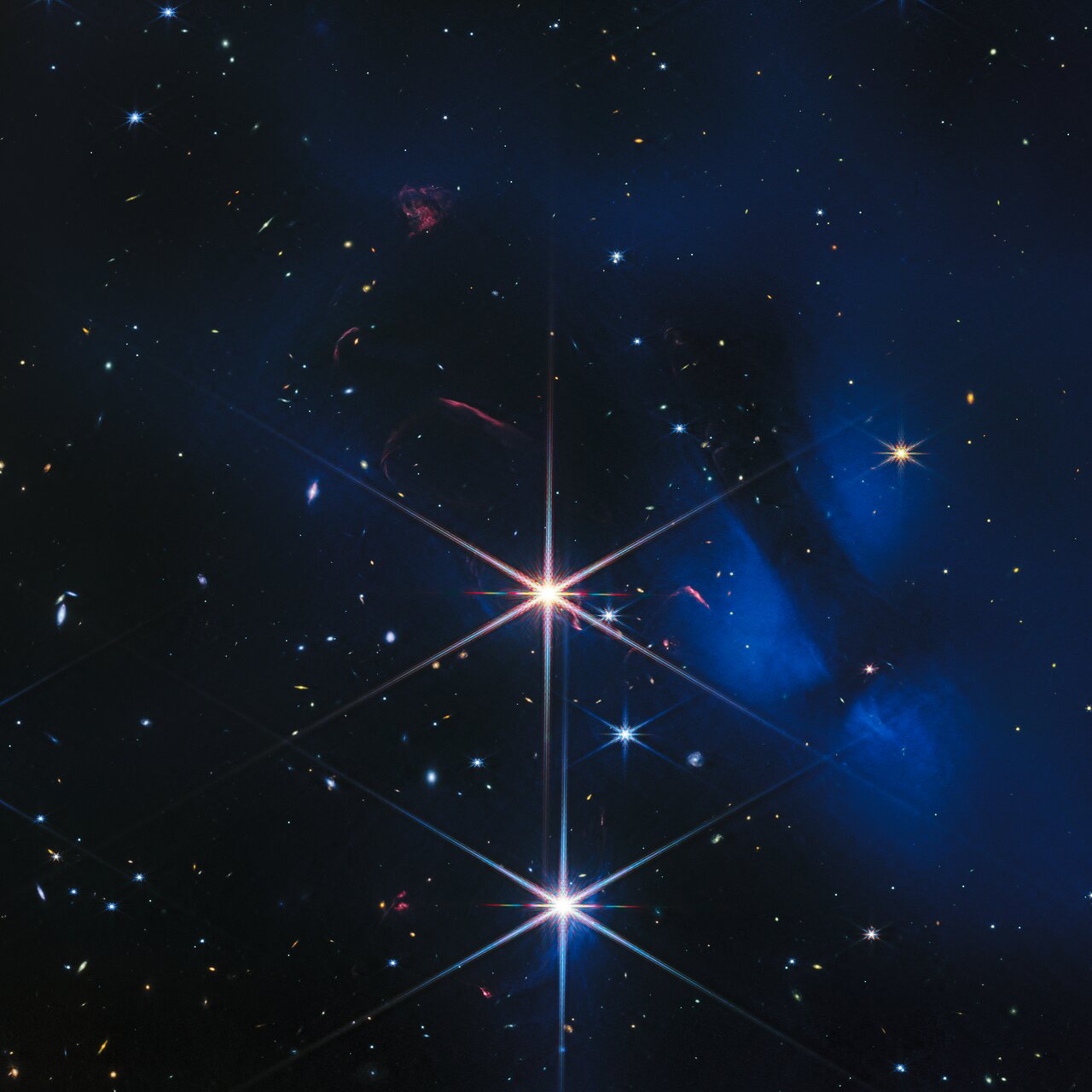
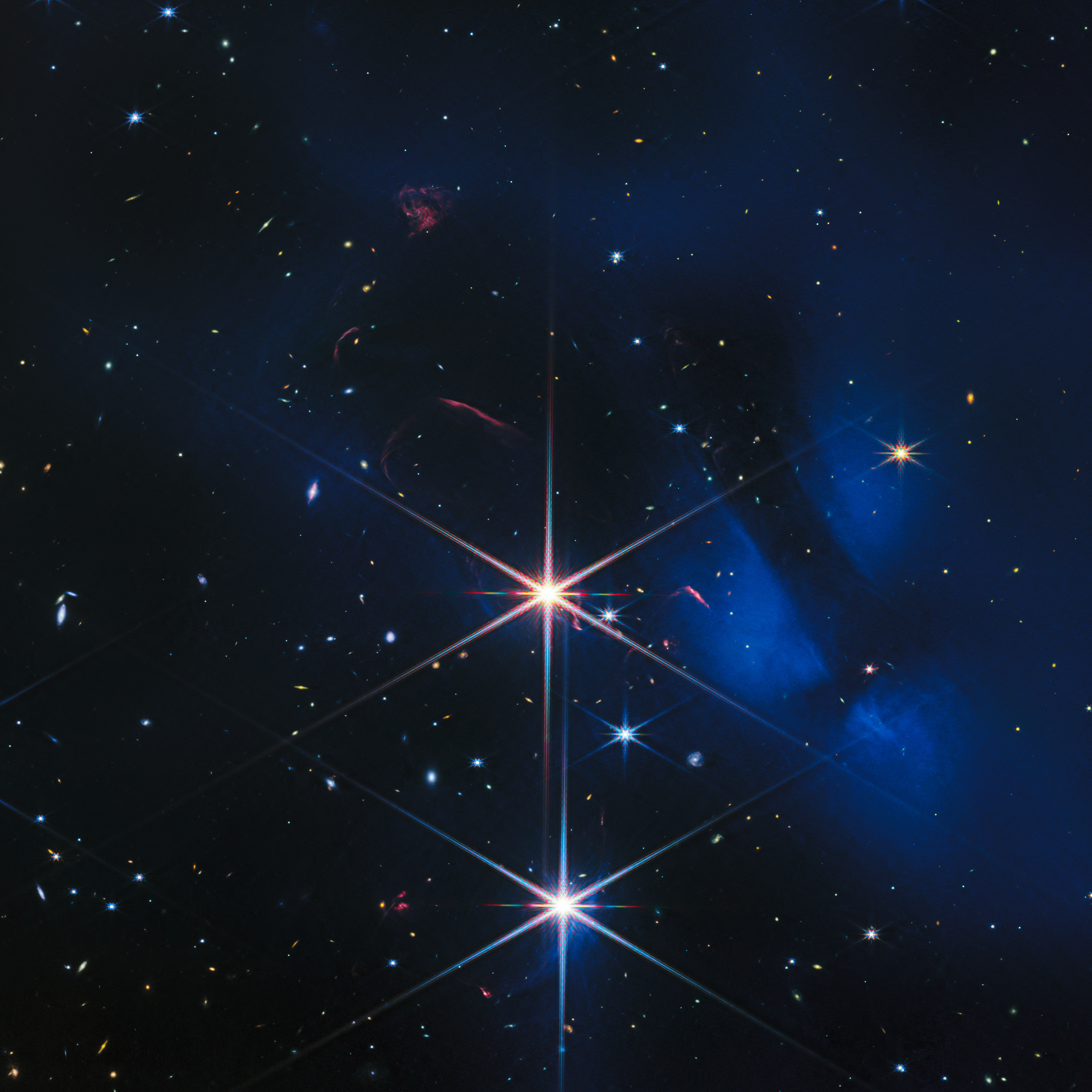
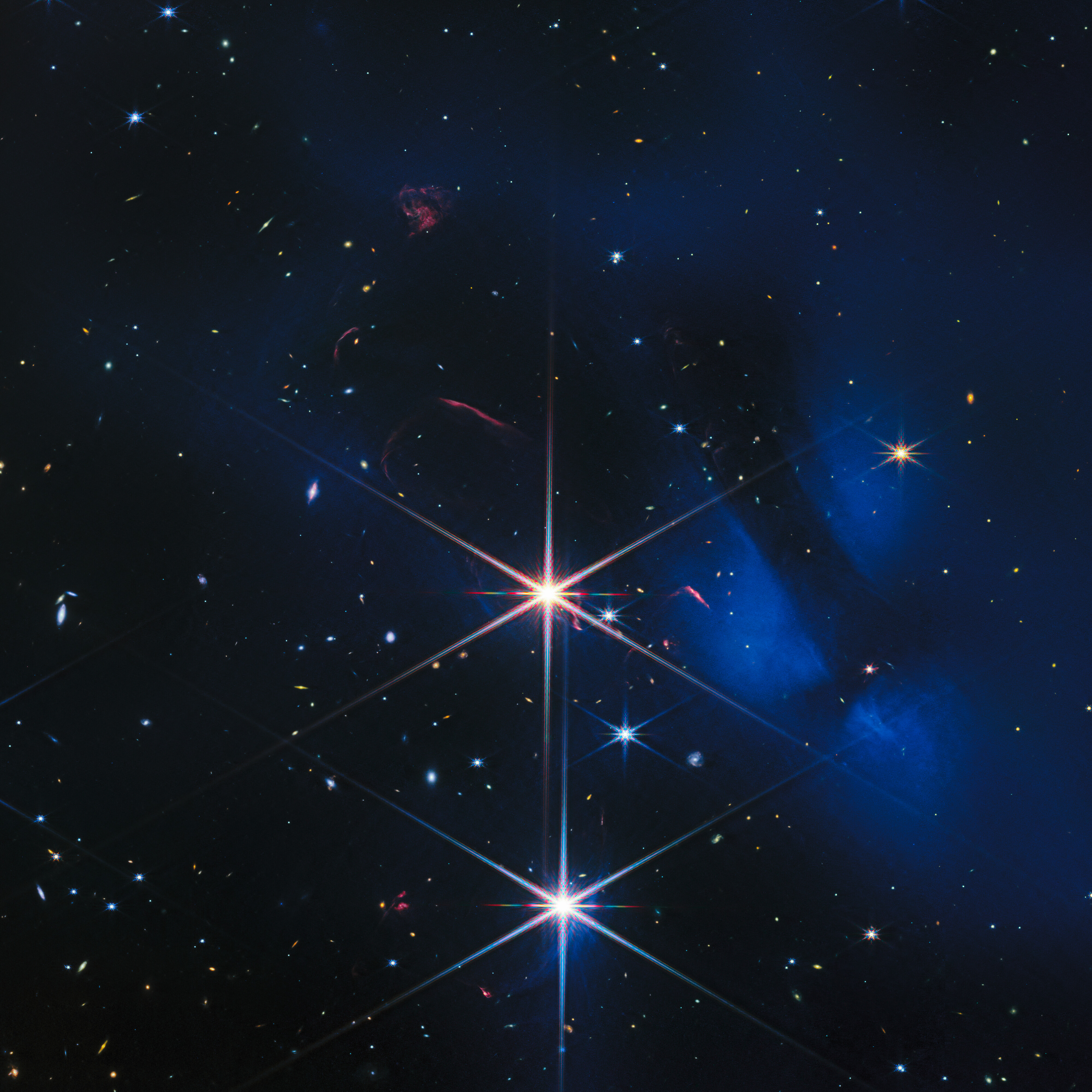
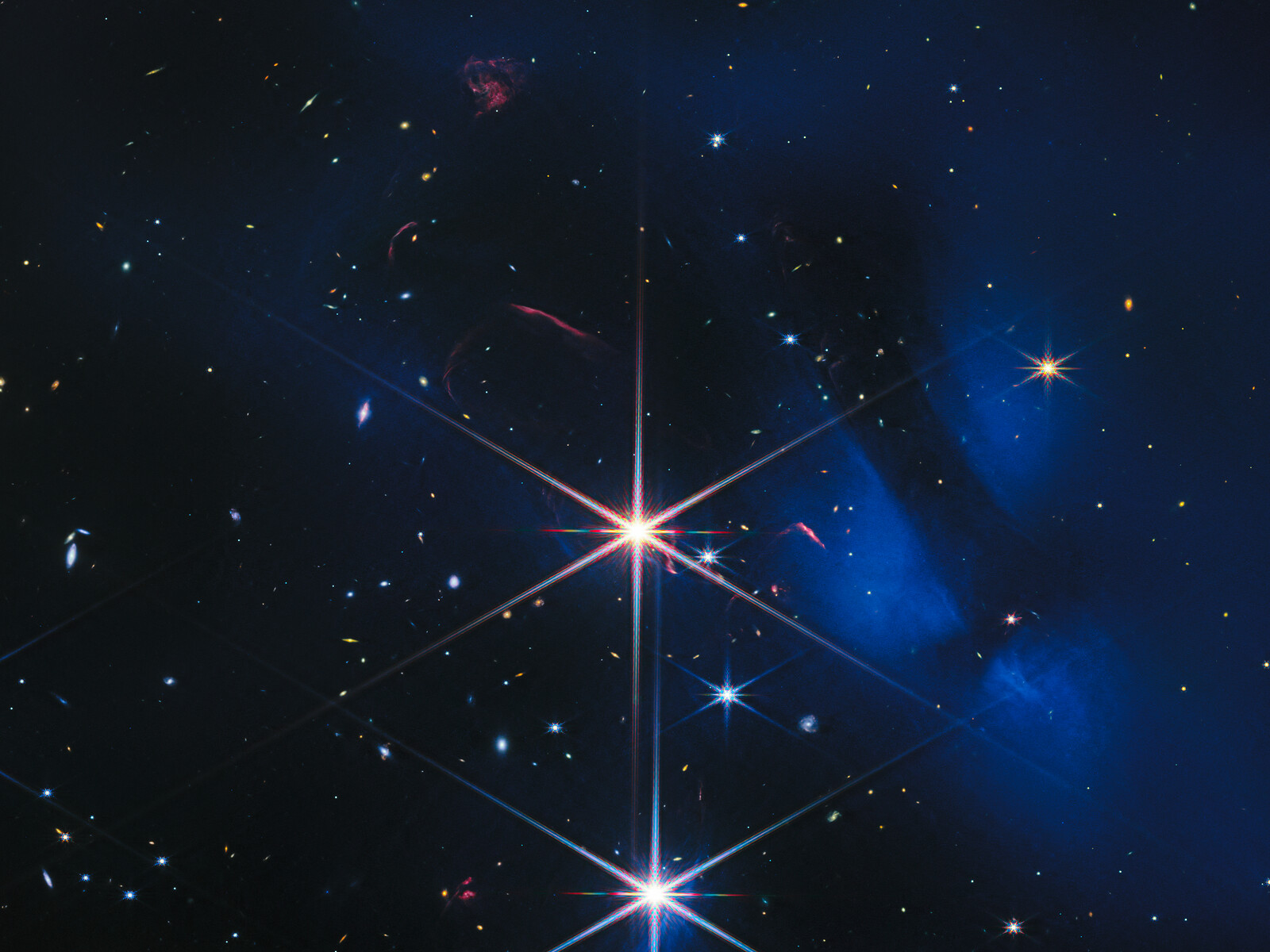
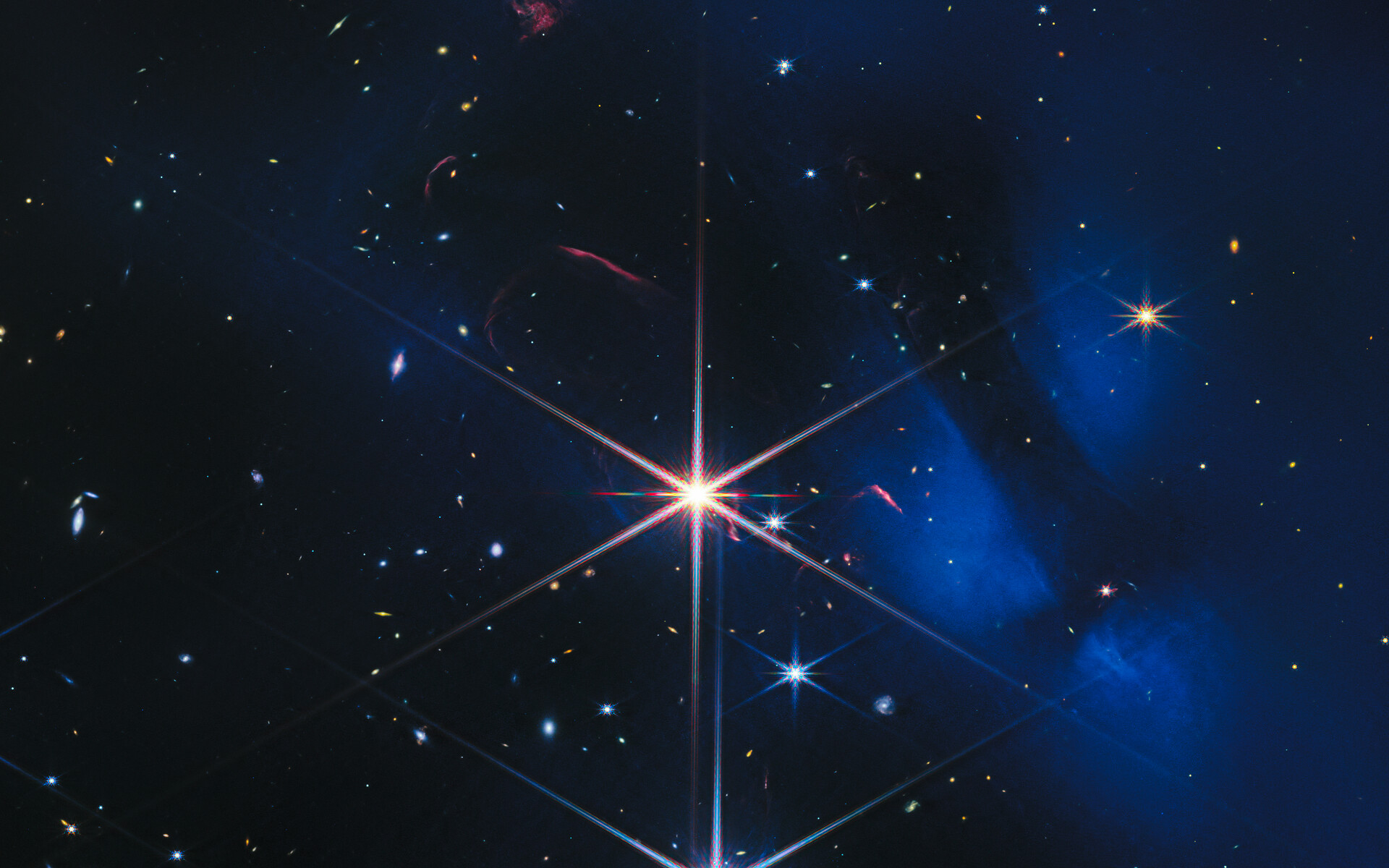
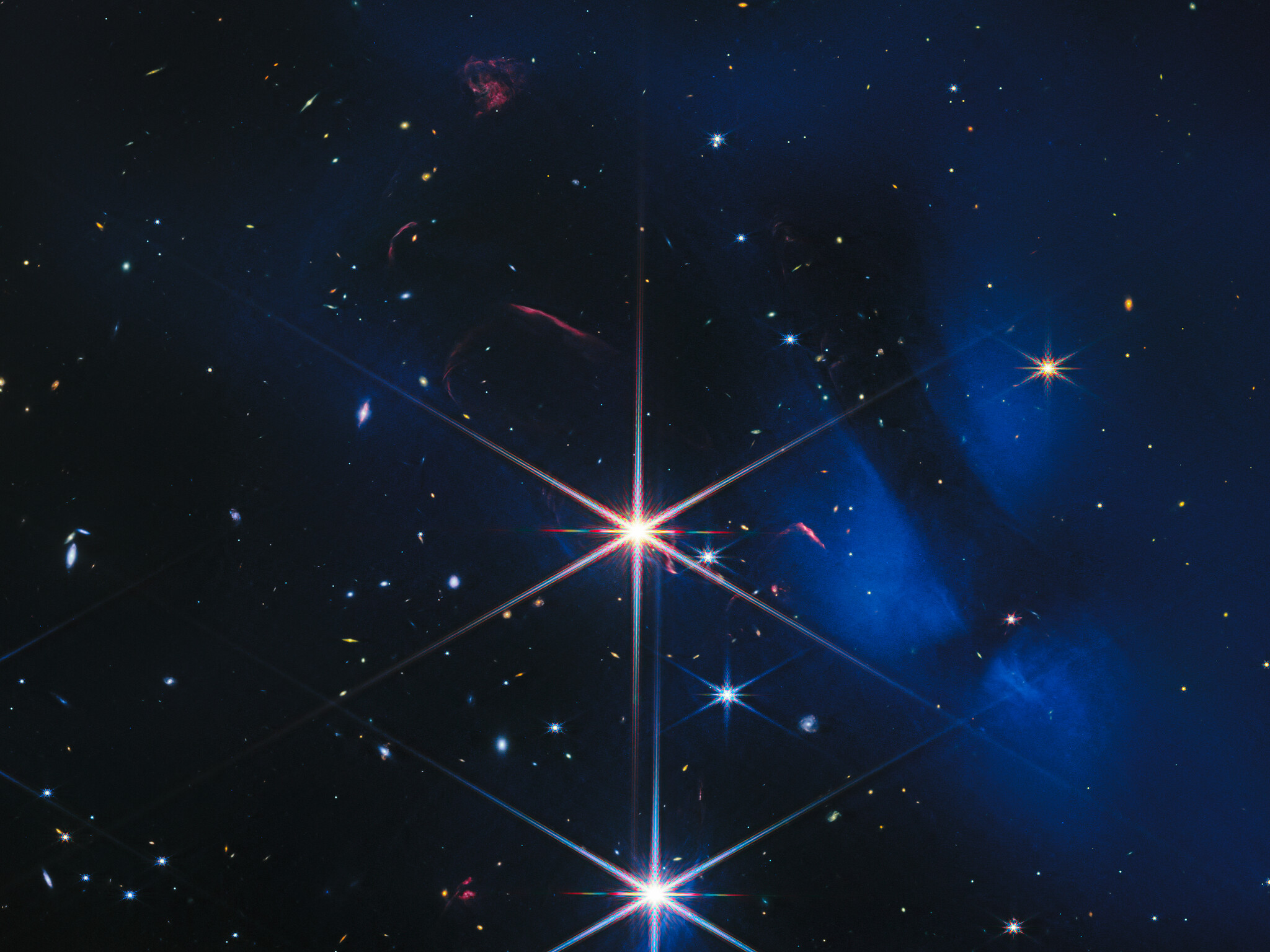
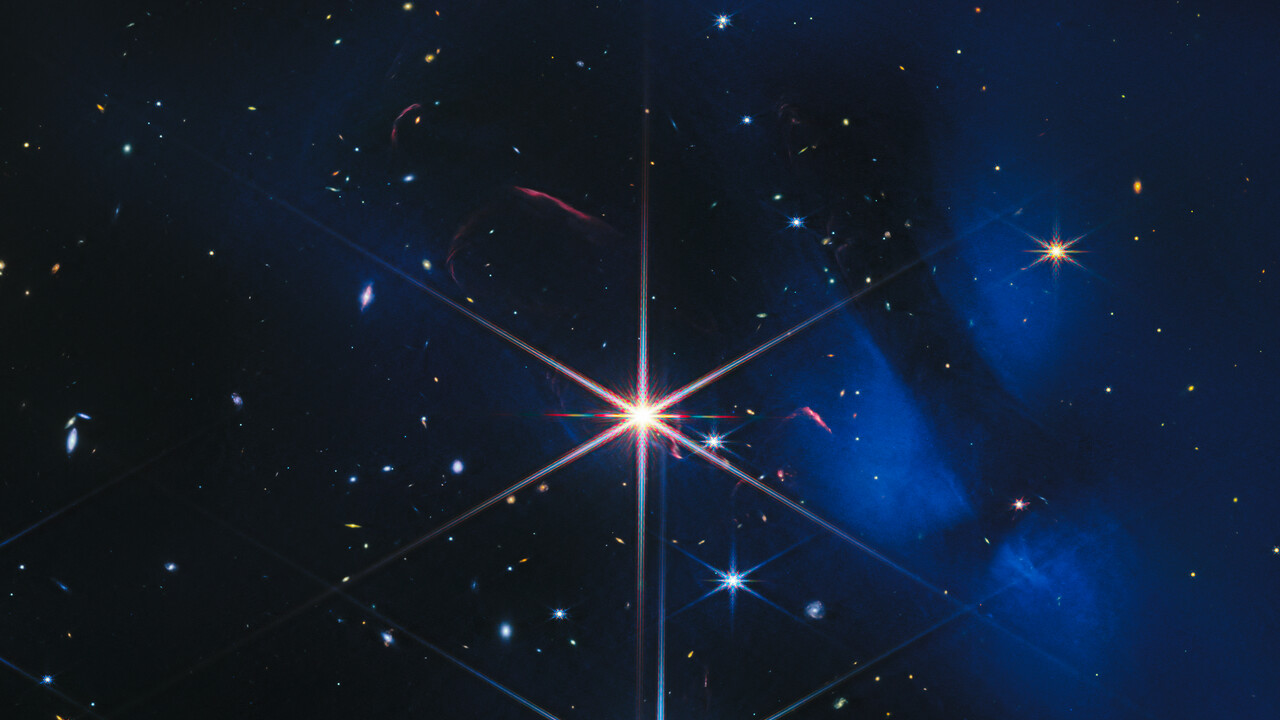
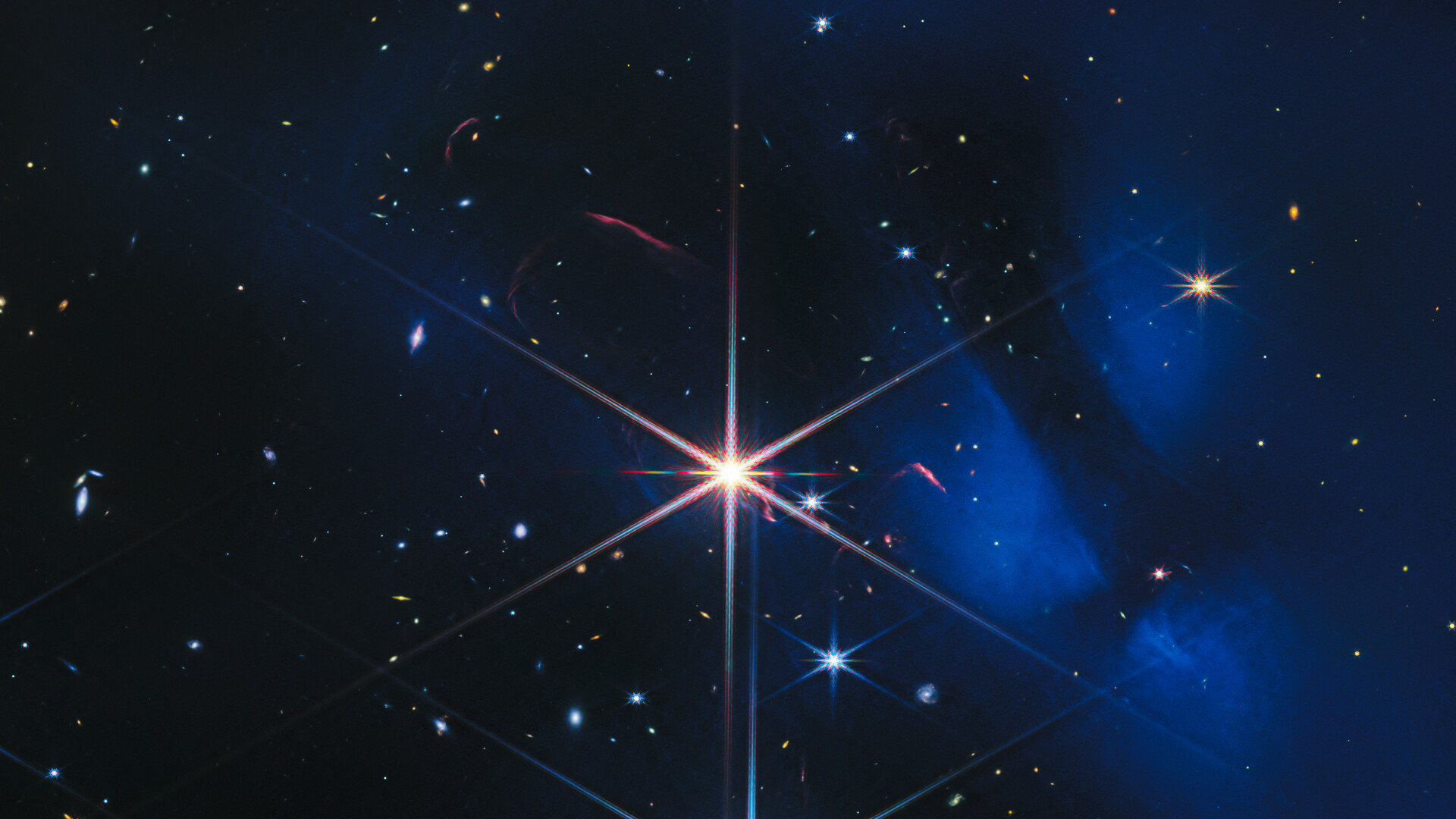
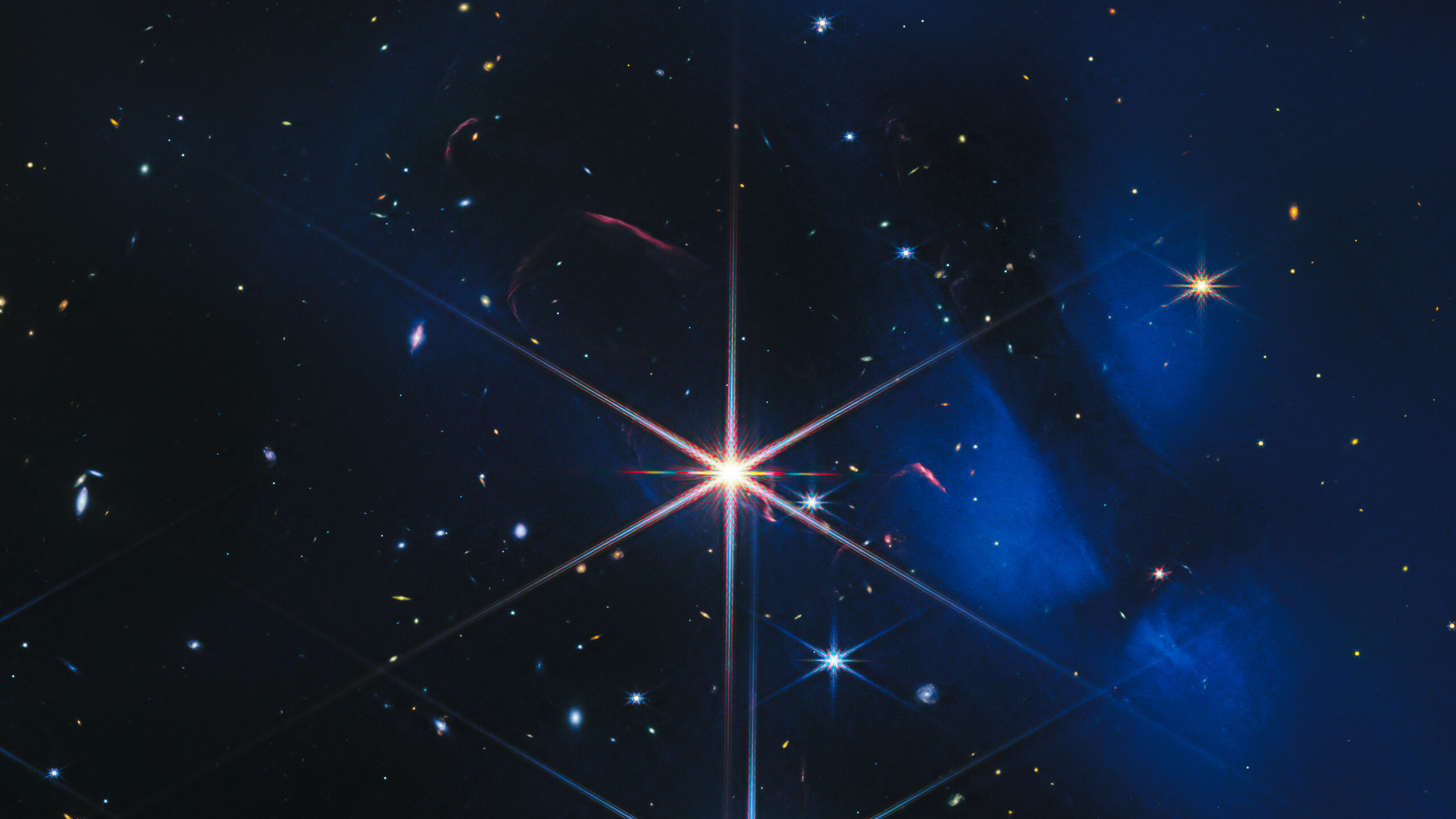
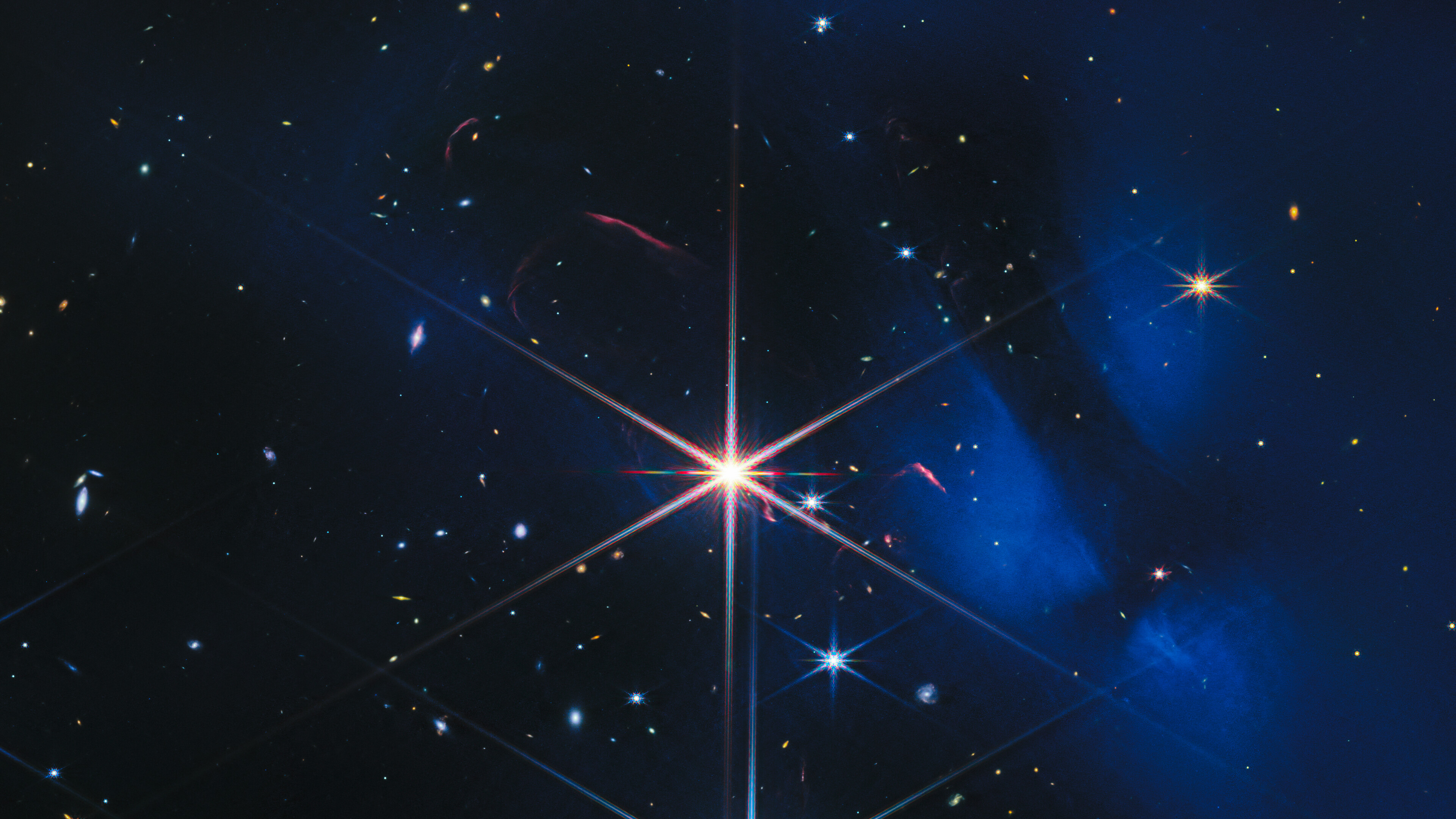
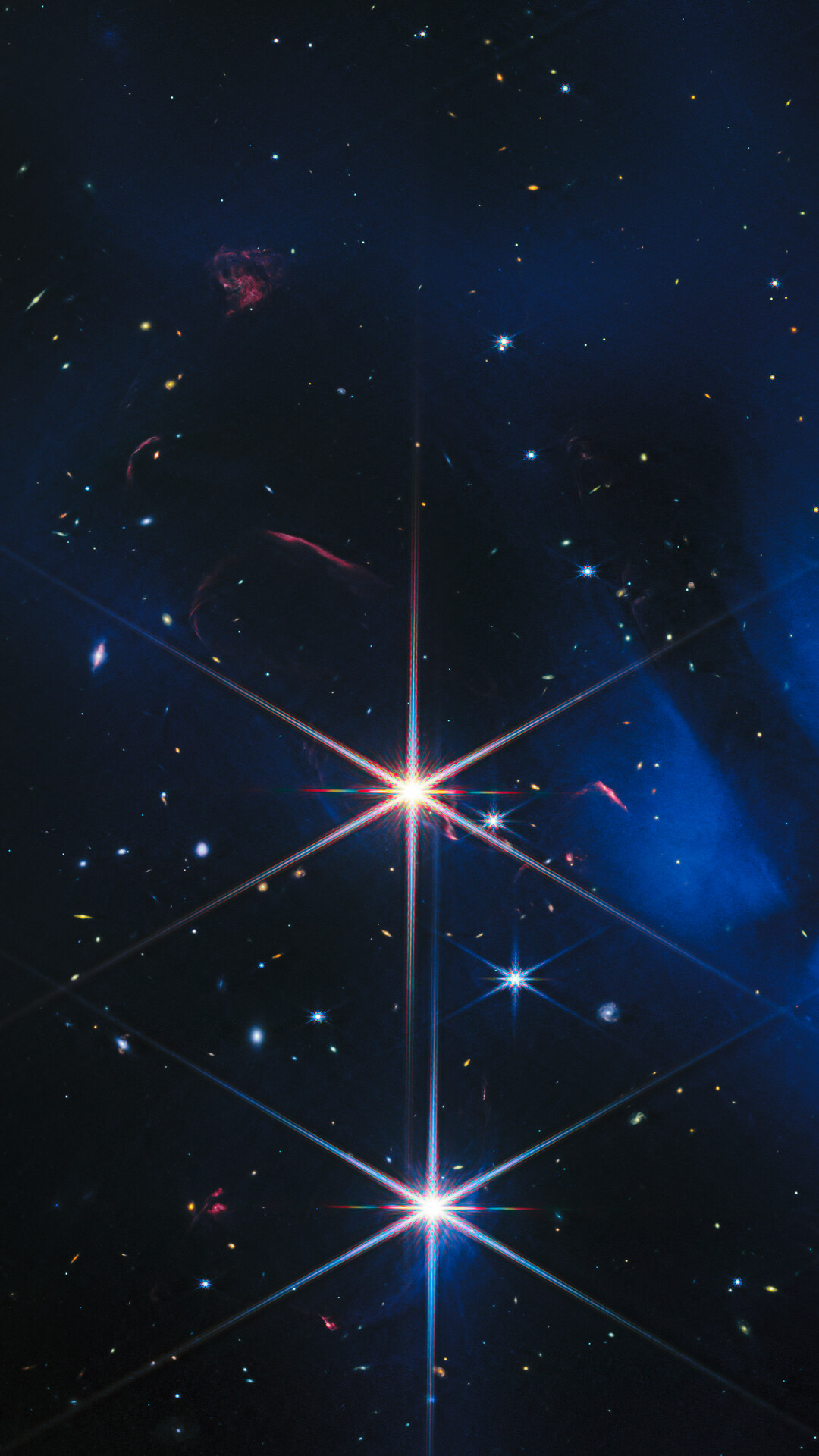
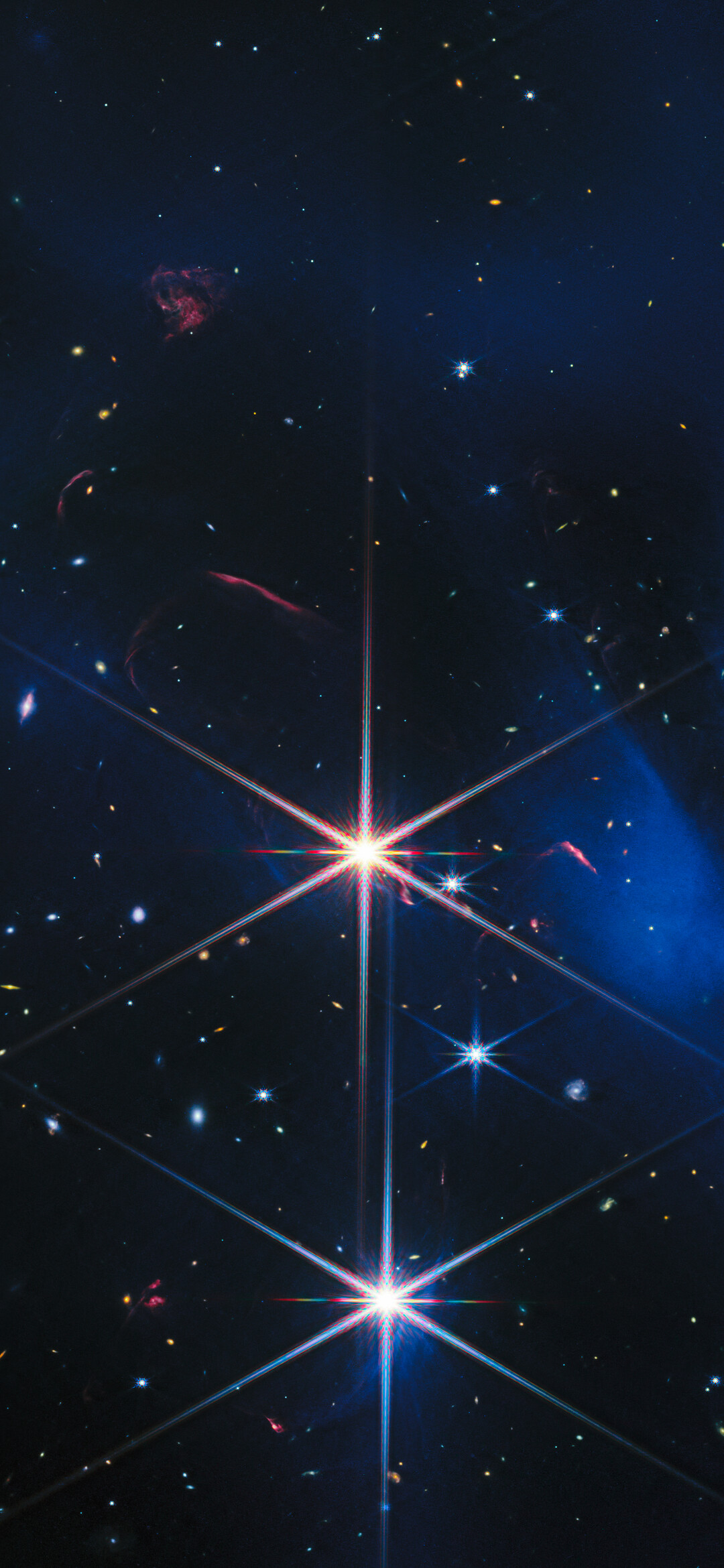
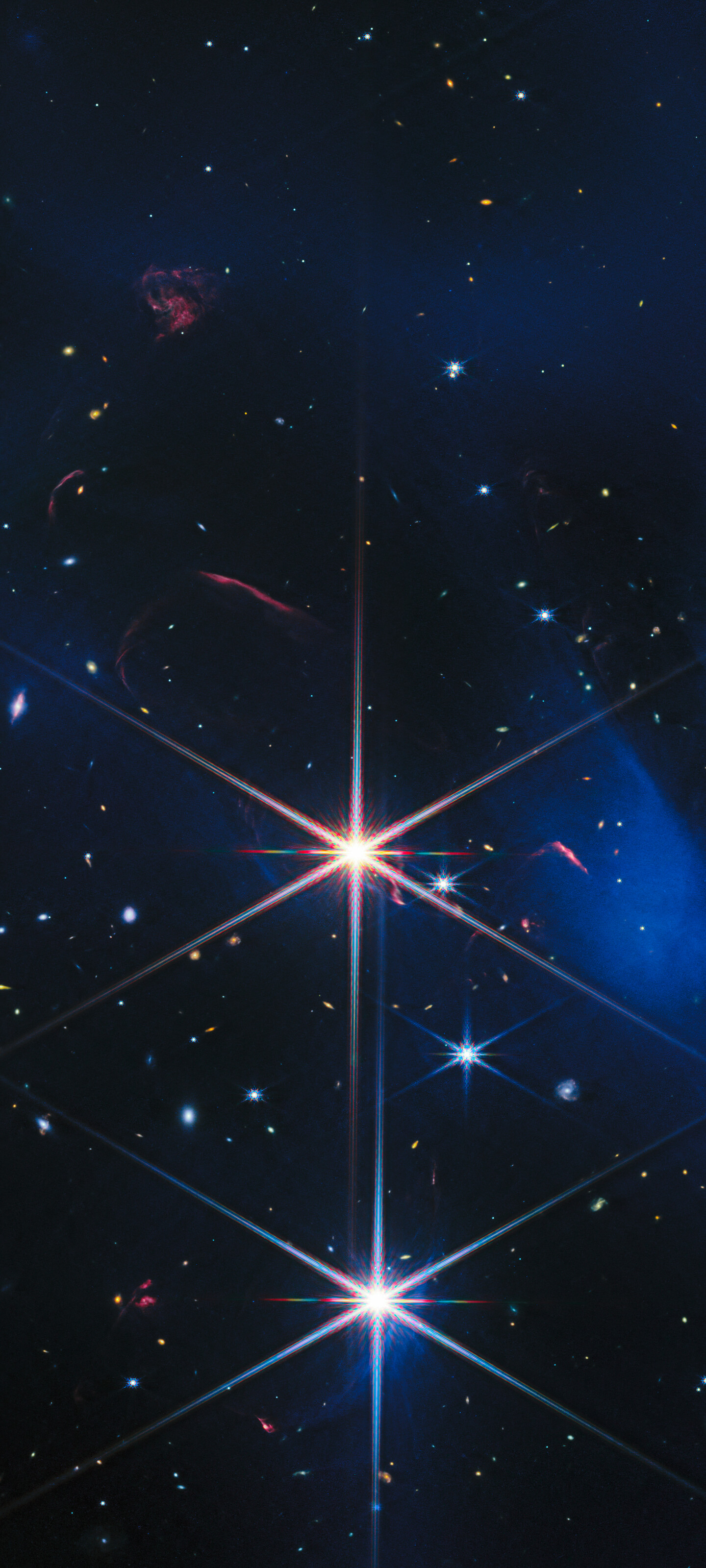
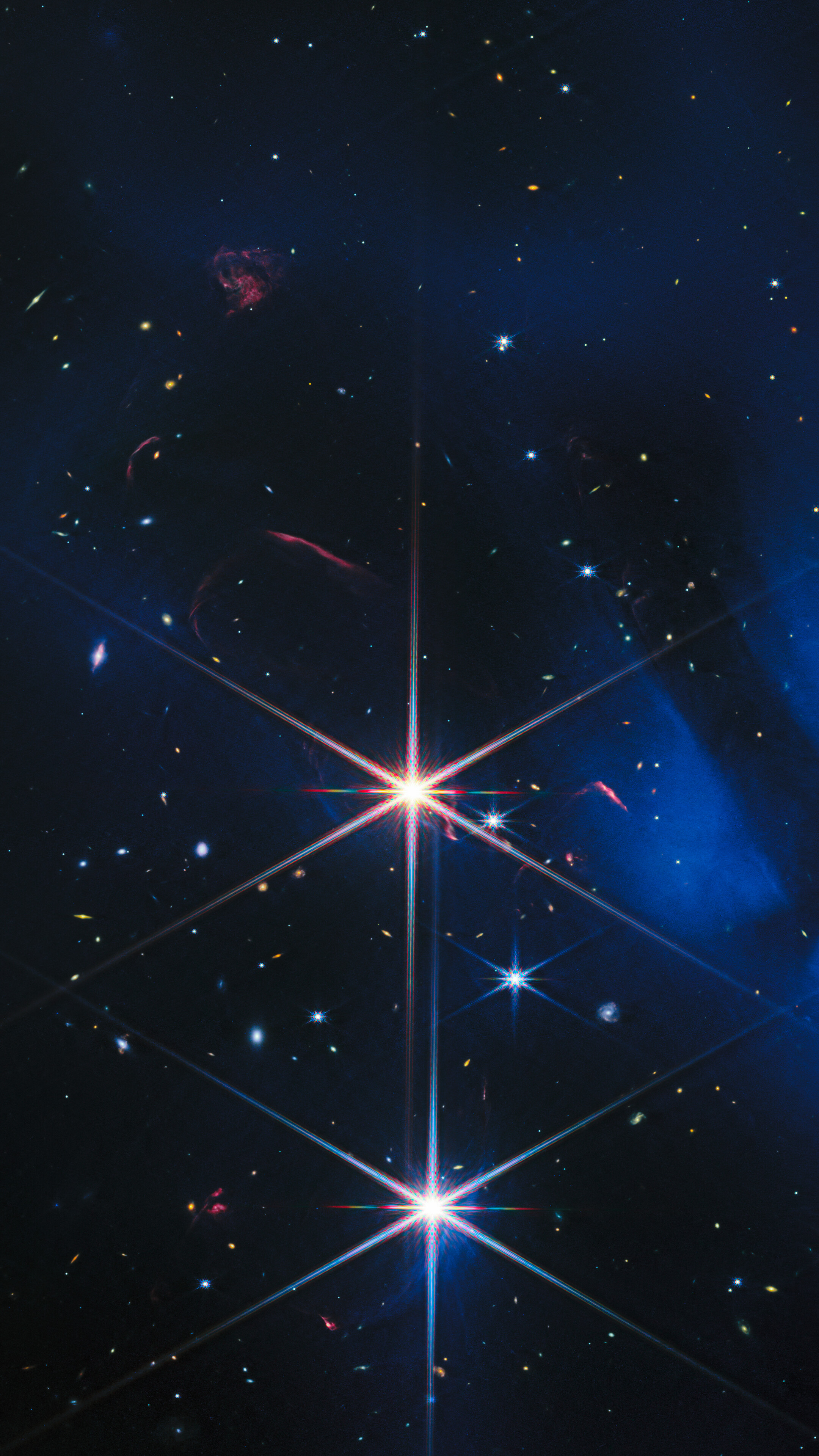
This image showcases a portion of the larger IC 348 field to highlight two stars among the outskirts of the nebula. These two stars appear equally-sized, because they are similarly bright, but one is orange while the other is blue. The reason for this is that the orange star is more deeply embedded in the clouds of interstellar gas and dust; these clouds block more of the shorter-wavelength infrared light that the star emits, leaving the longer wavelengths, which are coloured orange in this image. The other star is less shrouded, so the shorter and longer infrared wavelengths combine to make it appear whitish-blue. While it doesn’t look like there’s a lot of gas or dust here, the thin red arcs and faint blotches that can be seen around the stars are shockwaves made in that gas. Outbursts from the young stars crash into the interstellar gas, compressing and heating it up until it glows.
The bright lines appearing to radiate out from these stars are a type of distortion that arises from the optical design of the telescope. Called diffraction spikes, they are created because the intense light from the unresolved target is bent (“diffracted”) very slightly at the edges of Webb’s hexagonal mirror panels and around one of the struts that hold up its secondary mirror. This distinctive six-plus-two-pointed pattern is the same for any image taken by Webb. For diffraction spikes to appear, the light source has to be very bright and very concentrated, so they’re most often seen on stars.
You can view the full image from which this crop was taken here.
[Image description: Two bright stars, one golden and one more white in colour, in a mostly-dark area of space. Diffuse, dark blue gas clouds curl around the stars, with dark bands of empty space cutting through the clouds. Thin red arcs near the stars are hot shockwaves in the gas. The background is filled with many small objects in blue, green or yellow; most are distant galaxies.]
Credit:ESA/Webb, NASA, CSA, K. Luhman, C. Alves De Oliveira, M. Zamani (ESA/Webb)
About the Image
| Id: | weic2619e | |
|---|---|---|
| Type: | Observation | |
| Release date: | 15 September 2026, 16:00 | |
| Related releases: | weic2619 | |
| Size: | 6070 x 6070 px | |