
weic2605 — Photo Release
Webb examines Cranium Nebula
The telescope used two instruments to capture mind-bending new views of the little-known nebula PMR 1
25 February 2026
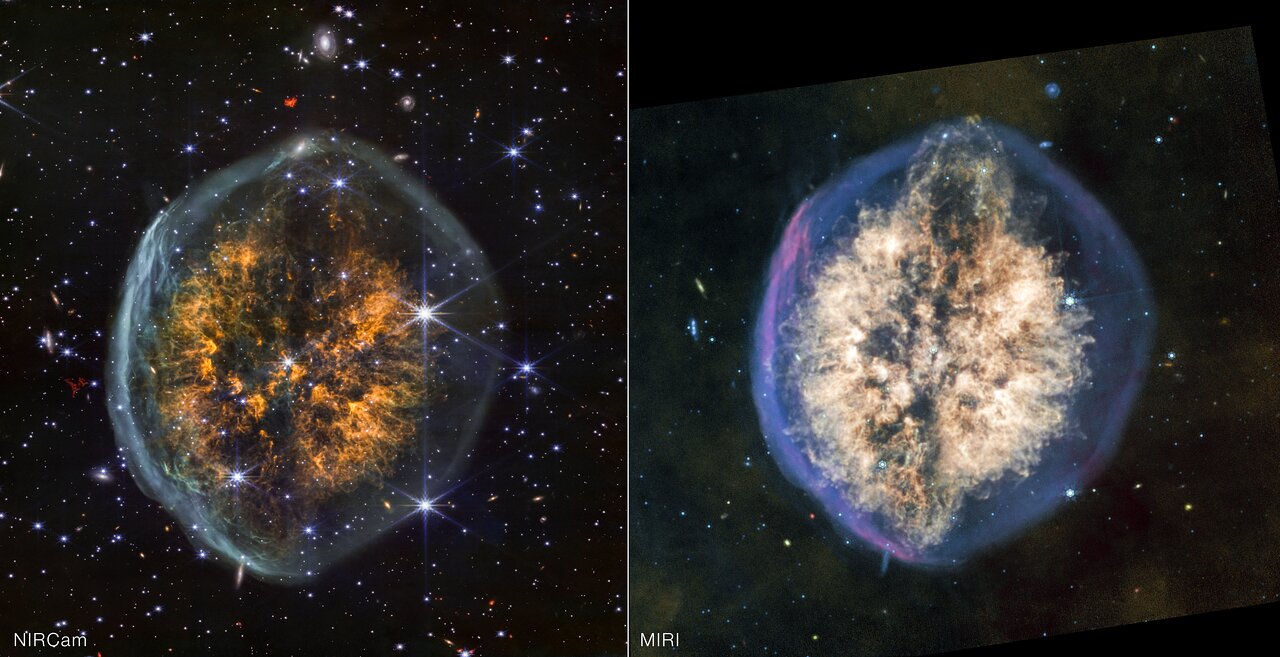
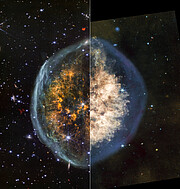
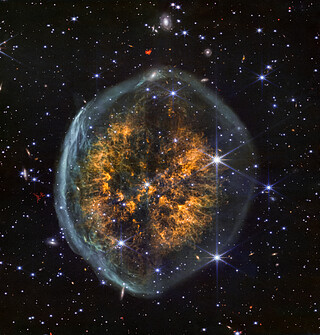
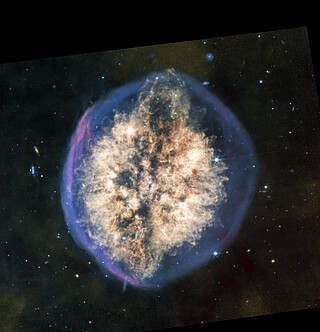
Astronomers are losing their heads over the latest images from the NASA/ESA/CSA James Webb Space Telescope, which bear a striking resemblance to a transparent cosmic cranium, revealing the “brain” inside. The nebula, officially named PMR 1, is being created by an aging star that is expelling its outer layers.
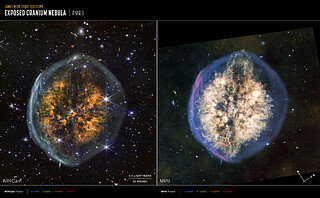
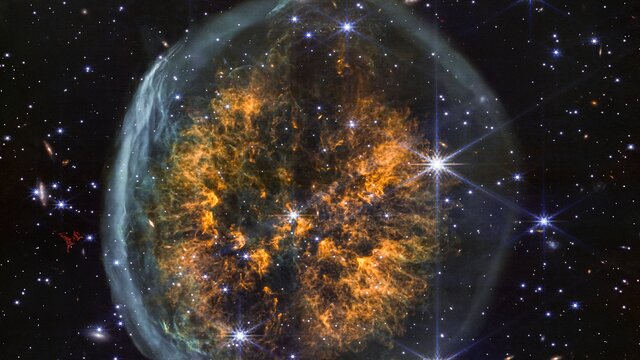
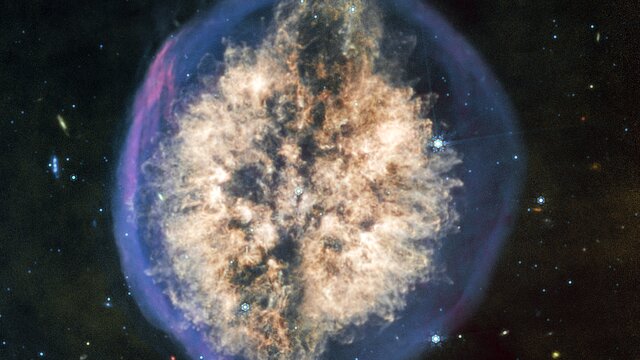
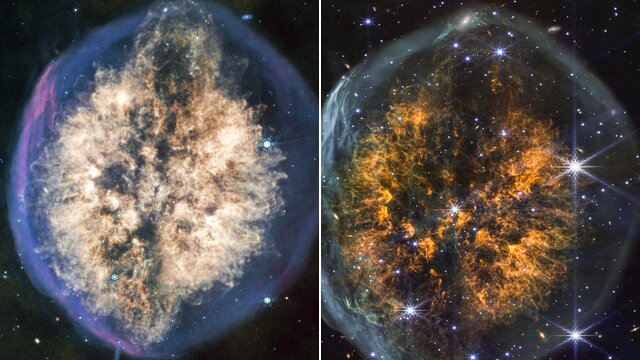
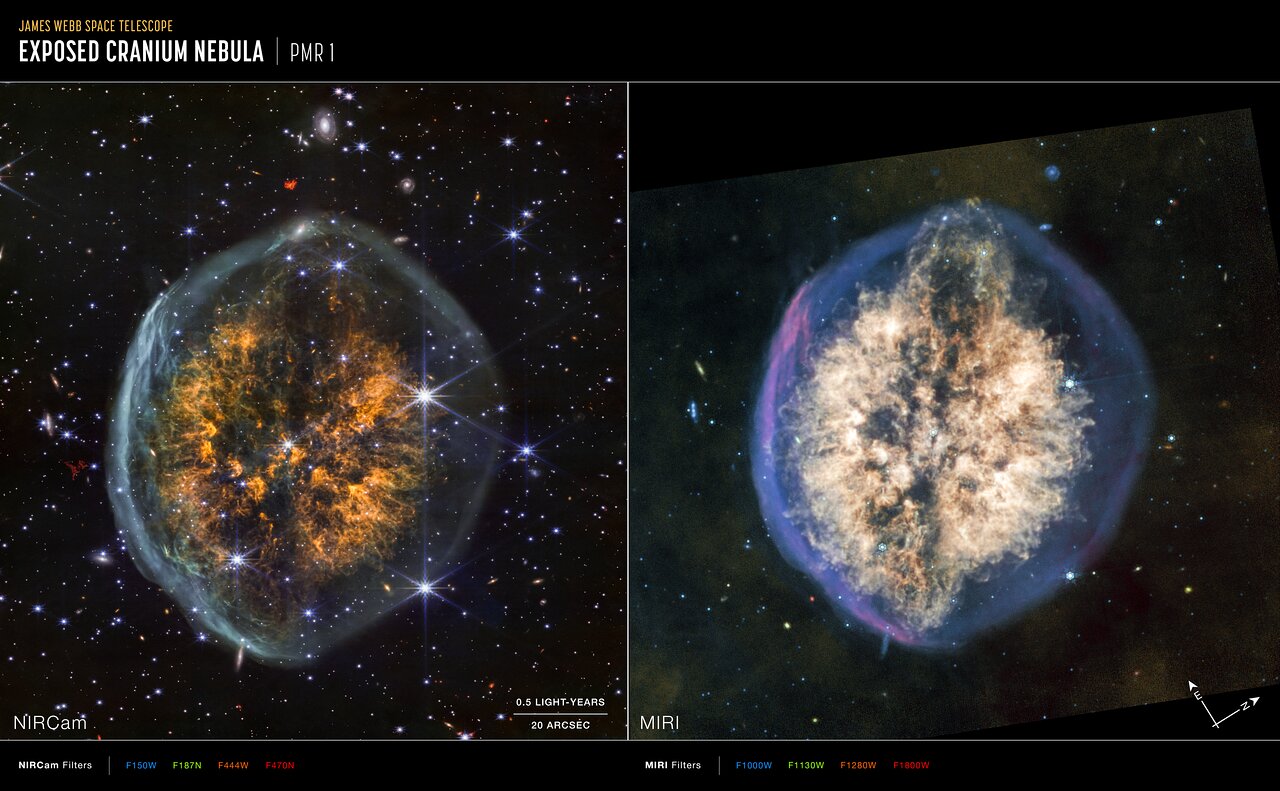
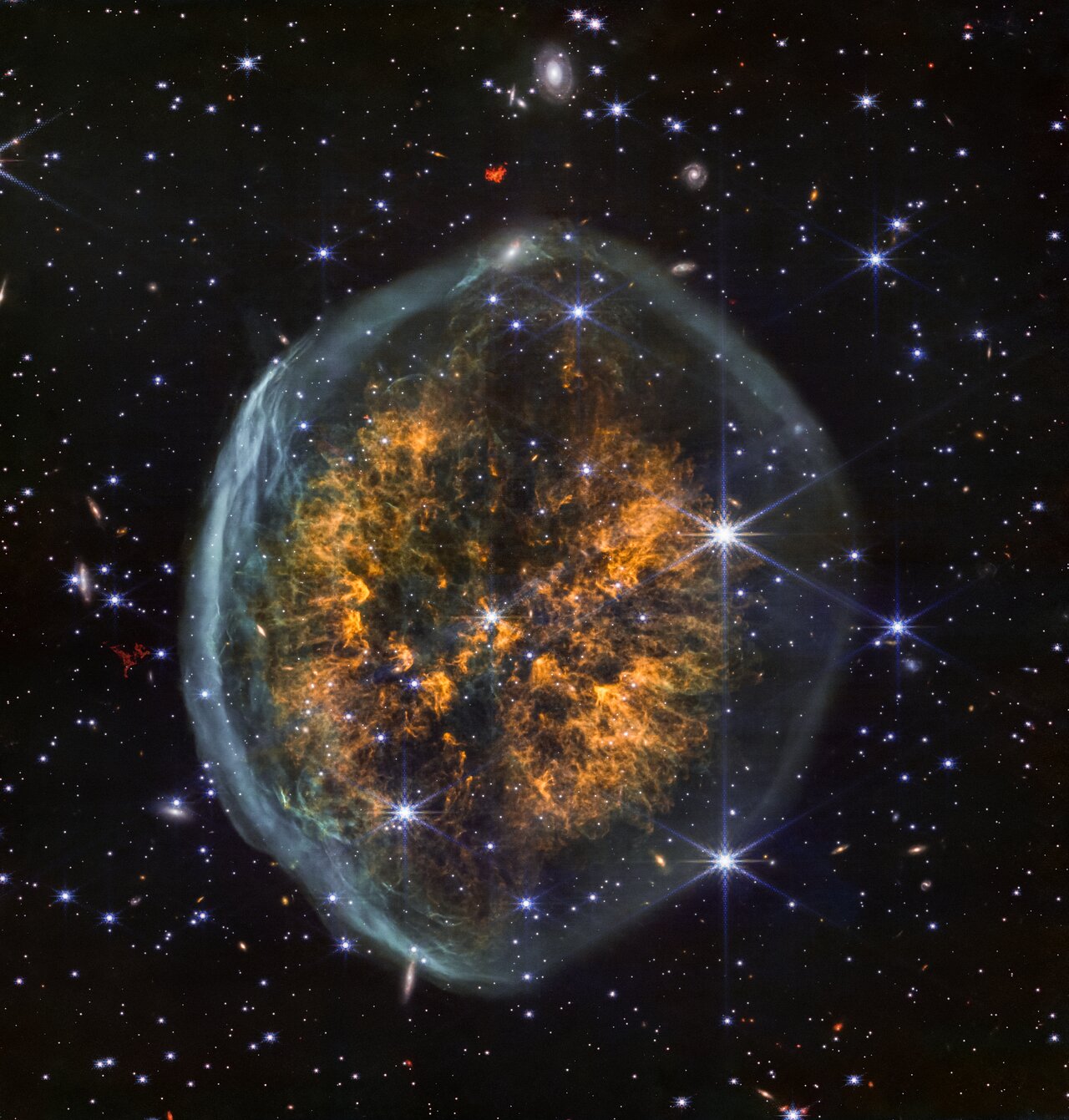
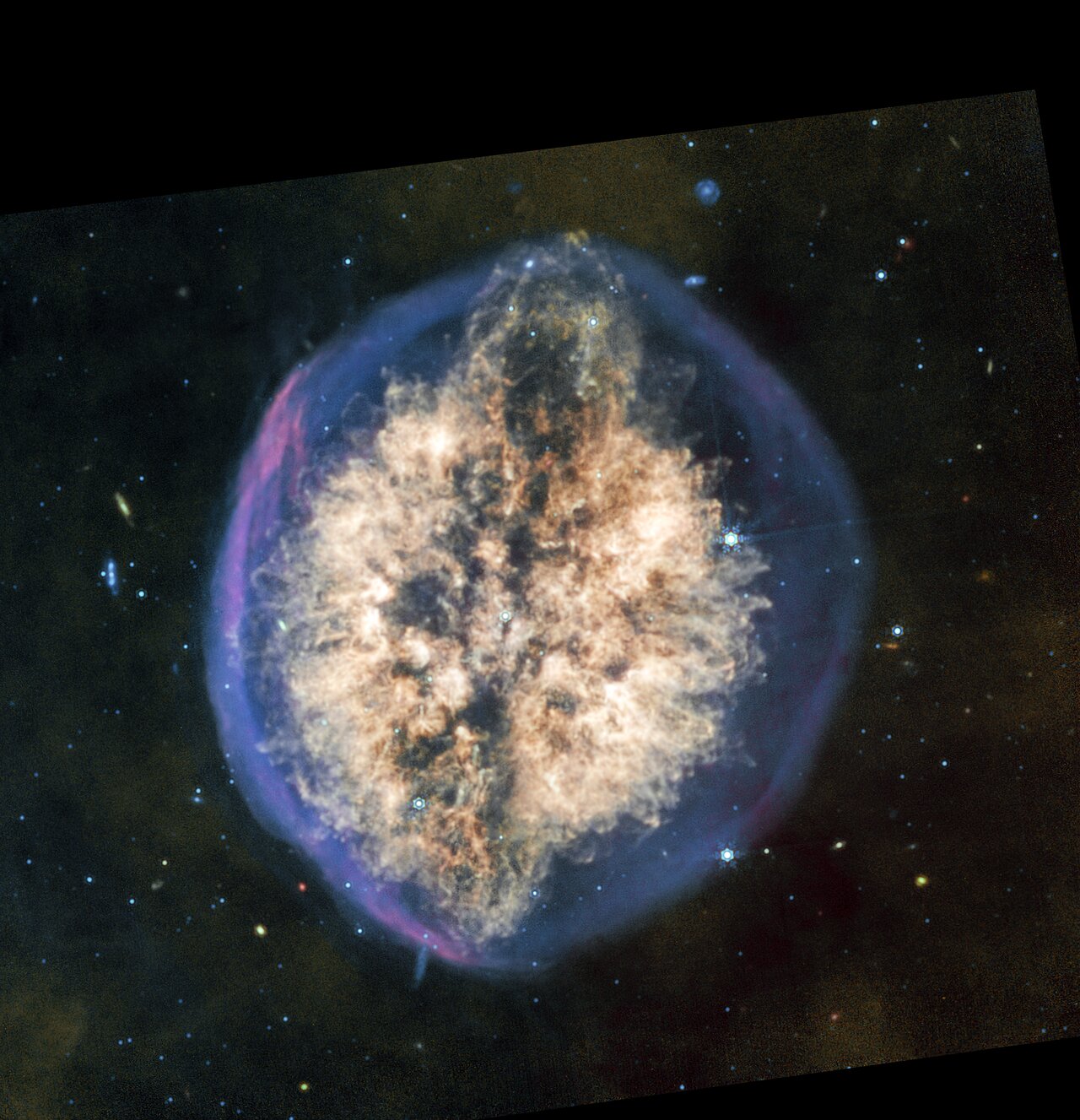
Nebula PMR 1 is a cloud of gas and dust that bears an uncanny resemblance to a brain in a transparent skull, inspiring its nickname, the “Exposed Cranium” nebula. Webb captured its unusual features in both near- and mid-infrared light using two instruments that reveal enhancing details of the nebula’s brain-like appearance.
The nebula appears to have distinct regions that capture different phases of its evolution: an outer shell of gas that was blown off first and consists mostly of hydrogen, and an inner cloud with more structure that contains a mix of different gases. Both Webb’s NIRCam (Near-Infrared Camera) and MIRI (Mid-Infrared Instrument) show a distinctive dark lane running vertically through the middle of the nebula that defines its brain-like look of left and right hemispheres. Webb’s resolution shows that this lane could be related to an outburst or outflow from the central star, which typically occurs as twin jets burst out in opposite directions. Evidence for this is particularly notable at the top of the nebula in Webb’s image, where it looks like the inner gas is being ejected outward.
While there is still much to be understood about this nebula, it’s clear that it is being created by a star near the end of its fuel-burning “life.” In their end stages, stars expel their outer layers. It’s a dynamic and fairly fast process, in cosmic terms. Webb has captured a moment in this star’s decline. What ultimately happens will depend on the mass of the star, which is yet to be determined. If it’s massive enough, it will explode in a supernova. A less massive Sun-like star will continue to shed layers until only its core remains as a dense white dwarf [1], which will cool off over eons.
Notes
[1] After a red giant has shed all its atmosphere, only the core remains. Scientists call this kind of stellar remnant a white dwarf. A white dwarf is usually Earth-size but hundreds of thousands of times more massive. A teaspoon of its material would weigh more than a pickup truck. A white dwarf produces no new heat of its own, so it gradually cools over billions of years. Despite the name, white dwarfs can emit visible light that ranges from blue white to red. Scientists sometimes find that white dwarfs are surrounded by dusty disks of material, debris, and even planets – leftovers from the original star’s red giant phase. In about 10 billion years, after its time as a red giant, the Sun will become a white dwarf.
More information
Webb is the largest, most powerful telescope ever launched into space. Under an international collaboration agreement, ESA provided the telescope’s launch service, using the Ariane 5 launch vehicle. Working with partners, ESA was responsible for the development and qualification of Ariane 5 adaptations for the Webb mission and for the procurement of the launch service by Arianespace. ESA also provided the workhorse spectrograph NIRSpec and 50% of the mid-infrared instrument MIRI, which was designed and built by a consortium of nationally funded European Institutes (The MIRI European Consortium) in partnership with JPL and the University of Arizona.
Webb is an international partnership between NASA, ESA and the Canadian Space Agency (CSA).
Image Credit: NASA, ESA, CSA, STScI, Image Processing: Joseph DePasquale (STScI)
Links
Contacts
Bethany Downer
ESA/Webb Chief Science Communications Officer
Email: [email protected]
ESA Newsroom and Media Relations Office
Email: [email protected]
About the Release
| Release No.: | weic2605 | |
|---|---|---|
Images
Videos
Slider Tool