
weic2610 — Science Release
Webb finds strongest evidence yet for "black hole stars”
10 June 2026
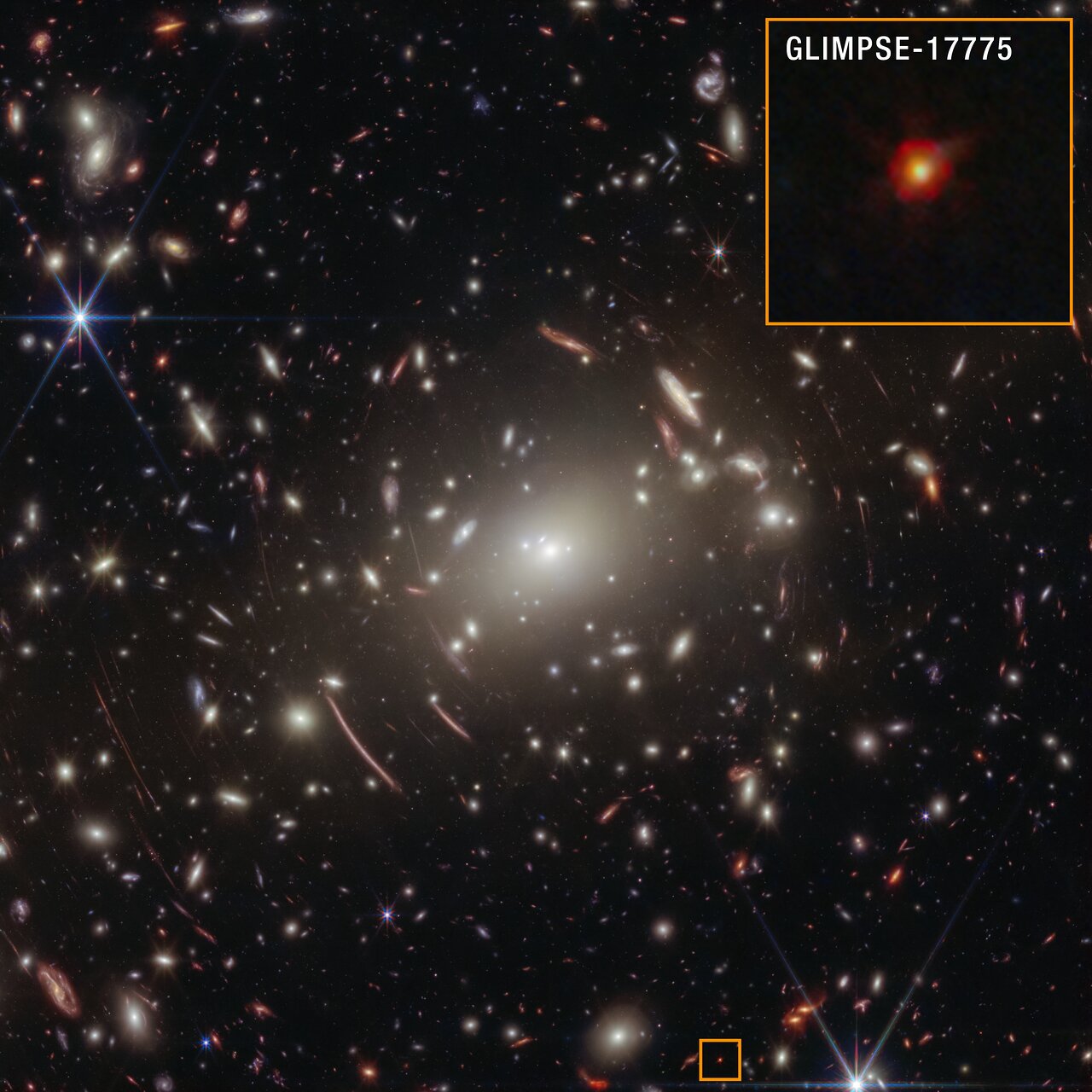
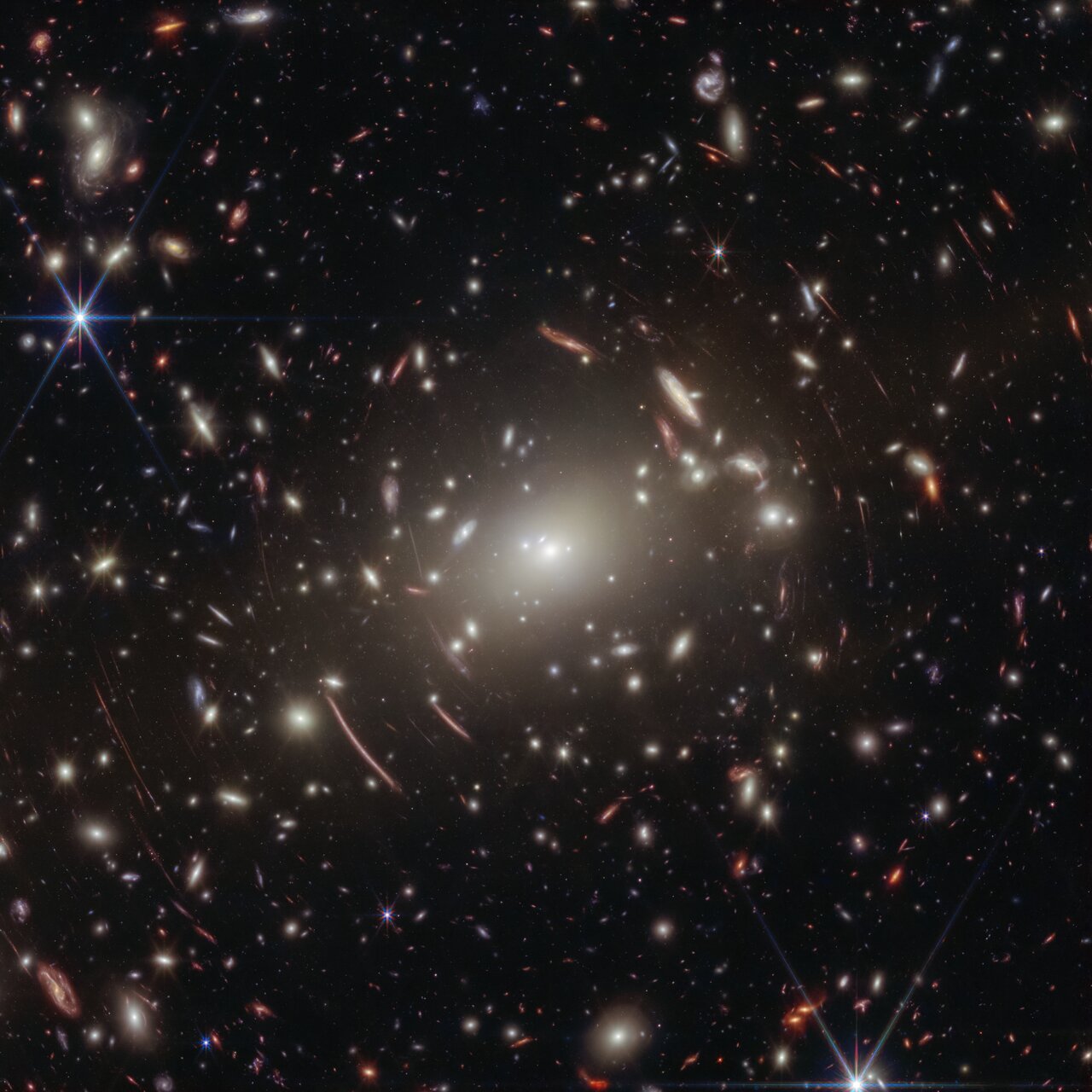
The complex puzzle of the objects known as little red dots (LRDs) has gradually become more complete since their initial discovery by the NASA/ESA/CSA James Webb Space Telescope in 2022. Now a particular little red dot’s spectrum is helping connect many of the pieces.
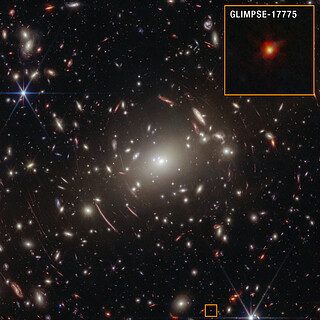
A team of astronomers led by Vasily Kokorev at the University of Texas at Austin identified the lucky dot in question: GLIMPSE-17775. By carefully analysing the dot’s spectrum captured by Webb — the deepest spectrum to date of a little red dot — the research team has identified multiple lines of evidence, all of which support the interpretation that GLIMPSE-17775 is a supermassive black hole enveloped in a dense cocoon of partially ionised gas. A paper describing the results was published today in The Astrophysical Journal.
“I think part of the scientific community is converging on a singular picture — that little red dots can be explained by black hole star models. But none of the previous little red dots have all of the pieces of evidence in the same place,” said Kokorev, lead author of the study. “With GLIMPSE-17775 we can test these models because of how deep and amazing this source’s spectrum is.”
Connecting puzzle pieces
Soon after Webb first began science operations, it discovered a new, mysterious type of object in the very early Universe – abundant red objects that emerged about 600 million years after the Big Bang. Scientists have explored multiple explanations for these little red dots, including the black hole star scenario.
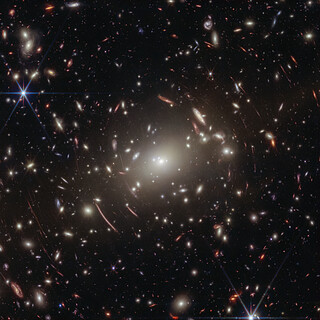
A set of fortunate circumstances brought about this elaborate spectrum of a little red dot. The little red dot that would come to be known as GLIMPSE-17775 was fortunately included in Webb’s imaging and spectroscopy efforts for a project that sought to look for Population III stars [1] and faint galaxies in galaxy cluster Abell S1063. This little red dot is more distant than the galaxy cluster and magnified by gravitational lensing (GLIMPSE-17775 has a cosmological redshift of 3.5, meaning it existed about 1.8 billion years after the Big Bang).
"The source was discovered from the GLIMPSE programme, that was designed to reveal the faintest sources in the early Universe,” said Hakim Atek, of the Institut d’Astrophysique de Paris in France, who is a co-author of the study and Principal Investigator of the GLIMPSE programme. “In addition, the magnification by gravitational lensing also enables a more detailed characterization of brighter objects, including LRDs such as GLIMPSE-17775.”
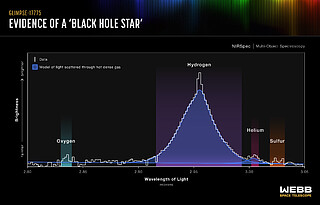
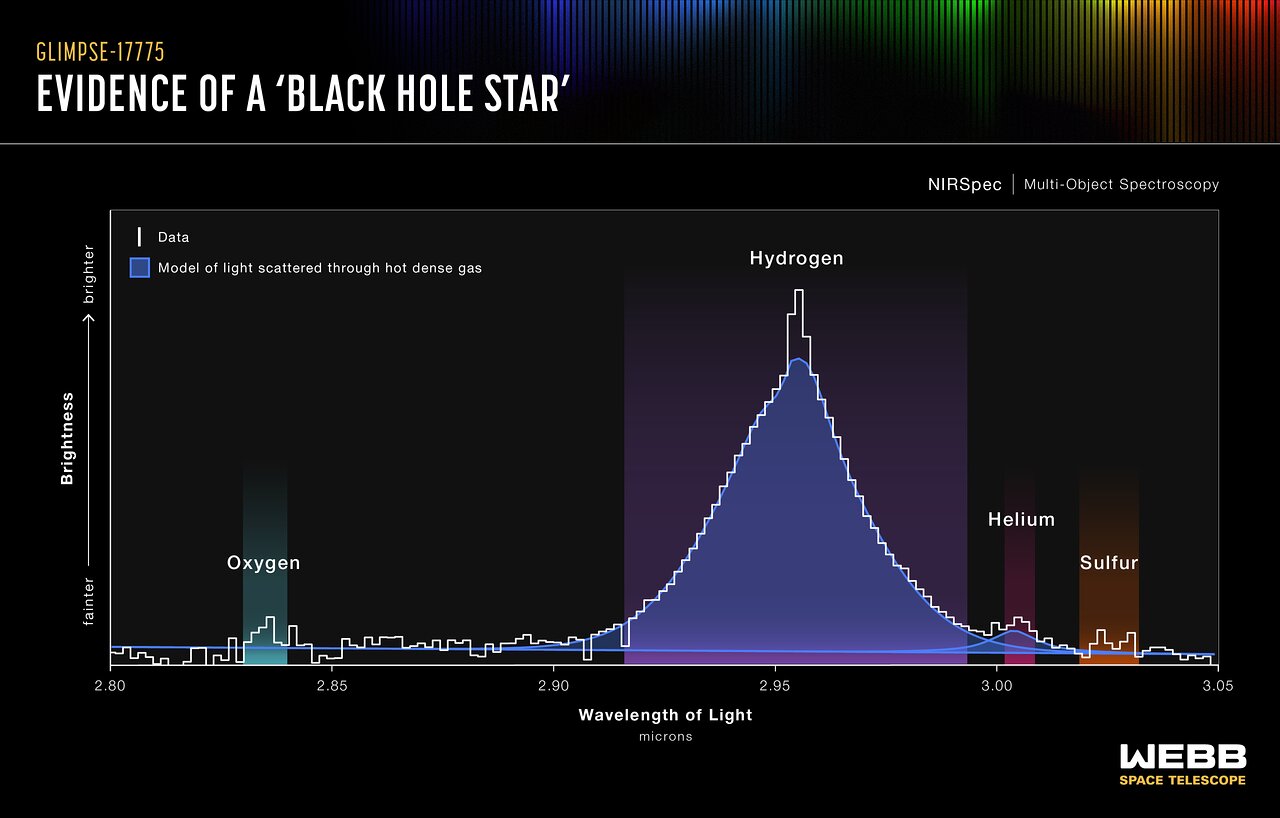
While Webb provided a 30-hour spectrum of the little red dot, the effect of gravitational lensing made it equivalent to 80 hours of telescope time. This combination of Webb’s infrared sensitivity and nature’s own “magnifying glass” amplified the amount of detail that could be gleaned from GLIMPSE-17775. The result was more than 40 spectral lines [2] from this small, red source, which is the most detailed LRD spectrum to date.
“When we saw the spectrum for the first time, it was like having all the pieces of a puzzle scattered on the floor,” said Kokorev. “We picked up each piece of the puzzle, measured the lines, and started combining the different pieces into a mosaic. Maybe a few pieces looked like nothing at first, but then a couple of them came together, and we realized that there was something there.”
The spectroscopic data collected by Webb contains multiple lines of evidence that support the interpretation that little red dot GLIMPSE-17775 is a black hole star: a rapidly accreting, or growing, black hole enveloped in a dense gas cocoon, which is reprocessing the light emitted from near the black hole and producing the features seen in the spectrum.
Lines of evidence
Among the 40-plus lines that the team detected in GLIMPSE-17775’s spectrum were various independent indicators that all align with the black hole star scenario. For example, the team found that many of the spectral lines (such as hydrogen, oxygen, and helium) do not fit a simple model of a rotating gas cloud. Instead, the best fit model includes a broadening effect known as electron scattering: a telltale sign that a dense, layered gas cocoon is enshrouding this source.
The strength and ratios of certain lines to each other, most notably the 16 iron lines that compose what the team has dubbed an “iron forest” and certain oxygen lines, require a high-energy source to produce them, like a rapidly accreting black hole. Additionally, astronomers noted the fluorescence and absorption of helium in the spectrum, both of which individually suggest that there is a dense medium enveloping a powerful source.
The black hole star scenario not only fits GLIMPSE-17775; it also accounts for why most little red dots are faint in X-rays, since any such emission is likely absorbed by the dense gas cocoon.
One missing element of the GLIMPSE-17775 puzzle piece is the part of the spectrum that would reveal what’s known as a Balmer break, or a strong dip in the emitted light that’s a signature characteristic of little red dots. To build a more comprehensive understanding of this little red dot, the team incorporated ancillary data from two observing programmes that used the NASA/ESA Hubble Space Telescope: Frontier Fields and BUFFALO (Beyond Ultra-deep Frontier Fields And Legacy Observations) programmes.
The Webb and Hubble data together help explain why the Balmer break is weaker than typically found in other little red dots: a giant host galaxy is surrounding GLIMPSE-17775. Although an LRD’s host galaxy is not something that has been usually seen at such scale before, it isn’t inconsistent with the dense gas cocoon model. The black hole star model of little red dots attributes excess blue light to stars in the host galaxy.
When Webb first discovered little red dots, some researchers thought these objects had “broken cosmology,” unsure how galaxies could have grown so big so quickly in the early Universe to account for all this light coming from their stars. However, the team believes the GLIMPSE-17775 puzzle piece fits nicely in the existing framework of the Universe’s evolutionary history, because black hole masses don’t need to be as high in order to explain the broad emission lines.
“Everything fits, nothing is broken, and I think that makes the puzzle that is our Universe even better,” said Kokorev. “Looking ahead, I’m eager to dive deeper and learn about what is powering the central engines of little red dots. While we think it’s a black hole, there are some other interesting theories being proposed, which is exciting. Maybe in a year or two, we’ll have the final answer to what powers these sources.”
Notes
[1] Astronomers know that the first stars, officially known as Population III stars, must have been made almost solely of hydrogen and helium — the elements that formed as a direct result of the Big Bang. They would have contained none of the heavier elements like carbon, nitrogen, oxygen, and iron that are found in stars shining today. In other words, Population III stars were metal-free (astronomers refer to any element heavier than helium as a metal).
[2] In a spectrum, light emitted or absorbed at a specific frequency by an atom or molecule. Each ion, atom, and molecule emits and absorbs light at specific wavelengths, making it possible to identify the makeup of a star or other celestial body. Emission lines produce bright features, absorption lines dark features, and each line represents light given off or absorbed by one or more substances.
More information
Webb is the largest, most powerful telescope ever launched into space. Under an international collaboration agreement, ESA provided the telescope’s launch service, using the Ariane 5 launch vehicle. Working with partners, ESA was responsible for the development and qualification of Ariane 5 adaptations for the Webb mission and for the procurement of the launch service by Arianespace. ESA also provided the workhorse spectrograph NIRSpec and 50% of the mid-infrared instrument MIRI, which was designed and built by a consortium of nationally funded European Institutes (The MIRI European Consortium) in partnership with JPL and the University of Arizona.
Webb is an international partnership between NASA, ESA and the Canadian Space Agency (CSA).
Image Credit: NASA, ESA, CSA, V. Kokorev (University of Texas at Austin), A. Pagan (STScI)
Links
Contacts
Bethany Downer
ESA/Hubble Chief Science Communications Officer
Email: [email protected]
ESA Newsroom and Media Relations Office
Email: [email protected]
Christine Pulliam
Space Telescope Science Institute
Email: [email protected]
About the Release
| Release No.: | weic2610 | |
|---|---|---|