
Coordinates
| Position (RA): | 13 29 55.57 |
|---|---|
| Position (Dec): | 47° 14' 2.10" |
| Field of view: | 0.13 x 0.13 arcminutes |
| Orientation: | North is 40.9° right of vertical |


Interactive Sky View
Background Survey Options
Colours & filters
| Band | Wavelength | Telescope |
|---|---|---|
| Infrared (Blue) | 1.15 μm | James Webb Space Telescope NIRCam |
|
Infrared
(Blue) P-alpha | 1.87 μm | James Webb Space Telescope NIRCam |
|
Infrared
(Blue) P-alpha | 1.87 μm | James Webb Space Telescope NIRCam |
|
Infrared
(Green) Br-alpha | 4.05 μm | James Webb Space Telescope NIRCam |
|
Infrared
(Red) PAH | 3.35 μm | James Webb Space Telescope NIRCam |
| Infrared (Red) | 4.44 μm | James Webb Space Telescope NIRCam |
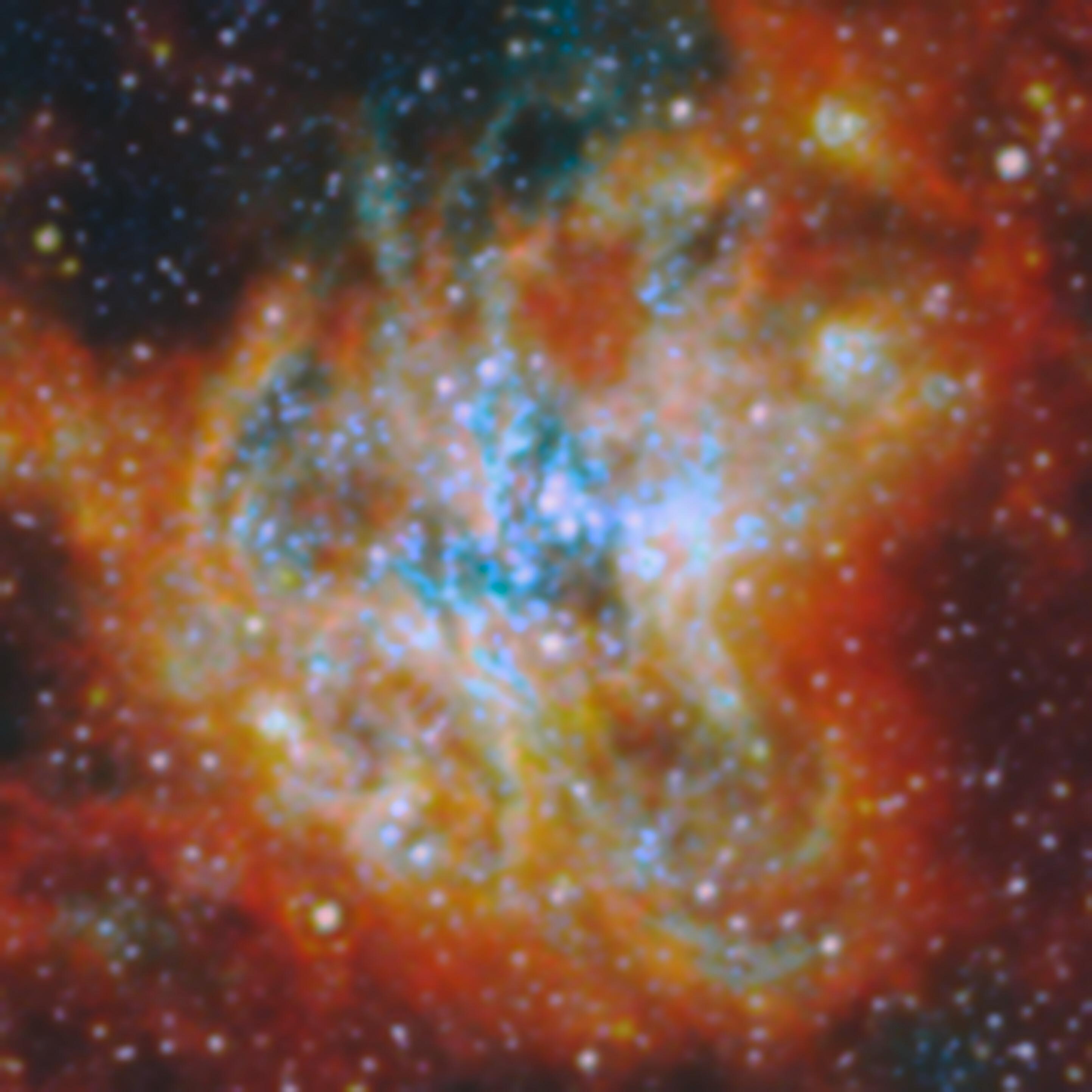
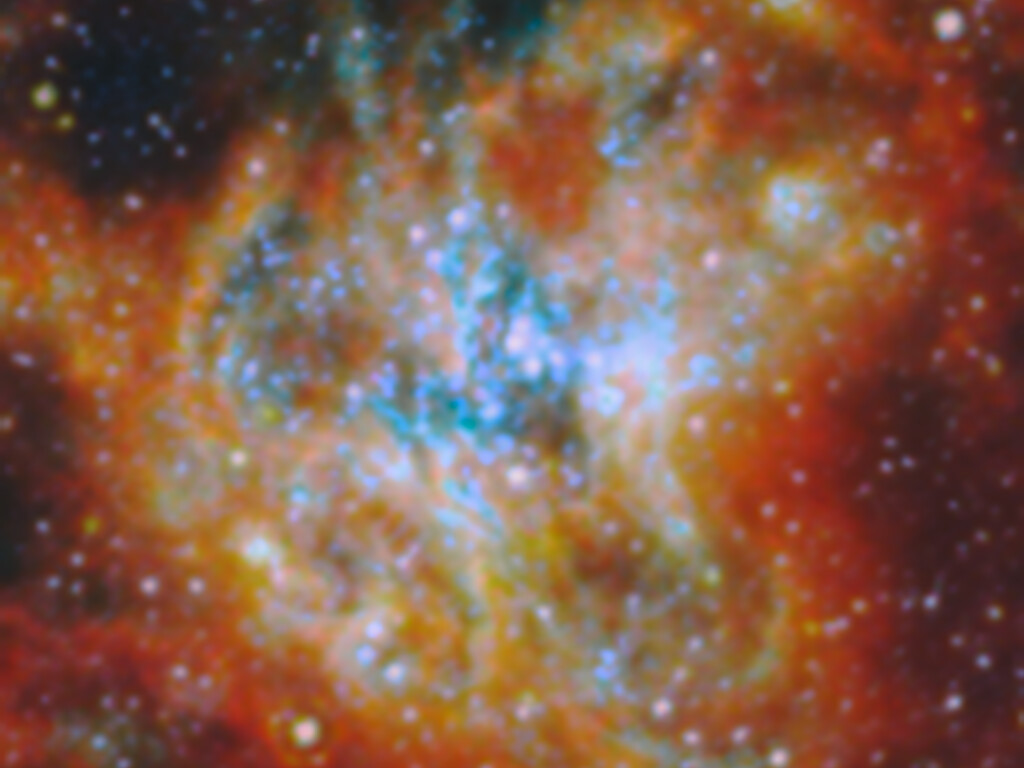
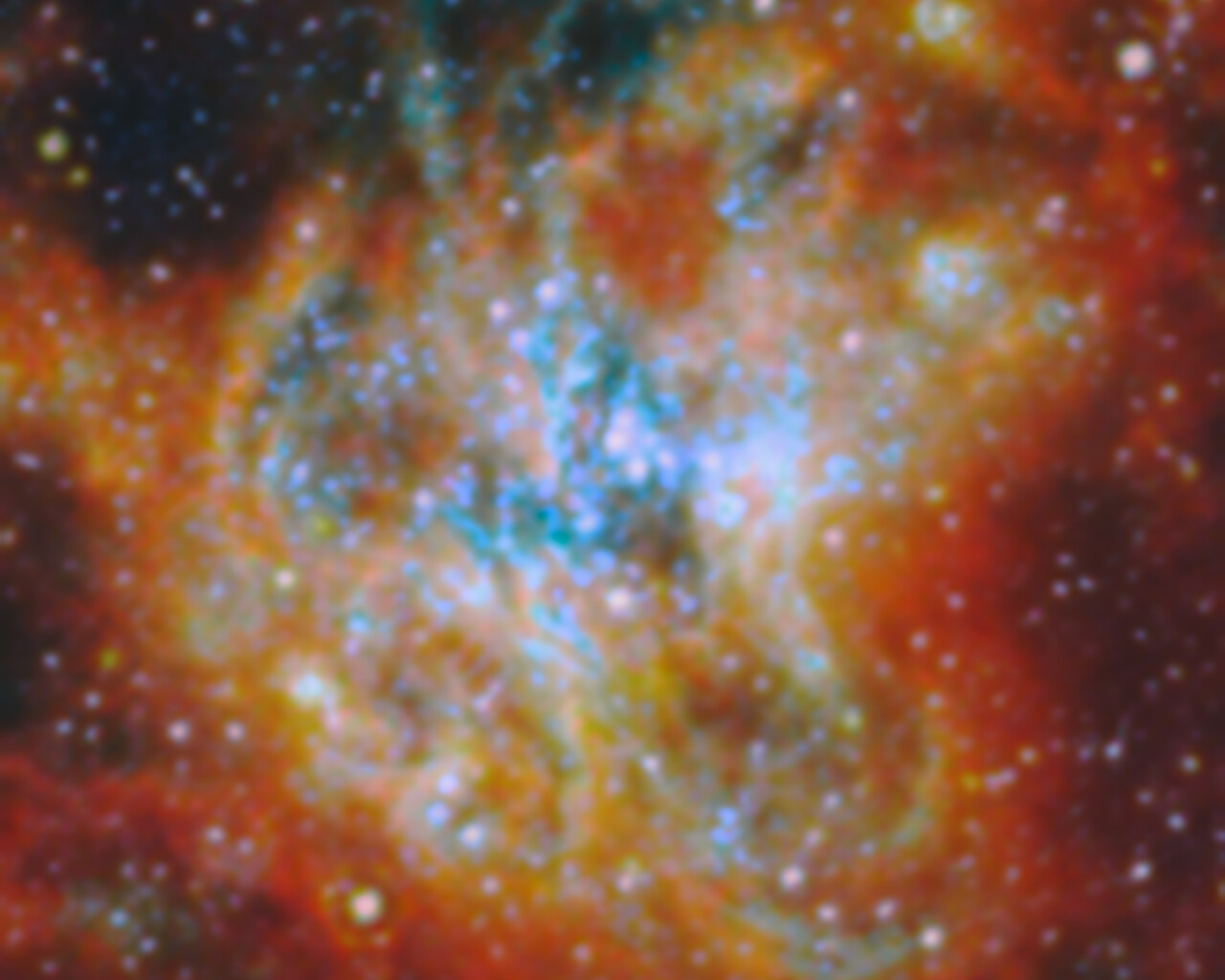
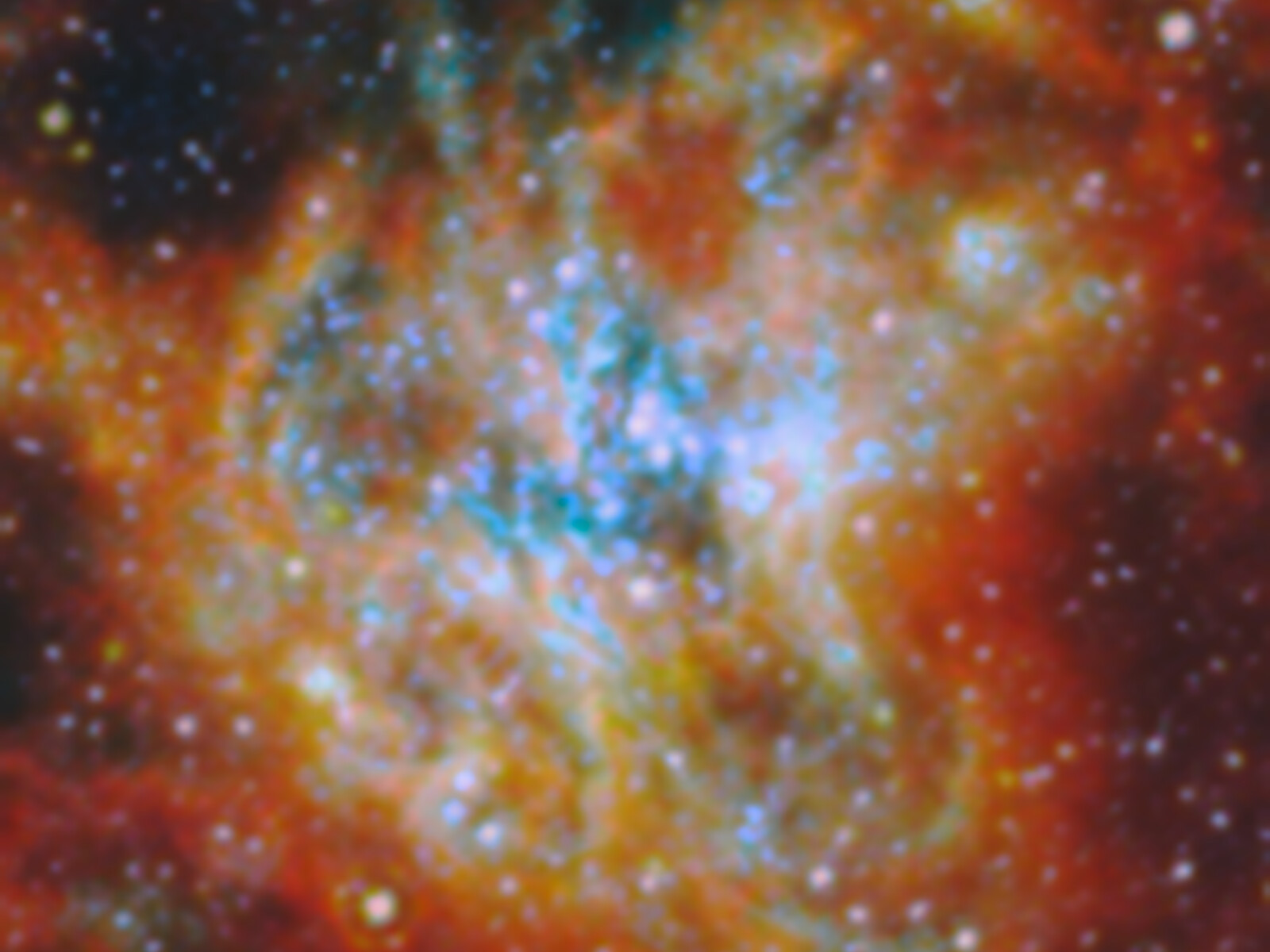
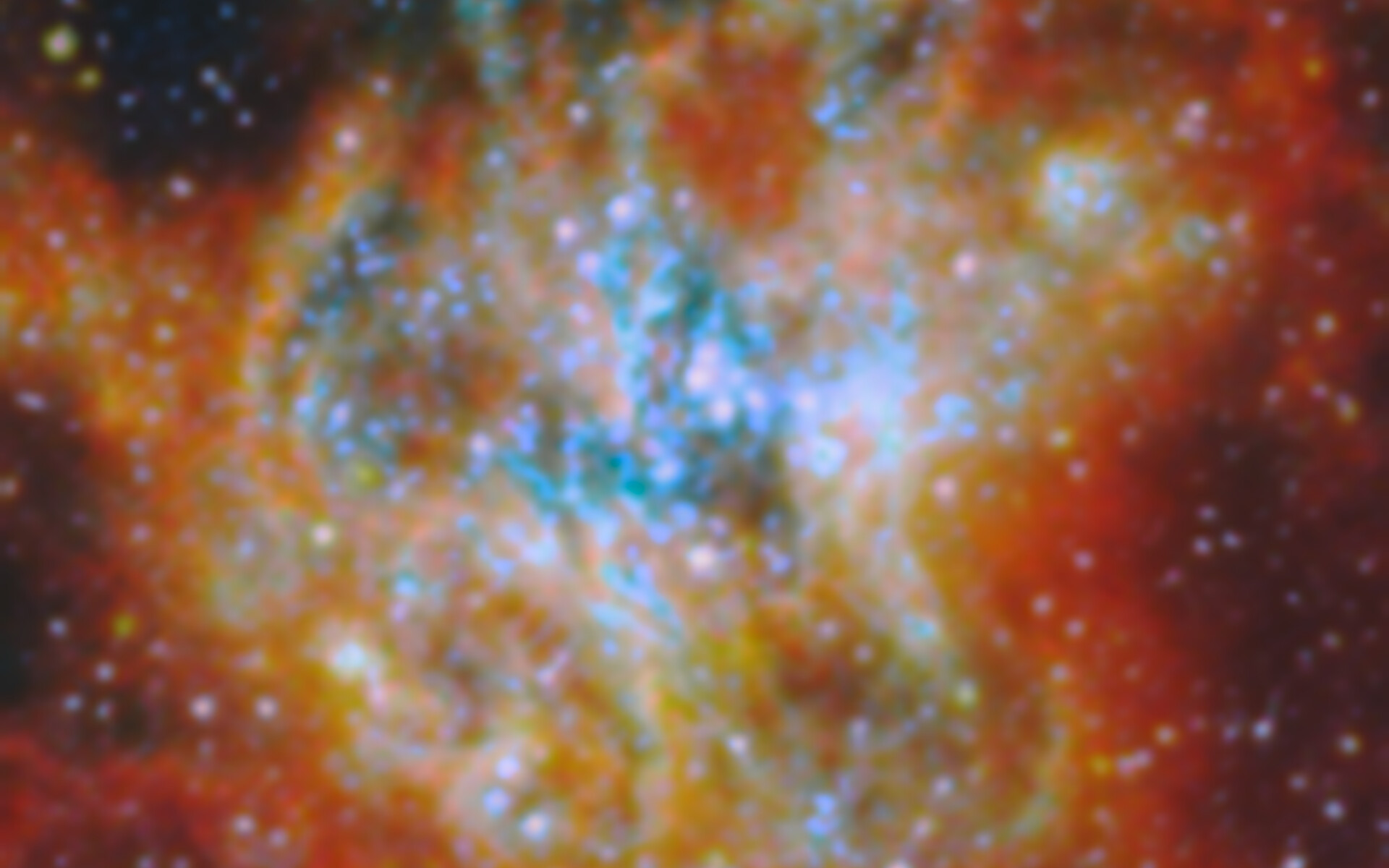
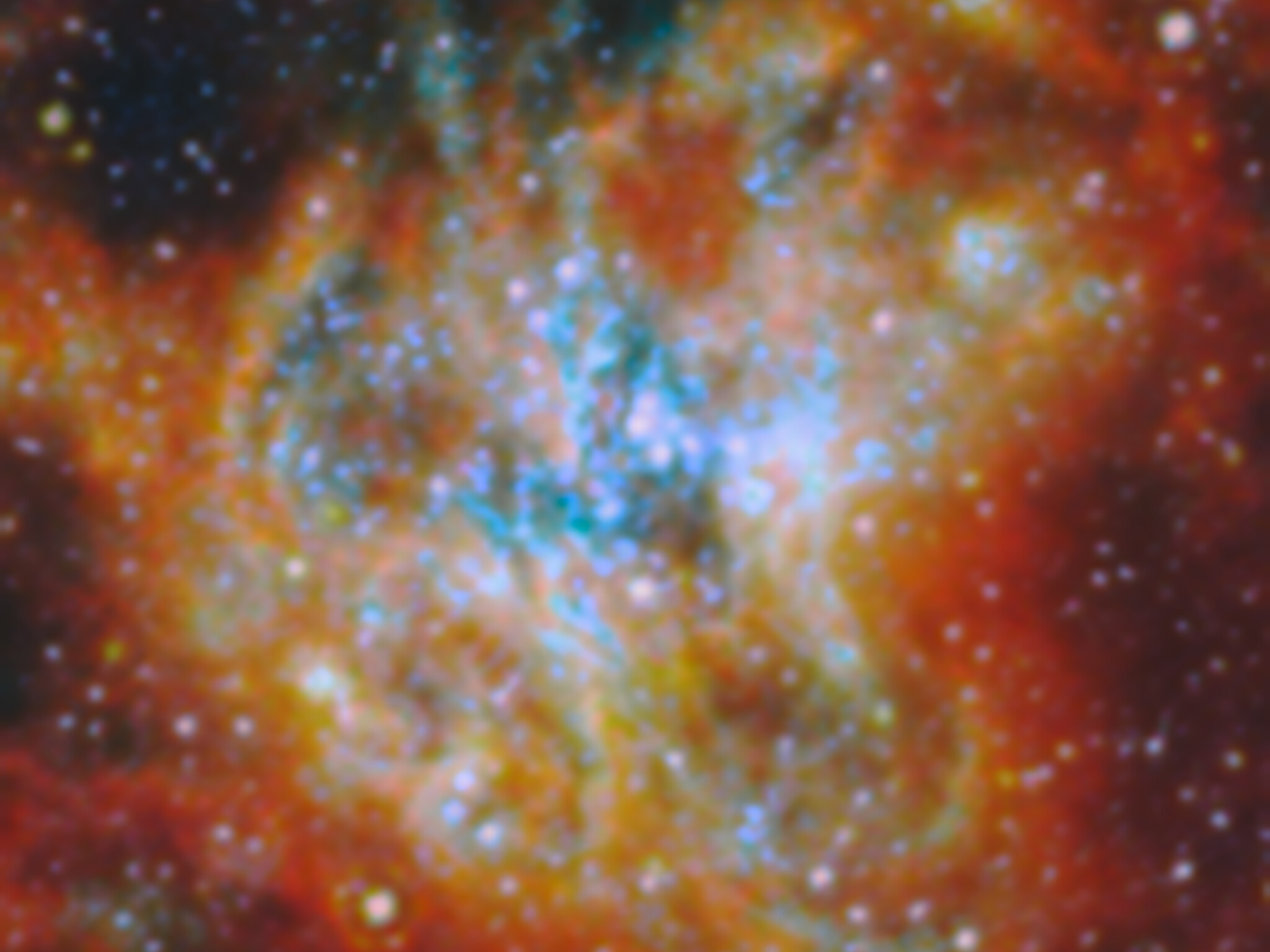
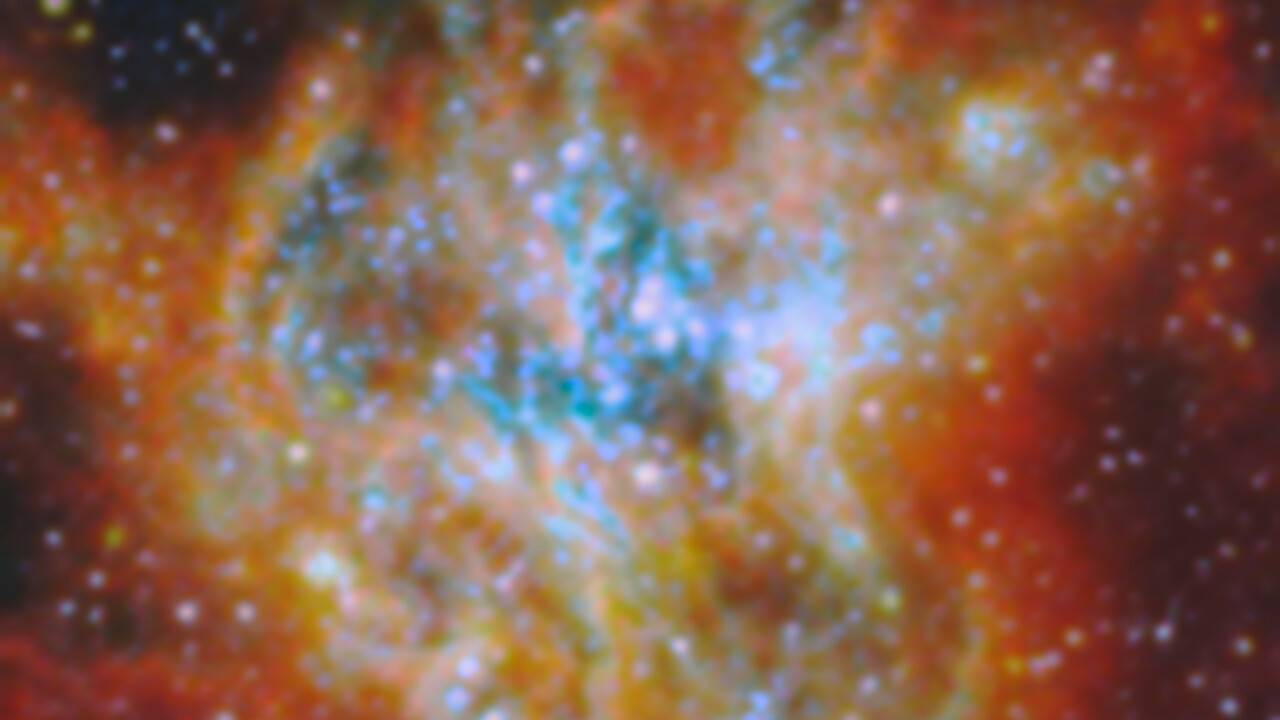
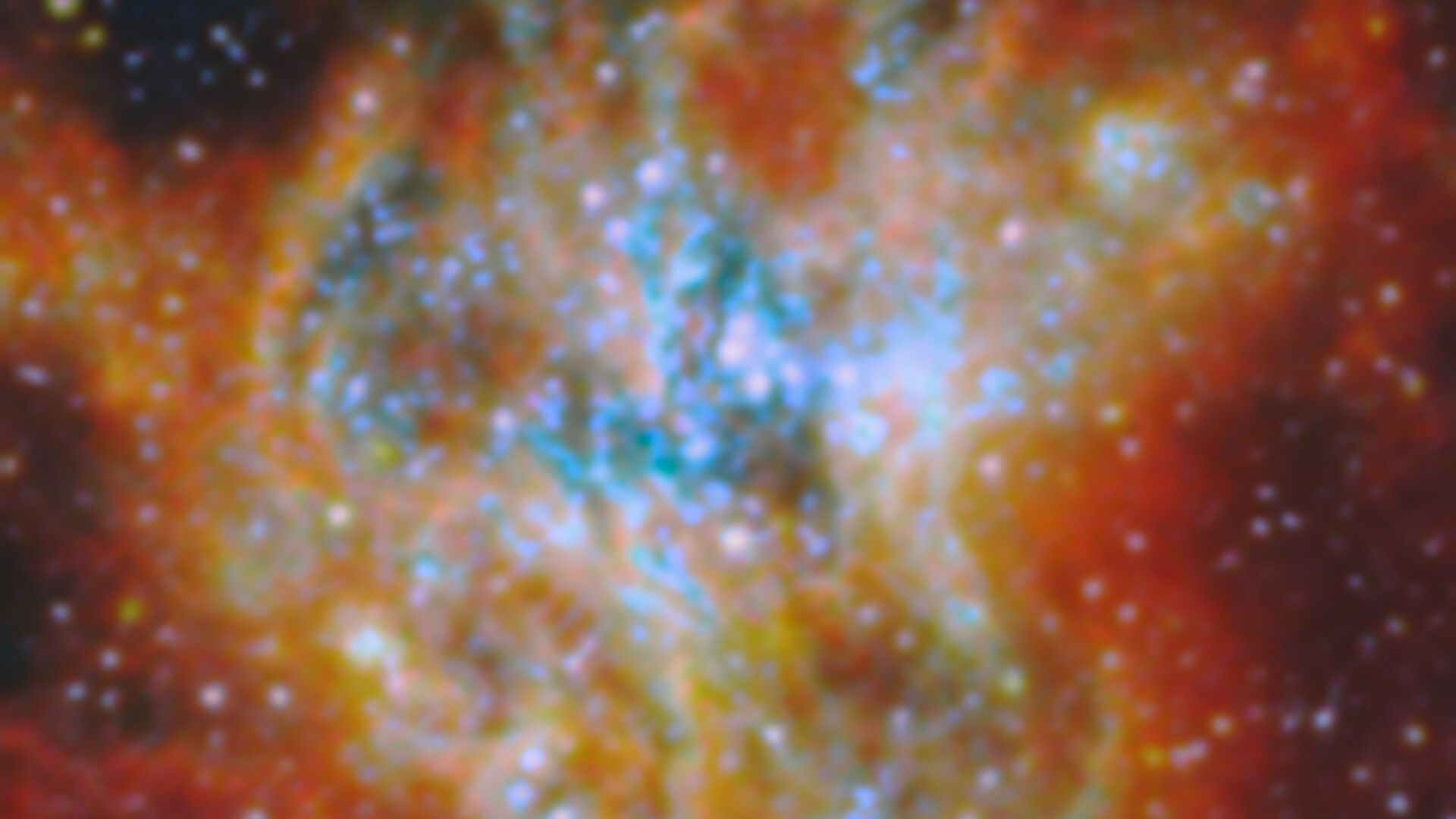
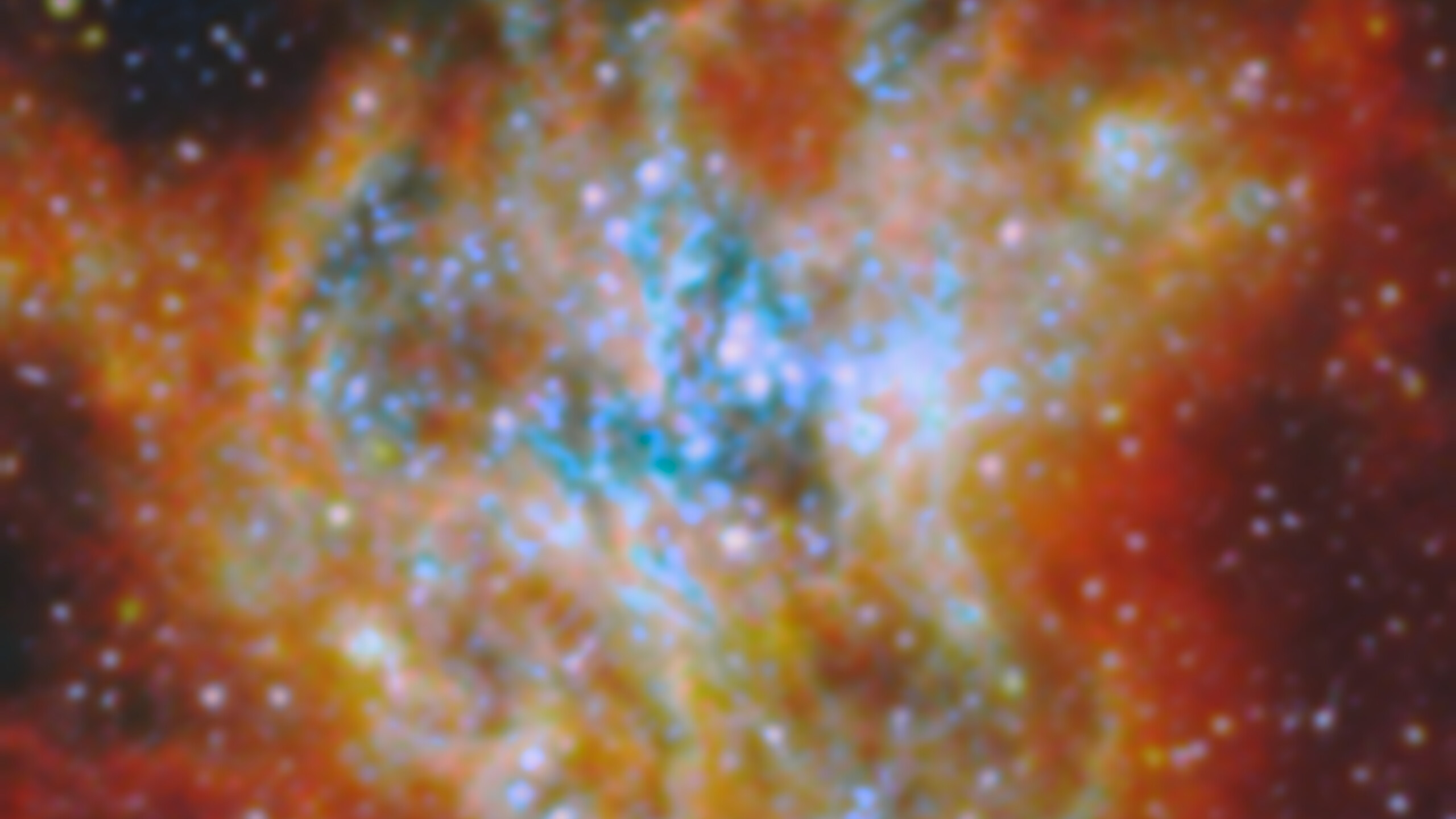
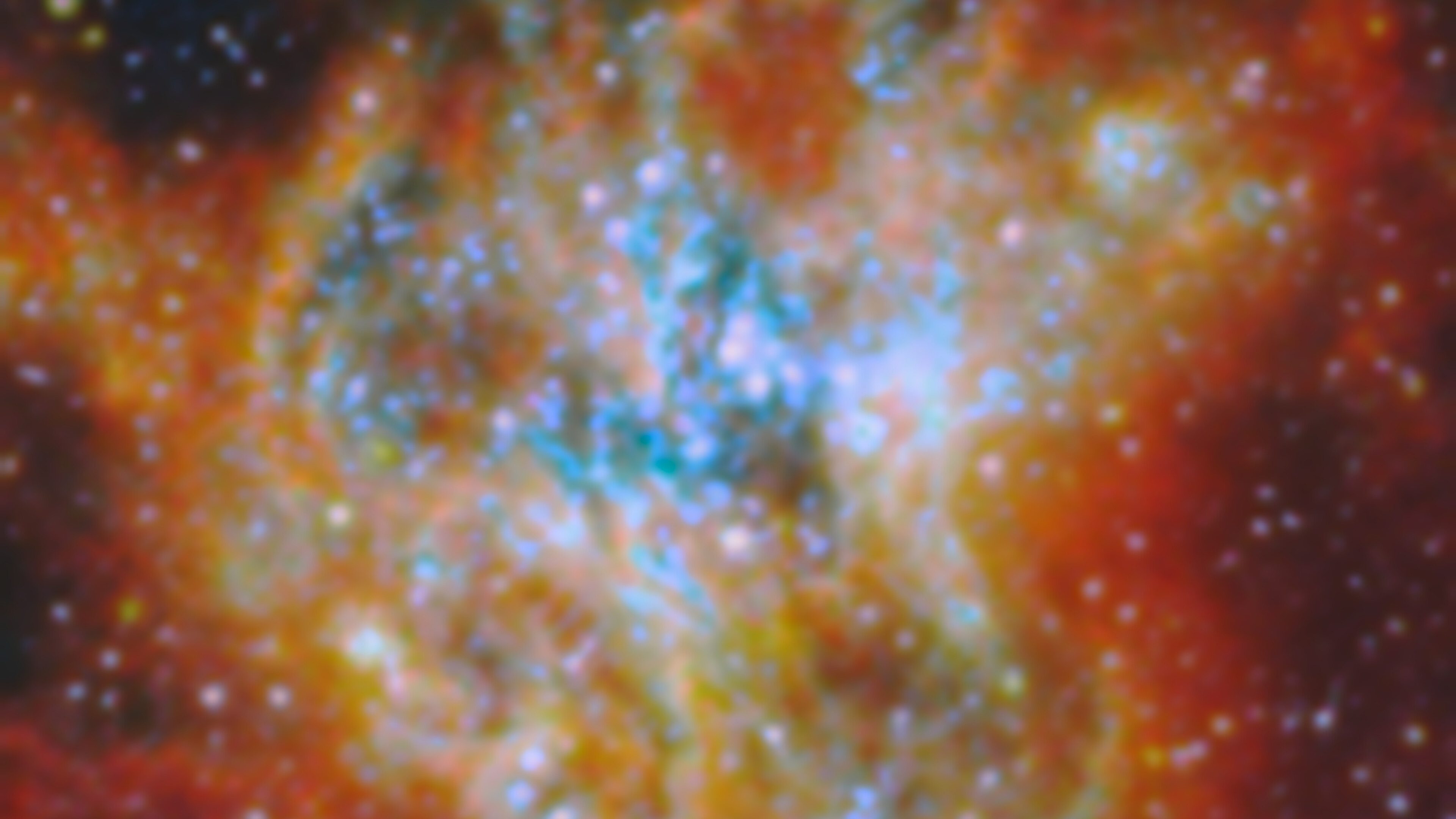
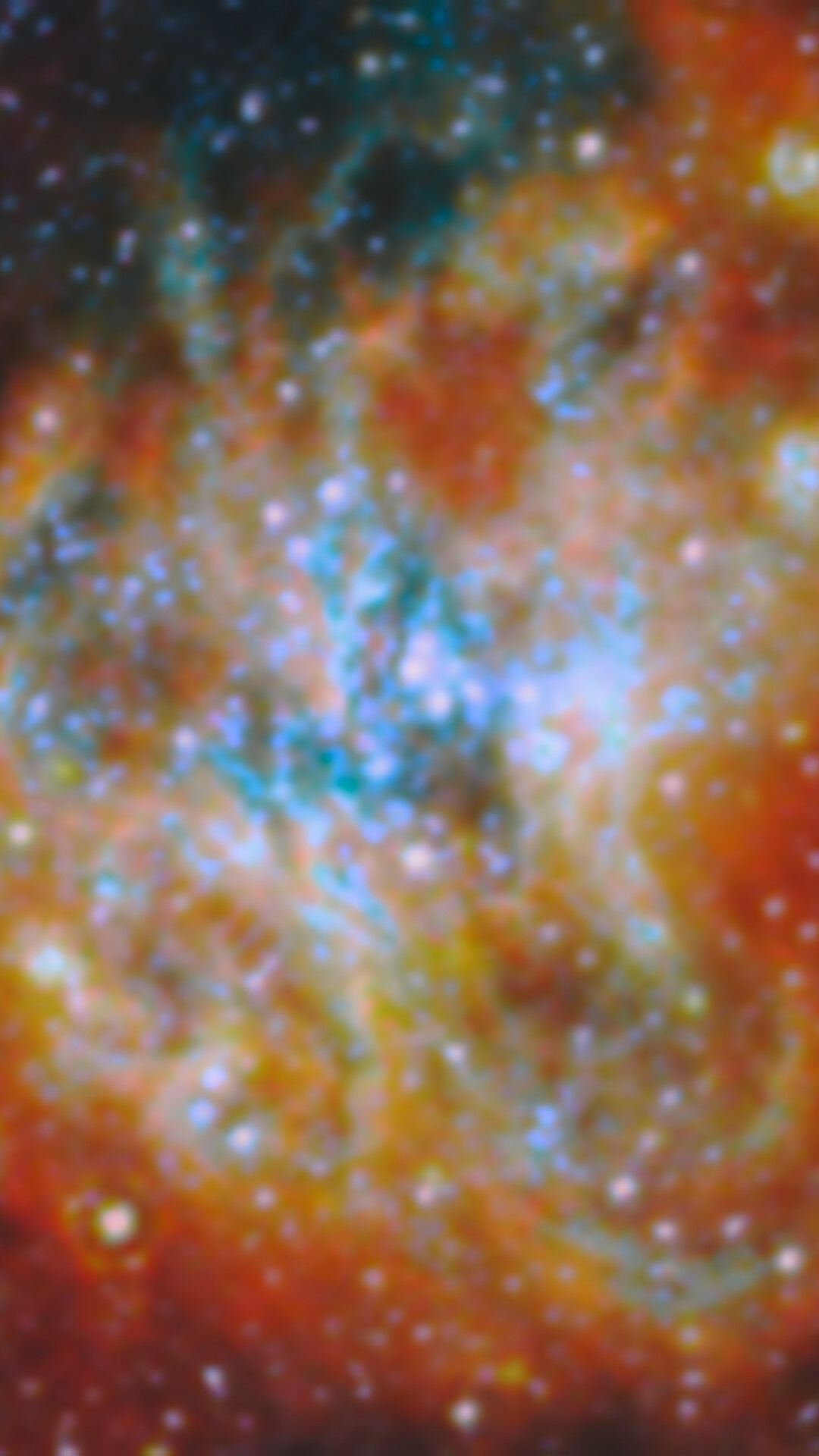
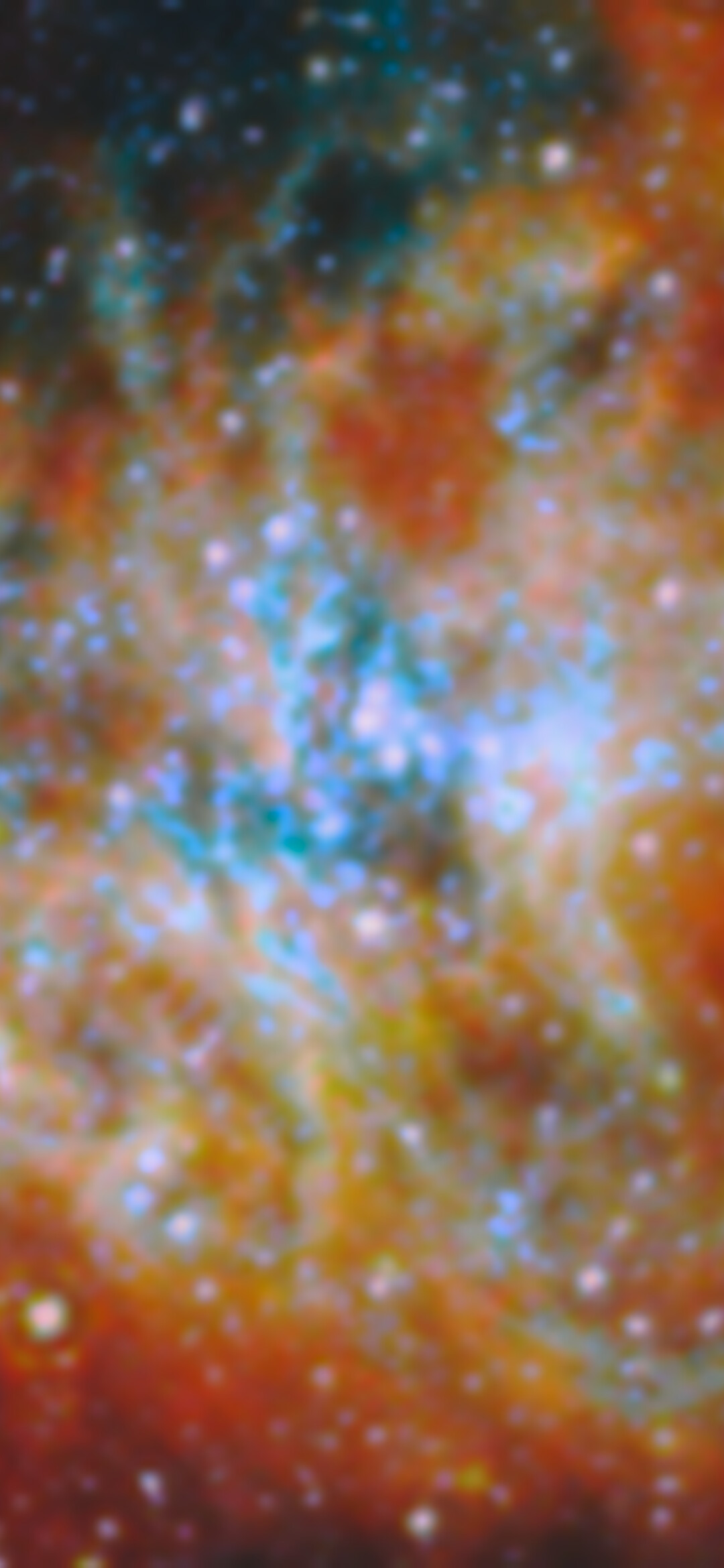
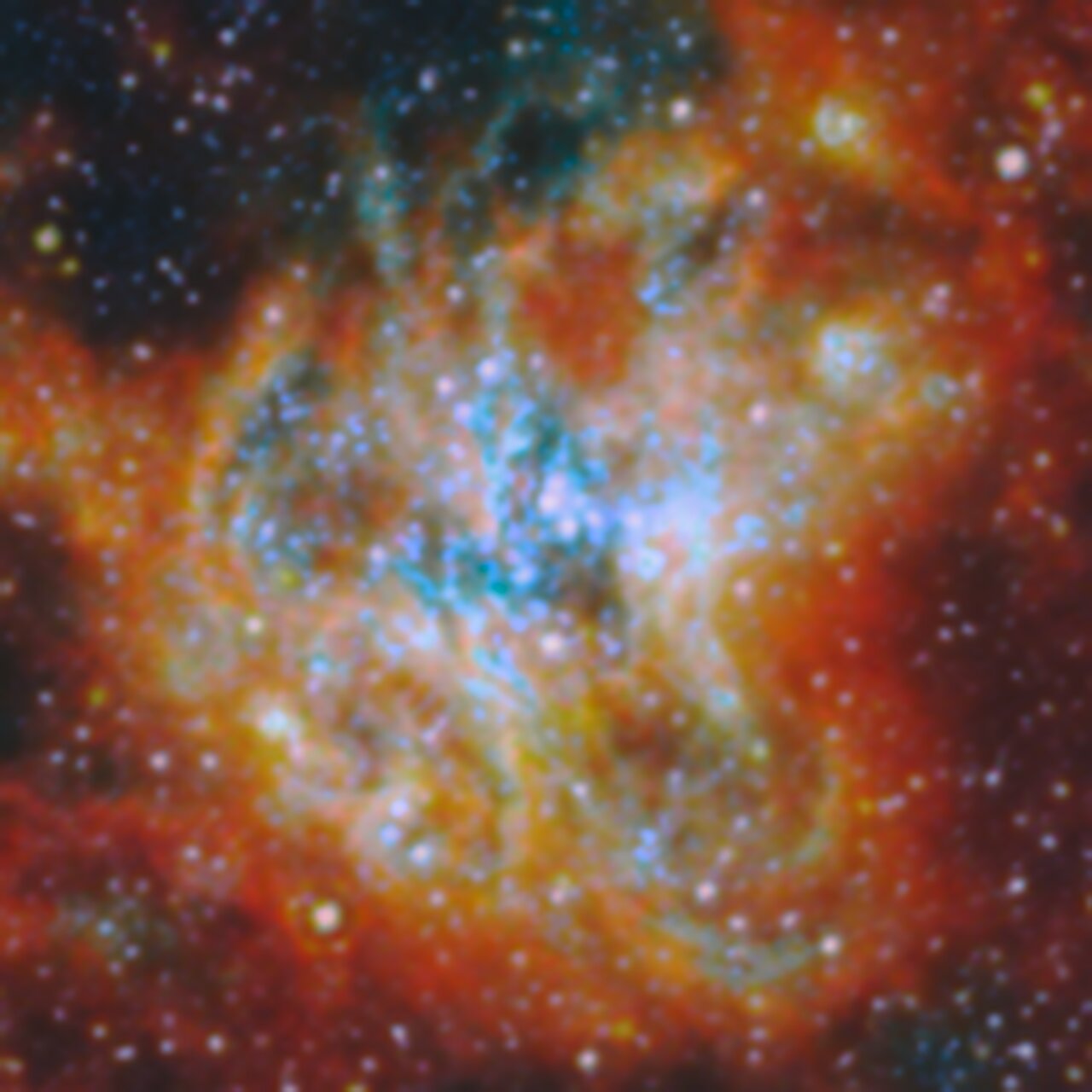
Star-forming region in M51 (close-up)
Astronomers have long known that understanding how star clusters come to be is key to unlocking other secrets of galactic evolution. Stars form in clusters, created when clouds of gas collapse under gravity. As more and more stars are born in a collapsing cloud, strong stellar winds, harsh ultraviolet radiation and the supernova explosions of massive stars eventually disperse the cloud, and their light can bear down on other star-forming regions in the galaxy. This process is called stellar feedback, and it means that most of the gas in a galaxy never gets used for star formation. Researching how star clusters develop can answer questions about star formation at a galactic scale.
Now, the state of the art has been further developed with both Hubble and Webb working together to provide a broad-spectrum view of thousands of young star clusters. An international team of astronomers has pored over images of four nearby galaxies from the FEAST observing programme (#1783), trying to solve this mystery. Their results show that it is the most massive star clusters that clear away their gaseous shroud the fastest, and begin lighting their galaxy the earliest.
The team identified nearly 9000 star clusters in the four galaxies in different evolutionary stages: young clusters just starting to emerge from their natal clouds of gas, clusters that had partially dispersed the gas (both from Webb images), and fully unobstructed clusters visible in optical light (found in Hubble images). With Webb’s ability to peer inside the gas clouds, they were able to then estimate the mass and age of each cluster from its light spectrum.
This image shows a star-forming complex in Messier 51 (M51), measuring almost 800 light-years across. M51 is located about 27 million light-years away from Earth. The thick cloud of star-forming gas, in which clumps collapsed to form each of the individual star clusters, is shown here in red and orange colours that represent infrared light emitted by ionised gas, dust grains, and complex molecules such as polycyclic aromatic hydrocarbons (PAHs).
Many of the bright dots that can be seen within the clouds are star clusters. The massive young stars within cast powerful radiation on the gas clouds that surround them, creating the cyan illumination shown here. Eventually, the combination of radiation, stellar wind and the supernova explosions of the most massive of these stars will disperse the gas clouds, putting an end to the star formation in this part of M51.
[Image description: A close-in view of a star-forming nebula. At this resolution, it is slightly blurry. It is made of dense clouds of gas, red on the outside and orange in towards the center. Nestled in the cloud is a collection of bright blue-white dots, which are star clusters. They light up the inner gas clouds in cyan. Many stars from the galaxy are scattered across the view. A little of the dark background appears in the top right.]
Credit:ESA/Webb, NASA & CSA, A. Pedrini, A. Adamo (Stockholm University) and the FEAST JWST team
About the Image
| Id: | weic2608c | |
|---|---|---|
| Type: | Observation | |
| Release date: | 6 May 2026, 12:00 | |
| Related releases: | weic2608 | |
| Size: | 2887 x 2887 px | |