
weic2612 — Photo Release
Webb pinpoints millions of stars within Cigar Galaxy
23 June 2026
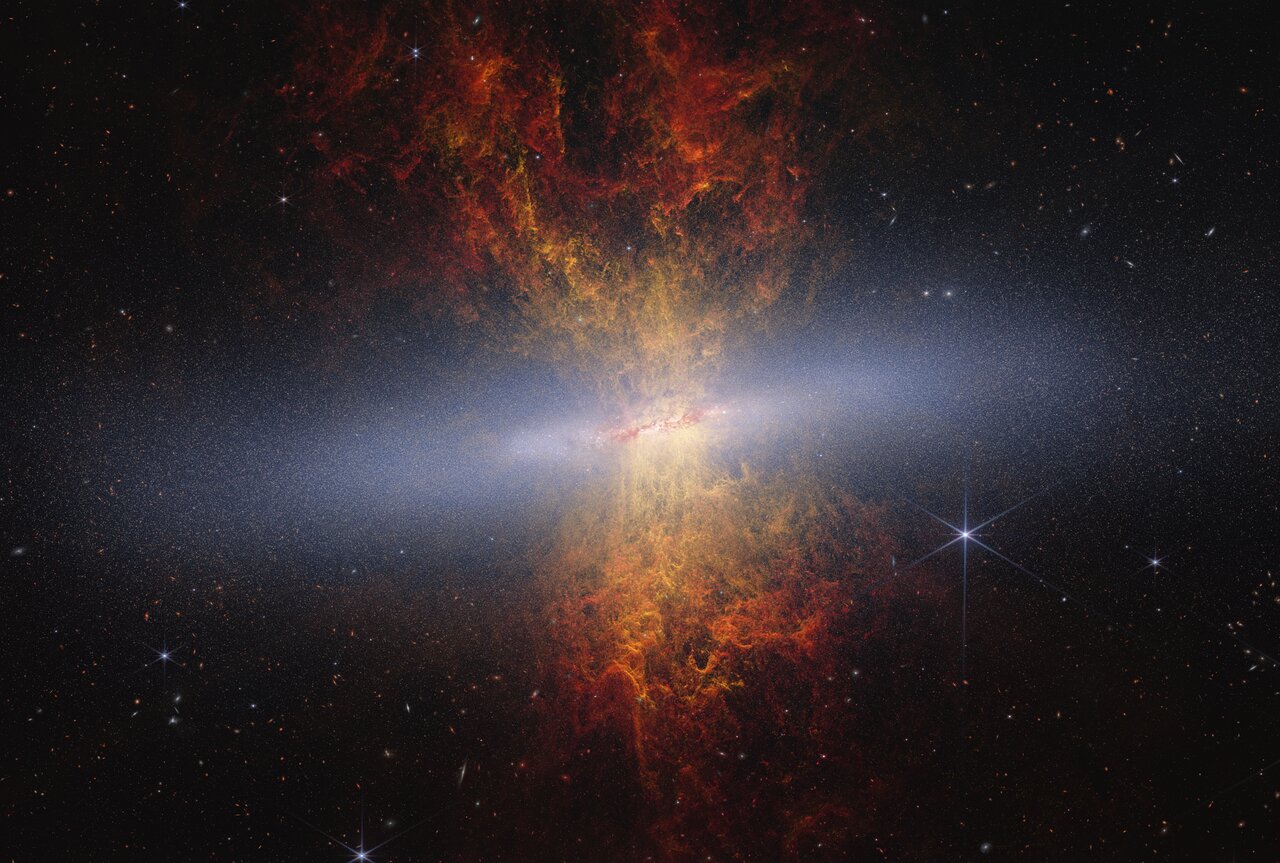
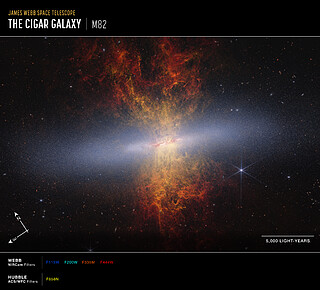
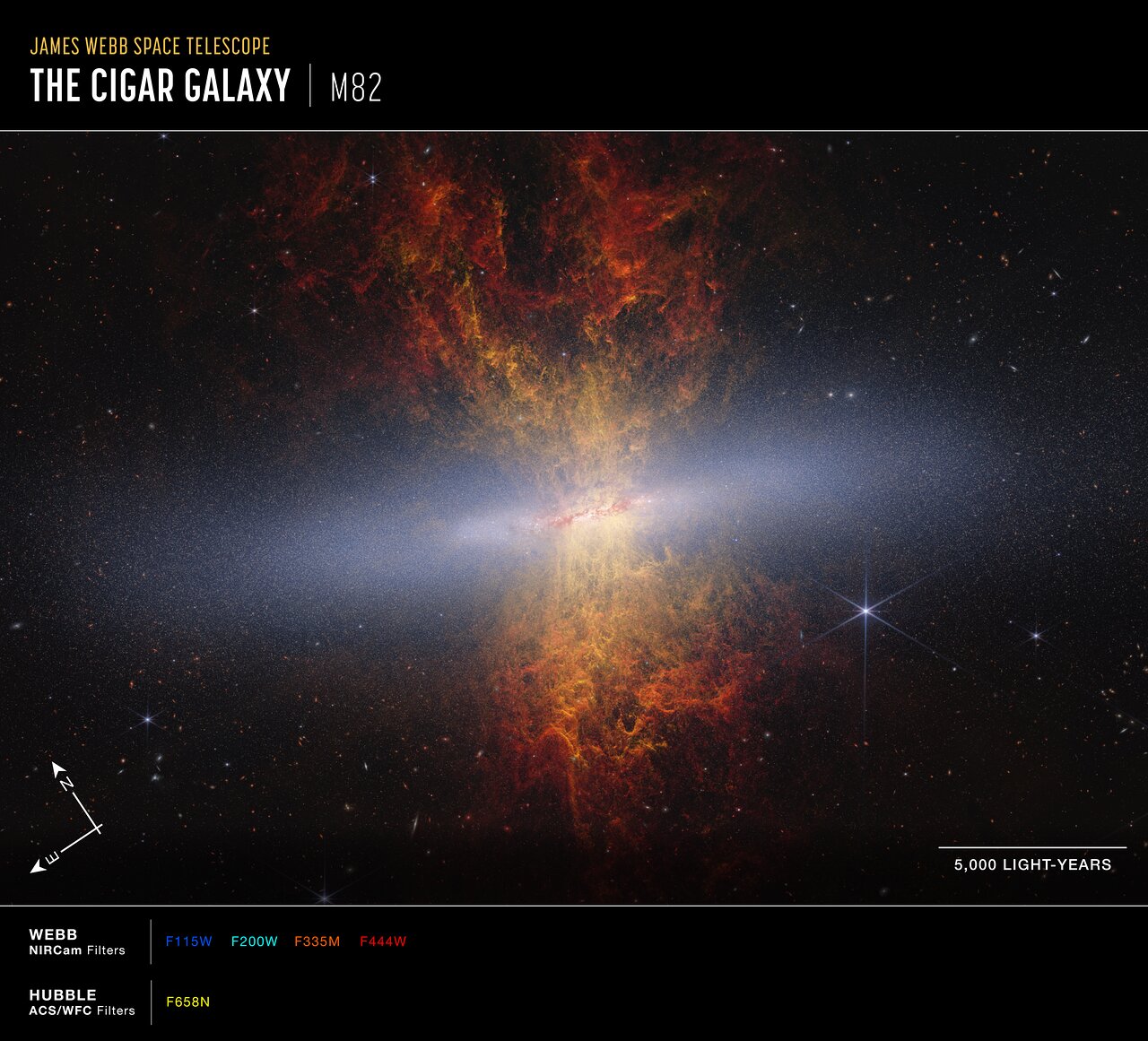
Located 12 million light-years away and undergoing rapid star formation, edge-on spiral galaxy Messier 82 (M82) is a scientifically unique sight to behold, and now the NASA/ESA/CSA James Webb Space Telescope has revealed previously unseen details.
M82’s intense star formation, thought to be the result of a galaxy merger, will be a short-lived event in astronomical terms, estimated to last a few hundred million years in its entirety. This temporary phase of extreme star formation relative to the galaxy’s mass, as well as its location in the local Universe, are among the factors that make M82, also known as the Cigar galaxy, a one-of-a-kind environment to study.
A team of astronomers recently completed an imaging survey with Webb. This programme entailed a total of 65 hours of observation time with Webb’s NIRCam instrument and revealed never-seen-before details of the starburst galaxy, including its distended disc structure and millions of individual stars. Webb’s high-resolution imaging, specifically of the main plane of the disc, has unlocked vital information for astronomers as they seek to uncover M82’s formation history. Additionally, the Webb data will help scientists understand the current processes occurring within the starburst galaxy.
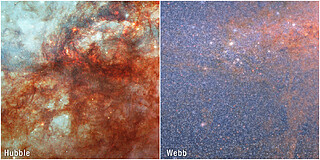
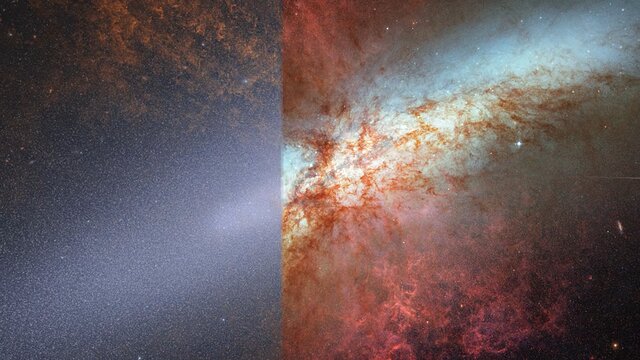
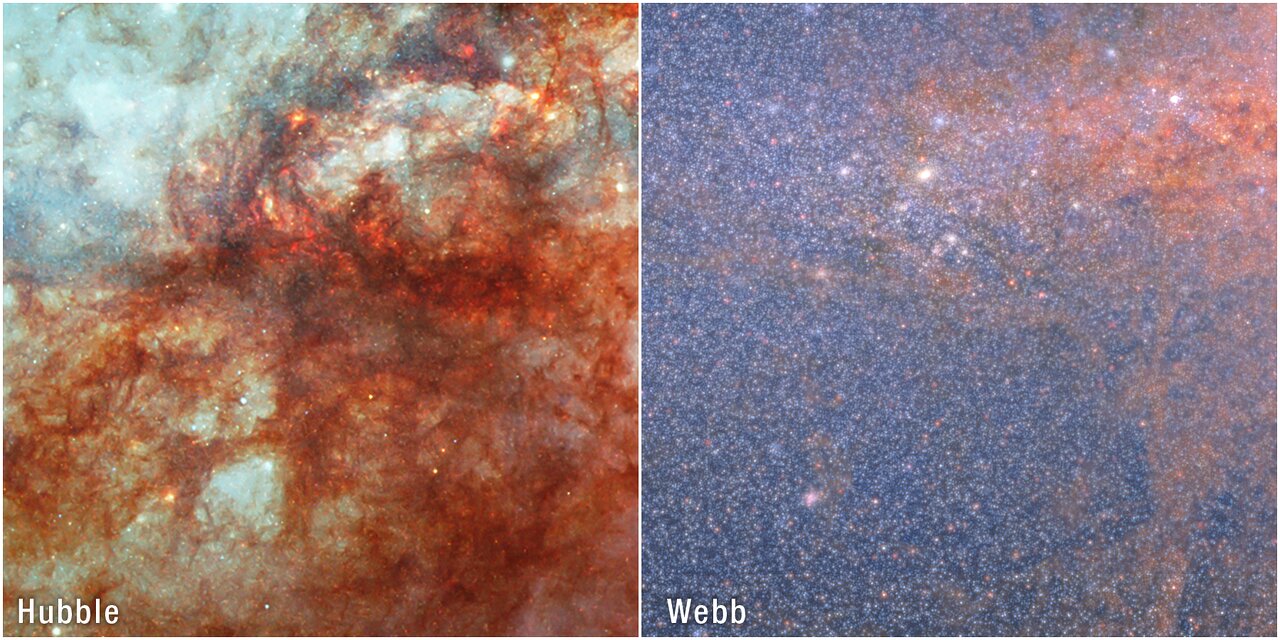
Prior to Webb, many observatories observed the starburst galaxy, including the NASA/ESA Hubble Space Telescope. However, the sheer volume of dust within that galaxy limited the amount of information astronomers could acquire on M82 at high resolution. While Webb has previously looked at this galaxy, the duration of the new imaging survey, combined with the telescope’s infrared sensitivity was an optimal combination that enabled it to pierce through the thick dust.
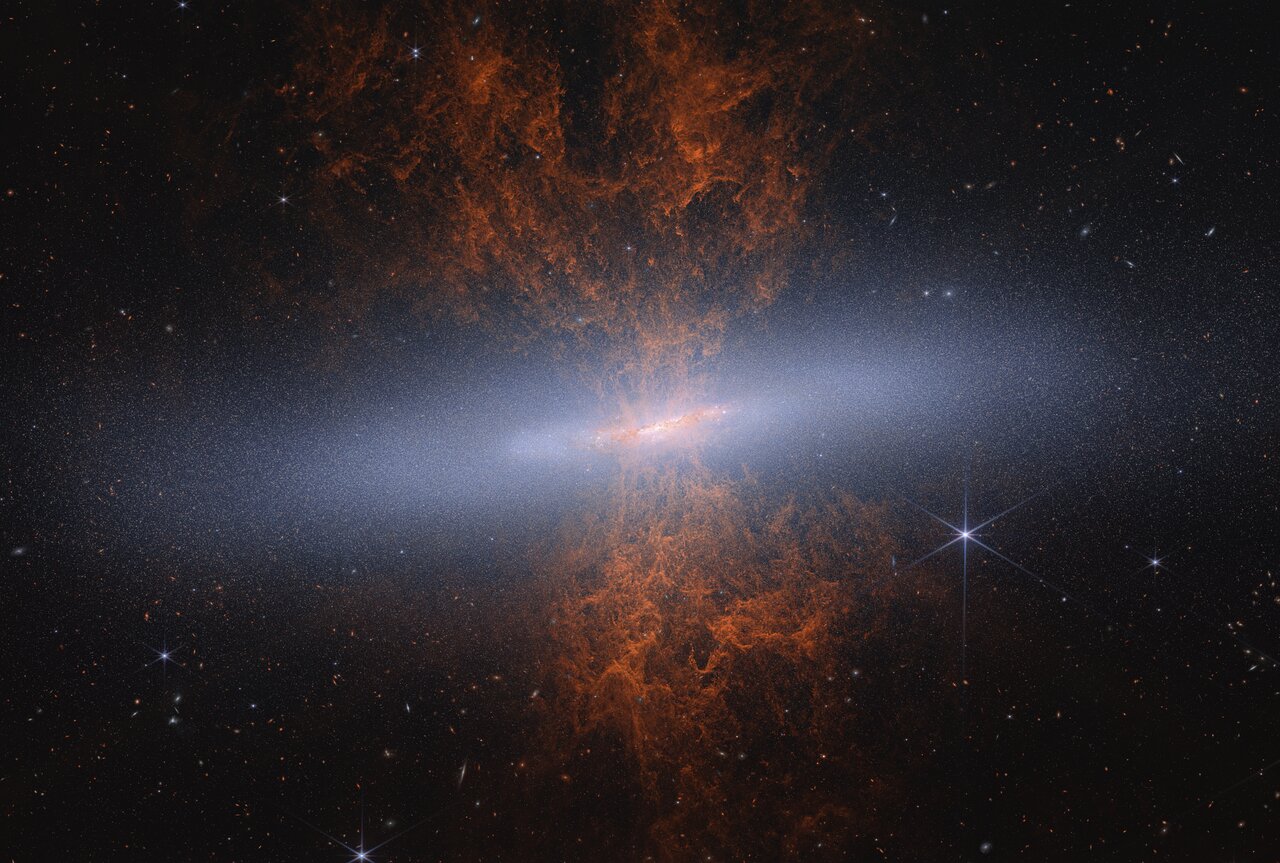
The telescope’s near-infrared-light view is a snapshot of a scene that has been evolving over a couple hundred million years. Webb’s image contains approximately 16.5 million individual stars dispersed throughout the galaxy. The starlight from these stellar sources is depicted as luminous blue granules. This is only a small portion of the total amount of stars astronomers think reside in a galaxy like M82, with the majority too faint to be seen.
Moving inward, the increase in brightness and the asymmetrical shape of the galactic disc hints at the spiral galaxy’s unique underlying structure. The differing radii between the two sides suggests that M82 has a distorted shape, which can happen during intense galaxy mergers.
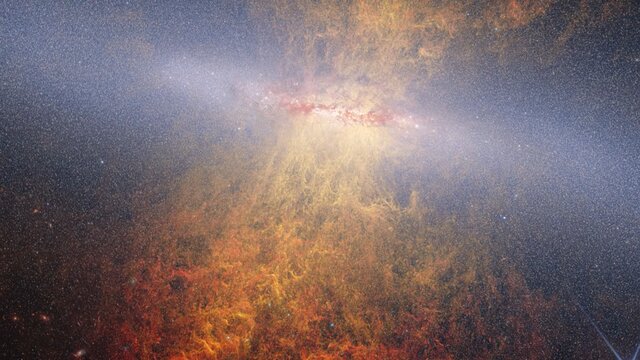
Because of the extreme star formation within the galaxy, which is 10 times faster than the Milky Way galaxy’s star formation rate, stellar birth will eventually be disrupted. M82’s stellar frenzy is causing bipolar plumes of material to be ejected above and below the disc. Though it looks like a tumultuous region, the hourglass-shaped outflows appear to have a layered structure. The yellow tendrils of material closest to the galaxy’s disc represent ionised gas, whereas the orange material farther away depicts small dust grains. These grains are called polycyclic aromatic hydrocarbons and are helpful in tracing material in the space between the galaxy’s stars, also known as the interstellar medium.
The information collected as part of this Webb study is just one dataset scientists will analyse as they seek to piece together this starburst galaxy’s formation history.
More information
Webb is the largest, most powerful telescope ever launched into space. Under an international collaboration agreement, ESA provided the telescope’s launch service, using the Ariane 5 launch vehicle. Working with partners, ESA was responsible for the development and qualification of Ariane 5 adaptations for the Webb mission and for the procurement of the launch service by Arianespace. ESA also provided the workhorse spectrograph NIRSpec and 50% of the mid-infrared instrument MIRI, which was designed and built by a consortium of nationally funded European Institutes (The MIRI European Consortium) in partnership with JPL and the University of Arizona.
Webb is an international partnership between NASA, ESA and the Canadian Space Agency (CSA).
Image Credit: NASA, ESA, CSA, A. Smercina (STScI), T. Williams (University of Manchester). Image processing: A. Pagan (STScI).
Links
Contacts
Bethany Downer
ESA/Hubble Chief Science Communications Officer
Email: [email protected]
ESA Newsroom and Media Relations Office
Email: [email protected]
Christine Pulliam
Space Telescope Science Institute
Email: [email protected]
About the Release
| Release No.: | weic2612 | |
|---|---|---|
Images
Videos
Slider Tool